The instruction sounds simple: brush your teeth. Hidden inside it is a small examination in coordination. Reach the back. Follow the gumline. Keep going. For a child, the bathroom mirror can become the site of a twice-daily negotiation over a task whose success is difficult to see. Willo built a company around the possibility that the instruction asks too much of the person holding the brush.
- Automatic mouthpiece brushing for children aged five and up.
- BrushBot supplies the motion; AutoFlo+ also handles toothpaste and rinsing.
- The plaque claim compares Willo with a manual brush, with the largest difference in hard-to-reach areas.
- Comfort, sizing and refill costs belong in the buying decision.
A dentist runs out of reminders
In a 2021 interview, co-founder Hugo de Gentile described his father’s frustration as a dentist. Patients received instruction and tried to follow it, yet still struggled to maintain healthy teeth and gums. The father, Jean-Marie, approached the problem as an inventor. Hugo, whose background was impact investing, saw an everyday activity with disappointing execution. Ilan Abehassera joined as another co-founder. Their answer would require engineering as well as persuasion.
That origin gives Willo its particular character. Plenty of consumer products promise to improve our behaviour. Here, the ambition was to transfer some of the behaviour to the product. The company’s April 2021 launch announcement described seven years of development and a team including dental professionals, mechanical engineers and designers working in France and the United States. A toothbrush had become a research project with plumbing.
“We’re on a mission to bring the same level of repeatable teeth cleaning to everyone.”Hugo de Gentile, co-founder, 2021
Put the difficult motion in the machine
The original Willo was a countertop oral-care robot. TIME included it among its 2020 inventions: a mouthpiece system that pumped cleaning liquid in and drew it out through tubing. At general availability in April 2021, the announced price was $199, plus a $13 monthly subscription covering consumables, app tracking and onboarding. The company reported $17 million raised in total. Those figures belong to that launch, rather than today’s shopping basket.
AutoFlo+, announced in December 2024 under CEO Dave Fox, carries the idea into the current range. Its OptiClean head moves from side to side. The system applies liquid toothpaste and uses suction to direct rinsing liquid into the sink. A visual pacer guides a two-minute cycle, including a cue to switch sides. The child still participates, but has fewer operations to manage.
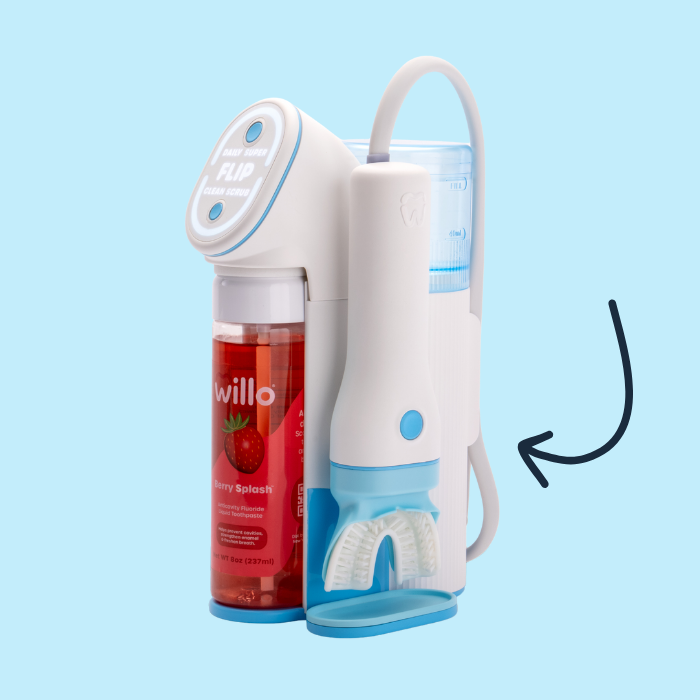
BrushBot pares the offer back. It automates brushing motion while leaving toothpaste application and rinsing to the child. This distinction matters more than the names: a family struggling with missed spots may need different help from a family struggling with every stage. Both models are marketed for ages five and up. Willo occupies the premium children’s oral-care market, alongside conventional powered brushes and other mouthpiece devices.
Automatic motion
Manual paste + rinse
Automatic motion
Automatic paste + rinse
Product-page list prices checked October 4, 2026, before temporary promotions. Toothpaste and replacement heads add ongoing costs.
Seven times what, exactly?
Willo’s arresting statistic is up to seven times more plaque removed in hard-to-reach areas than a manual toothbrush. The company’s clinical summary describes children aged five to thirteen after one brushing session. Average plaque removal was 60% with Willo, compared with 20-25% with the manual brush. The sevenfold result concerns particular difficult areas; it is not the average across the mouth.
Company-published clinical summary; ages 5-13. Scale: 0-100%.
That is a useful result to examine, provided the question stays attached to it. A single-session plaque comparison does not establish seven times fewer cavities. Nor does a manual-brush comparison rank Willo against every electric alternative. Oral-B and Philips Sonicare offer conventional powered approaches; AutoBrush and Y-Brush also use mouthpieces. Shape alone tells a shopper little about the cleaning a particular device achieves.
The mouth gets the final vote
Willo now speaks directly to families dealing with sensory sensitivities, attention difficulties and motor challenges. Its positioning recognises that resistance to brushing can have several causes. Taste, texture and movement may be uncomfortable. Holding and steering a conventional brush may be difficult. Automating the stroke could ease one obstacle while leaving another intact.
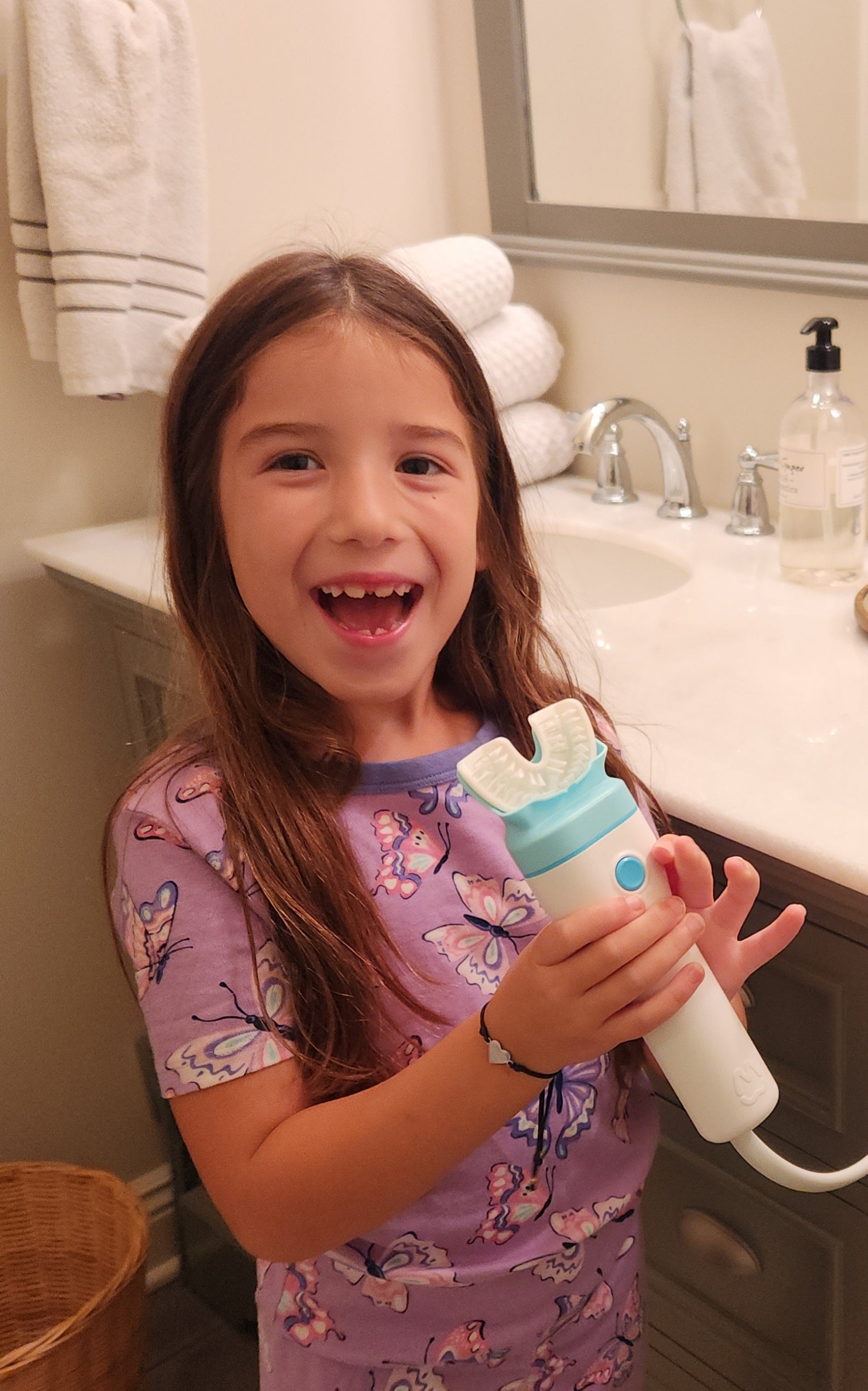
A June 2025 Pocketables review supplies a particularly helpful counterweight to the happy-family pitch. The reviewer reported that the older child switched back to a regular brush after finding the mouthpiece uncomfortable for daily use. That household’s experience does not settle effectiveness. It does establish a practical point: automatic brushing still needs a willing mouth.
Willo’s newer Ortho heads extend the same approach to brackets and wires. They are available for both current devices, so an existing customer can change the head rather than the whole system. Blue bristles distinguish them visually; the company says the colour itself adds no cleaning property. Flossing and the orthodontist’s other instructions remain part of the routine.
A habit with a refill order
The business combines starter kits with repeat purchases of toothpaste and replacement heads. Refill subscriptions advertise 20% savings. The companion app supplies brushing history, rewards and streak milestones, giving parents a record and children a reason to return. Dental-professional programs help explain the product, while Truemed supports qualifying HSA/FSA purchases. Current direct shipping is limited to the United States and its territories.
The idea readers can borrow is quite concrete: isolate the step people repeatedly struggle to perform, then decide whether the tool can perform it. Willo has chosen brushing technique. Families must still decide whether its price, feel and upkeep suit their child. The interesting promise is modest enough to test at a sink: fewer instructions to remember, and a routine that gets done.