In a British kitchen in 1950, the future arrived looking like a small cream-colored cement mixer. The Kenwood Chef A700 was heavy, mechanical and expensive: £19 10s 10d, a serious purchase when the country was still living with postwar rationing. Harrods put it on sale and exhausted its stock in a week. The remarkable part was not that the machine could beat cake batter. Other mixers existed. The Chef could mince meat, extract juice, peel potatoes, slice vegetables and perform a parade of jobs from one motor base. It sold the countertop equivalent of a workshop.
That distinction explains Kenwood Limited better than its catalog does. The Havant company now offers stand mixers, food processors, blenders, hand mixers, kettles, toasters and connected cooking machines. Its prices range from impulse-friendly compact tools to four-figure appliances. Underneath the assortment sits a durable idea: home cooks do not want machinery for its own sake. They want the distance between “I could make that” and dinner to become shorter.
The first product fixed a finger problem
Kenneth Maynard Wood had worked on radar and electronic controls during the war. In 1947, he and former RAF colleague Roger Laurence began producing the A100 turnover toaster in Woking. Its promise was almost comically specific: toast both sides without making the user touch the bread. That tiny saved motion became the seed of a company. The next machine, the A200 food mixer, offered four speeds, two bowls, twin beaters, a mincer, a juice extractor, a whisk and, improbably, a cutlery buffer.
Wood’s method was observational engineering. Find the household task that irritated people, then make the mechanism carry it. In 1950, he combined those lessons in the Chef. Live selling mattered. A kitchen machine with several outlets and unfamiliar attachments needs demonstration; on a shelf, it looks like expensive metal. In motion, it turns sausages, bread, juice and cake into one coherent argument. The Ideal Home Exhibition supplied the stage. Harrods supplied social proof.
The genius was not adding more speed. It was giving one reliable motor more careers.
The early product did not visibly fail first. The first real fracture in the story was ownership. By the time Thorn Electrical Industries completed a hostile takeover in 1968, more than 10 million Chefs had reportedly been sold and Wood left the company he created. That matters because founder mythology can obscure a harder truth: a good product architecture may survive the founder, the boardroom and several corporate identities.
One motor, many ambitions
Kenwood’s attachment outlets created a physical platform decades before that word became software shorthand. Buy the base for baking; later add a pasta roller, mincer, blender or spiralizer. Each accessory increases the machine’s usefulness and the owner’s cost of switching. The household accumulates not only tools, but recipes, habits and confidence. A competitor must replace all of that, not just beat the motor specification.
This is the part founders can copy. Start with one costly or annoying job. Make the core conspicuously dependable. Design an interface that can accept genuinely useful extensions. Preserve compatibility when possible. Sell the next outcome, not another gadget. The attachment cannot be decorative inventory; it must make a customer think, “Now I can make pasta,” rather than, “I own another piece of plastic.”
What changed Kenwood’s mind
By 2001, durability alone was not a corporate strategy. A strong pound hurt exports, retail prices were falling and multinationals including Braun, Moulinex and Philips squeezed the category. Kenwood had also dealt with a financial irregularity that management said was fixed. De’Longhi acquired the business for roughly £46 million. The buyer saw complementary products, greater purchasing power, a useful Chinese factory and a broader distribution opportunity, especially in America.
The deal changed the machinery around the machine. Kenwood gained the supply chain and international reach of a larger group, which now also contains Braun Household and Nutribullet. It did not abandon the central product logic. The Chef remained an expandable kitchen system. This is a less glamorous lesson than a reinvention narrative: sometimes the customer proposition is healthy while the ownership, cost base or route to market needs surgery.
A catalog built like a ladder
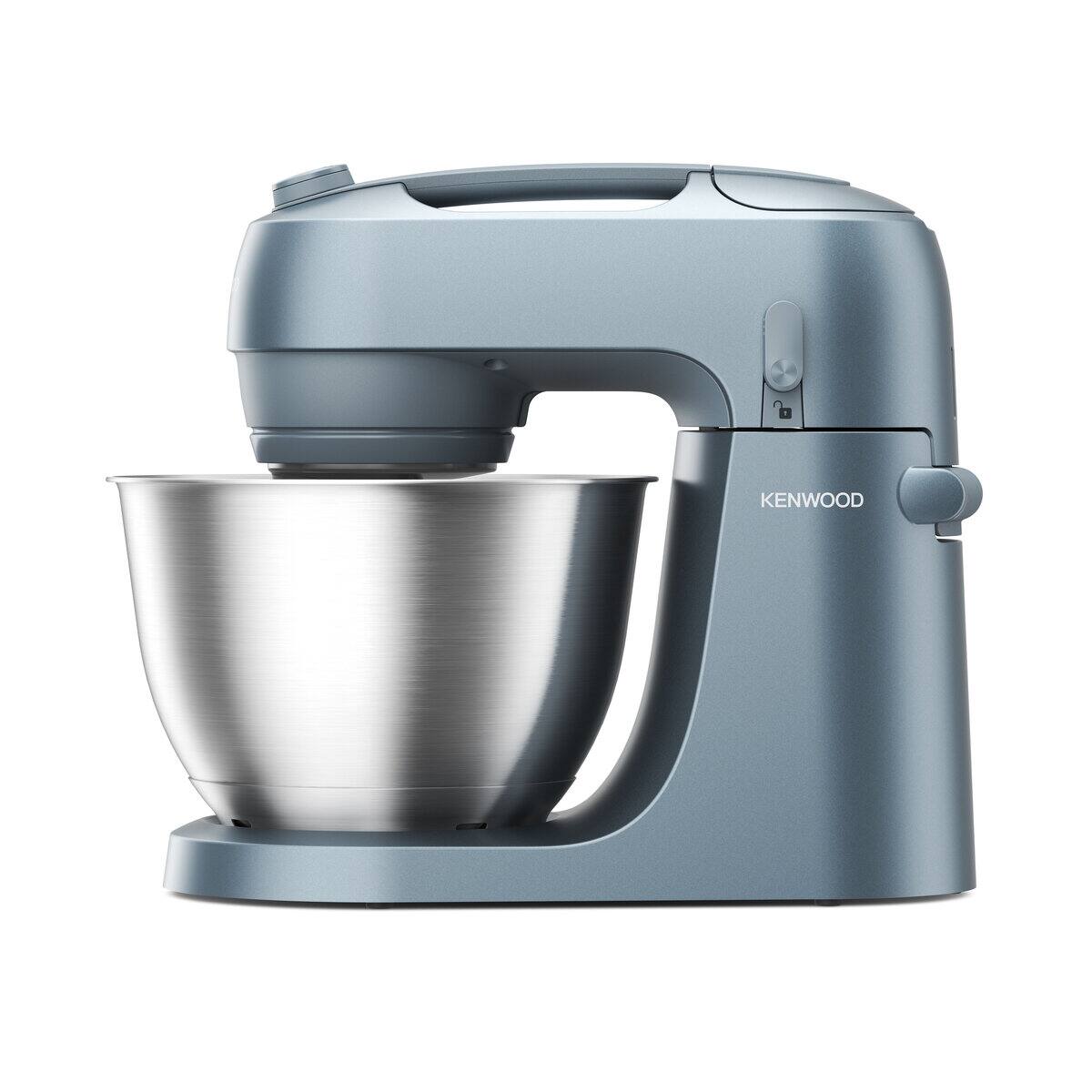
Today the catalog works like a ladder. At the lower end, the 900-watt MultiPro Go chops, slices, grates, purees and kneads, then fits in a drawer. Its direct-serve chute drops food into a pan or bowl, a neat answer to the least romantic kitchen problem: washing up. The Kenwood Go stand mixer targets small and open-plan homes. At 30 centimeters tall, with front-facing controls and a handle, it acknowledges that many buyers cannot dedicate a permanent altar to an appliance.
At the top, Cooking Chef blends Kenwood’s old mechanical platform with software. It weighs ingredients, heats by induction, stirs, carries onboard recipes and connects to the Kenwood & Me app. An April 2026 update added custom multi-stage programs, automatic dough-kneading detection, recipe search and 14 new presets. The company has promised at least five years of support from the connected model’s commercial launch. That pledge is significant: once a whisk depends on Wi-Fi, software maintenance becomes part of appliance durability.
The customer is not “everyone who eats”
Kenwood serves home bakers, everyday cooks, gift buyers and ambitious enthusiasts across more than 40 countries. The useful segmentation is not age or income alone; it is friction tolerance. A beginner wants fewer intimidating controls and easier storage. A serious baker values capacity, precision and attachments. A connected-cooking buyer will pay for guidance and repeatability. Kenwood can address all three because the underlying promise stays legible: reliable assistance without taking the pleasure out of making food.
The alternatives vary by job. KitchenAid owns a strong visual and cultural position in stand mixers. Bosch competes on systems and engineering. Magimix, Ninja and Cuisinart crowd food preparation. Thermomix offers an integrated guided-cooking world. Kenwood’s distinction is neither the cheapest price nor the loudest lifestyle signal. It occupies the useful middle ground between sturdy tool and culinary system, with British design heritage and an attachment habit that makes the machine feel less disposable.
A mature brand stays young by solving a new constraint, not by changing its adjectives.
That is visible in design awards, but awards are best understood as evidence of the process, not the product. Kenwood says it has collected more than 100 since 2004. The iF Design profile lists 34 awarded projects. Red Dot praised MultiPro Go for performance inside a small footprint and for serving sliced food directly into another container. Those details reveal the company’s expertise: mechanical engineering, food science, industrial design and the choreography of cleanup, storage and control.
A campaign worth stealing carefully
Kenwood’s Norway campaign for the Titanium Chef Patissier XL offers a modern version of the old demonstration. The company used TikTok-native video, creator partnerships, personalized discount codes and a major retailer. TikTok’s case study reported a 5.01 percent engagement rate, a 1.46 percent click-through rate and a 2,100 percent year-over-year sales increase for the featured product.
The copyable mechanism is not “hire influencers.” It is alignment. A visually demonstrable product met creators who could show it in use, an offer that made action measurable and a retailer able to fulfill demand. One previously untested paid creator became the third-highest sales performer, a reminder that audience fit can beat an impressive partnership resume.
When the playbook breaks
The platform strategy fails when the base is unreliable, the extensions solve trivial jobs or compatibility changes too often. Creator-led growth fails when the product looks good but disappoints in use, discount codes are not distinctive, retail inventory is thin or the comparison period begins from tiny sales. Connected appliances fail when software support ends before the motor does.
There are broader conditions, too. A platform needs tasks adjacent enough to share a motor and different enough to justify add-ons. It works best in categories where customers practice, improve and accumulate routines. It works poorly for infrequent chores, rapidly changing technical standards or products whose cheapest version is already good enough. Kenwood’s model also carries tension: a machine famous for lasting decades limits replacement demand. Accessories, premium tiers and new formats help reconcile that, but only while customers believe “built to last” is more than heritage copy.
The quiet durability of a useful idea
Kenwood’s local culture mirrors the product argument. The company says its Havant engineers can see the full development cycle and that feedback from service advisers can influence design. It describes a collaborative, entrepreneurial workplace with mentoring and flexible benefits. Its sustainability program emphasizes appliance longevity, renewable electricity at headquarters, electrical recycling and a local relationship with Portsmouth Foodbank. These are company claims, but they point toward the right operating question: can the people who hear the problem reach the people who shape the mechanism?
The reader’s takeaway is almost stubbornly physical. Do not begin with an ecosystem diagram. Begin with toast that burns on one side, dough that exhausts an arm or vegetables that create three bowls of washing up. Fix that moment well. Then ask which neighboring frustrations the same trusted core can absorb. Kenwood’s history includes takeovers, pressure, premium pricing and plenty of catalog sprawl. Its durable achievement is simpler. Seventy-six years later, the motor still has another job to do.