customer-intelligence
(34)
Symphony EYC wanted your shopping basket to run the supermarket
EYC turned loyalty data into decisions about what to stock, promote and put on the shelf. Its journey into SymphonyAI shows why knowing the shopper was only half the job.
The AI That Watches the Moment - Not the Person
Intent HQ sells large companies a sharper sense of when customers are ready to act. Its wager is that relevance can improve without turning privacy into collateral damage.

Tasha Reasor Left the Funnel for the Field - Then Came Back to Rewrite the Playbook
After years turning software signals into stories, the Idaho-raised marketing operator traded board decks for batting cages in Napa. Her return to startup life at Common Room ended in a Zoom acquisition - and revealed the same instinct at work in both worlds: build the missing infrastructure, then make it human.

Zeta Global Threw Away Two-Thirds of an Acquisition - and Kept the Piece That Built a $1.3 Billion Machine
The company began by buying customers for brands. Then it bought a software business, sold most of it, and discovered the platform it wanted to become. Now Zeta is asking CMOs to swap a messy stack for one data-and-AI operating system.

Gong Put the Sales Call on Trial - Then Built a $500 Million AI Business from the Evidence
The original product listened to calls that managers could never attend. A decade later, Gong wants its agents to plan, coach, forecast, and act - but the winning lesson is still wonderfully small: capture reality before asking people to summarize it.

Paige Leidig Has Spent 20 Years Marketing the Invisible
From SAP cloud applications to social listening and graph AI, Paige Leidig has built a career translating complicated technology into a reason to care. His method is brisk, curious and unusually consistent: listen to customers, find the relationship, then make it useful.

Joseph Lee Built an AI Company Around the Messiest Thing in Business: What People Mean
After a $200 million AI exit, Joseph Lee did not chase a louder machine. He built Syncly to hear the quiet signals inside customer complaints, support chats and social video - a second act shaped by a life spent translating between worlds.

Linda Lian Learned to Read the Room - Then She Built One for the Internet
The Common Room founder turned a lonely childhood, a critic’s career and an AWS blind spot into a new way of seeing buyers - then carried that idea into Zoom.

Erin Condon Goes One Click Deeper
CVS Pharmacy’s marketing chief built her career where numbers meet judgment. Her operating rule is simple: listen closely, move quickly, and reserve a little room for the big swing.

The 95% Blind Spot Every Contact Center Pretends Isn't There
Most contact centers score under 5% of their calls and guess at the rest. Spiral by UJET reads 100% of conversations — and Turo used it to cut handle time by 28 seconds.

The 30% Problem: D.LUXURY Is Rewriting the DTC Growth Playbook Around Profit
The Los Angeles firm starts with a blunt premise: a minority of customers often creates nearly all the profit. Its answer combines an investment-grade audit, live customer intelligence and an outsourced growth team built to act on the findings.
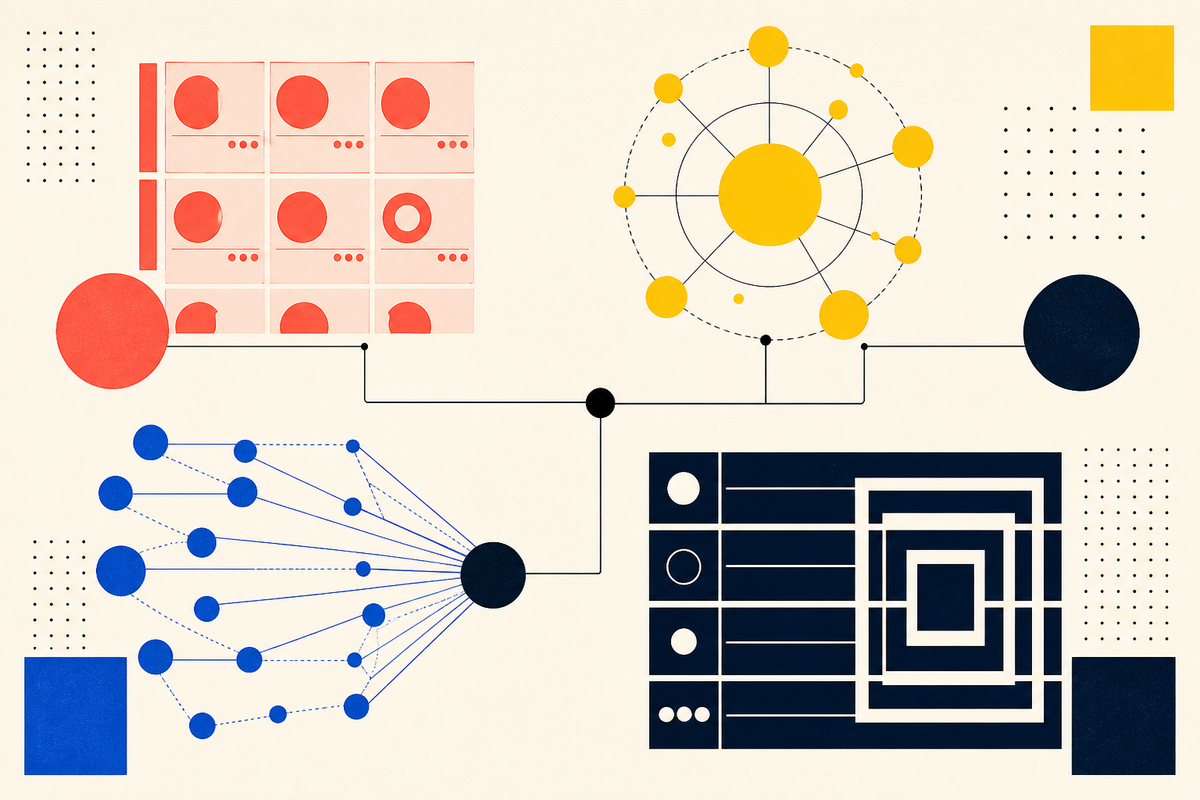
Stop Shopping for a Community Platform
Glue Up, Patreon, Common Room and Invision Community all sell “community.” What they actually sell are different answers to who belongs, who pays and what participation is worth.

The 57-Year-Old Data Company Quietly Sitting Under Modern Marketing
Acxiom began with mailing lists and one computer in Arkansas. Today, its identity layer helps global brands decide when scattered signals belong to the same person - and how to act on that knowledge without losing control of the data.

Treasure AI
Treasure Data spent 15 years teaching enterprises to recognize a customer across a maze of systems. Now, under a new name, it wants governed AI agents to turn that memory into action - without asking marketers to babysit another dashboard.

The AI Fight to Hear What Customers Actually Mean
Zeda.io and Unwrap are chasing the same stubborn problem: companies collect more customer feedback than their teams can understand. Their competing approaches show where AI product software is heading, and what buyers should demand before trusting the machine.
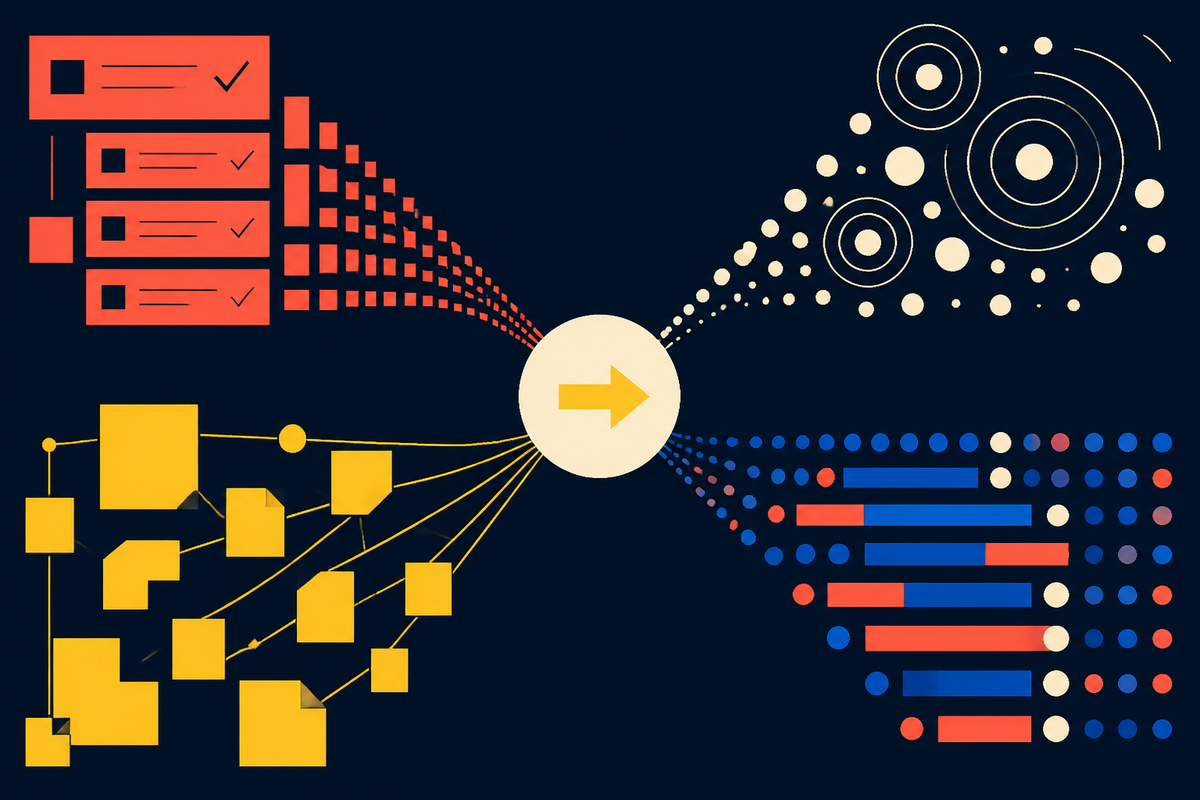
Four Research Tools, Four Very Different Jobs
Feathery, InMoment, Dovetail, and QuestionPro all promise a clearer view of the customer. The useful question is not which one wins, but which job your team actually needs done.
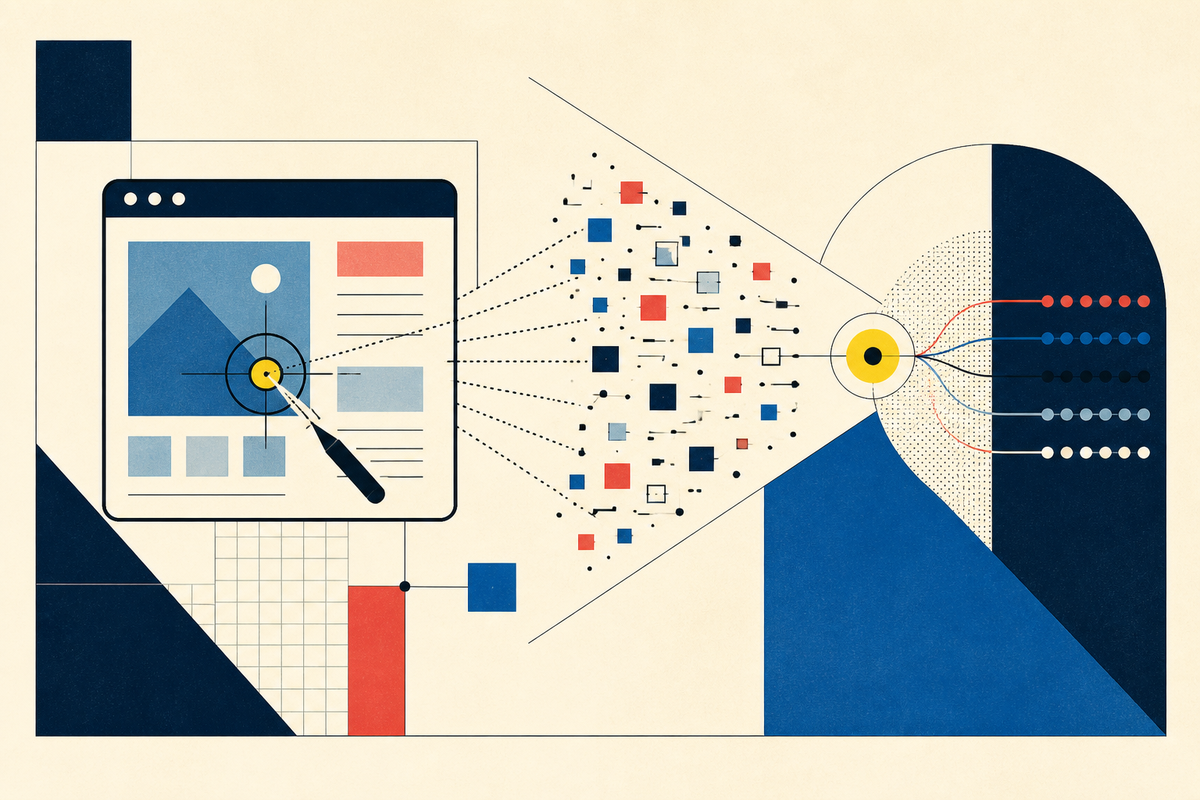
Marker.io and Unwrap Fix the Feedback Gap
Marker.io captures the bug in front of you. Unwrap finds the pattern hiding across thousands of customer comments. Together, they show why better products need both a sharp report and a wide-angle view.

SmartKarrot
The Dallas software company wants customer success teams to stop firefighting churn - and start engineering growth from the accounts they already have.

unitQ
The dating-app founders who got tired of guessing which bug to fix built a machine that reads every customer complaint on the internet - and tells you which one is costing you money.
Thematic
One trusted view of your customer, built from the bottom up across every channel - from raw feedback to confident action.
Unwrap
The AI-powered customer intelligence platform that proactively uncovers what matters most - so product teams stop guessing what their users actually want.

UserVoice
For nearly two decades, UserVoice has been the quiet infrastructure behind how big software companies decide what to build next - turning a flood of customer opinions into a ranked list of what actually moves revenue.

Unwrap Reads Every Angry Review So PMs Don't Have To
The AI feedback platform, built by two ex-Alexa product managers, folds support tickets, app reviews and social posts into patterns teams can act on. Microsoft, Lyft and Perplexity are paying to skip the guesswork.
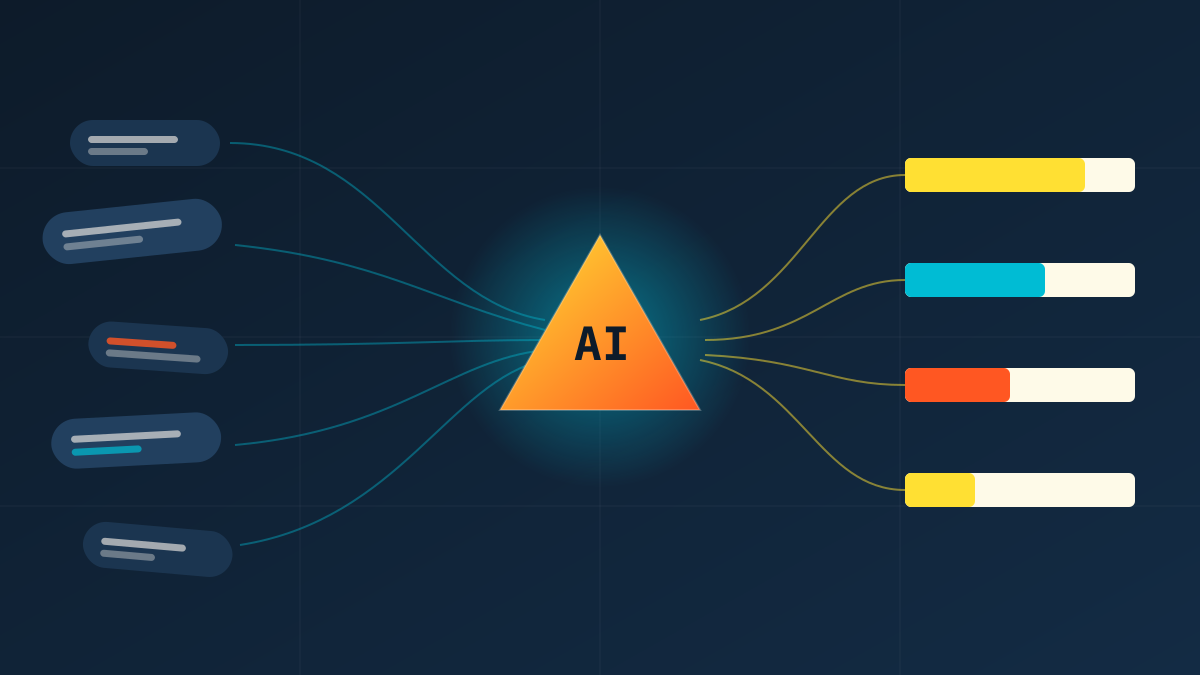
Unwrap Turns Customer Complaints Into a Product Roadmap
The Santa Barbara startup, built by two Amazon Alexa veterans, uses AI to read the reviews, tweets, and support tickets your product team never gets to - and tells them what to build next.
Idiomatic
Idiomatic built a machine that reads every complaint so support teams don't have to - one custom-tuned category at a time.

Feedier
Feedier reads every signal across regions, business units and channels, then tells your leadership what to fix, what it's worth, and what it means for retention and revenue, in real-time.

Common Room
The AI GTM Platform: Complete buyer intelligence. Real pipeline impact.

Poth Labs
Poth Labs is a San Francisco startup building an AI-native customer research platform. Poth connects to a company's scattered customer data - analytics, call transcripts, support tickets, surveys, CRM notes - and unifies it into a searchable model of the customer. It then generates hypotheses about why users behave the way they do, and validates them using existing data plus adaptive interviews that adjust to each response. The goal is to move product, growth, and leadership teams past knowing what users did toward understanding why. Founded in 2026 by ex-Palantir engineer Matthew Wong and ex-Tietoevry engineer Mojmir Horvath, Poth Labs is part of Y Combinator's Summer 2026 batch.

Dovetail
Dovetail is a Sydney-founded customer intelligence platform that pulls scattered customer signals - sales calls, support tickets, surveys, app reviews, usability tests - into one searchable place and uses AI to turn them into themes, dashboards and decisions. Started in 2017 by two ex-Atlassian employees, Benjamin Humphrey and Bradley Ayers, it began life as a repository for user researchers and grew into an organisation-wide intelligence layer used by roughly 40% of the Fortune 500, including AWS, Visa, Atlassian, Canva and Johns Hopkins. Accel led a US$63M Series A in January 2022 at a valuation north of US$700 million.

Total Expert
Total Expert is a Minnesota-based fintech company that builds a purpose-built customer engagement platform for banks, credit unions, mortgage lenders, insurance and wealth firms. Founded by Joe Welu in 2012, its CRM, marketing automation and AI-driven customer intelligence tools help financial institutions unify borrower data, spot lending opportunities in real time, and guide customers across financial milestones. It serves more than 200 financial institutions, including 15 of the top 25 U.S. banks and lenders.