A customer buys a guitar in Nashville, opens an email in Atlanta, browses an amplifier on a phone, and later visits the same retailer from a work laptop. The customer experiences one relationship. The retailer may see four unrelated records. Acxiom lives in that gap - the stubborn space between how people behave and how corporate databases remember them.
The company does not sell a consumer app, and most shoppers will never knowingly encounter its name. Its customers are the enterprises trying to turn scattered records into a usable view of a person, household, or audience. Acxiom cleans and connects data, resolves identities, adds licensed attributes, builds models, prepares audiences, advises on strategy, and moves the result into clouds, ad platforms, customer-data systems, and measurement tools.
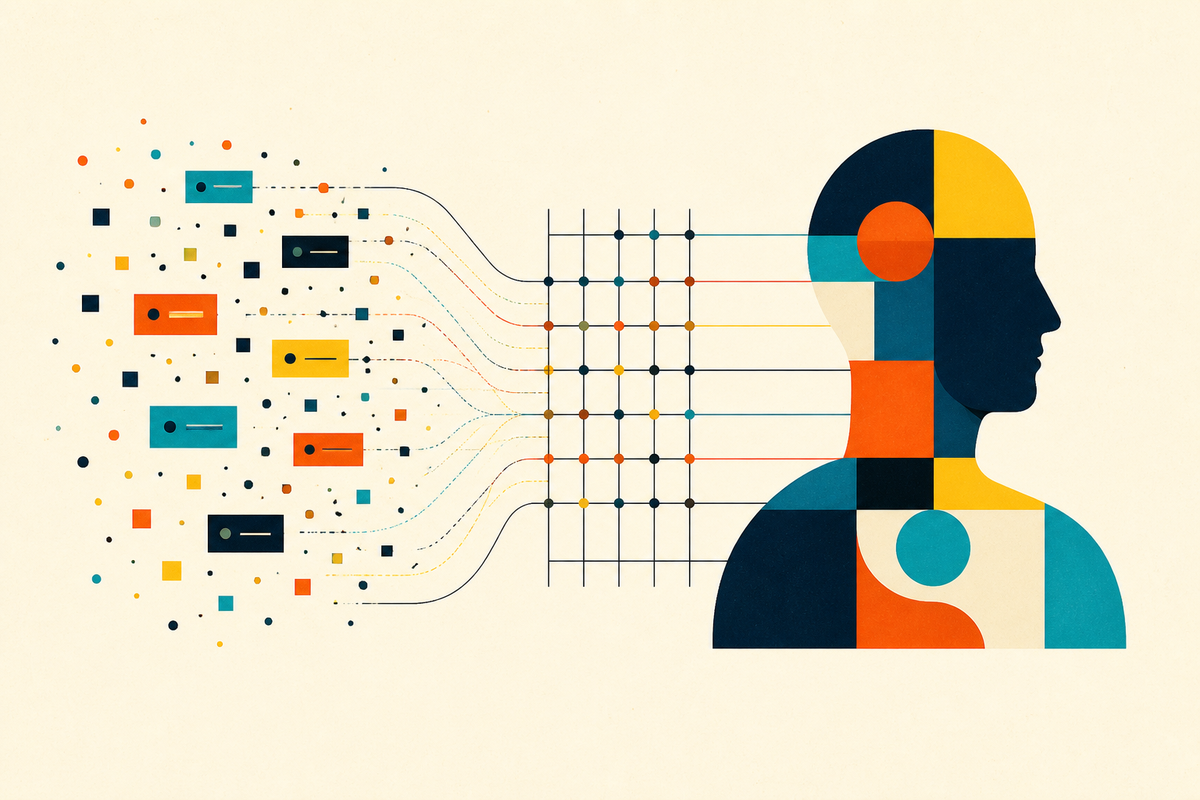
That makes it part software vendor, part data provider, and part deeply embedded consulting operation. The combination is not tidy, but neither is the problem. A bank may have decades of account history, a retailer may have loyalty and transaction data, and an automaker may depend on a network of dealers. Every one of them still has to answer the same basic question: are these records the same customer?
The original data startup was a room in Conway
Acxiom began in 1969 as Demographics, Inc., founded by Arkansas industrialist Charles D. Ward. The early setup in Conway reportedly included a single computer and printing press. Its work mixed political mailing lists with practical data processing - payrolls, utility billing, and whatever else could keep a small machine busy. Long before “customer 360” entered the conference vocabulary, the company was standardizing records so somebody could reach the right household.
Names changed as the ambition grew: Conway Communications Exchange, then CCX Network, then Acxiom in 1988. The company became a public database-marketing specialist and expanded through acquisitions. By the 2010s it operated at a scale that made it both useful to global marketers and uncomfortable to privacy critics. A 2012 New York Times investigation described an enormous commercial consumer database, sharpening public debate about how much data brokers know and how little people see of that machinery.
“The interesting Acxiom question is not how much data exists. It is whether a brand can turn that data into one accurate, governed decision.”YesPress analysis
Its corporate identity then split in a way that still confuses the market. In 2018, Interpublic Group agreed to buy Acxiom Marketing Solutions for $2.3 billion in cash. The remaining public corporation kept LiveRamp, adopted that name, and carried on as a separate identity-connectivity company. Today’s Acxiom is the acquired marketing-solutions business. LiveRamp is not its parent, subsidiary, or new name.
Those are historical transaction figures, not a current operating disclosure. Their value is perspective: Acxiom was already industrial infrastructure before the current rush toward AI. In November 2025, Omnicom completed its acquisition of Interpublic. Acxiom moved again, this time into the world’s largest agency grouping, where its Real ID technology now sits at the heart of Omni, the parent company’s operating platform for data, media, creative, commerce, and AI.
Identity first, intelligence second
The present product story begins with Real ID. It is Acxiom’s way of matching identifiers - postal addresses, hashed emails, phone numbers, account IDs, device and digital signals - to a persistent identity while preserving controls around how that result is used. The pitch is ownership and interoperability. A brand should be able to build an identity asset it controls, then use it across the technology it already owns.
Around that identity core sits Acxiom Data, advertised with more than 10,000 ethically sourced attributes and in-market signals; Acxiom Audiences for social, programmatic, connected television, retail media, and other activation channels; and data-collaboration capabilities for clean rooms and partner analysis. The services layer includes data strategy, quality work, cloud modernization, analytics, AI advisory, and implementation practices for Salesforce, Adobe, Snowflake, Databricks, and Google.
For a marketing chief, the use cases are concrete. Find likely new customers without spraying spend across a broad demographic. Recognize more anonymous website traffic. Suppress existing customers from acquisition campaigns. Build a retention model before expensive customers leave. Link ad exposure to a store purchase. Give a call-center agent a more complete view. Prepare reliable customer records before an AI assistant is allowed to recommend an action.
In July 2026, Acxiom expanded Digital Recognition, a Real ID-powered bridge between online signals and offline identity. It reported up to 50 percent higher recognition, a 10 percent increase in website conversion rates, and 57 percent lower cost per conversion in early client results. Guitar Center’s published case study offers the memorable retail example: 50 percent better recognition and 30 percent more profiles available for personalization.
The moat is experience with messy systems
Acxiom competes across several markets at once. Experian and TransUnion sell data and identity products. LiveRamp specializes in connectivity and activation. Epsilon and Merkle combine data with agency services. Treasure Data, Tealium, ActionIQ, Salesforce, and Adobe compete for the customer-data layer. Accenture and Deloitte can redesign an enterprise stack from the boardroom down.
Acxiom’s distinction is the bundle: data, identity, analytics, integration, governance, and people who will operate the machinery. It is deliberately open across major clouds and media destinations. Snowflake and Databricks integrations let customers resolve identity closer to where their data already sits, reducing duplication and movement. Its Salesforce practice stretches from planning through managed services. Its partner directory reads like a map of the modern advertising economy, from Amazon and Meta to Roku, Reddit, The Trade Desk, and Magnite.
Longevity matters here in a less glamorous way. Customer databases contain misspellings, household moves, inherited schemas, contradictory consent flags, duplicate accounts, and years of organizational politics. A clean demo can hide those conditions. Acxiom’s institutional expertise is in surviving them, particularly in regulated categories such as finance, insurance, and healthcare.
“We don’t win unless our clients win.”Acxiom’s stated operating principle
The culture mirrors that service posture. Acxiom emphasizes collaboration, inclusion, client outcomes, and responsible data use. Fortune and Great Place to Work placed it No. 36 among large technology workplaces in 2024, the fifth time it made that list. Its public recognition also includes disability inclusion and veteran employment. Those awards do not settle what daily work feels like, but they suggest the company understands that its product is partly the judgment of thousands of specialists.
Privacy is not a footnote to the product
The same capabilities that make identity resolution valuable make scrutiny inevitable. Consumers may reasonably ask where an attribute came from, whether it is accurate, who can use it, and how to opt out. Acxiom publishes regional privacy notices and consumer-rights instructions, and it frames its data as ethically sourced. It also sells governance, security, and clean-room controls as part of the solution.
That posture is commercially necessary, not merely reputational. A mistaken match can waste money; a poorly governed one can violate trust or law. As third-party cookies fade and AI systems consume larger pools of enterprise data, provenance and permission become operating requirements. The winning identity layer will not simply make more matches. It will make defensible matches and preserve a record of what may happen next.
This is also where Acxiom’s place inside Omnicom becomes strategically interesting. Self-serve platforms and generative tools are making pieces of campaign execution cheaper. Agency groups need assets that are difficult for a client to reproduce quickly. A connected identity foundation, tied to media, commerce, creative production, and measurement, is one such asset. Acxiom gives Omnicom a data spine rather than another dashboard.
From batch files to agentic decisions
Acxiom’s newest language is AI strategy, AI-ready data, and agentic marketing. The sober interpretation is more useful than the fashionable one. An AI agent acting on broken identities will make bad decisions faster. Before automation can select an audience, generate an offer, or change a customer journey in real time, somebody must reconcile the underlying person, permission, context, and history.
That puts Acxiom in a peculiar market position: an old company selling the precondition for a new technology wave. Its future depends on proving that decades of data work translate into cloud-native speed without importing the closed, opaque habits that made data brokers controversial. The product must be open enough for brands to control, connected enough to be useful, and governed enough to trust.
The company’s history offers a neat final symmetry. In 1969, the technical challenge was turning local records into a list that could reach the right household. In 2026, the list has become a graph, the household has acquired dozens of identifiers, and the message may be chosen by software in milliseconds. Yet the essential job remains recognizable: decide what belongs together, make it accurate, and put it to work.