Joseph D. Lee has spent much of his life noticing the gap between a signal and its meaning. He was born in Columbus, Ohio, then grew up in Seoul, Boulder and Boston before making a home in San Francisco. In his own account, moving across those places left him living between rhythms: between cultures, between what is said and what is meant, between technology and human context. The line could sound like the tidy origin myth founders often discover after the fact. In Lee’s case, it also describes the practical problem he has now chosen twice.
His first AI company taught machines to notice defects on a factory line. His second teaches them to notice the small frictions hiding in support chats, reviews and, increasingly, social video. One inspected the physical surface of a product. The other inspects the sprawling conversation around it. Both begin with the same suspicion: important evidence is present, but a human team cannot process enough of it in time.
Lee is the co-founder and CEO of Syncly, a San Francisco company from Y Combinator’s Winter 2023 batch. The company first became known as an AI customer-feedback platform. It connected the places where customers speak - Intercom, Slack, Zendesk, Front, reviews and other channels - then categorized what they were saying, tracked sentiment and pushed useful patterns toward the teams that could act. The promise was not a more decorative dashboard. Lee wanted users to reach value in 30 minutes.
“The great product is built based on customer feedback.”Joseph D. Lee, Across the Funnel podcast
The first machine looked for scratches
Lee’s belief in AI was earned in a less fashionable setting: manufacturing. He helped found SUALAB in 2015, when the company began applying machine vision to quality inspection. The task was concrete. A factory needed to catch the flaw on a polished surface or a manufactured part, and a system that could identify patterns reliably could alter the economics of the line.
SUALAB grew and was acquired in 2019 by Cognex, the American machine-vision company that had once been a competitor. The reported price was $200 million. In an interview years later, Lee distilled the experience into two convictions. AI could change how people work. And the reason an inexperienced team had managed to grow was its care for what customers felt about the product.
The first conviction explains the technology. The second explains the company he built next. After SUALAB, Lee completed an MBA at Harvard Business School in 2021. By 2022 he was back at the starting line with Syncly and co-founders Kwan Yoon and Jongsoo Keum. There was no factory this time. There was an inbox full of human ambiguity.
An Airbnb, some cold emails and a fire
Before Y Combinator began in January 2023, the Syncly team spoke with prospective customers through introductions and cold outreach, looking for a “hair-on-fire” problem. During the batch, the founders worked from an Airbnb in San Francisco, talking to users and building the product. It is a wonderfully uncinematic scene: three second-time founders, one successful exit behind them, once again asking strangers what hurts.
They found pain in abundance. Companies collected thousands of support tickets, survey answers, sales calls and reviews, then relied on manual tags or heroic spreadsheet work to understand them. By the time a pattern reached a roadmap meeting, the damage might already be visible in churn. The problem was not a shortage of feedback. It was a surplus without structure.
The Syncly loop: from noise to a decision
Lee’s most useful distinction is that listening does not mean obeying. A customer request is not a command slipped under the product manager’s door. It is evidence of an underlying job. His method is to ask for the root cause, then map that cause to the company’s mission. Feedback guides the route; it does not grab the wheel.
That nuance matters because customer-centricity easily becomes either theatre or surrender. A team can display quotes in a slide deck and change nothing. It can also chase every request until the product resembles a garage after a decade of impulse purchases. Lee’s approach asks for something more demanding: interpretation.
The founders leave the dashboard
In 2023, Syncly announced a $3.3 million seed round led by SoftBank Ventures, with participation from Y Combinator, 500 Global, Rebel Fund, Fast Ventures and Sendbird co-founder John S. Kim. Funding gave the company room to build integrations and refine the analysis. It did not make the founders outsource the listening.
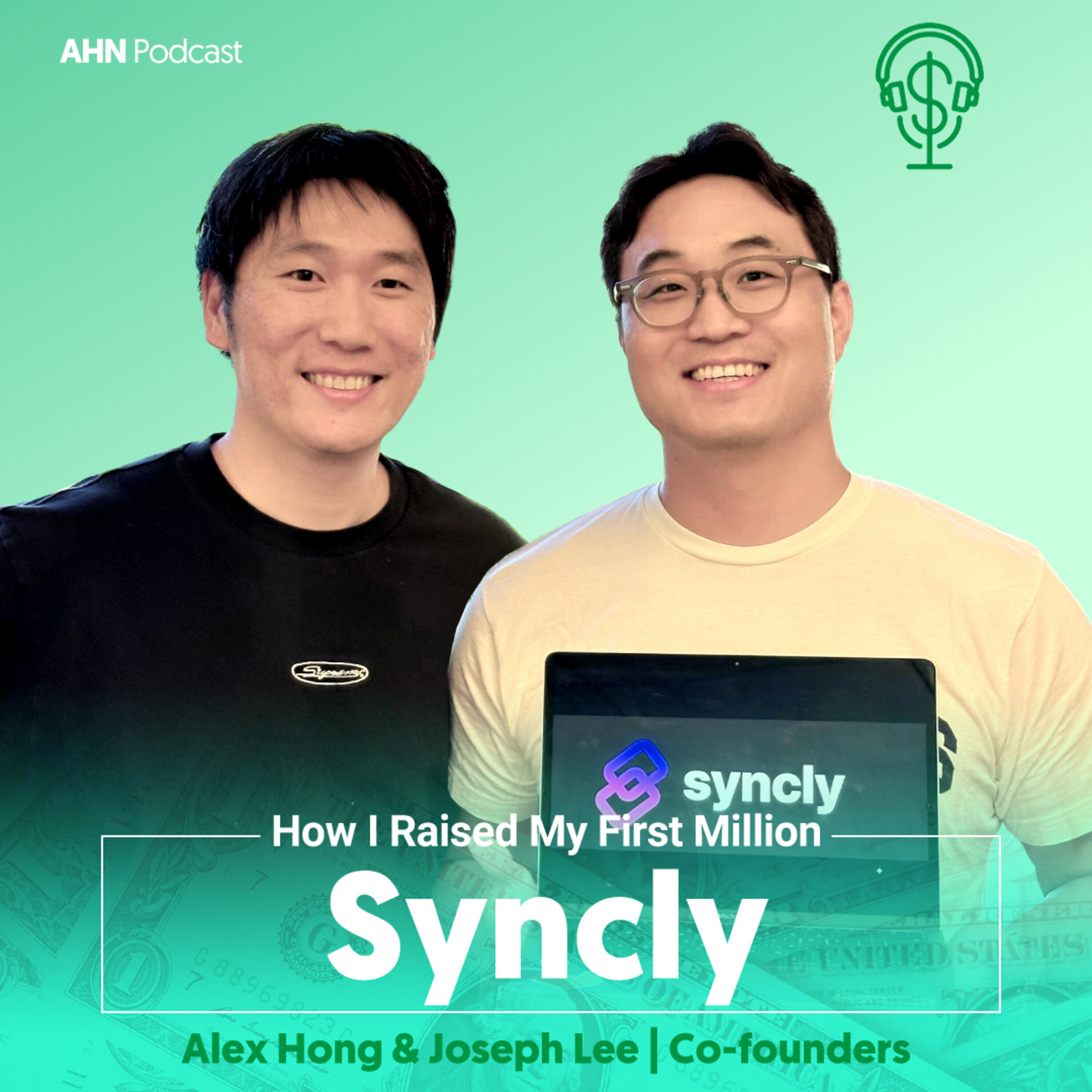
In 2024, Lee and co-founder Alex Hong went on a customer tour. Lee later wrote that Syncly was selling more than software. Customers were also paying for the founders’ attention and the promises they made. The statement is risky in the healthy way. Features can be benchmarked. Trust keeps its own books.
The tour produced a blunt lesson: insight is only as good as the action it drives. At crypto-data company Nansen, Syncly helped turn a mass of feedback into larger themes that could enter a roadmap and prioritization process. The saving was not merely time spent reading. It was the distance removed between a customer’s experience and a product team’s decision.
“Insight is only as good as the action it drives.”Joseph D. Lee, reflecting on Syncly’s 2024 customer tour
The customer tour also reveals Lee’s temperament more clearly than a list of titles could. He is drawn to systems, but suspicious of the context they erase. He believes in automation, then gets on a plane to hear the thing automation might miss. This is less contradiction than maintenance. A listening machine needs its ears calibrated in the world.
A pivot that kept the same question
Syncly’s current front door looks different from its early one. The company now describes itself as social listening for the video era. Its AI analyzes what happens inside video - frames, spoken words, sound and creative style - instead of depending only on captions, tags or profile metadata. A marketer can describe a creator in ordinary language, down to a visual mood or storytelling style, and search by the substance of the work.
The move from support tickets to TikTok-style video may look like a change of subject. It is better understood as the same obsession entering a noisier room. Traditional tools can tell a brand that a creator has a certain follower count. They struggle to say whether she films a chatty morning routine in soft window light, or mentioned a competitor without using a tag. Again, the signal exists. Again, meaning is trapped inside a format that does not volunteer it politely.
Y Combinator’s current company profile reports Syncly at $2.1 million in annual recurring revenue, with ARR doubling over six months and quadrupling over twelve, alongside 142 percent net dollar retention. It lists a 15-person team serving brands including Tiffany and Clorox. Those numbers belong to a company still in motion, not a completed parable. They do suggest that the new room contains people willing to pay for better ears.
The founder as translator
Lee has called himself someone who lives between two rhythms. The phrase gives his work a human scale. Software companies often speak of unstructured data, as if the mess were a property of the information. Usually the mess is life: a customer angry at the start of a chat and relieved by the end; a product request carrying an unstated fear; a video communicating through lighting, gesture and tone before anyone reads its caption.
Translation does not clean those signals into perfect truth. It preserves enough context to make a better decision. That is the thread from a factory camera to a support inbox to a social feed. Lee’s career is not simply a bet on AI getting smarter. It is a bet that organizations can become more attentive when machines do the first exhausting pass and people retain responsibility for the meaning.
There is also a modest founder playbook here. Find the expensive act of interpretation. Sit with the people performing it. Get them to value quickly. Ask why beneath the request. Leave the dashboard when trust requires a visit. Let the product change without abandoning the durable question.
After a nine-figure exit, Lee returned to cold emails and a shared Airbnb. That may be the most telling fact in the story. Success had answered what AI could do. It had not answered what was worth hearing next.