The useful clue arrived after dark. Erin Condon’s team had been studying when people visited CVS Pharmacy stores and noticed traffic rising outside the ordinary shopping day. A dashboard could have filed the bump under “late night” and moved on. Condon’s group asked the second question. In which markets was it happening, and what had changed around those stores? The answer was mundane enough to be valuable: nearby competitors had closed for the evening. Customers still needed a place to go.
The team turned that local pattern into content for markets with a concentration of 24-hour CVS stores. From the first signal to live creative, the job took less than seven days. A conventional campaign cycle might have taken six to eight weeks. The work produced lifts in trips, sales and engagement, but its more revealing output was organizational. A business with thousands of locations had found a way to notice a small behavior and answer while the behavior still mattered.
That episode contains the operating philosophy Condon has developed as senior vice president and chief marketing officer of CVS Pharmacy. She calls it going “one click deeper.” A piece of data is an invitation, not a conclusion. The marketer’s job is to find the insight behind the insight, then decide whether the brand has a useful reason to act.
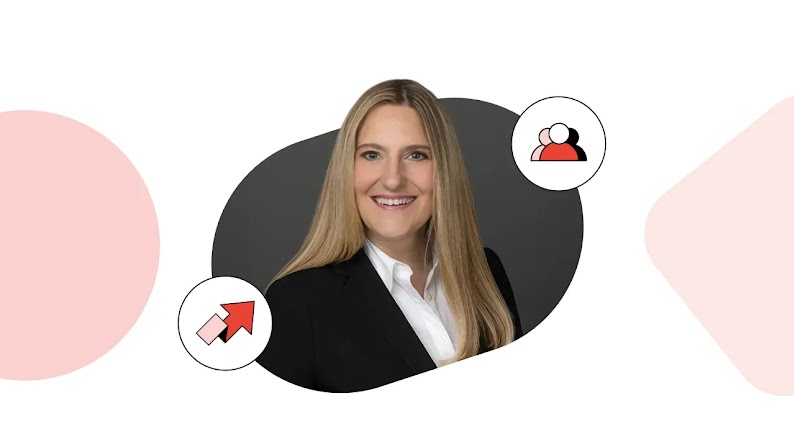
The formationAn economist walks into the aisle
Condon did not begin with the mythology of advertising. She studied economics at Babson College, graduating with honors in 1998, then earned an MBA in marketing and finance with honors from Notre Dame’s Mendoza College of Business. The pairing is a neat preview of her career: the discipline to count, paired with the judgment to interpret what people choose.
Her early work crossed ARAMARK and Discover Financial Services before moving into the college-savings world of Upromise and Sallie Mae. There she worked on acquisition, onboarding, digital experience, analytics and brand awareness, eventually serving as president of Upromise. The category was different from retail pharmacy, but the underlying puzzle was familiar. A loyalty business has to turn an abstract future benefit into an action somebody will take today.
Economics at Babson, then an MBA in marketing and finance at Notre Dame.
Marketing leadership across Upromise and Sallie Mae, culminating in the presidency of Upromise.
Joins CVS Health to lead digital-adoption marketing.
Moves into front-store and omnichannel marketing leadership.
Named permanent CMO of Pharmacy and Consumer Wellness after serving on an interim basis.
Co-authors research connecting spontaneous brand associations with later customer spending.
When Condon joined CVS Health in 2015, her remit was digital adoption. Three years later, she became vice president of front-store and omnichannel marketing. The title covered an enormous seam: physical shopping and digital behavior, brand building and demand capture, loyalty communication and the experience inside a store. She helped develop the company’s digital marketing capability far enough to support cMx, the CVS Media Exchange, a retail media network that could use the retailer’s data and creative assets for more tailored campaigns.
By July 2023, Condon was serving as interim chief marketing officer for Pharmacy and Consumer Wellness while continuing her existing responsibilities. CVS made the role permanent in January 2024. She took charge of brand and creative strategy across a system that includes prescriptions, front-store retail and in-store services, along with the internal creative agency and media operation. It was less a departure than the widening of a problem she had been solving for years: make a large organization feel attentive.
“There is no shortage of data. The challenge is really sifting through what is most important.”Erin Condon on actionable insight
The principleWhen a mark changes the merchandise
One of Condon’s most visible projects began with an image problem. Beauty advertising had long treated retouching as an invisible production step. CVS introduced the Beauty Mark to identify imagery that had not been digitally altered, and asked partner brands to join a broader transparency commitment. Condon was part of the team behind the effort.
Her explanation moved between the aisle and the dinner table. A retailer, she said, had an opportunity to make the beauty section a constructive place to shop. She also thought about her three daughters seeing faces that had not been thinned or smoothed into impossible geometry. The policy turned a creative convention into a customer promise, then made the promise legible with a small symbol.
The Beauty Mark later received industry recognition, including a 2020 ADC Merit honor. Condon’s own measure of the work was broader. She cited it as an example of a purpose-driven move that could benefit customers and still have business impact. This is an important distinction in her playbook. Principle does not sit in a separate corporate campaign. It changes what appears on the shelf, screen and sign.
The systemA machine for noticing
At CVS Pharmacy, Condon has assembled strategists, analysts and planners around what she describes as a customer intelligence function. The group combines first-party behavior, outside data, search, social conversation and qualitative feedback. The ambition is not to collect everything. It is to detect what matters now, examine it closely and make an informed decision quickly.
The need comes from fragmentation. Two people under the same roof may watch different feeds, follow different creators and expect different things from a brand. Averages can describe the household while missing both humans inside it. “One click deeper” is Condon’s answer to that flattening. It asks the team to search for the cause, context or local detail hidden underneath the first observation.
Her 2026 research makes that listening habit unusually concrete. Working with Srikant Narasimhan and three academic collaborators, Condon examined responses from more than 9,000 shoppers. Instead of relying only on ratings, the researchers asked what words, feelings and experiences came to mind around a brand, then followed spending for three months. Each additional positive association correlated with an 18 percent spending lift; each negative association correlated with a 12 percent decline. Some associations were worth as much as five times others.
The implication is useful for any executive staring at a tidy score. A rating tells you how much. Spontaneous language may tell you why. It can show a team which parts of an experience carry economic weight and which attractive-sounding ideas barely move behavior. Condon’s economics training and her creative remit meet in that method. The words remain human, but they become operational.
The portfolioProtecting a place for the big swing
Speed creates its own temptation. A team that can respond in days may spend all its time responding. Condon manages that risk with a simple portfolio: 60 percent tried and true, 30 percent moderate risk, and 10 percent “big swing” innovation. The proportions make exploration a funded category rather than an aspiration squeezed between deadlines.
The experiment portfolio
A practical allocation for proving today while learning about tomorrow.
Her defense of the smallest slice is blunt: if nothing goes into the big-swing category, somebody else will innovate first and CVS will be left catching up. The point is not novelty for its own sake. Retail convenience is easier to copy, and commoditization punishes brands that wait. A protected ten percent creates a way to learn before certainty arrives.
The same logic shaped CVS Pharmacy’s early partnerships with college athletes after name, image and likeness rules changed. Local athletes offered a national brand a credible connection to hometown audiences. Condon called the prospect exciting and a little daunting. That modest note matters. Localization can make scale feel personal, but only if the national brand is willing to give local context real room.
The peopleThe audience already wearing the badge
Condon’s other audience is inside the company. She argues that front-line colleagues should receive the same serious attention as customers. They need to know what the brand is saying and why it is saying it. In a retailer, the person in the advertisement and the person across the counter may be the same colleague. Internal understanding becomes part of the external experience.
CVS Pharmacy has used real store and pharmacy colleagues in its advertising, including authentic voiceovers. Condon summarizes the choice in five words: “Our people are truly the face of our brand.” It is both a creative position and an operating fact. A campaign can promise familiarity, service or welcome. A colleague eventually has to make that promise believable.
That concern for people also appears in the way she talks about leadership. Condon has written publicly about the difference between mentorship and sponsorship, emphasizing the leader’s responsibility to advocate for talent in rooms where that person is absent. Colleagues who have recommended her describe a manager who combines big-picture strategy with analytic detail and who works deliberately on people’s strengths and gaps. Her own interviews keep returning to developing the next generation of marketing talent.
“I see a world five to 10 years from now where the marketing profession is made up of what I call ‘critical-thinking athletes.’”Erin Condon on the next marketing team
The next moveGrit, fluency and the second question
Condon’s “critical-thinking athlete” is not a narrow specialist. The phrase describes someone able to absorb a shifting environment, interrogate a signal, use technology and keep moving when the easy answer fails. She names resilience, grit and technological proficiency as future requirements. The athletic metaphor fits the system she has built: preparation before the moment, judgment inside it, review afterward.
Her near-term priority is more personalized content, while balancing performance programs with the slower work of building trust. That balance is the CMO’s two-clock problem. One clock measures this quarter’s response. The other measures whether a customer will choose the brand again. Condon’s research suggests the clocks are connected by associations accumulated one interaction at a time.
The late-night campaign is therefore more than a case study about quick production. It is a compact lesson in attention. The team found a pattern, resisted the urge to label it too early, discovered a local cause and acted in a useful window. Condon’s career has followed a similar movement from acquisition metrics to loyalty systems, from digital adoption to omnichannel retail, and from campaign leadership to the design of a marketing organization.
Her most transferable idea may also be the quietest. Go one click deeper. Ask why the number moved, which words sit behind the score, who must understand the promise, and what small portion of the plan is protected for discovery. Data supplies the first question. Judgment earns the second.