A bug arrives with the confidence of a crime report and the detail of a shrug: “The page is broken.” Which page? On what device? Before or after the user clicked? The developer asks. The client rummages for a screenshot. Someone opens a Slack thread. By the time the clues are assembled, the small problem has recruited five people and stolen half a morning.
Then there is the opposite failure. The company has too much evidence. Support tickets, app reviews, sales calls, survey answers and posts are all saying something, but no single person can read the pile. The urgent anecdote wins the meeting. The quieter pattern waits another quarter.
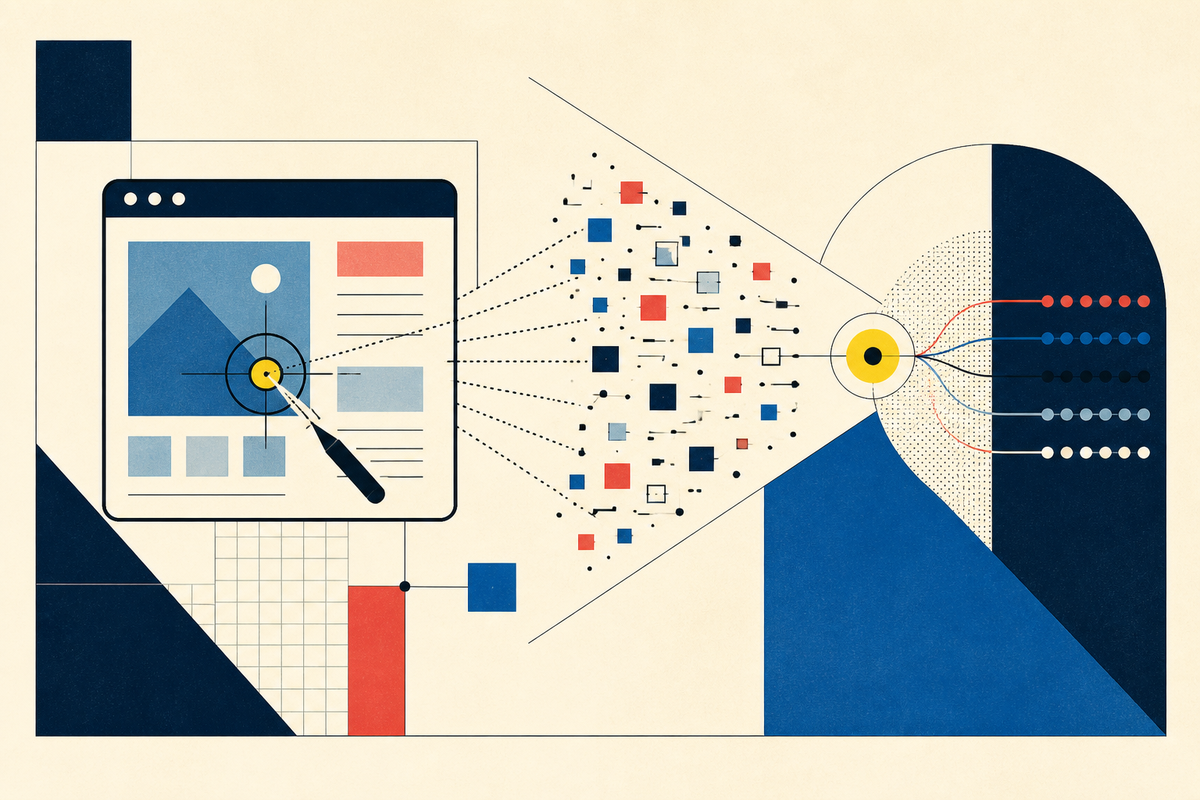
Marker.io and Unwrap occupy those two ends of the feedback problem. They are not a merger, and public sources reviewed for this story do not show a native integration. They are better understood as two lenses. Marker.io is a close-up: point to a web issue, annotate it, preserve the technical context and route it to the system where work gets done. Unwrap is the wide shot: connect many streams of qualitative feedback, detect themes and changes, and put a pattern in front of a product or customer-experience team.
A clean ticket is not a product strategy. A trend line is not a reproducible bug.Two scales of evidence, two different jobs
Marker.io begins with the pixel
Marker.io’s origin story is satisfyingly unglamorous. In 2015, co-founders Gary Gaspar, Olivier Kaisin and Emile-Victor Portenart were running a web agency in Brussels. Gaspar has described doing quality assurance on a complicated client application and manually making a Trello card for every error. Hundreds of errors later, annoyance became a product brief.
The resulting tool puts a feedback widget on a website. A reporter can point at the problem, take a screenshot, annotate it and submit without holding a Marker.io account. The report can carry browser, operating system, screen size, console logs and network information. It then syncs with tools such as Jira, Trello, GitHub, Asana, Linear, ClickUp and Notion. The practical value is not the screenshot itself. It is the reduction in translation between the person who saw the problem and the person expected to fix it.
Marker.io says its customers report three times more bugs and resolve them 50 percent faster. Those are vendor figures, useful as a description of the company’s claim rather than an independent benchmark. The sturdier point is observable in the workflow: structured evidence saves a developer from asking the first round of questions. For agencies, web teams, QA and user-acceptance testing, that can be the difference between a task entering the queue intact and dissolving into chat.
Unwrap begins with the pile
Unwrap started at a different altitude. Co-founders Ryan Millner and Ashwin Singhania had worked together at Graphiq before Amazon acquired it in 2017. On the Alexa team, they faced feedback measured in tens of thousands of support tickets, plus reviews, Reddit posts and other channels. The customers were speaking plain English. The product managers lacked enough hours to listen.
Their 2021 insight was to aim natural-language processing, technology familiar from Alexa, at customer feedback. Unwrap launched with a small team, raised a $4 million seed round in January 2022 and named Microsoft, Lyft, Oura, JetBlue and Perplexity among its early adopters. In January 2025, Fortune reported that Unwrap raised a $12 million Series A led by Scale Venture Partners, with Atlassian Ventures and others participating.
The product connects surveys, support tickets, calls, reviews and social sources. It automatically groups feedback, tracks sentiment and changing themes, offers natural-language queries, creates dashboards and sends alerts when an issue emerges. Unwrap says it can sync from more than 3,000 tools and complete setup within two weeks. Its pricing is based on feedback volume rather than a public flat plan.
The appeal is leverage. A GitHub Copilot product manager quoted by Unwrap said a monthly task fell from 15 to 20 hours to one or two. Again, that is a customer testimonial published by the vendor, not a controlled study. It still captures the job neatly. Unwrap is selling time that would otherwise be spent tagging, sorting and preparing the meeting before the meeting.
The handoff is where value lives
It is tempting to turn this into a product cage match. That would confuse category with task. Marker.io is designed for a concrete website issue that somebody can point to. Unwrap is designed for a large body of qualitative language that somebody needs to interpret. A checkout button that fails on mobile needs a reproducible record. A six-month rise in complaints about checkout friction needs synthesis. Both may describe the same product weakness, but they should not enter the organization in the same shape.
A sensible feedback architecture preserves the source at every stage. Keep the screenshot, the console data, the original comment, the channel and the date. Then allow software to compress the pile without severing the line back to the evidence. A cluster called “login friction” is only useful if a skeptical product manager can inspect the complaints underneath it.
This is also where AI deserves restraint. A model can rewrite a vague description, suggest a title, cluster related comments or flag a jump in volume. It cannot decide whether the problem fits company strategy, whether the sample is biased, or whether a painful issue affecting a small population carries legal or ethical weight. Frequency is information. It is not morality.
A buying test built around decisions
Before shopping, write down the decision your team cannot currently make. If developers repeatedly ask reporters for browser details and screenshots, test a visual issue-capture tool. If product reviews require days of manual coding across many channels, test a customer-intelligence platform. If both are true, define the handoff between them before adding software. Otherwise the organization may simply build a cleaner set of silos.
Run a short pilot against old evidence. For Marker.io’s category, ask five non-technical stakeholders to report the same staged bug and measure whether an engineer can reproduce it without a follow-up. For Unwrap’s category, import a known period of feedback and see whether the system rediscovers an issue your team already found. Then inspect false groupings, missing context and the route from insight to owner. A polished dashboard is easy to admire. A changed decision is harder to fake.
Security belongs in that pilot. Marker.io says it is SOC 2 Type II compliant, GDPR-ready and hosted with European data centers; Unwrap advertises SOC 2 Type II, GDPR compliance, single sign-on, activity monitoring and automatic PII redaction. Buyers handling health, financial or employee data should verify the controls, retention settings and contractual terms for their own use case rather than treating a badge as the end of diligence.
Do not let the metric eat the story
Once feedback becomes structured, managers naturally want a score. How many issues arrived? How quickly did the team close them? Which theme grew fastest? These measures can expose a stuck workflow, but they also invite gaming. A team can shorten resolution time by closing weak reports. A popular theme can swell because an easy-to-find survey asks about it. A small accessibility defect can rank below a cosmetic complaint even when its consequence is much greater.
The antidote is to pair every operational metric with a quality check. Sample closed tickets and ask whether the reporter’s actual problem was solved. Review a growing theme and ask whether one channel, market or customer segment dominates it. Look for absence as well as volume. People who cannot complete a flow may never reach the widget that asks what went wrong. Customers who have already churned will not appear in this week’s support queue.
A useful monthly review can stay small. Bring one sharply documented issue, one rising cross-channel pattern and one piece of contradictory evidence. Ask what the team changed, what it chose not to change and what would reverse that choice. Then record the reasoning beside the underlying evidence. This gives future colleagues something more durable than a dashboard snapshot: a trail from observation to judgment.
That trail is the quiet promise behind both categories. Better capture reduces argument about what happened. Better synthesis reduces argument about whether it is isolated. Neither removes disagreement about what to do. It makes the disagreement specific enough to be useful.
The best lesson from these two companies is not that every team needs two subscriptions. It is that listening has resolution. Zoom too far in and every complaint looks like a priority. Zoom too far out and the customer becomes a colored bar. The useful practice is moving between scales without losing the person, the evidence or the owner.
Feedback earns its place when it survives the trip from complaint to decision.The operating principle
Frequently asked questions
What is the main difference between Marker.io and Unwrap?
Marker.io captures and routes visual website bugs and feedback. Unwrap aggregates and analyzes customer feedback from many channels to surface themes, trends and alerts.
Are Marker.io and Unwrap competitors?
They overlap in the broad feedback category but focus on different jobs. Marker.io centers on website QA and issue reporting; Unwrap centers on organization-wide customer intelligence.
Can the two products be used together?
Conceptually, yes. A team can pair a visual reporting workflow with a separate intelligence layer. Public sources reviewed for this story do not establish a native integration.
Who is Marker.io best suited for?
Agencies, QA teams, web teams and stakeholders who need screenshots, annotations and technical context attached to website issues.
Who is Unwrap best suited for?
Product, customer-experience and leadership teams analyzing large volumes of feedback from support, reviews, surveys, calls and social channels.