ai-education
(25)
The Produce Aisle Needed a Marketing Department
DMA Solutions spent two decades teaching fruits and vegetables to behave like brands. Its trick is less glamorous than a viral post: know the crop, earn trust, and keep showing up.

DIGITALENT’s bet: buy the schools, close the skills gap
A Spanish education group has brought business, law, coding and vocational schools under one roof. Its next test is teaching people to work with AI while keeping the classroom connected to the job.

What AED 1,500 Buys at Dubai Business Women Council
A membership buys access to workshops, mentors and a business community. Dubai Business Women Council’s real proposition is what women can learn to do once they get there.

1105 Media Knows Who Buys the Boring Stuff
Software, school technology, workplace safety: 1105 Media gathers the people who make specialized buying decisions. Its business turns that attention into publications, paid learning and introductions worth selling.

Gaiax wants its employees to outgrow the company
The Tokyo startup studio lets teams turn their departments into independent businesses. Its next experiment asks what happens when those businesses share more of what they know.

Greg Shove Has Survived Seven Startups. Now He Wants to Rewire the Company.
After 30 years of pivots, exits, bruises and board meetings, the Section CEO is betting that AI will change companies only when their leaders change first.

Akshay Sanghai Is Building an English Classroom That Talks Back
The MySivi co-founder left large-company engineering for a harder systems problem: giving millions of learners a patient place to practise, make mistakes and speak again.

Mattia Mauro Is Building the Tutor He Wanted for His Little Sister
A physics tournament, a broken childhood computer, and one stubborn question about how students really learn led Mattia Mauro from research and investing to the classroom.
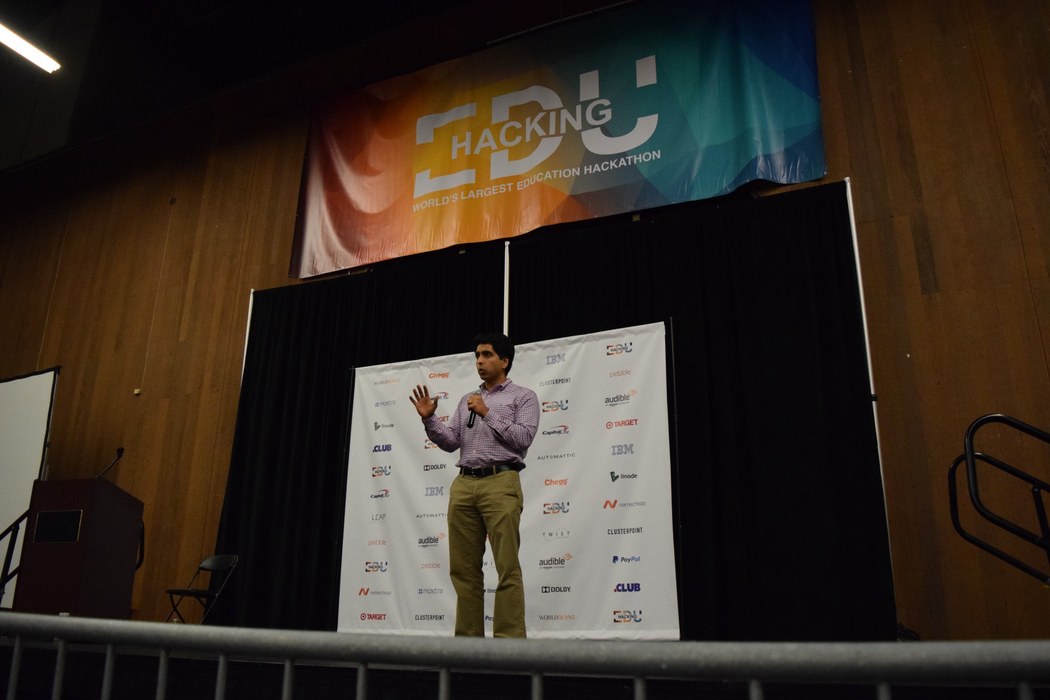
Sal Khan on Job Shock: How AI Will Reshape Work and Learning
In this podcast interview, Khan Academy founder Sal Khan discusses his forthcoming book 'Job Shock' and his growing concern that AI-driven automation will dislocate entire categories of workers—call center staff, drivers, and even software engineers, designers, and product managers—over the next three to five years. He argues that safe jobs are those that lean into human connection (teaching, nursing, hospitality, sales), describes how Khan Academy is transforming internally with AI agents (running a ~$1.2M/year Anthropic bill), and unveils the Constellation Institute, a new accredited program offering a full degree for under $10,000 that emphasizes 'durable skills' like communication, collaboration, creativity, and critical thinking, co-designed with employers such as McKinsey, Bain, Google, Microsoft, Replit, and Accenture.

Vu Van
Vu Van is the Vietnamese-born co-founder and CEO of ELSA (English Language Speech Assistant), an AI-powered app that gives non-native speakers instant feedback on English pronunciation, fluency and intonation. She built the idea out of her own struggle to be understood as a Stanford graduate student, teamed up with speech-recognition scientist Xavier Anguera, and has grown ELSA into one of the world's largest AI language platforms, with tens of millions of users across roughly 190 countries. She is a World Economic Forum Technology Pioneer and Endeavor entrepreneur.
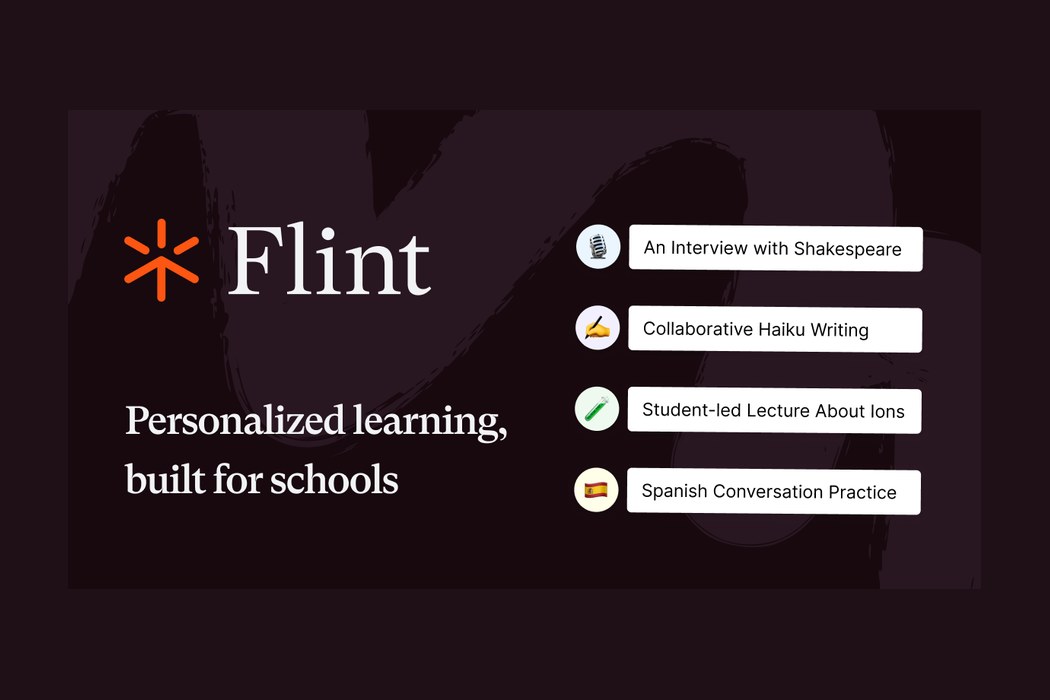
Flint
Flint is an AI-powered personalized learning platform built for K-12 schools. It lets teachers design AI tutors, activities, and assessments that adapt to each student across every subject - from language speaking practice to guided science labs - while giving educators real-time visibility into student progress without adding to their workload. Founded in 2023 and backed by Y Combinator, Flint raised a $15M Series A in November 2025 and serves hundreds of schools and hundreds of thousands of students worldwide.
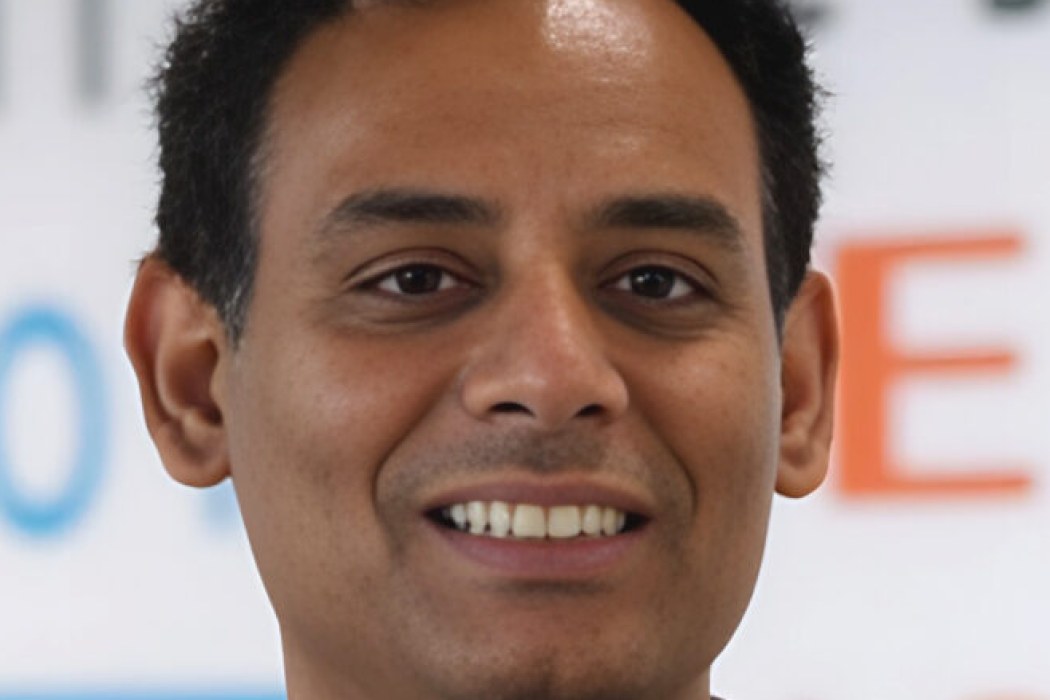
Karun Tadepalli
Karun Tadepalli is the co-founder and CEO of byteXL, a Hyderabad-based edtech company that partners directly with engineering colleges across India to close the gap between what students learn and what the tech industry needs. After roughly two decades in the US working for companies like Accenture, Health Management Systems and AT&T, he left a corporate career to build a B2B skilling platform now used by more than 100,000 students. Under his leadership byteXL has partnered with dozens of institutions and, in 2024, teamed with Microsoft to launch AI and machine learning B.Tech specializations at universities across the country.

Woolf
Woolf is the first global collegiate university built as software: qualified organizations - companies, nonprofits and academic groups - join as member colleges and issue genuinely accredited degrees. Licensed in Malta and carrying European ECTS credits recognized across 50+ countries, Woolf turns accreditation into an API. Its Airlock product lets education providers plug in, benchmark their learning content, and award credits that stand up to regulatory scrutiny. Founded in 2018 by former Oxford philosopher Joshua Broggi, Woolf partners with Saïd Business School (Oxford), Harvard Business Publishing and Udacity to make credible degrees faster, cheaper and portable across borders.

Ariel Quinones
Ariel Quinones is the co-founder and co-CEO of Ironhack, a global tech bootcamp he launched in Madrid in 2013 with Gonzalo Manrique after the two met at Wharton. Raised in a Puerto Rican family of educators, he spotted a mismatch he could not unsee: youth unemployment above 50% in Spain sitting beside hundreds of thousands of unfilled tech jobs. Ironhack was his answer - short, intensive, outcomes-obsessed training that has since graduated thousands of career-changers across campuses in Europe, the Americas, and beyond. He now leads from Miami, preaching a gospel of ruthless focus on student outcomes and over-delivering on what people expect.

Kelvin Lwin
Kelvin Lwin is an AI architect and educator who came to the United States from Burma at twelve and turned a monk's charge to fix education into a life's work. After nearly a decade at UC Berkeley and seven years building the computer science curriculum at UC Merced, he designed courses at NVIDIA's Deep Learning Institute that reached more than 100,000 developers worldwide. He now serves as a Field CTO and AI leader at Centific, the enterprise AI and data-foundry company that closed a $60M Series A, where he focuses on responsible, human-in-the-loop AI and the idea that teaching machines when not to act matters as much as teaching them how.
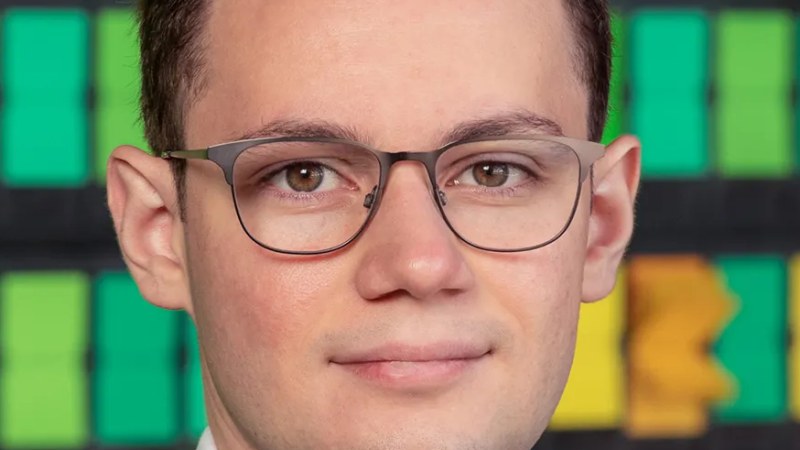
Abdulhamid Haidar
Abdulhamid Haidar is the founder and CEO of Darsel, a nonprofit that teaches K-12 math over text messages. Instead of apps and video that assume reliable Wi-Fi, Darsel runs entirely on WhatsApp, Facebook Messenger and SMS, using AI-powered adaptive algorithms to tutor students in Jordan, India and Nigeria. Built during the 2020 COVID lockdown by a Syrian-American who grew up in a family of teachers, Darsel has had more than 120,000 students answer over 170 million math questions. Haidar holds degrees from MIT, Harvard Kennedy School and Stanford's Graduate School of Business, and previously spent three years at McKinsey. His goal: meaningfully reach 100 million students by 2030.

Siran Jiang
Siran Jiang is the CEO and cofounder of Moonlight, a San Francisco edtech startup that began as a gamified focus-and-productivity app and grew into an AI-powered personalized learning platform turning lessons into quests for kids. A daughter of generations of teachers, she traded a finance-and-entertainment resume that runs from Evercore and Warburg Pincus to MGM Studios and Activision Blizzard's Call of Duty for a mission built on attention. She holds a BA from Columbia and an MBA from Stanford GSB, and on the side has spent over a decade as a college admissions tutor.

Yiorgos Nikoletakis
Yiorgos Nikoletakis is the co-founder and CEO of 100mentors, an Athens- and San Francisco-based edtech company that started as a platform connecting young people with mentors worldwide and has since pivoted into generative-AI skilling for organizations. A Fulbright scholar with degrees from AUEB, Ohio State, and Columbia, he describes his job as teaching people to ask better questions, use GenAI well, and keep humans in the loop. His personal motto: arguing like he's right, listening like he's wrong.

RoboTerra, Inc.
RoboTerra, Inc. is a Silicon Valley educational robotics company founded in 2014 that teaches middle- and high-school students to build robots and write real code. Its flagship Origin Kit pairs more than 85 hardware components and the RoboCore controller with the cloud-based, gamified Castle Rock learning platform, turning C++ programming into something a 10-year-old can pick up. Led by founder and CEO Yao Zhang, a World Economic Forum Young Global Leader, the company set out to make hands-on robotics education accessible far beyond elite schools, reaching institutions across dozens of countries.

Diego Villegas
Diego Villegas is the co-founder and CEO of Slang, an MIT-born edtech startup that uses machine learning and NLP to teach industry-specific professional English to the global workforce. A serial entrepreneur, he first built MASA, a Colombian oil-and-gas technical-services firm that grew to roughly $200M in revenue and 5,000+ employees before its acquisition by Stork. The pain of watching capable employees stall - and get laid off - for lack of business English became the seed of Slang, which now offers 150+ career-focused courses to companies including Nestle, Banco Santander, and Hyatt across more than a dozen countries.

Yao Zhang
Yao Zhang is the founder and CEO of RoboTerra, a robotics-education company that teaches kids around the world to code and build robots. A Columbia-trained education economist who walked away from a finished PhD's worth of dissertation work to build hardware, she was named a 2016 Young Global Leader by the World Economic Forum and one of RoboHub's Top 25 Women in Robotics. RoboTerra has reached 1,000+ institutions across more than 40 countries, splitting its life between Silicon Valley and China.

Jiayuan Fang
Dr. Jiayuan Fang is the Founder and CEO of Afficient Academy, a Silicon Valley edtech company that uses patented AI-driven adaptive learning to help K-12 students advance a full grade level in 2-5 months. A former UC Berkeley PhD and electrical engineering professor turned serial entrepreneur, Fang previously founded Sigrity Inc., which was acquired by Cadence Design Systems for approximately $80 million in 2012. His pivot to education was sparked by his own three children's experience with inadequate after-school tutoring - leading him to build a platform that identifies not just what students get wrong, but why.

Navid Moazzez
Navid Moazzez is a Swedish-Iranian lifestyle entrepreneur, creator, and AI educator best known as the 'Godfather of Virtual Summits' — a title coined by HuffPost. After dropping out of Stockholm University law school in 2013 following his brother's sudden death, he built a multi-million dollar online business empire around virtual summits, helping students collectively generate $70M+ in revenue. He sold his flagship course Virtual Summit Mastery in 2021 and pivoted to AI education, founding Creator School and hosting the AI Creator Summit, which drew 100,000+ attendees in 2024. A true global citizen who has lived in 10+ countries and visited 50+, Navid operates at the intersection of AI, creator economy, and disciplined self-development.
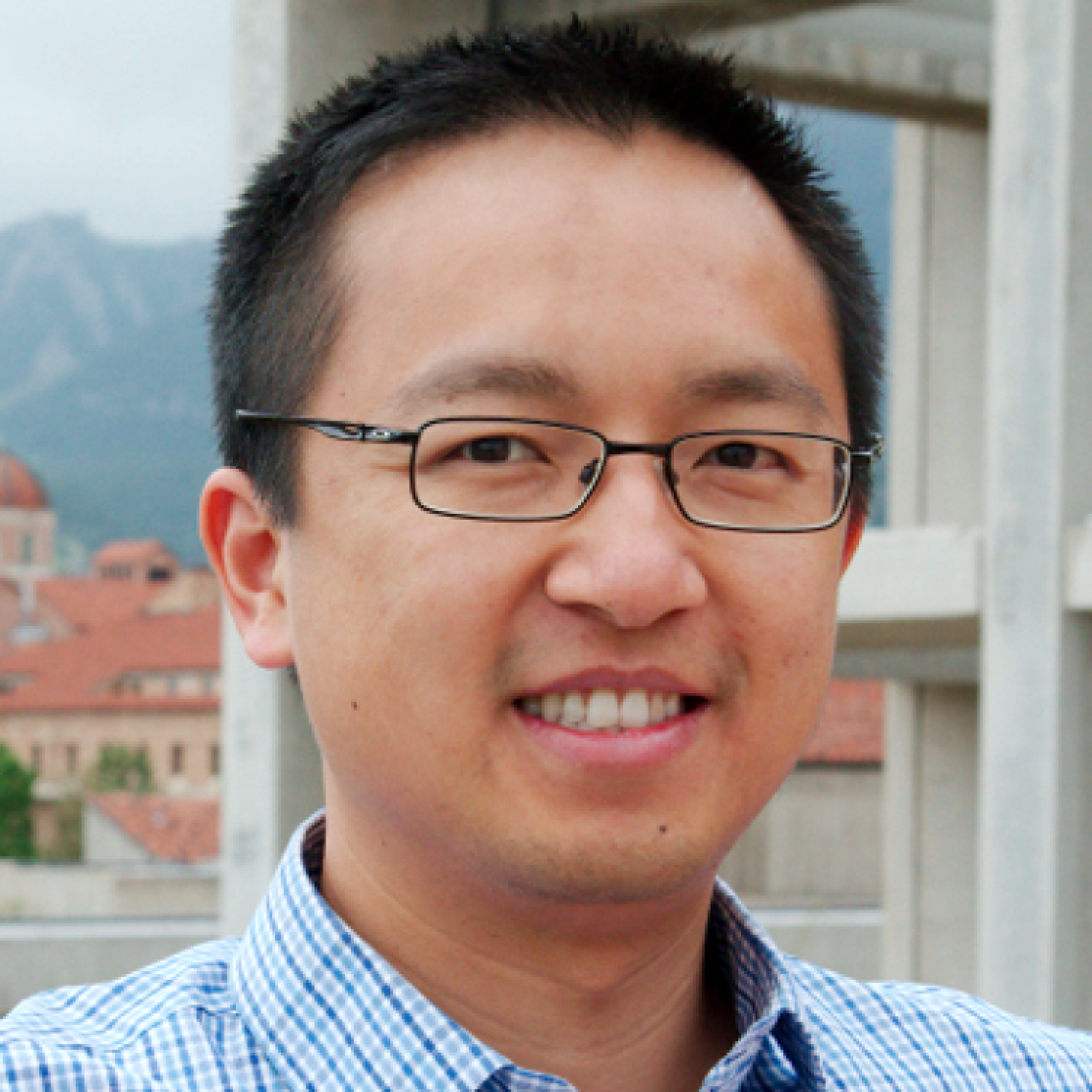
Tom Yeh
Tom Yeh is an Associate Professor of Computer Science at the University of Colorado Boulder and the creator of AI by Hand, a wildly popular educational newsletter and community that teaches transformers, LLMs, and deep learning architectures through pen-and-paper calculations. With 62,000+ Substack subscribers, 200,000+ social media followers, and a Feynman-inspired philosophy that you only truly understand what you can build by hand, Yeh has become one of the most influential voices in practical AI education - bridging the gap between black-box hype and genuine first-principles understanding.

Mihail Eric
Mihail Eric is a Palo Alto-based ML engineer, researcher, educator, and serial founder who has spent a decade bridging cutting-edge AI research and production systems. A Stanford CS alumnus who studied under Christopher Manning and Percy Liang, he built some of Amazon Alexa's earliest large language models, co-founded YC-backed Storia AI, founded Confetti AI (acquired by Towards AI), and now teaches 'The Modern Software Developer' at Stanford while running a newsletter for 17,000+ AI practitioners.