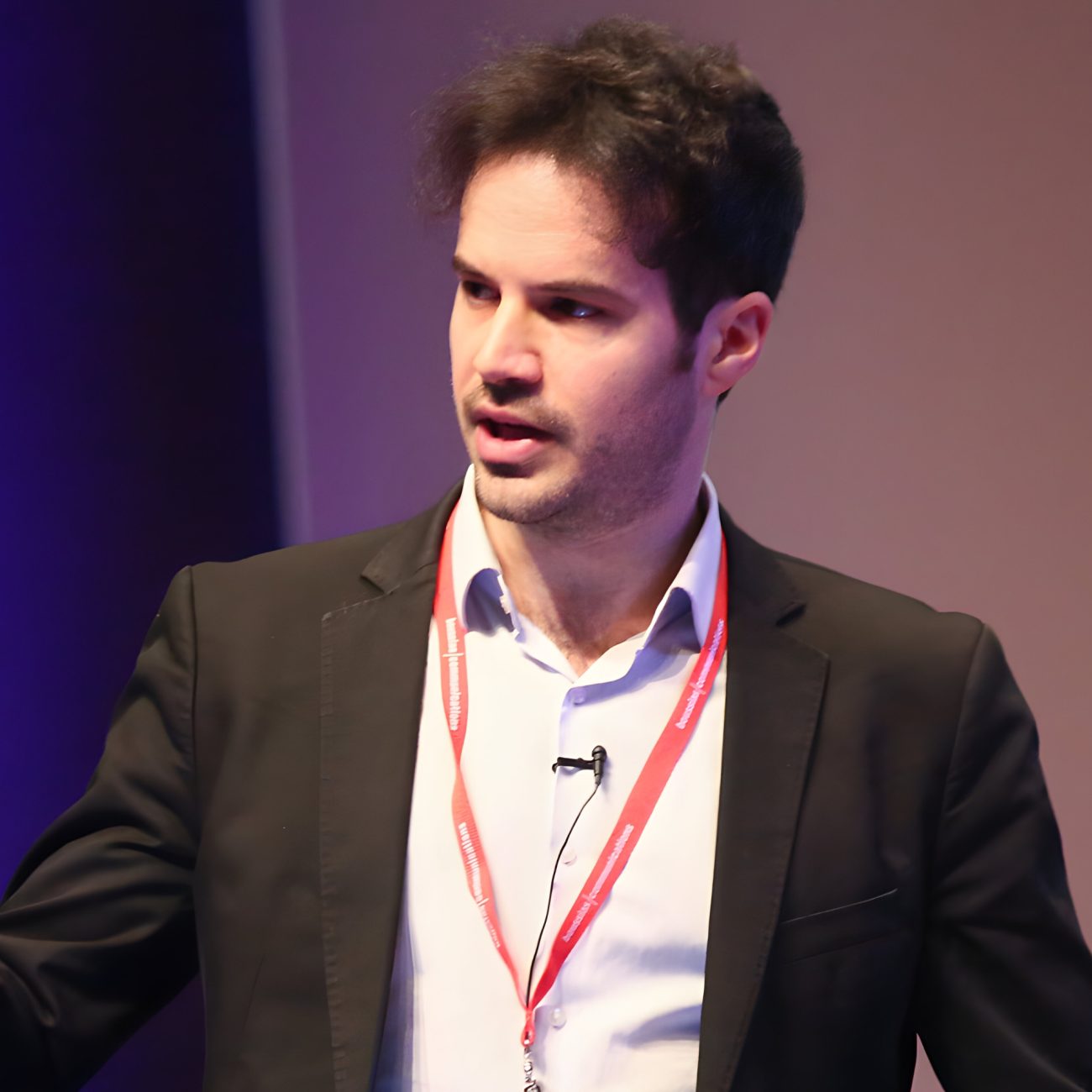
Walk into a meeting run on Yiorgos Nikoletakis's terms and the first thing that disappears is the noise. That is the pitch of 100mentors in its current shape: use AI to clear away the clutter so the humans in the room can be sharper, shorter, and actually decide something. The tools change. The obsession does not. For more than a decade Nikoletakis has been building around a single conviction - that a good question, asked at the right moment to the right person, can redirect an entire life.
Today he is the co-founder and CEO of 100mentors, an edtech company with one foot in Athens and the other in the San Francisco Bay Area. It began as something deceptively simple: a digital platform built by a group of young Greeks who wanted to change how people choose what to do with their lives. Students and early-career professionals could reach mentors anywhere in the world, ask them the questions that career guidance brochures never answer, and find a path that matched their own inclinations instead of someone else's expectations. The name was the mission. One hundred mentors, on demand, for the people who needed them most.
Then generative AI arrived, and Nikoletakis did what good founders do with a tremor under the floor - he leaned into it. 100mentors became a training company that equips organizations and professionals to use generative AI well, plus an AI-powered meeting platform designed for teams trying to think clearly in a suddenly noisy era. The way he frames his own job has a monastic simplicity to it. He helps learners do three things: ask better questions, use GenAI, and keep humans in the loop. Notice the order. The machine is third on the list, and on purpose.
AI can make space for connection - not replace it. Use AI to clear the noise so we can be more human in our conversations.
— Yiorgos Nikoletakis, Eureka Podcast, 2025
The student who collected mentors
Before he built a mentorship company, he was its ideal customer. Nikoletakis studied at the Athens University of Economics and Business, crossed the Atlantic to Ohio State, and landed at Columbia University, where he earned a master's tied to capital markets, international finance and economic policy and held research and fellowship positions at the Blinken European Institute. Along the way he picked up scholarships and fellowships from ten different institutions - the Fulbright Foundation, the Propondis Foundation, the State Scholarships Foundation, the London Deloitte Institute of Innovation & Entrepreneurship among them. That is not a normal resume. That is someone who kept finding people willing to bet on him, and then turned around and built a company to industrialize the bet.
He has worked across four US states, Spain, Greece and China. He says he likes to surround himself with role models, and that the role models he reaches for tend to be educators and entrepreneurs - the two trades that sit at the center of everything 100mentors does. There is a tidy logic to a man who learned by borrowing other people's wisdom deciding to spend his career making that borrowing easier for everyone behind him.
Arguing like I am right, listening like I am wrong.
— his personal motto
That motto deserves a second read, because it is doing more work than it looks. Most people pick one mode and stay there. They argue like they're right and listen like they're right too, which is to say they don't really listen. Or they hedge everything and never commit to a position worth defending. Nikoletakis is asking for both at once - full conviction in the argument, full humility in the ear. It is also, not coincidentally, a decent definition of what it takes to use AI without losing your judgment to it.
From "feeling lost" to a curriculum
In 2025 he sat down for the Eureka Podcast, in an episode titled "Navigating the Path to Success." The headline idea was not a victory lap. It was that feeling lost is part of the journey - that the disorientation people try so hard to skip is not a detour from the path but a stretch of it. Coming from someone who has spent his career helping young people find direction, that is a generous admission. He is not selling a map that removes the wandering. He is saying the wandering is the point, and the right mentor is the one who walks with you through it rather than pretending it can be engineered away.
You can hear the same instinct in how he talks about meetings and machines. The fear with generative AI is that it flattens us, that it does our thinking and our talking until there is nothing distinctly human left in the room. Nikoletakis flips the camera. Let the AI take the noise - the scheduling, the summarizing, the boilerplate - and what's left is the part that was always the point: two people, a hard question, and the attention to answer it honestly. His meeting tool exists to make gatherings sharper, shorter, and more likely to lead to action. The deeper bet underneath it is that human connection is the scarce resource AI should protect, not the thing it should automate.
Why this matters now
The world is awash in AI courses promising to make anyone a prompt wizard by Friday. Nikoletakis is selling something quieter and harder to fake. He has been involved in efforts like the "Skilling that Scales: Generative AI Skills Challenge" and the Generative AI Greece 2030 study, work aimed at the unglamorous middle of the problem - not the demo, but the adoption; not the hype, but the habit. The skill he keeps returning to, the one that survives every model upgrade, is the ability to ask a better question. Models change weekly. Curiosity, aimed well, compounds.
That is the through-line from the kid collecting fellowships to the CEO clearing noise out of conference rooms. The product has been a website, then a platform, then an AI tool, and it will be something else next year. The constant is the conviction: that the best technology in the room should make the people in it more human, that mentorship scales when you build the right rails under it, and that the question is worth more than the answer. Yiorgos Nikoletakis has spent a decade proving the first two. He seems happy to spend the next one on the third.