There is a particular silence that arrives when somebody knows the answer but cannot make the sentence leave their mouth. It can happen in a job interview, a meeting, a café, or a call with a stranger. The vocabulary is present. The grammar has been studied. Yet conversation, being a mildly unruly creature, refuses to behave like an exam paper.
Akshay Sanghai has made that silence his operating problem. As co-founder and CEO of MySivi, he is building a place where English learners can speak to an AI tutor, receive corrections, practise everyday situations, and then talk with other learners. The proposition is less about acquiring one more rule and more about converting stored knowledge into usable confidence.
Sanghai arrived at this problem by way of engineering. He studied at the Indian Institute of Technology, Roorkee from 2011 to 2015, then worked at Visa in systems engineering roles. Booking.com followed, where he worked as a software developer. His public certifications range from OpenStack administration to data science and deep learning. The thread is easy to see: systems, feedback, and the useful habit of asking where a process gets stuck.
The bottleneck was not another lesson. It was a safe place to use the lesson.
The first idea did not survive contact with reality
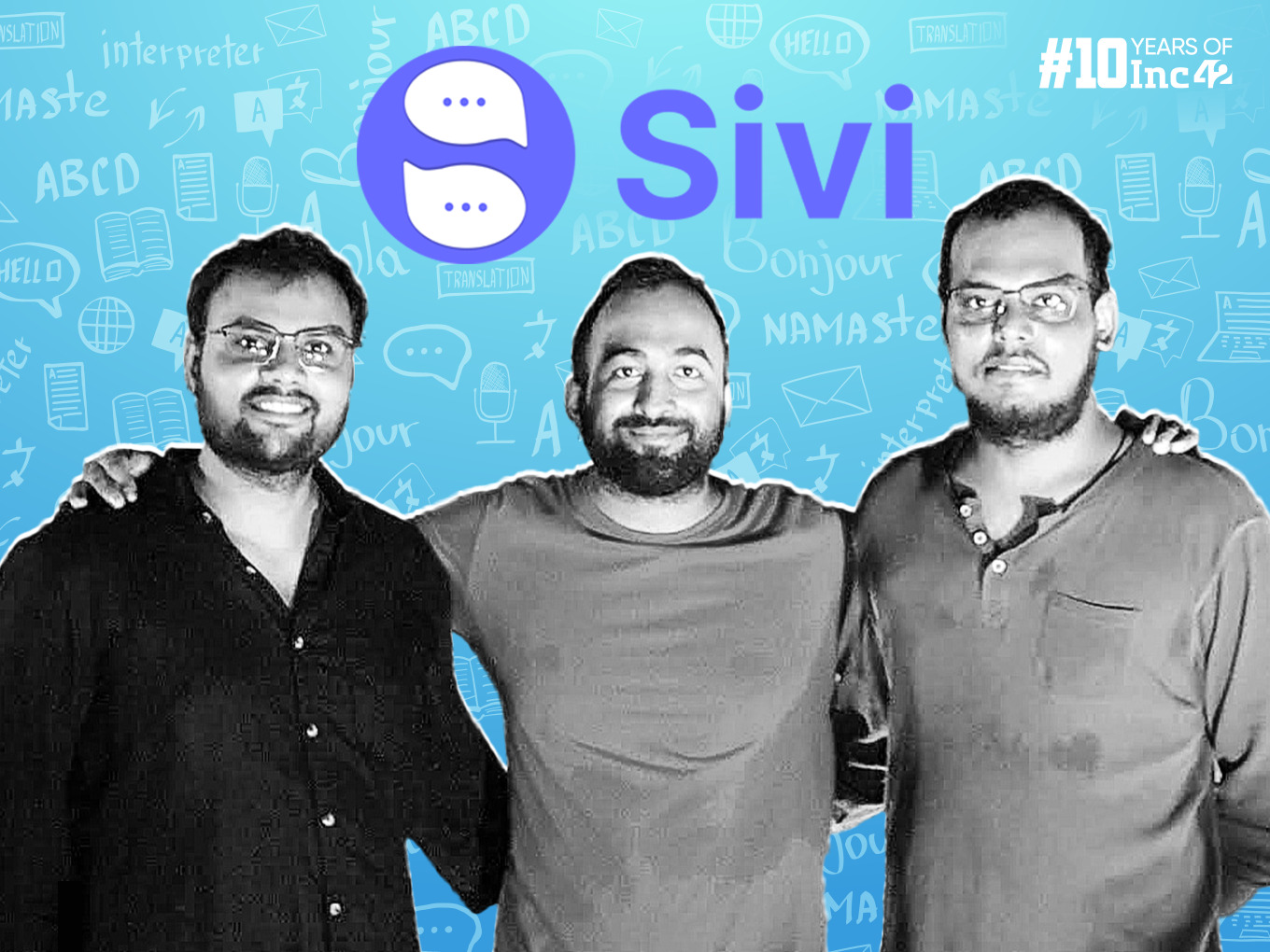
MySivi did not begin as MySivi. Sanghai, Shivam Gupta and Anoop Jaiswal first worked on a platform that would collect client requirements, find contractors or freelancers, assign jobs, and track the work. The concept entered Y Combinator's Winter 2022 batch. Then execution and regulatory problems made the founders reconsider the business.
A pivot is often polished into a heroic epiphany after the fact. This one looks more practical. The team had a difficult business in front of it and a familiar human problem nearby. Gupta had experienced the gap between studying English and feeling comfortable speaking it. Sanghai, reflecting on his own years in technology, had reached a related conclusion: communication can determine whether a person's potential is visible to other people.
The founders moved toward spoken-English practice. In September 2022 they launched Speakify AI, built around a conversational teacher. Even the new start required a correction. Speechify objected that the name was too close to its trademark in e-learning, so the team renamed the product MySivi, short for Speak, Interact and Verbally Improve. It is an unusually industrious name. All three words are verbs.
The machine listens; the peer makes it real
The early product centered on an AI chatbot. A learner spoke in English; the app recorded the speech; Arya, its AI teacher, returned text feedback and corrections. Prompts supplied subjects for the conversation. The format reduced two costs at once: arranging a lesson and feeling embarrassed in front of another person.
But language is social equipment. A learner eventually has to encounter another human, complete with pauses, interruptions, unfamiliar rhythms and opinions about where to eat. In March 2023, MySivi added peer-to-peer calls. The AI could provide repeatable correction. A co-learner could provide the benign uncertainty of actual conversation.
This hybrid design is the product's most useful idea. AI makes practice available on demand. Peer conversation tests whether correction becomes fluency. Scenario-based lessons place that loop inside situations learners care about: an interview, a workplace exchange, ordering food, planning a trip. Progress tracking adds memory to the system, so today's awkward attempt does not vanish when tomorrow begins.
Sanghai describes the ambition in social rather than technical language. In one concise line, he says the team is building “confidence at scale.” The technology matters, but the desired output is a person willing to finish the sentence.
An operator between the boxes
At MySivi, Sanghai says he leads the growth engine across product, marketing and operations. That description is revealing because it declines the comfort of a neat department. Consumer learning apps live or die in the joins. An advertisement makes a promise. The first session must cash it. Feedback must feel useful enough to bring the learner back. A subscription must be worth more than the many free ways to postpone practice.
His public updates have the texture of an operator's notebook: month-on-month growth, office capacity, hiring briefs, acquisition costs, advertising budgets, and experiments with new channels. In late 2025, he wrote that the team had moved into a 60-seat office after outgrowing its previous space. He paired the cheerful office news with the harder arithmetic of six months growing above 30 percent month on month.
He has also emphasized capital efficiency. His Y Combinator profile says MySivi raised little money and later held more cash than the total amount it had raised. MySivi says it became profitable in October 2024. Those are company statements, but they illuminate the operating preference: use capital, do not perform it.
The metric beneath the metrics
In April 2024, MySivi reported more than one million downloads, over 200,000 monthly active users, 30,000 paid users and annual revenue above $250,000. By August 2026, Google Play showed more than 10 million downloads, roughly 87,000 reviews and a 4.5-star rating. The company's website now lists support for more than 15 languages and practice across 150 countries.
The commercial curve became steeper. In May 2026, co-founder Shivam Gupta said MySivi had crossed INR 100 crore, or more than $10 million, in annual recurring revenue. He reported more than one million monthly active users and over 250,000 monthly paying users, and said the company remained profitable. Sanghai's response was brief and rocket-shaped, but the milestone belongs in his operating story: a consumer subscription product had moved from an early paid base to a business with meaningful recurring revenue.
Scale also changes the questions. At one million downloads, the puzzle is whether enough learners find value. At ten million, it becomes whether feedback remains personal, peer interactions remain useful, and the promises made in advertising match the experience after payment. Public app reviews contain praise alongside complaints about pricing, renewals and support. A serious profile cannot treat those voices as scenery. They are part of the same feedback system the product celebrates.
This is where Sanghai's broad remit becomes less like an ambitious job description and more like a necessity. Marketing can acquire a learner quickly. Product determines whether the first conversation feels worth repeating. Operations handles the moments when billing, moderation or support interrupts the lesson. Each team can optimize its own chart and still leave the learner with a poor sentence to say about the company. The CEO's task is to make the charts agree.
Large numbers make handsome furniture for a startup story, but Sanghai's stated aspiration is more intimate. He wants high-quality speaking practice to be accessible, affordable, and available to anyone with a smartphone. The learner he describes works hard, has ability, and lacks a place to rehearse spoken English without pressure. The grand market is assembled from those private moments.
There is a useful product lesson here. Information is not always the scarce thing. Sometimes the scarce thing is permission: permission to be clumsy, to receive a correction without losing face, to repeat a sentence until it belongs to you. Software can lower the price of that permission. A well-matched peer can keep it human.
The model also carries a cultural subtlety. MySivi supports learners through more than 15 languages, which means English does not have to arrive by pretending a learner's first language never existed. The product can meet someone in Hindi, Tamil, Telugu, Kannada, Bengali or another supported language, then guide the step into English. That matters because fluency is not a personality transplant. The point is to give an existing voice greater range.
A language app earns its place when the learner closes it and speaks in the world.
The next sentence
MySivi's path has already contained a discarded business model, a discarded name, an AI teacher, a social layer, and the unglamorous discipline of making paid acquisition meet product retention. Sanghai's role sits across those elements. The engineer in him still looks for the bottleneck; the chief executive has to decide which bottleneck matters now.
His recent hiring posts point toward a company treating growth as an experimental practice rather than a slogan. He has sought marketers comfortable with large ad budgets, creative strategy and new channels, alongside engineers, designers and content specialists. That mix suggests a consumer company where distribution and pedagogy must learn to share a desk.
The quiet elegance of the mission is that the product should eventually disappear. Arya corrects the grammar. The co-learner stays on the call. The progress chart moves. Then one day the user answers a question in an interview, adds a thought in a meeting, or begins a conversation before rehearsing it internally. The app has done its job precisely when nobody in the room is thinking about the app.
For Sanghai, that is the system worth building: not English as a badge, but conversation as usable infrastructure. A sentence leaves the learner's mouth. Somebody else understands it. The silence loses.