Founder · Educator · Robotics
Yao Zhang
She had a Columbia dissertation finished. Then she put it down, picked up a soldering iron, and started teaching ten-year-olds to debug robots.
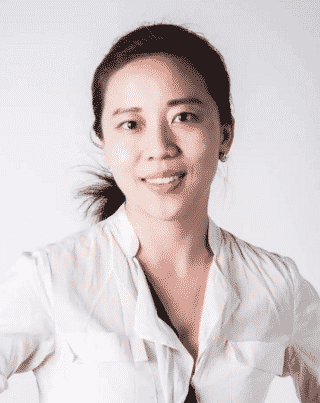
The economist who chose motors over manuscripts.
She had a Columbia dissertation finished. Then she put it down, picked up a soldering iron, and started teaching ten-year-olds to debug robots.
Yao Zhang runs RoboTerra, a company that does something deceptively small and quietly enormous: it hands kids a box of motors, sensors and code, and lets them build a robot that actually moves. Multiply that box by more than 1,000 institutions in over 40 countries, and you get the shape of her ambition. She is not selling toys. She is rehearsing a generation for a world it will share with machines.
The pitch sounds simple until you notice what's behind it. Zhang is an education economist by training, the kind of person who measures learning the way other people measure interest rates. She studied how assessment works, how big data moves through classrooms, how innovation actually reaches a child instead of dying in a procurement meeting. Most people with that background write papers. Zhang built hardware instead.
Her bet is contrarian and oddly hopeful. While headlines warn that robots will take the jobs, she points the other direction: teach children to command the robots, and the fear inverts into fluency. RoboTerra is the toolkit for that fluency - half engineering kit, half curriculum, shipped across two continents from a company that lives in both Silicon Valley and China at once.
It helps to understand what a robotics-education company actually has to solve. A robot kit is the easy part. The hard part is everything around it: a curriculum that a non-engineer teacher can deliver, an assessment system that tells a parent whether their child is learning anything, a supply chain that puts the same box of motors into a classroom in Shenzhen and a classroom in Sao Paulo. Zhang's academic training maps almost suspiciously well onto that list. Computational models in assessment. Big data in education. Market innovation. She spent years studying the bottlenecks before she ever tried to clear them.
Role: Founder & CEO, RoboTerra, Inc.
Trained as: Education economist (Columbia Teachers College)
Known for: Robotics-and-coding education at global scale
Honors: WEF Young Global Leader (2016); Top 25 Women in Robotics (RoboHub)
Lives between: Silicon Valley & Shenzhen
Every company eventually becomes a data company.— Yao Zhang, CNBC, 2017
Here is the detail that explains her better than any title: at Columbia's Teachers College she completed every dissertation requirement toward a PhD in education economics. The research was on her side - educational technology, market innovation, computational models in assessment, big data in classrooms. The doctorate was within reach.
She walked toward robotics instead. Not away from education - deeper into it. If you spend years modeling how learning fails to scale, the logical next move is to build the thing that scales it. RoboTerra is that thing, dressed up as a robot kit.
Before any of it, she co-founded Minds Abroad, building student-relationship software and curriculum for American and European colleges. She ran innovation projects at McKinsey and at EdisonLearning. The through-line was never finance or consulting. It was always the same question: how do you make learning actually reach a person?
The undergraduate degree was a BBA from the Central University of Finance and Economics - which means she started, of all places, in the language of balance sheets. Then she crossed an ocean to Columbia's Teachers College and traded that language for a harder one: how learning actually works, at scale, with evidence. The two halves of that education are not as far apart as they look. Both are about systems that either compound or leak. A classroom that fails to scale is, in its own way, a unit-economics problem. Zhang seems to have understood that earlier than most.
Illustrative weighting of where Zhang's career energy has gone - not a precise timeline.
When CNBC put her on camera in 2017 to talk about automation, the expected answer was anxiety - the robots are coming for the jobs. Zhang gave the opposite. The goal, she said, is to help humans in a work environment, not replace them. Teach people to work alongside machines, and the threat becomes a skill.
That same year she offered a line that aged better than most predictions of the era: whatever sector you belong to, you will be a data company very soon. In 2017 that was a provocation. A decade on it reads like a memo everyone eventually received. The instinct behind it - watch where the world is heading and build the skills before the wave lands - is exactly the instinct she's trying to install in children through a robot kit.
"We must challenge our thought processes around AI and deeply consider its implications throughout the design of algorithms, hardware, and policy."
Years before it was conventional wisdom, she told CNBC that whatever sector you're in, you'll be a data company "very soon." She was early.
Her writing frames education as something "learners and AI are making together" - a shared journey, not a one-way delivery of facts.
Innovation projects at McKinsey & Company and EdisonLearning.
Co-founds Minds Abroad - student-relationship software and curriculum for U.S. and European colleges.
RoboTerra named a "Star Company" at the World Learning Technology Summit.
Named a Top 25 Women in Robotics by RoboHub; RoboTerra is a Top 30 Innovation Company at SVIEF.
Named a Young Global Leader by the World Economic Forum.
Featured by CNBC on automation and the future of work; speaks at GMIC Beijing.
Publishes op-eds on resilience and crisis leadership for founders during the pandemic.
Robotics for the whole earth's classrooms. The branding telegraphs the ambition: not a product for one school district, but a platform aimed at every map pin she can reach.
Plenty of edtech founders can claim a pilot program and a press release. The number that matters in Zhang's story is reach: more than 1,000 institutions, in more than 40 countries. That is the difference between a clever product and an actual operating system for a category. It is also brutally hard to do, because it means the same curriculum has to survive translation, the same hardware has to survive customs, and the same promise has to survive a teacher who has never written a line of code.
RoboTerra earned early validation before the scale arrived - a "Star Company" nod at the 2014 World Learning Technology Summit, a Top 30 Innovation Company placing at SVIEF in 2015. Those are the kinds of awards that look modest in a press kit and matter enormously in a founding story, because they arrive at the moment when a company is still mostly a conviction. By 2016 the World Economic Forum had named her a Young Global Leader, and RoboHub had placed her among its Top 25 Women in Robotics - recognition not for a finished thing, but for a direction.
What's striking is how steady the direction has been. Finance, then consulting, then education software, then a doctorate she didn't quite finish, then robots: on paper it looks like restlessness. Read it forward instead of backward and it's a single argument, told in five chapters. The argument is that learning is the highest-leverage thing a person can change, and that the tools we hand children decide what they're capable of imagining later. A robot that moves because a ten-year-old told it to is a very concrete answer to a very abstract belief.
She writes a yearly founder's letter on Medium. One was titled "What Does 'Seeing Dots Connected' Mean for a Tech Entrepreneur" - an exercise in finding the pattern after the fact.
She has written, for Forbes and elsewhere, about the "deeper stories of women execs in tech" - the parts that don't fit the keynote highlight reel.
When 2020 hit, she published on resilience for founders and a Sixth Tone op-ed on staying positive in quarantine. The instinct: write the manual while living the crisis.
1. Finance degree in China, education-economics master's at Columbia, then robots. The resume reads like three different people.
2. "All but dissertation" toward a Columbia PhD - and she still left to build hardware.
3. She called the "every company is a data company" shift years before the rest of the room caught up.
4. She runs a company that genuinely lives in two places - Silicon Valley and China - rather than picking one.
5. She kept writing through it all: annual founder's letters, a Forbes piece on women in tech, a Sixth Tone op-ed. A builder who insists on narrating the build.
Profile compiled from public sources including CNBC, edCircuit, Columbia Global Centers, RoboHub, Crunchbase and Yao Zhang's own writing. Facts unverified at the time of writing are omitted.