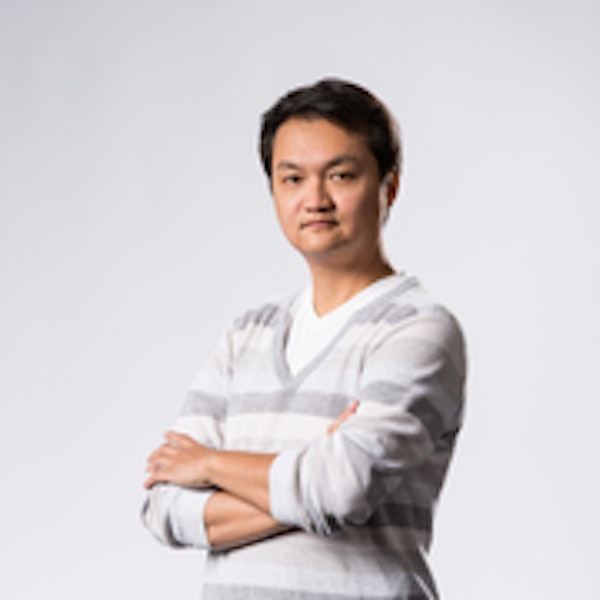
Ask most technology executives how they ended up in artificial intelligence and you will hear about a first computer, a clever hack, a startup that took off. Kelvin Lwin's answer starts with a monk. Before he left Burma as a twelve-year-old, a preceptor monk handed him something heavier than a suitcase: a charge to help improve the education system. Decades and three universities later, that instruction is still the through-line of everything he touches.
Today Lwin works at the front edge of enterprise AI. At Centific - the Redmond-based data-foundry and AI platform company that closed a $60 million Series A - he operates as a Field CTO and AI leader, the person who stands between what customers want and what the technology can responsibly deliver. Centific's world is the unglamorous plumbing of modern AI: high-quality data, human-in-the-loop annotation, model evaluation, governance, the guardrails that decide whether a model ships or stalls. It is a company built on the belief that AI is only as trustworthy as the humans and data behind it. That is a thesis Lwin has been rehearsing his entire career.
He describes his own interests in language most CTOs would not risk out loud. He wants to integrate the nonlinear dynamical patterns found in nature with those emerging in what he calls Third Wave AI, and he has floated a concept he named NeoFlow. It sounds like philosophy because, for him, the engineering and the philosophy were never separate departments.
Nearly a decade at Berkeley, then a debt to repay
Lwin spent close to ten years at UC Berkeley, working his way through college as a teaching assistant. He could have taken the standard exit ramp into a lucrative private-sector job. Instead he decided he owed something. Public education had carried an immigrant kid from Burma into one of the best computer science programs on earth, and he wanted to pay it back with interest.
So he went to UC Merced, the youngest campus in the University of California system, at a moment when it was still being invented. For seven years he was a teaching professor there. The numbers are worth sitting with: 4,500 students, 55 classes, and a complete redesign of the undergraduate computer science curriculum. He was not just delivering lectures. He was building the machine that produced the lectures, deciding what a generation of engineers would learn and in what order.
That is the quiet superpower running underneath his resume. Lwin does not only teach. He designs the thing that teaches. Curriculum is his native medium, and it turns out to be the exact skill the AI industry was about to need at planetary scale.
Democratizing deep learning, one workshop at a time
When NVIDIA needed someone to make deep learning teachable, Lwin was a natural fit. As a senior instructor and curriculum designer at NVIDIA's Deep Learning Institute, he built and delivered hands-on training meant to democratize access to the latest technology across disciplines, industries and geographies. The reach is the headline: the DLI programs he contributed to helped bring practical deep-learning skills to more than 100,000 developers around the world, directly and through partnerships with Udacity and Coursera's deeplearning.ai.
This is where his teaching philosophy quietly bent the industry. Most AI training answers a single question - how do you do it? Lwin insisted on a second question that engineers rarely ask: when should you not? He has argued that AI education must address when not to apply AI, not just how to use it. For a field intoxicated by its own capability, that is close to heresy. It is also, increasingly, the entire conversation.
He kept teaching the human side directly, too. As an instructor affiliated with UC Santa Cruz, he built a Coursera course with a title that reads like a manifesto: AI, Empathy & Ethics. No frameworks in the name. No libraries. Just the three things he thinks the machines cannot be trusted to supply on their own.
The Human Insight Project
Lwin's answer to biased AI is not a clever loss function. It is people. He has worked to build a coalition to create balanced, inclusive datasets that represent all of humanity, an effort he calls the Human Insight Project. The premise is blunt: a model trained on a narrow slice of the world will quietly assume that slice is the whole world. His fix is to pull domain experts - historians, scientists, social researchers - into the data pipeline to spot the biases that a pure engineering team would never see. It is human-in-the-loop taken to its logical conclusion, where the loop includes the humanities.
You can hear the classroom in all of it. He talks about 1:1 personalized learning enabled by AI, about education expanding from children to every human being, about applying learning to the whole person and not just the parts that pass an exam. Where others see AI as an answer machine, Lwin keeps treating it as a very fast, very literal student that will absorb whatever you teach it, including your blind spots.
Why an educator ended up at an enterprise AI company
On paper, a career teacher joining a venture-backed AI company mid-scale-up is a swerve. In practice it is the straightest possible line. Centific's pitch to the enterprise is trust: your data, curated and governed; your models, evaluated and monitored; your AI, kept on a leash you can actually hold. Selling that requires someone who can explain a complex system to a skeptical room and mean it. Lwin has done exactly that in front of 4,500 undergraduates and 100,000 developers. The room is bigger now. The lesson is the same.
There is a small, telling detail in how he presents himself online. He appends the wheel of dharma to his professional name, a nod to the Burmese Buddhist tradition he was raised in. It is easy to read too much into a symbol. But for a person whose founding story is a monk's instruction and whose signature course is about empathy and ethics, the icon is not decoration. It is a thesis statement in a single character.
Consider the shape of the audiences he has stood in front of. A lecture hall of undergraduates who did not choose to be there. A global cohort of self-selected developers hungry for the newest technique. A boardroom of enterprise buyers weighing risk against reward. Each demands a different register, and Lwin has learned to move between them. The curriculum designer's instinct is to ask, before anything else, who is learning and what they already know. It is the same instinct a good data scientist brings to a training set, and it is why his move from the classroom to the model pipeline never looked like a career change to him.
His interest in nonlinear dynamics is not a party trick either. Nature rarely moves in straight lines, and neither does learning. A student does not absorb calculus at a constant rate, and a model does not improve smoothly with more data. Lwin's fascination with the patterns that recur across natural systems and AI systems is, at bottom, a search for the underlying grammar of how complex things learn. Whether NeoFlow becomes a product, a paper, or simply a way of thinking, it points at the same target he has always aimed for: understanding the process well enough to teach it.
What Lwin is ultimately building is not a model or a curriculum but a stance: that the hardest problem in artificial intelligence has always been a human one, and that you solve it the way you solve any human problem - by teaching, carefully, with attention to who is in the room and who has been left out. He arrived with a job to do. He is still doing it.