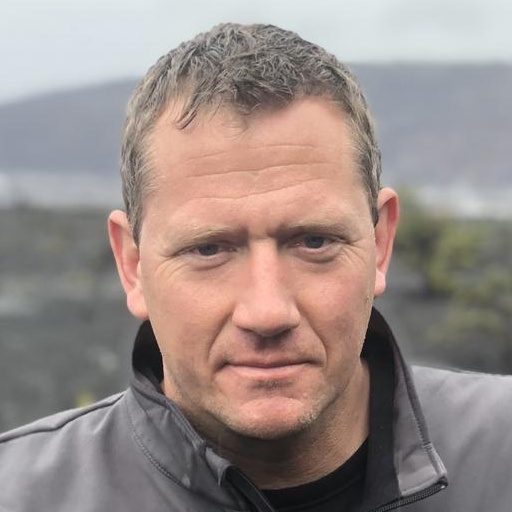
The Physicist Who Went Underground
At some point in his career, Kurt House looked at what he was building and didn't like the answer. He had a Harvard doctorate. He'd published papers on carbon capture. He'd built an oil company that acquired 60 million barrels of tertiary reserves using CO2 injection. He was, by any measure, succeeding. And that was the problem.
The Tibetan trail metaphor he uses - describing how he walked away from fossil fuels - sounds tidy in retrospect. At the time it was a pivot with no guaranteed destination. He'd spent years at Phase Change Resources developing physics-based tools to forecast natural gas production from hydraulically fractured wells. Elegant science. Wrong direction. So in 2018, he co-founded KoBold Metals in Berkeley with a different bet: that the same computational rigor he'd applied to finding oil could find the minerals the world actually needs now.
The timing was either visionary or lucky. Probably both. The electric vehicle industry was about to collide with a hard geological truth - that the metals required for batteries were concentrated, difficult to find, and almost entirely controlled by a small handful of countries and companies. The energy transition needed a supply chain that didn't exist yet. House had decided to build it.
We're trying to transform mineral exploration from a manual, judgment-guided, trial-and-error process into a data-driven and scalable science.
- Kurt House, CEO, KoBold MetalsThe Machine Prospector
The classical approach to mineral exploration is expensive, slow, and largely unchanged since the mid-twentieth century. You hire experienced geologists. You look for surface expressions of what might be below. You drill. You miss. You drill again. KoBold's claim is that this process can be systematically improved - not replaced by a black-box algorithm, but augmented with the kind of data aggregation and probabilistic modeling that has transformed medicine, finance, and materials science.
The platform House built with his co-founders has two central components: a system they call "terrashed" - a database aggregating geological data from public and proprietary sources - and "machine prospector," the AI system that builds physics-driven and machine learning models on top of that data. The goal is to identify "compositional anomalies": spots in the Earth's crust where economic concentrations of metal are likely to exist, far underground, without a single borehole having been drilled.
What makes KoBold unusual is the team architecture behind these tools. The company employs veteran mineral explorers - the human side of the operation represents over 200 years of collective field experience - alongside Silicon Valley engineers trained in physics. And then there's the "chief philosopher," an unusual leadership role focused on physical intuition in scientific discovery. House built something that resembles a university research group more than it resembles a mining company. That's deliberate.
On why AI works in mining now and not before: "They couldn't do what we're doing even 10 years ago. We are standing on the shoulders of trillions of dollars of high bandwidth computing networks."
Three Companies. One Direction.
House's career doesn't follow a straight line - it follows a logic that only becomes clear at the end. Each company was a step deeper into the intersection of physics, data, and energy.
KoBold's mission is to expand and diversify the global supply of critical resources essential for prosperity, energy technology, AI, and security.
- Kurt House, in a statement to Fortune, January 2025What the Machines Found in Zambia
The Mingomba deposit sits in Zambia's Copperbelt - a geological province that has been mined since the 1920s, scrutinized by hundreds of exploration companies, and mapped in more detail than almost any other stretch of African land. And yet KoBold found something no one had recognized before: a deposit containing 247 million tonnes of copper ore at an average grade of 3.64%, with some zones exceeding 5%.
Those numbers require context. The world's highest-grade copper deposits typically grade between 1% and 2%. Ivanhoe Mines' Kakula deposit in the DRC, widely considered one of the most important copper discoveries in decades, grades around 6% in its richest zones. Mingomba sits in that category. House has described it as "enough copper to power more than 100 million electric vehicles" - a framing that converts a geological statistic into a climate argument.
The $2 billion mine KoBold plans to build at Mingomba targets 300,000 tonnes of annual copper production from the 2030s. To put that number in perspective: global copper production runs at roughly 22 million tonnes per year. One mine, found by an AI, contributing roughly 1.4% of projected world supply. And KoBold is running the same playbook across dozens of other exploration targets simultaneously.
KoBold Metals
Founded 2018 in Berkeley, California. AI-driven mineral exploration and development, focused on copper, cobalt, lithium, and nickel - the four metals that matter most for lithium-ion batteries and EV drivetrains.
The company combines 200+ years of collective mineral exploration expertise with a team of Silicon Valley engineers and physicists - plus, unusually, a chief philosopher. House structured it like a research institution that also happens to run mines.
Partnerships with BHP and Rio Tinto. Exploring across Zambia, Canada, Greenland, and targeting Finland, Botswana for expansion. IPO expected within three to five years.
In His Own Words
"To beat global warming, we need to electrify everything - in the next 30 years."
"We need to find ore systems that can be mined with minimal impact, in reliable jurisdictions."
"We are trying to create a diversity of supply. Major OEMs would rather have a sustainable, ethical choice."
"Take your responsibility to understand the science somewhat seriously - and buy an electric car."
The Tibetan Trail and the Energy Reckoning
House doesn't hide the tension in his career. His first company used CO2 for oil recovery. His second built tools to improve hydraulic fracturing. He was making money and publishing papers and doing exactly what a successful technical entrepreneur does. And somewhere in that process, he ran the numbers on what it all added up to.
The Tibetan metaphor - "walking the trail" away from a path that felt wrong - surfaces in his public appearances and interviews with a consistency that suggests it wasn't easy. He was good at fossil fuels. The physics translated. The data skills were identical. He simply redirected them.
What's striking about KoBold's founding logic is that it doesn't pretend the energy transition happens by ideology alone. House is explicit: the planet needs more of certain metals, those metals are hard to find, and the current exploration industry is too slow and too expensive to find enough of them. His company exists to close that gap. The mission is clean energy, but the mechanism is mineral supply chains. That's a less romantic story than "we're saving the planet" - which is probably why it's more convincing.
On cobalt's chemistry and why it's irreplaceable for now: transition metals like cobalt are ideal for battery cathodes because they "give up and accept electrons somewhat readily" due to partially-filled D orbitals, enabling the reversible reactions essential for rechargeable batteries. House explains this not as a CEO talking points, but as a physicist describing a constraint - there are very few materials that actually work, and the world needs more of them.
Physics, Harvard, MIT, Stanford
House studied physics at Claremont McKenna College - an unusual choice for someone who would end up running a mining company, but exactly the right background for someone who would spend his career treating geological problems as physics problems. The PhD at Harvard in Applied Mathematics and Earth Science sharpened both instincts. The post-doctoral fellowship at MIT - studying the chemistry and physics of CO2 capture and storage - put him at the intersection of geoscience and climate policy.
The Stanford chapter sits at the center of his career: three years as an adjunct professor in Energy Resources Engineering, overlapping with the founding of Phase Change Resources and ending just as KoBold began. Stanford also connected him to the broader network of climate technologists, investors, and policymakers who would eventually back KoBold. He now chairs the Mineral-X Advisory Council there - a formal recognition that his exploration platform is as much a research institution as it is a commercial venture.