mineral-exploration
(7)
The Geologist Who Turned Rocks Into Rent Checks
For nearly 30 years EMX Royalty did the unglamorous half of mining - it found the ground, then let someone else dig. The payoff was a royalty machine that grew about 17% a year and ended in a US$456 million merger.
Viridien Built a Supercomputer Business by Learning to See Through Rock
The company once known mainly for seismic surveys has become an asset-light seller of Earth data, algorithms, sensors and computing power. Its wager is simple: the machinery built to understand reservoirs can also help industry understand almost anything difficult, hidden or computationally expensive.
VerAI Discoveries
VerAI Discoveries is a Boston-based AI mineral-discovery company that uses machine learning to detect concealed metal deposits hidden beneath covered terrain - forests, ice sheets, gravel and young rock - that conventional exploration misses. By analyzing magnetic, gravimetric, electromagnetic and seismic data, its proprietary AI Discovery Platform generates high-probability, drill-ready targets faster and far cheaper than traditional methods, then advances a 60+ project portfolio of critical-mineral assets through joint ventures and partnerships across North and South America.

Yair Frastai
Yair Frastai is the co-founder and CEO of VerAI Discoveries, a Boston-based company using proprietary AI to find concealed mineral deposits buried under covered terrain. A former Israeli Intelligence special operations officer and Israel Defense Prize recipient turned mining-sector executive, Frastai built VerAI in 2020 with longtime partner Amitai Axelrod to attack what he calls mining's biggest problem: only 1 in 1,000 exploration projects ever becomes a mine. VerAI reads raw geophysical signals from deep underground with machine learning, and has raised roughly $39 million to date, including a $24M Series B led by Insight Partners in 2025.
Terra AI
Terra AI is a Palo Alto geoscience company building generative AI that turns the messy, expensive guesswork of subsurface exploration into fast, probabilistic 3D models of what lies underground. By fusing geophysics, geochemistry, and drilling data, its platform generates millions of geological scenarios in minutes, helping mining and energy teams decide where to drill, how many wells they need, and whether a project is worth the capital - shrinking exploration timelines and pointing capital at the critical minerals the clean-energy transition depends on.

KoBold Metals
KoBold Metals is a Berkeley-based mineral exploration company that uses artificial intelligence, data science, and geophysics to find the copper, lithium, cobalt, and nickel deposits the energy transition will require. Founded in 2018, it has raised roughly $1 billion from investors including Breakthrough Energy Ventures, Andreessen Horowitz, T. Rowe Price, Bill Gates, and Jeff Bezos, and is developing the Mingomba copper project in Zambia, called the country's largest copper discovery in a century.
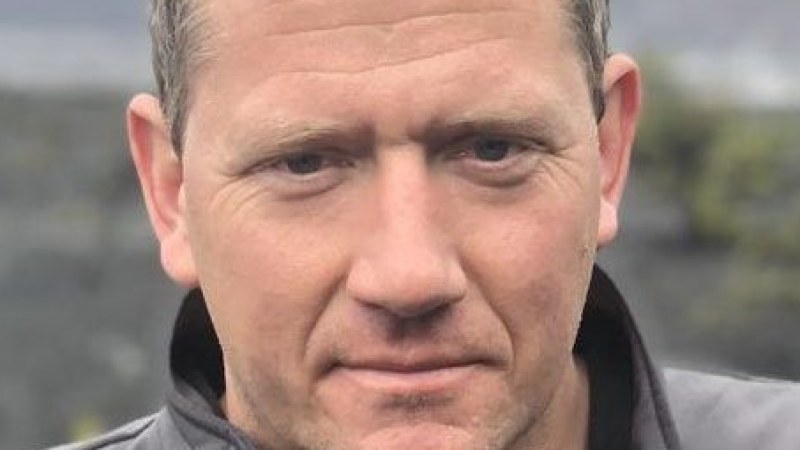
Kurt House
Kurt Zenz House is the Co-Founder and CEO of KoBold Metals, an AI-driven mineral exploration company backed by Bill Gates, Jeff Bezos, and Andreessen Horowitz. A Harvard-trained earth scientist and serial energy entrepreneur, he built KoBold from the ground up to solve one of the most consequential problems of the energy transition: finding enough copper, cobalt, lithium, and nickel to power a decarbonized world. Under his leadership, the company discovered the Mingomba deposit in Zambia - potentially the most significant copper find in a century - and raised over $1 billion to develop it. Before KoBold, he founded C12 Energy (CO2-based enhanced oil recovery) and Phase Change Resources (natural gas asset acquisition), and held research and teaching roles at MIT and Stanford.