There is a particular kind of corporate suspense that arrives on commission day. A seller opens a statement, spots a number that looks wrong, and asks the question that can make three departments quietly leave the group chat: “How did you calculate that?” The answer may be hiding across a CRM export, a territory workbook, an HR roster, a compensation plan PDF, and a payroll file. Varicent exists to make that answer traceable - and to connect the decisions that produced it before anyone gets paid.
The Toronto company sells sales performance management software to organizations whose revenue machinery has outgrown improvised tools. Its platform covers sales planning, incentive compensation, seller insights, channel incentives, and the data pipelines beneath them. Sales operations can model territories and quotas. Compensation teams can calculate commissions and handle disputes. Finance can inspect cost and performance. Sellers can see progress, earnings, and the logic behind a payout. The pitch is less “one more dashboard” than “one governed version of the plan.”
That distinction matters. Varicent is not aimed at the 20-person startup choosing its first commission app. It is built for banks, insurers, technology companies, manufacturers, retailers, and telecom operators with thousands of payees, multiple countries, elaborate crediting rules, and regulators or auditors who dislike mystery. Public customers include ServiceNow, Shaw Industries, ManpowerGroup, Thomson Reuters, Pitney Bowes, CNA Insurance, and CDW. In this corner of software, an edge case is rarely an edge case. It is somebody's paycheck.
01 / The machineFrom territory sketch to commission statement
Varicent's difference is the connective tissue. A planning tool can produce a quota. A commission tool can process a payout. A business-intelligence tool can display performance. Varicent wants the quota, payout, and performance signal to share a data model, so a territory change does not have to be manually reconstructed downstream. The company calls this revenue orchestration. In less polished language: stop making Finance, HR, Sales, and IT translate the same decision four times.
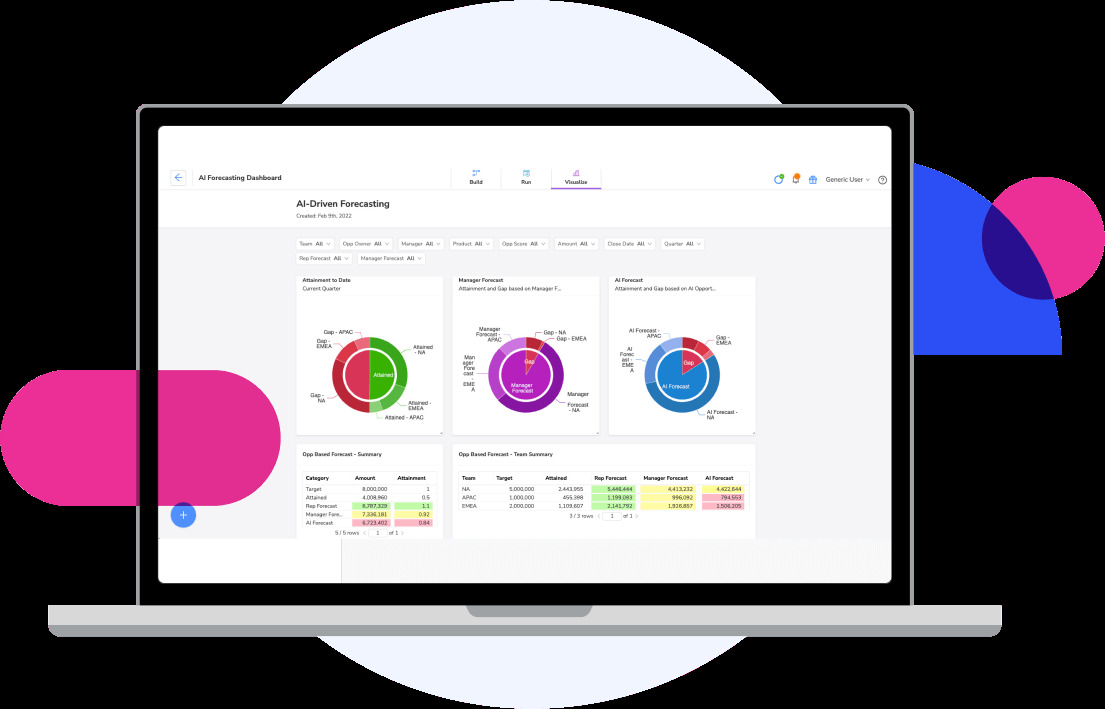
Varicent Incentives remains the center of gravity. Administrators can build complex plans, automate calculations, publish statements, route approvals, and resolve inquiries. Sales Planning handles segmentation, territory design, quota allocation, capacity, and what-if scenarios. Seller Insights gives reps and managers a view of attainment, forecast earnings, pipeline coverage, and account potential. ELT connects systems such as Salesforce, Workday, Snowflake, NetSuite, spreadsheets, and databases, then transforms and documents the inputs. Channel Incentives applies similar logic to partners, rebates, SPIFFs, and tiered programs.
02 / The billWhat control actually costs
Varicent does not publish a price list. Enterprise contracts are negotiated around users or payees, modules, data connections, service levels, and implementation. The cleanest public cost anatomy comes from a 2019 Forrester study commissioned by Varicent. For a composite organization with 2,000 licenses, the model estimated roughly $2.95 million in risk-adjusted costs over five years: about $1.5 million for cloud licensing and administration, $640,000 for professional services, $562,500 for implementation and planning, and $217,200 for training. It is a model, not a current quote, but it shows where the money goes.
The important cost is not only the invoice. A serious rollout needs people who can define compensation rules, reconcile source systems, test calculations in parallel, manage exceptions, train sellers, and own the model after consultants leave. G2's aggregated reviewer data lists an average implementation time of eight months and return on investment at 20 months. Individual experiences vary widely. One public Gartner review describes a promised few-month migration stretching into years; other customers report fast rollouts and responsive support. The gap usually reflects complexity, data quality, scope, partner capability, and whether the buyer treats implementation as a software install or an operating-model redesign.
“The first thing to fail is usually not the formula. It is trust in who owns the formula.”YesPress analysis
03 / The fractureWhat fails first - and what changes minds
Reviewers repeatedly praise Varicent's flexibility, reporting, permissions, and ability to model complicated compensation. They also repeat a less flattering set of nouns: complexity, setup, loading, processing, support tickets. Large calculations can take time. A flexible model can require specialized administrators. An implementation partner can become a bottleneck. If source data arrives late or definitions conflict, the new platform may process confusion with greater precision.
What changes a buyer's mind is often a spreadsheet finally behaving like production infrastructure. A new territory plan takes weeks to propagate. A crediting exception triggers hundreds of manual adjustments. Reps keep “shadow accounting” because they do not trust statements. A customer cannot explain why two nearly identical deals paid differently. Varicent's own case material describes Shaw Industries moving from mainframes, homegrown applications, and countless spreadsheets to a central hub. ServiceNow chose a purpose-built system because its plans needed to change without rebuilding the process. DXL needed rules granular enough to handle an item sold in one store and returned in another.
The best outcome is not simply faster calculation. It is fewer seams. ManpowerGroup says clearer reports gave its team more time for analysis and made commission logic visible to payees. Thomson Reuters described using Varicent's ELT Assistant to cut some data-analysis work from four or five hours to roughly 15 minutes. Shaw said automation let teams respond to tariff changes and build incentives in days instead of weeks. Those are vendor-published customer claims, but they are usefully specific: time saved, decisions moved, fewer black boxes.
04 / The second actThe company IBM bought - then gave back
Varicent's corporate history has the pleasing symmetry of a founder story written by an investment banker. The company launched in 2005 and grew quickly, topping Canada's PROFIT 100 in 2010 and earning Deloitte Fast 500 recognition. By 2012 it had raised $35 million, served more than 200 organizations, and caught IBM's attention. IBM acquired it for an undisclosed sum and folded the software into its analytics portfolio.
The next seven years became what employees call “the IBM Years.” The parent invested in processing and enterprise editions for larger customers. Then the direction reversed. In late 2019, Great Hill Partners and Spectrum Equity acquired IBM's sales-performance assets, again for undisclosed terms, with founder Marc Altshuller and former Varicent leaders returning. The independent company relaunched on January 1, 2020. It acquired Symon.AI for data preparation and machine learning, then Concert Finance to broaden compensation planning. A 2024 investment led by Warburg Pincus backed another phase of product development and international growth.
That round trip explains Varicent's personality. It has the configurable depth of software raised inside a large enterprise vendor and the focus of a private company with one category to defend. It also carries the habits of enterprise software: negotiated contracts, partner-led projects, training, professional services, and a product whose value increases with scale.
05 / The new layerAI, but attached to an actual job
Varicent's current AI argument is more restrained than the usual sparkling assistant bolted onto a dashboard. At its 2025 Unlock forum, the company showed AI embedded across scenario modeling, incentive logic, data preparation, documentation, and inquiry management. The point is to improve a chain of work: ask what changed in a data pipeline, generate documentation, test a compensation rule, compare territory scenarios, or help answer a seller's payout question.
This works only under boring, necessary conditions. Source data must be accurate. Humans must approve plan logic. Teams need permission controls and auditable calculations. A model that confidently optimizes the wrong definition of revenue is not intelligence; it is a faster argument. Varicent's advantage is that AI sits beside governed enterprise data and calculation logic. Its risk is that buyers confuse having the feature with having the foundation.
06 / The stealWhat operators can copy tomorrow
The most useful Varicent ideas do not require a Varicent contract. They require someone to stop treating compensation as a clerical task at the end of the quarter. Incentives are a behavioral system. Territory and quota choices shape opportunity. Crediting rules decide what work counts. Statements teach sellers which actions the company values. Inquiries reveal where the design is confusing. Put those pieces in one feedback loop and the commission process becomes an instrument panel rather than a receipt printer.
The five-part copyable playbook
- Name one owner for every core field: account, territory, role, quota, credit, rate, and payout.
- Draw the handoffs from CRM and HR through calculation, approval, payroll, statement, and dispute.
- Run old and new calculations in parallel; test ugly exceptions before celebrating the happy path.
- Give every seller a traceable explanation, not merely a number with a green checkmark.
- Measure inquiry volume, adjustment rate, cycle time, and shadow-accounting hours before adding predictive AI.
Buyers should also copy Varicent's platform logic selectively. Connect planning to payout if territory and quota changes regularly create downstream repairs. Add seller insights if reps cannot see the link between activity, attainment, and earnings. Invest in an ELT layer when analysts spend their week reconciling inputs. Do not purchase every module because a slide labels the collection a platform. Purchase the shortest complete chain that removes a costly handoff.
07 / The fitWhere Varicent wins - and where it does not
Varicent sits between commission specialists and broad planning suites. Xactly and CaptivateIQ are common incentive-compensation alternatives. Salesforce Spiff appeals to organizations centered on Salesforce. SAP and Oracle offer suite-based options. Anaplan competes in connected planning. Varicent's position is that enterprise sales performance needs a purpose-built model spanning planning, incentives, data, and seller action. That breadth is meaningful when the parts genuinely share decisions. It is expensive decoration when they do not.
Conditions for a good fit
Many payees, complex plans, frequent changes, multiple source systems, audit pressure, dedicated administrators, executive sponsorship, and a measurable cost of manual work.
Conditions for a bad fit
A small sales team, simple commissions, clean single-CRM data, no implementation owner, no appetite for governance, or a requirement for quick self-serve setup and public pricing.
The company is strongest when complexity is real and already expensive. It will not rescue a team that cannot agree on plan rules, cannot assign data ownership, or expects consultants to discover the business process by archaeology. Nor is it an obvious bargain for a straightforward plan that a lighter tool can explain and calculate.
Varicent ultimately sells a rather unglamorous corporate luxury: confidence that the plan approved in January is the plan sellers experience in June. For a global sales organization, that confidence can affect cost, behavior, retention, and revenue. For everyone else, it may be a very elaborate answer to a spreadsheet that only needed a careful owner.