There is a particular sort of dread reserved for the person who must tell a salesperson that the number on the paycheck is wrong. Mark Schopmeyer met it at BrightRoll. Asked to process commissions for a 30-person sales team, he figured his Excel skills would be enough. He then spent two weeks working until 2 a.m., cleaning data, calculating pay and emailing summaries. When the team grew toward 100 people, the work nearly drove him to quit. The arithmetic was only part of the trouble: every rule, exception and correction lived somewhere fragile.
He compared notes with college friends Conway Teng and Hubert Wong. In 2017, the three founded CaptivateIQ. They had found a large software market by looking closely at a small, miserable task. Their question was wonderfully unglamorous: if a company can describe a commission plan, why should paying it require heroic spreadsheet maintenance?
The short version
- CaptivateIQ automates incentive compensation and connects it to sales territories, quotas and capacity plans.
- Its buyers are usually finance, RevOps and compensation teams; its daily audience also includes sellers checking their earnings.
- Gong says monthly commission calculations dropped from five hours to five minutes. Expel says sales planning time fell 75%.
- The price is a custom quote built around seats, setup, complexity and integrations; no public dollar figure is posted.

The calculation is a promise
A sales commission plan looks tidy on paper: close a deal, earn a percentage. Real plans have tiers, accelerators, split credit, eligibility rules, bonuses and exceptions. They rely on data from a CRM, people systems and finance records, often changing while the sales year is in motion. Administrators must make the rules execute correctly. Sellers want to know why one deal paid differently from another. Leaders want incentives to reward the behavior the company actually needs.
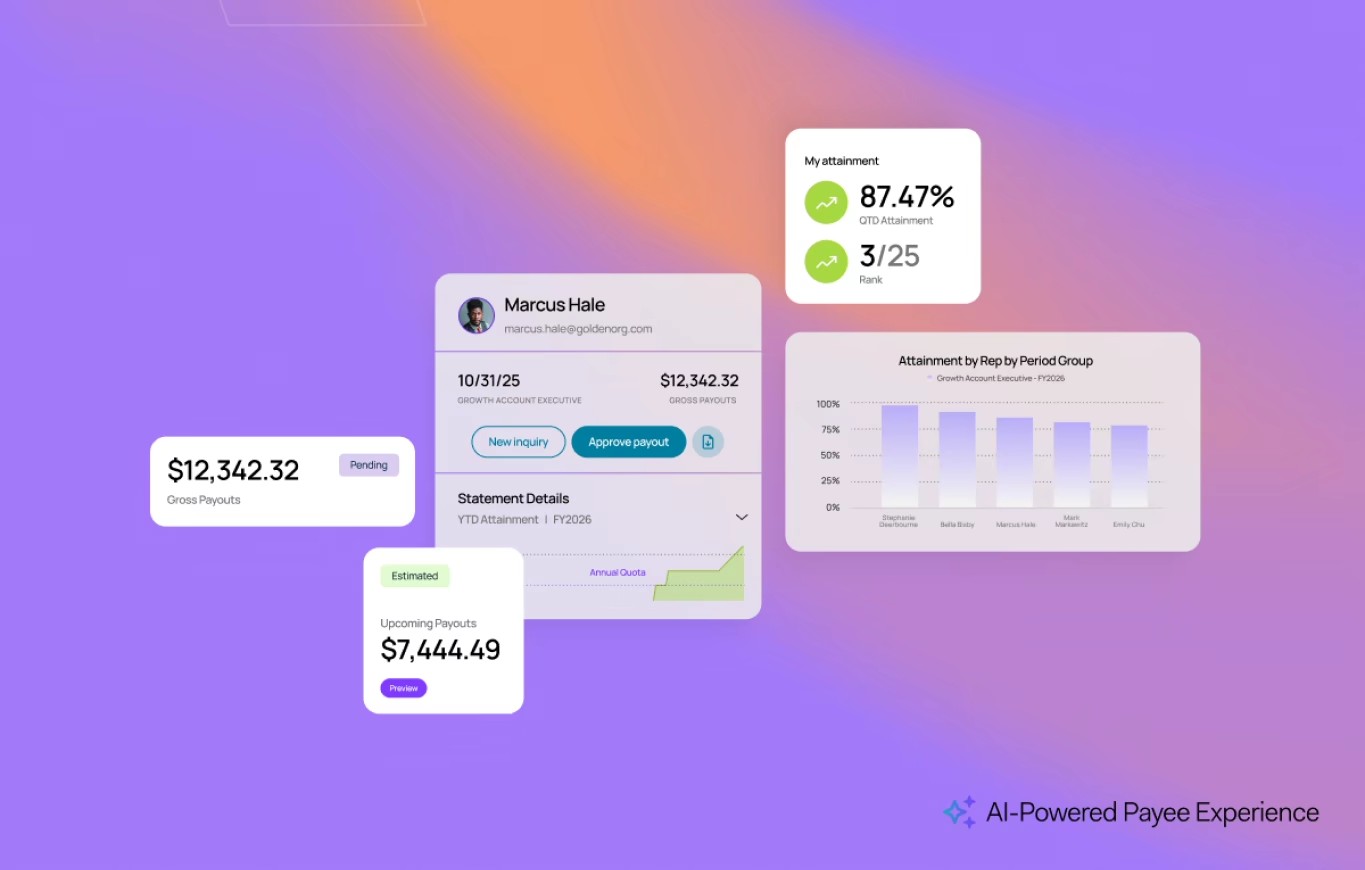
CaptivateIQ's original product, now called Incentives, gives operations teams a no-code place to build those rules, run calculations and produce statements. Its SmartGrid engine takes in source data, transforms it and applies plan logic. The attraction is less mysterious than the software's branding: an admin can change a plan and inspect the result without commissioning a custom consulting project. A rep can see the path from deal to dollar, which is a useful antidote to the private spreadsheet some sellers keep to check their employer's math.
This is where the company sits in the market. Spreadsheets remain the cheap, familiar default. Products from Xactly, Varicent, Performio, Spiff, QuotaPath and others offer different ways to manage compensation. CaptivateIQ's pitch is flexibility for complicated plans without sacrificing an audit trail, then a connection to the planning decisions upstream. That is a claim buyers should test on their own ugliest plan, not the vendor's cleanest demo.
What broke first at Gong
Gong offers a useful view of the problem in the wild. Its operations team had built a sophisticated spreadsheet system, but adding sellers meant making more individual Google Sheets and pasting data between files. As the sales organization grew, the process was becoming an administrative job unto itself. Gong wanted finance professionals, already comfortable with spreadsheet logic, to own changes directly. Its team chose CaptivateIQ after rejecting other systems it found harder to learn.
CaptivateIQ's product solutions team configured Gong's plans and tested the results against its previous model. That parallel run matters. A fast calculation earns little trust if it cannot reproduce a known answer. Gong reports that monthly calculations for hundreds of reps fell from at least five hours to five minutes, with payout accuracy above 98%. These are Gong's reported results, not a guarantee for every sales organization. Still, the steps are copyable: document the rules, connect the data, run old and new systems side by side, and let the people who own compensation verify the difference.
Then the map entered the paycheck
The founders started with payouts, but a payout begins long before payroll. A territory determines which accounts a rep can pursue. A quota defines what success means. Capacity planning determines how many people are available to pursue it. If those decisions are made in separate files, the compensation system receives a plan that may already be out of date. CaptivateIQ introduced Planning in 2024, added Territory Optimization in early 2025, and announced a connected Planning and Incentives platform later that year.
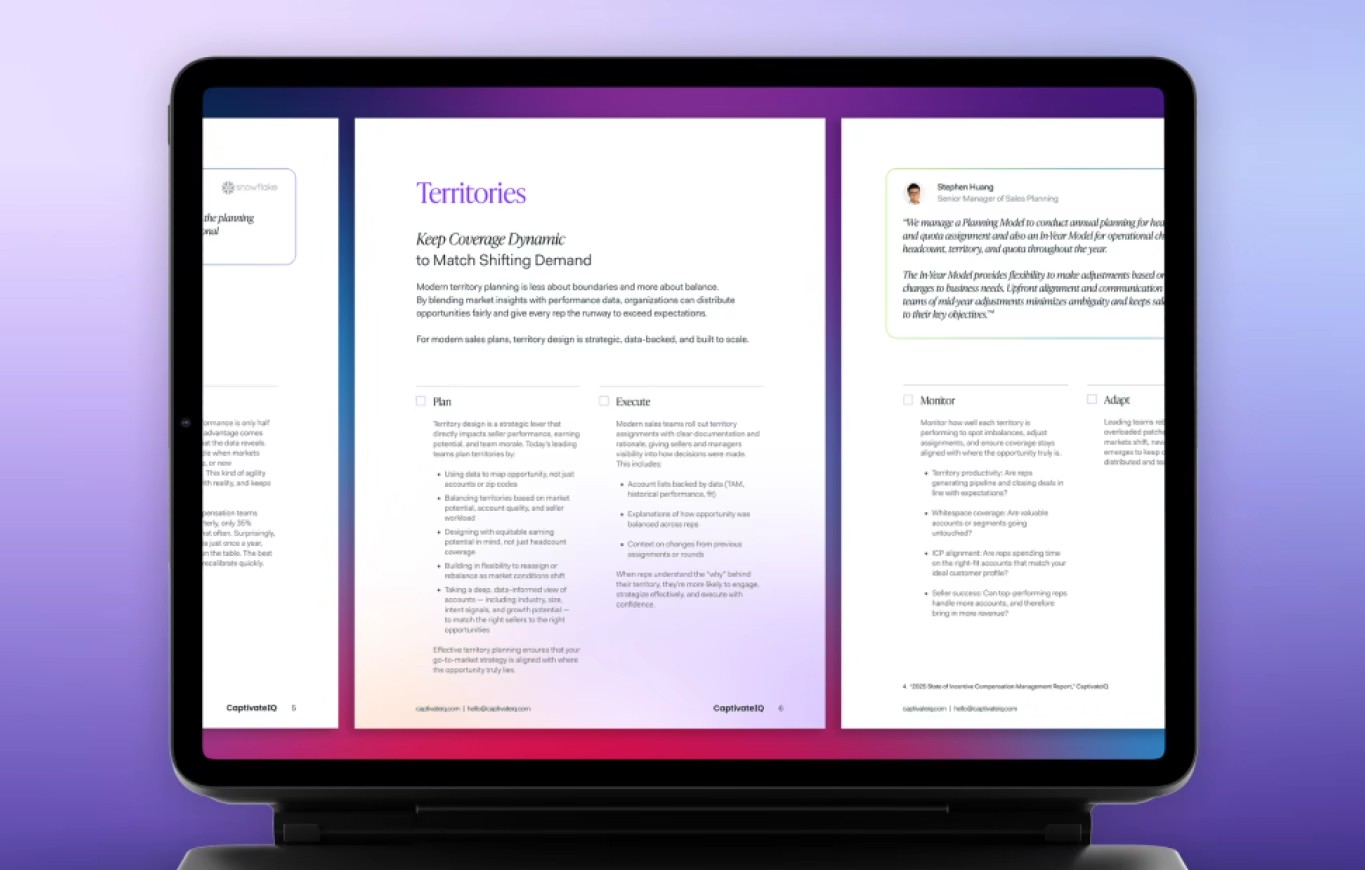
Expel is a crisp example. The cybersecurity company already used CaptivateIQ for incentives, while its territory process stayed in a Google Sheet with more than 55 columns and over 80,000 accounts. It moved the routing rules and Salesforce data into CaptivateIQ Planning. Expel reports that a process taking roughly a month came down to a week, with enterprise territories finalized in six hours. The choice was not a sudden romance with new software. Expel had already trusted CaptivateIQ for commissions; the planning product addressed the next spreadsheet that had begun to fail.
The other expansion is predictive. Catalyst, introduced in 2025, offers models for quota attainment, commission spend, payout anomalies and account scoring, using planning and compensation data already in the system. In 2026 CaptivateIQ began introducing specialized AI agents to build compensation logic, handle operational questions and help with revenue planning. The rollout has stages; some capabilities have been in limited beta. The practical distinction is that an AI suggestion about someone's pay needs a visible rule, current data and a human approval path. A fluent answer that cannot be traced is no answer at all.
The business behind the relief
CaptivateIQ sells enterprise software by subscription. Its public pricing page describes per-seat pricing for administrators and payees, a one-time setup fee and custom quotes shaped by integrations and compensation complexity. Reporting is included; some services and accounting features are add-ons. That leaves the dollar cost unknown until a buyer gets a quote. The real buying calculation includes implementation effort, time saved each month, errors avoided and the cost of salespeople no longer trusting their statements. Those last two are harder to measure, which is precisely why a test run on real plans matters.
The company has grown well beyond the founders' first 30-person problem. It says more than 1,000 organizations worldwide use the platform. In January 2022 it raised a $100 million Series C led by ICONIQ Growth, Accel and Sequoia, with Sapphire joining, bringing disclosed funding to $164.6 million and a $1.25 billion post-money valuation at the time. In 2026 it announced recognition as a Leader in Gartner's Sales Performance Management Magic Quadrant. Those markers say the market takes the category seriously; none of them calculates a customer's next payroll run.
A company considering the product can borrow the founders' method before buying anything: find the person still awake at 2 a.m. Ask which rule takes the longest to explain, which source file creates the most rework and which payout people quietly recalculate for themselves. Build a test around those answers. If the data is stale, the plan is undocumented or no one agrees who owns approvals, a faster engine will merely deliver confusion on schedule. CaptivateIQ's most durable insight is simpler: the sales plan and the paycheck belong to the same conversation.