The most revealing decision in Arnab Mishra’s career was not accepting the chief executive job at Xactly. It happened much earlier, when he was paid to study companies and discovered that he would rather help build one. Investment banking had taught him to read transactions. Growth-stage private equity had put him in rooms with founders preparing for public markets. The work was rigorous, the people were sharp, and the view was excellent. Yet it was still a view from the grandstand. Mishra wanted the mud on his shoes.
He has described those late-1990s encounters with technology entrepreneurs as life-changing. They were making products, hiring teams, and solving the daily problems that never fit neatly into a model. Mishra, born in New York and raised mostly in northern New Jersey by parents who had immigrated from India, recognized something familiar in their wager: risk taken without a built-in guarantee. He left the investor’s side of the table, went to Harvard Business School, and began a long migration toward the operating center of software.
That choice gave his career its shape. He did not leap directly from finance into a corner office. He moved through product, marketing, customer experience, cloud infrastructure, go-to-market work, and operations. Every stop added a new dialect. By the time he became Xactly’s second CEO in December 2023, he could speak to a board about capital, to a product team about workflows, and to a customer about the ugly spreadsheet that still ran a consequential part of the business.
The education of an inside outsider
At the University of Pennsylvania, Mishra earned an economics degree from Wharton in 1996, but he did not confine himself to the business-school corridor. He explored literature, South Asian studies, and music. Years later, he said that this breadth taught him he works best across disciplines. It is a small autobiographical detail with large explanatory power. His professional advantage became the ability to stand at the seam between categories: commercial and technical, analytical and empathetic, strategy and execution.
His first technology chapter began with Telera, whose team used VoiceXML to put voice self-service applications on standard hardware. After Alcatel acquired the company, its work became part of the Genesys Voice Platform. Mishra then joined members of the same founding team at Transera, which built an enterprise cloud contact-center system for routing, queuing, reporting, and analytics. Over more than a decade there, he rose to president and chief operating officer. BroadSoft acquired Transera, and Mishra went on to lead its contact-center business.
Xactly later credited his BroadSoft unit with more than doubling bookings growth, adding over 70 enterprise customers, and enabling more than 25 channel partners. The figures matter, but the more durable result was range. Mishra had watched one technology become a product, a product become a company, and a company become a business unit inside a larger company. He had seen both creation and integration, those two very different corporate weather systems.
“The process of business is really the process of iteration.”Arnab Mishra
A company ready to be reworked
When Mishra joined Xactly in 2017 as senior vice president of products, he was deliberately leaving the customer-experience field after roughly 15 years. Xactly offered a different problem. It was not a blank-page startup. The company had already gone public, been taken private by Vista Equity Partners, and established its name in incentive compensation. The assignment was reinvention at scale: broaden the product, connect departments that often speak past one another, and turn a successful point solution into a wider platform for revenue performance.
He became chief product officer in 2018 and eventually took responsibility across product, go-to-market, and customer success before moving into the chief operating role. This was not an executive tourism program. It was an apprenticeship in the entire revenue loop. Planning determines where sellers work and what quotas they carry. Compensation shapes what they pursue. Forecasting tells leaders whether the plan is becoming reality. If those systems disagree, the company conducts its business through translation errors.
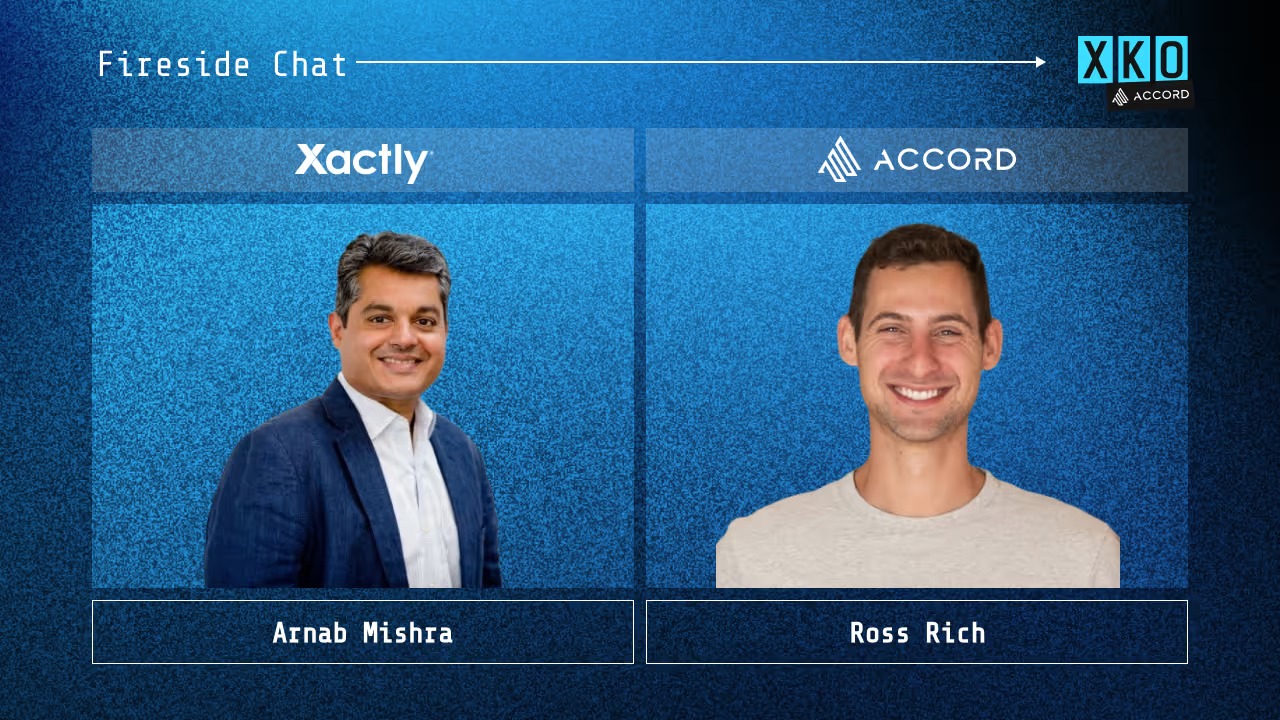
Mishra’s product idea is prosaic in the best sense: replace hunts through reports and handoffs between spreadsheets with a shared system. In 2024, Xactly introduced a composable platform that joined its Incent and Forecast products with planning, design, and management tools. In 2025, the company added AI agents and presented Xactly Intelligence, combining predictive models with generative interfaces. The ambition is not to decorate old software with a chatbot. It is to make the system easier to question, configure, and act through.
His caution is equally clear. AI inherits the weaknesses of the data beneath it. Mishra has asked the blunt question: “When you can’t trust the data, can you trust the AI?” Xactly’s wager rests on years of pay and performance information, but volume alone is not virtue. The information must be relevant, contextual, and presented where a person can use it. For compensation and revenue teams, a confident wrong answer is not a charming glitch. It can alter a forecast, a territory, or a paycheck.
The operating system behind the operator
Mishra’s leadership vocabulary is strikingly free of managerial incense. He talks about truth-seeking, a bias toward action, and a long-term perspective. Truth-seeking means facing information that unsettles a preferred story. Action means listening closely enough to find the root problem, then moving. The long view means funding innovation with operational discipline while continuing to invest in people and customer relationships. These principles are not slogans arranged on a lobby wall. They form a sequence.
Get an objective view, including the evidence that challenges existing beliefs.
Stay curious, ask why repeatedly, and respond before the market finishes changing.
Use efficiency to finance innovation, people, partnerships, and durable customer trust.
He adds a leader’s obligation: model and measure. Executives must demonstrate the behavior they request, admit when they miss their own standard, and create enough visibility for people to correct themselves. The method has a stern kindness to it. Facts should not be used as theatre for the boss. They should help a team see its own work more accurately.
This is also why Mishra defends changing one’s mind. He distinguishes indecision from rethinking. Indecision refuses to choose. Rethinking makes a choice and remains willing to revisit it when new evidence arrives. Seniority often tempts people to confuse accumulated knowledge with permanent correctness. Mishra prefers first principles: take the problem apart again, examine what is actually true now, and earn the next decision.
“No win will define you and no loss will define you.”Arnab Mishra
The quiet competitor
Colleagues describe Mishra as thoughtful, calm, and collaborative. Friends who play pickleball with him append an important footnote: he wants to win. He grew up playing tennis, squash, and table tennis before adding pickleball to the rotation. His first game happened when he and Zingtree CEO Juan Jaysingh found the tennis courts occupied. The improvisation stuck. So did the rivalry.
Mishra explains the competitive streak as a problem-solving instinct. Put an obstacle in front of him and he would rather go through it than decorate a route around it. On a court, the opponent becomes the problem of the moment, though he has joked that an alarming shot is more likely inaccuracy than menace. In business, the same instinct is tempered by perspective. Experiments fail. Wins pass. Losses pass too. The useful part is what the result teaches the team to do next.
He reads nonfiction to keep that process alive. His interests range from business to historical cycles to empathy and listening. The habit is consistent with the Wharton undergraduate who wandered into literature and music: use another discipline to loosen the grip of the familiar one. He has also remained involved with Penn, including the James Brister Society, alumni interviewing, and the advisory board of the university’s Museum of Archaeology and Anthropology. The museum connection feels particularly apt for an executive interested in how systems, artifacts, and human behavior explain one another.
His advice to people starting their careers is to spend the early years investing in skills rather than optimizing for title or pay alone. Choose work that matters to you. More pointedly, choose people who know what you do not. Mishra deliberately sought technically accomplished leaders after business school because he knew the missing piece in his own toolkit. For mid-career professionals, his prescription changes: cultivate the ability to rethink, before expertise hardens into furniture.
The next version of the machine
At Xactly Upside in 2026, Mishra framed the AI moment as a leadership test more than a shopping trip. The question is not simply which tool a company adopts. It is whether leaders can align sales, compensation, and finance around more adaptive decisions, then govern the technology well enough to trust the result. That position suits someone who has spent a career between markets and machinery.
The job ahead is plain to state and difficult to execute. Make enterprise software less laborious. Turn scattered sales data into useful judgment. Preserve human accountability while automation grows more capable. Listen to customers without waiting for their complaints to become strategy. Mishra has already traveled from the people who value companies to the people who must make value appear in the first place. His quiet bet is that the next revenue machine will work better when its parts can finally talk to one another - and when its leaders remain curious enough to listen.