On Sunday nights, K. V. Rao used to do what many executives do when they would rather be doing almost anything else: stare at spreadsheets before Monday’s sales meeting. The cells held plenty of data. They were less forthcoming about the future. Rao had helped build Zuora, and he knew how consequential a revenue decision could be. In 2014, announcing the public launch of the company he had spent two years building with Andrew Abrahams, he described Aviso as born from the anxiety of trying to find a signal in that noise. It is a remarkably unglamorous origin for an AI company. That is precisely why it is useful.
The short version
- Aviso began by forecasting sales from historical deal data; it now sells a broader platform for guiding revenue work.
- Its buyers are B2B sales, RevOps and customer success teams, including Honeywell, RingCentral and New Relic.
- The distinction is its attempt to link a predicted number to the meetings, relationships, usage data and next actions beneath it.
- Enterprise pricing is tailored. Aviso advertises migration and onboarding help, but no universal public list price.
A forecast is a confession
A sales forecast is usually presented as a number. In practice, it is a collection of judgments: whether an enthusiastic prospect has authority, whether a quiet account is still engaged, whether a deal slipped because of timing or because nobody wants it. The CRM records pieces of that story. Spreadsheets rearrange them. Neither necessarily tells a sales manager what to do before the quarter ends.
Aviso’s first answer was predictive forecasting. Its cloud software drew on deal history to estimate likely outcomes and help leaders inspect a pipeline. That put it in a market full of forecasting tools. The company’s later move was more interesting: it began treating the forecast as an entry point to the seller’s working day. Its platform now combines opportunity data, emails, calendars, meetings, buyer relationships and, for some businesses, product usage. It then offers deal scores, risk signals, coaching prompts and automated follow-up. In 2019, when former Salesforce leader Trevor Rodrigues-Templar became CEO, Aviso introduced what it called an AI compass for guided selling. The change made its ambition plain: predicting the quarter was useful; altering its path was the larger business.
“It gives management what management wants to see ... and it gives [sellers] insights back.”Charles Forsgard, Honeywell sales leader, on the Aviso bargain
Forsgard’s observation gets at the product’s hardest problem. Salespeople have long been asked to feed CRMs for the benefit of management. If the system gives a rep a useful cue about an account in return, data entry becomes less of a tax. This is a theory of incentives as much as a theory of machine learning.
The moving target at RingCentral
RingCentral had a particularly hostile forecasting environment: many transactions, short cycles and data that changed quickly. Its team, according to Aviso’s case study, struggled to assemble consistent pipeline views from disconnected spreadsheets. Aviso supplied predictive dashboards, pipeline intelligence and customized nudges. The case study describes 29 quarters of forecasting work together. That duration matters more than a single accuracy slogan. A forecast must survive the ordinary indignities of changing territories, rep habits and deal stages.
New Relic posed a different question. Its revenue increasingly depended on consumption, so an opportunity-stage forecast alone could miss what customers were actually using. Aviso’s approach joined CRM records with usage data from a warehouse such as Snowflake. The company says a technical evaluation forecast within 2.5% across programs and account cohorts, while the New Relic case study reports more than 99% accuracy for a recent consumption forecast. Those are company-reported, case-specific figures, not a promise for every sales organization.
From looking at deals to working on them
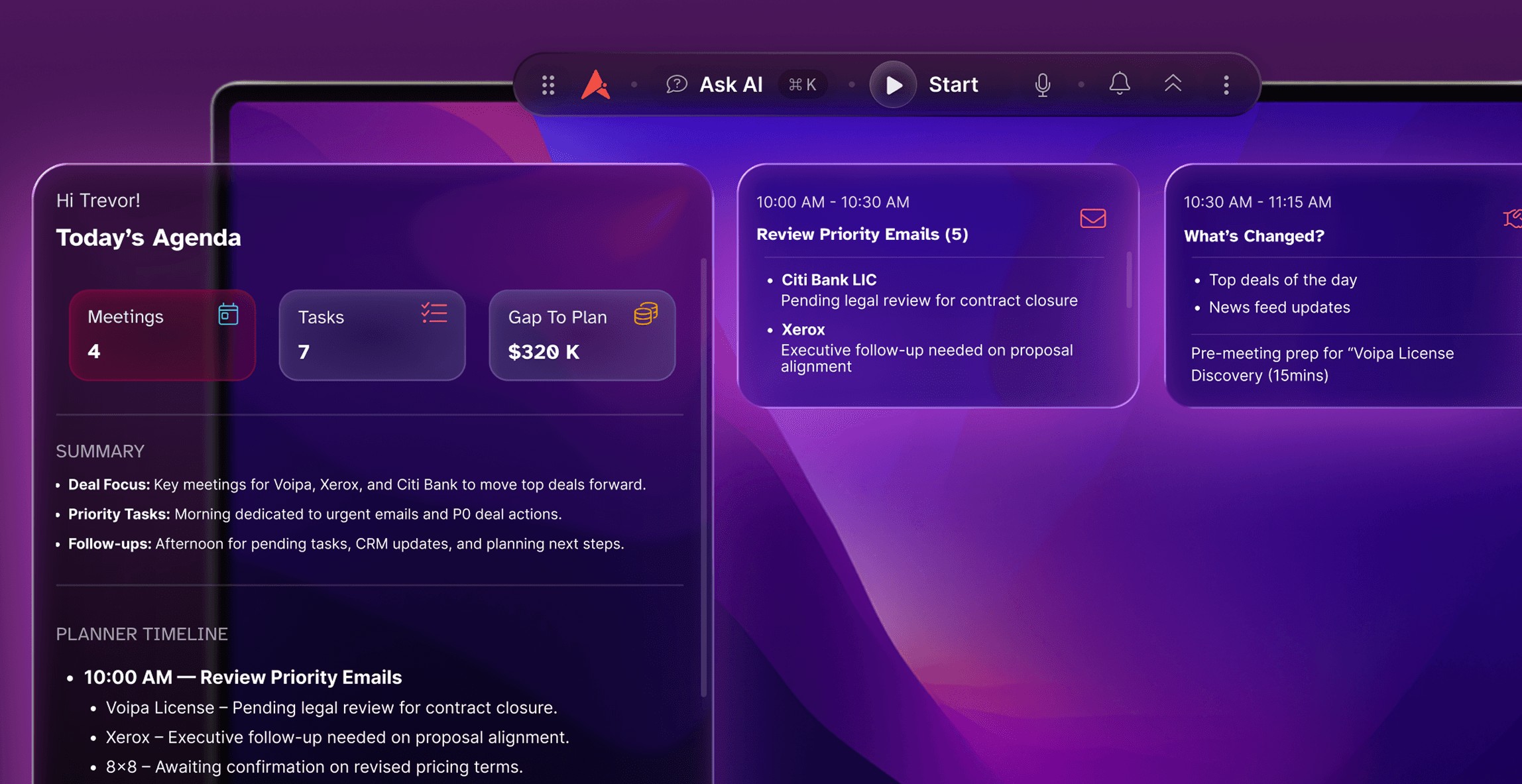
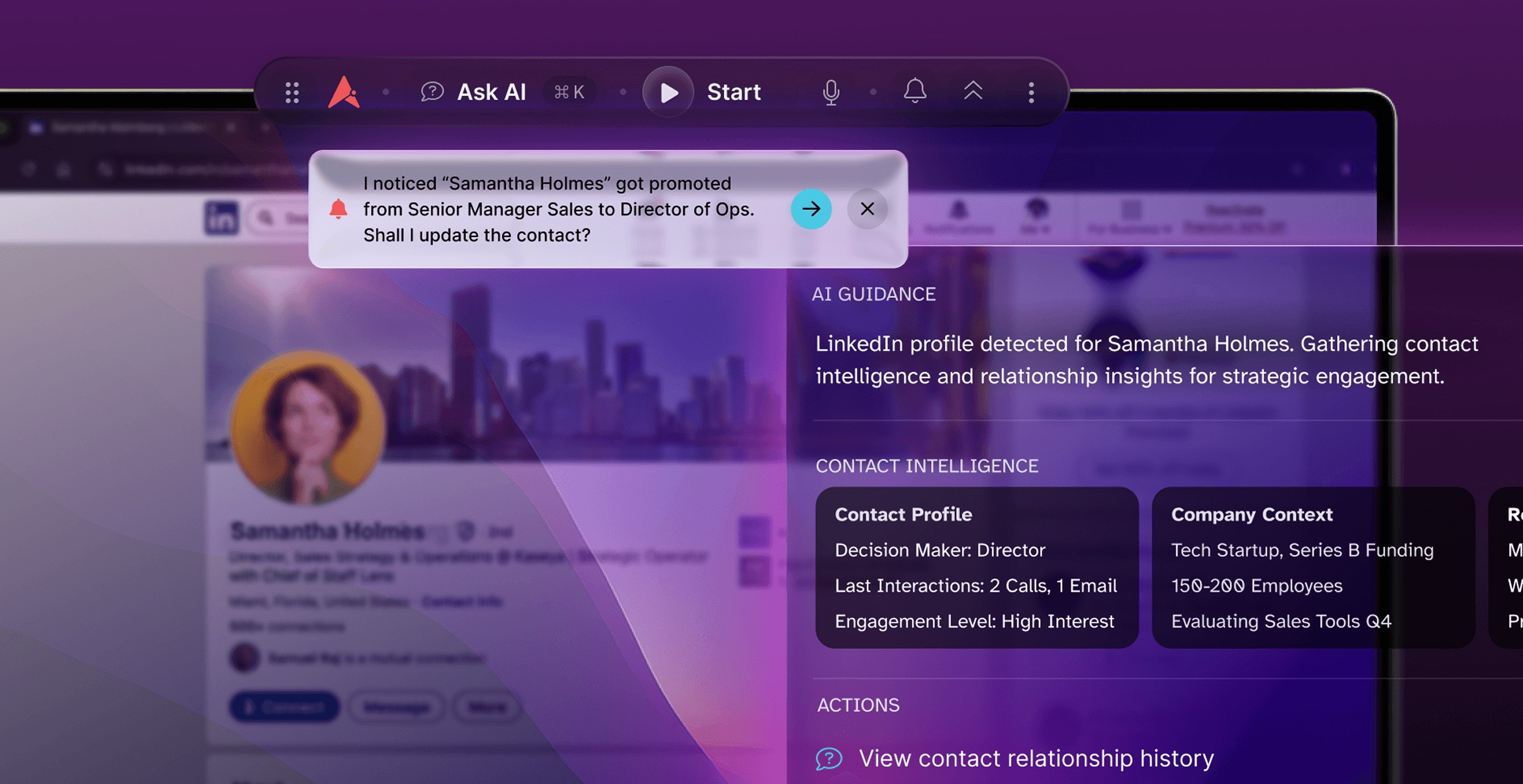
The company calls the result a revenue operating system. “Operating system” is a large claim; the practical version is easier to understand. A rep can prepare for a meeting with an account brief, inspect a stalled opportunity, review a call summary, send a recap and update the CRM. A manager can compare those activities with the forecast. RevOps can combine several CRM instances into one view. Customer success teams can watch renewals and account health. Halo, introduced in 2025, is meant to keep this guidance visible across the apps where sellers already work. MIKI, its AI chief of staff, answers questions and coordinates tasks. Aviso has also introduced role-specific agents and a no-code studio for customized workflows.
The loop is Aviso’s answer to specialist rivals. Clari and BoostUp are common forecasting alternatives; Gong is known for conversation intelligence. Aviso competes by putting forecasting, conversation analysis, pipeline inspection and automation in one workspace. That breadth could simplify a complicated stack, especially for an enterprise with several CRM systems or a mix of subscription and usage revenue. It also asks a lot of one vendor. Teams with a narrow problem may prefer a specialist tool; teams with poor source data will still have poor raw material for advice. AI cannot infer a buyer’s private intention from a blank CRM field.
The expensive part is habit
What did the effort cost? The company has raised about $60 million according to funding databases, with named backers including Storm Ventures, Scale Venture Partners and Shasta Ventures. For customers, Aviso’s pricing page offers tailored proposals rather than a standard posted rate; it advertises free migration and hands-on implementation. A 2026 company blog gives an illustrative $60 per seat per month for one offering, but the price of a full enterprise deployment depends on the deal. Software subscription fees are only one part of the bill. Integrations, historical data and human adoption decide whether the system earns its keep.
Aviso seems to understand the adoption problem. In 2025 it partnered with Consalia, a UK sales education and consultancy business, to combine AI guidance with training in how salespeople actually change behavior. The same year it brought meeting intelligence into Zoom’s app marketplace. In 2026 it added NEWCOM as a channel partner. A spring 2026 product release pushed further into pipeline health scoring, configurable agents and customer success. These moves extend distribution, but they also reveal the obstacle. A beautiful forecast is inert until a team trusts it enough to alter a call, a coaching conversation or an account plan.
The company’s own story contains a useful revision. Rao’s starting question was how to stop guessing about revenue. The product that emerged increasingly asks how to change it. A reader can copy the smaller lesson without buying the platform: start with the decision people dread, identify the signals scattered across their tools, and return the analysis to the person who can act. If the rep gets nothing back, the data will eventually go stale. If the forecast never reaches the rep, it is merely a more elegant Sunday-night spreadsheet.