At Flock Safety, the sales forecast reaches into the warehouse. The company sells technology that includes physical equipment. Its components can require purchasing twelve to eighteen months ahead. A deal that slips out of the quarter therefore leaves more than an awkward conversation. Someone has already made decisions about what to buy.
That detail, tucked into a Clari customer story, explains the company better than the phrase “revenue orchestration.” A forecast is a set of instructions disguised as a number. It tells an organization when to hire, where to spend and how much confidence to carry into its next meeting.
- The job: connect sales activity, deal history and forecasts.
- The buyer: revenue teams managing complex B2B sales.
- The change: Clari is now part of Salesloft; Clari Forecast keeps its name.
The first obstacle was a habit
Andy Byrne and Venkat Rangan founded Clari in 2012. Their early proposition was appealing: gather scattered sales information and use machine learning to make it useful. The awkward discovery was that salespeople did not necessarily want another way to work.
Sequoia’s account of the company describes the resistance plainly. Even useful software demanded new habits. “The roadblock was that our product required a change in behavior of individuals,” Rangan recalled. The founders changed whom they approached, turning toward sales leaders. The business subsequently reached 250 customers.
The distinction matters. A representative has a day to get through. A sales leader has a number to defend. Clari had found someone with both an urgent question and the authority to change the meeting in which it was answered.
“The roadblock was that our product required a change in behavior of individuals.”
Venkat Rangan · Co-founder, Clari
A close date needs witnesses
A CRM can contain an opportunity amount, a stage and an expected closing date. Those fields are useful, but they are also assertions. What changed since last Tuesday? Has the buyer gone quiet? Is the closing date moving while the salesperson’s confidence stays put?
Clari’s expertise lies in connecting records with activity and time. Forecast brings together revenue predictions and management rollups. Inspect lets managers examine opportunities and pipeline movement. Capture reduces the manual work of getting activity into the record. RevDB, its revenue database, provides a foundation for that accumulated context.
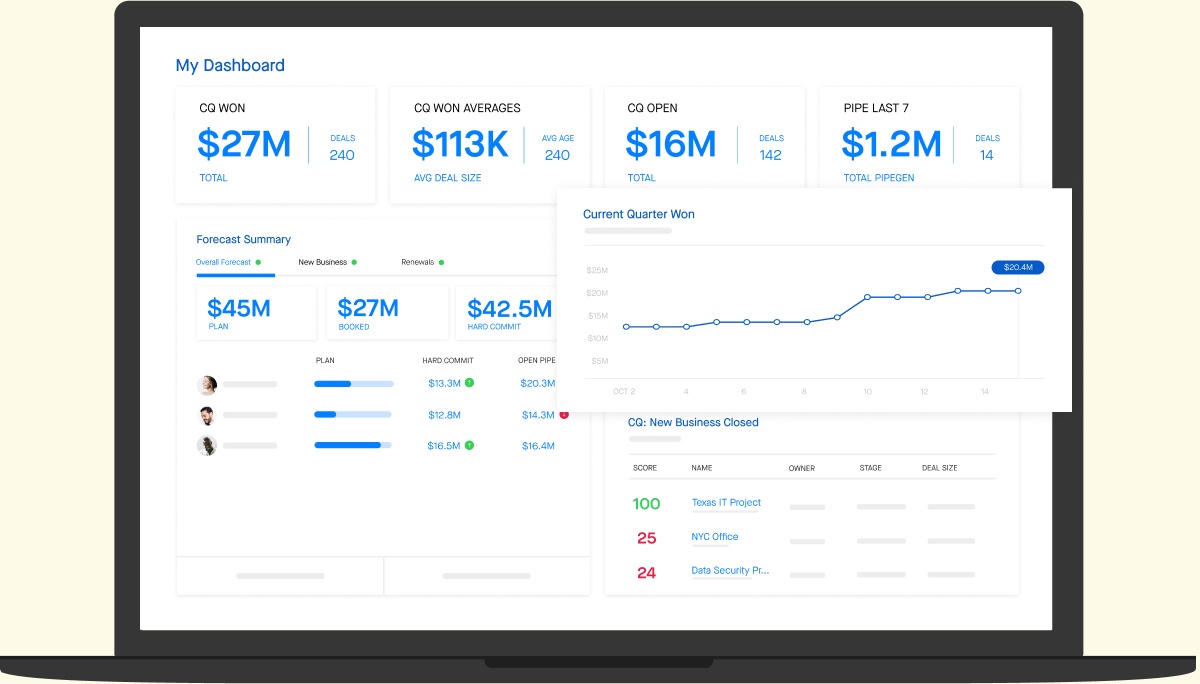
The aim is a forecast call where people can inspect the evidence together. Salesforce can remain the system of record. Clari sits around that information, helping leaders understand its movement and decide where attention belongs. The distinction is practical: recording a deal and judging its prospects are different jobs.
Conceptual workflow, not a measured performance chart.
Four hours back. Fewer slipping deals.
At Unity, the starting point was Salesforce and spreadsheets. Clari’s published case study describes automatic forecast rollups, easier opportunity inspection and a shared view across parts of the business. Its operations team estimated that it saved four hours a week.
The same case reports a 30.2% decrease in slipped deals and a 29.9% improvement in win rate. These are vendor-published customer results, not an experiment isolating the software’s effect. Their usefulness is more specific: they show the kinds of friction a forecasting system is supposed to remove.
Unity’s reported customer-case results. Outcomes depend on the team and process.
Flock Safety supplies the operational stakes. Its team had exported CRM data into spreadsheets and manipulated a weighted forecast. Clari gave it a common view of business segments and historical comparisons. Better visibility mattered because sales expectations informed supply-chain and inventory decisions months into the future.
There is a useful lesson here even for someone who never buys Clari: keep the history, agree on definitions and give each worrying change an owner. Otherwise, a dashboard merely gives uncertainty a more attractive typeface.
The forecast acquired a pair of hands
Clari’s acquisitions followed the work surrounding the number. DealPoint, acquired in 2021, brought buyer-seller collaboration. Wingman, acquired in 2022, supplied conversation intelligence. Groove, added in 2023, brought sales engagement and prospecting.
The resulting product family addressed different moments in a sale. Align organized shared plans with buyers. Copilot turned conversations into material for coaching and deal review. Groove supported outreach and seller workflows. The logic was to connect what managers could see with what representatives could do.
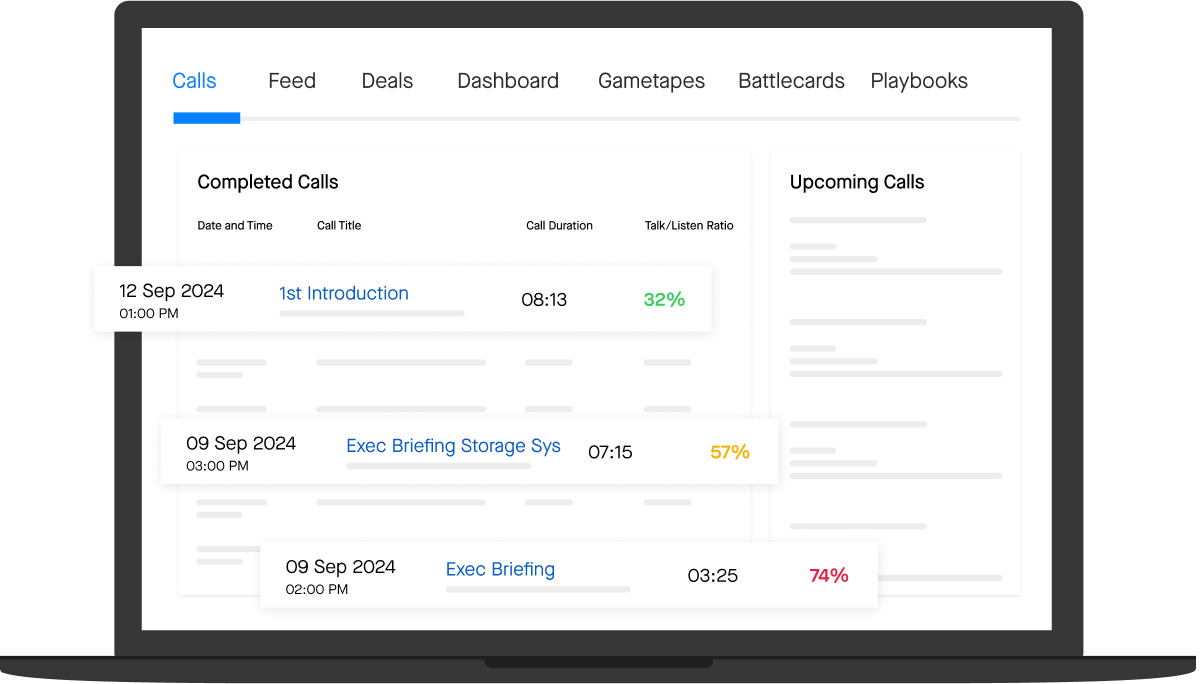
That expansion placed Clari among overlapping alternatives: Gong for conversation and revenue intelligence, Outreach for engagement, and CRM vendors’ own forecasting tools. Its pitch centered on a connected enterprise revenue process. The real comparison for buyers is which combination supports their existing workflows with the least operational friction.
Buying software still means changing work
Clari sold enterprise SaaS through negotiated subscriptions. Buyers need a quote for the users and capabilities they intend to deploy. The practical cost also includes connecting systems, agreeing on forecast categories and teaching managers to use the evidence consistently.
That makes the fit clearest where sales complexity justifies a shared operating routine. A small team with few opportunities may need less machinery. Missing activity, inconsistent definitions or managers who ignore flagged risks weaken the logic of the purchase. Those are operating conditions to evaluate, not problems a subscription automatically settles.
The name changes. The question survives.
Clari’s ambition attracted substantial capital: a $150 million Series E in March 2021, then $225 million in January 2022 at a valuation above $2.6 billion. Those are historical financing figures. They help explain the resources available to expand the product and pursue acquisitions.
In December 2025, Clari and Salesloft completed their merger and appointed Steve Cox CEO. In April 2026, the combined company announced connections between forecasting and seller execution, plus an MCP Server opening revenue intelligence to external AI tools. By September, it adopted Salesloft as its company and platform brand. Clari Forecast retained its name.
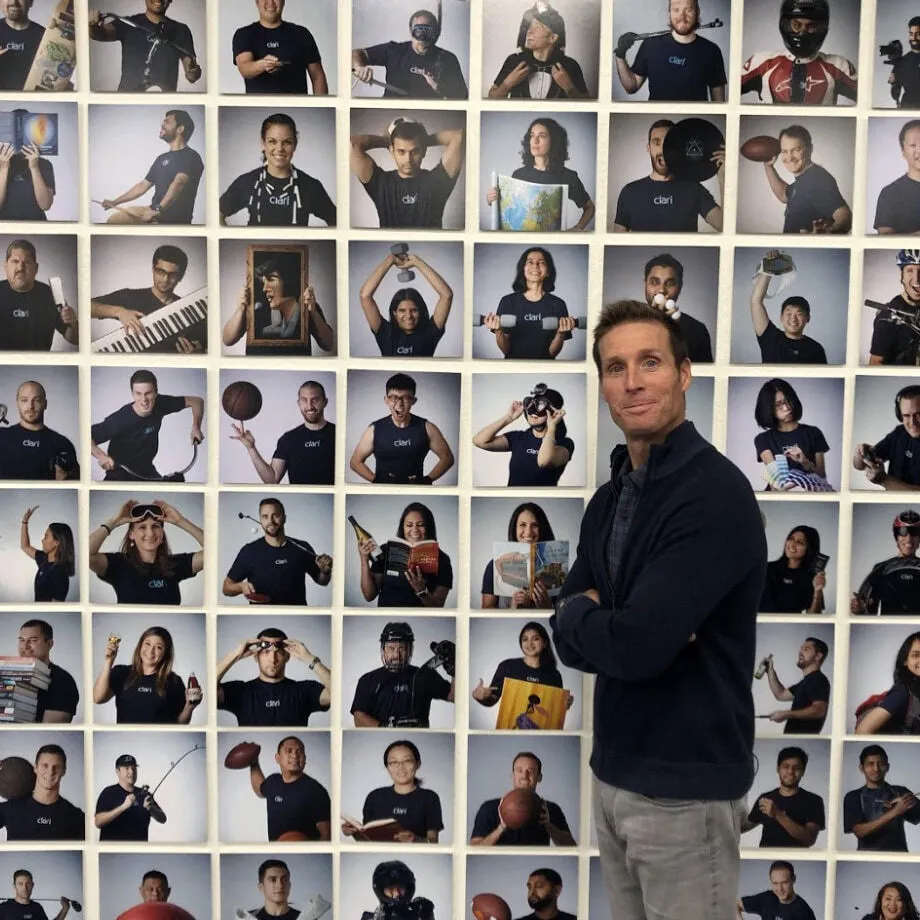
The human detail is worth keeping. Clari’s office displayed employees holding meaningful belongings; Byrne asked newcomers about achievements they wanted from their time there. A business built around numbers understood that people supply the habits behind them. Its enduring question remains wonderfully plain: what makes you believe this deal will close?
Follow the number
Explore the tools, the company’s next chapter and the people explaining the work.