The most important person in an enterprise software sale may be the one who is not in the room. It is the buyer who must later explain the purchase to a finance chief, defend it against other priorities and answer the small, brutal question hiding beneath every large invoice: what did we get for the money? Doug May has spent much of his career preparing an answer for that absent conversation.
May's title has changed often enough to make a business card nervous. He has carried a quota, led sales, served as a chief revenue officer, built value teams, worked as chief of staff to a CRO and run a portfolio of go-to-market functions. The companies changed too: IBM and early internet firms, then Bit9, Splunk, Databricks, Datadog and Harness. Yet a single piece of work keeps reappearing. Complex technology must become legible as business value, and individual brilliance must become an operating system that other people can use.
Now he is doing that work under his own flag. From Greater Boston, May has launched Value Sherpas, a small advisory firm for growth-stage B2B technology companies. The mountaineering metaphor is not shy. Its pitch is that advisors should climb with the team, not wave from base camp with a handsome slide deck. May is the founder and managing director. Wendy Wise, a pricing and go-to-market strategist, is his partner in the firm and his coauthor on a forthcoming book, Bridging the Value Gap.
“Value is the universal language that connects every department within an organization.”Doug May
First, he carried the bag
May did not begin as a theorist of value. He began in sales. After earning a business administration degree from the University of Rhode Island, he worked at IBM and moved through BBN Planet, WebLine Communications, Mirror Image Internet and Endeca. These were companies selling into markets that were either young, technical or both. Buyers did not always have an existing budget line for the thing being offered. A seller had to make the category comprehensible before asking anyone to buy from it.
He has said that he spent more than 20 years carrying a quota. The experience taught him a useful form of commercial humility. A product can be technically impressive and still lose because the customer cannot convert capability into consequence. Faster queries, cleaner data or better security are features until somebody connects them to revenue, cost, risk or time. Without that bridge, the sales pitch floats above the customer's actual business like a very polished weather balloon.
At Bit9, the endpoint security company later known as Carbon Black, May reached his first CRO role. Years later he recalled an odd detail from the reference process. The chief executive and board found a boss he had worked for a decade earlier and asked one question: how did he leave? Not how much he sold. Not whether he was charismatic. How did he leave?
May says the question changed the way he thought about exits. In his last four operating roles, at Splunk, Databricks, Datadog and Harness, he gave between five and twelve weeks of notice. Senior leaders leave a wide wake. A transition measured only by the legal minimum may satisfy a contract while bewildering the people who inherited the decisions. Numbers matter in May's world, but this is one of his better measures: give people runway.
At Splunk, the translator found his job
The decisive turn came at Splunk. The data platform was growing quickly, but technical enthusiasm did not automatically answer executive concern about price. May moved from conventional sales leadership into building business cases full time. His team helped customers compare cost with an outcome rather than with the nearest line item.
As Splunk grew from roughly $200 million to more than $2 billion in revenue, the value practice widened. It began around new customers, then reached expansion and renewals. Product teams came to the group with feature lists, asking which capabilities would deliver the most value. Customer success teams worked on measuring outcomes after the contract was signed. The business case stopped being a late prop in a sales process and became connective tissue.
The translation May keeps building
Internal change was not romantic. May has said he nearly quit while trying to make the value program stick. In a frustrated conversation, sales leader Anthony Palladino offered a useful rebuke: just because you work inside the company does not mean this is not a sales cycle. Find champions. Understand who influences the economic buyer. Build trust. May had been asking salespeople to sell differently while briefly forgetting to sell the change itself.
A new unit of value
In 2019, May went to Databricks and encountered a more peculiar problem. The company sold consumption. Customers paid for Databricks units, but a unit of compute is not an outcome anyone frames for the boardroom. The meaningful object was the workload: customer recommendations, analytics, a machine-learning application or another job the platform made possible.
May's team worked backward. If a customer could establish the value of the workload, it could understand value per unit of consumption. That became especially important when usage rose faster than the original budget. Surprise spending is easier to defend when every dollar of compute is connected to several dollars of business return.
A published Databricks case study reported that 80 percent of its sales representatives adopted the value platform. When the business value assessment was used, the reported win rate rose from 8 percent to 55 percent. Those numbers came from a specific program, not a universal law. Still, they illustrate May's basic claim: value becomes useful when it can travel through the organization without its original translator standing beside it.
At Datadog, where May served as chief of staff to the chief revenue officer, the vantage point widened again. A value specialist can fix one conversation. A chief of staff must see the whole revenue machine: strategy, operating rhythm, leadership judgment and the inconvenient handoffs between teams. May later described forecasting as a diagnostic job built from hundreds of small signals about deals and the people calling them. Better technology can sharpen that judgment. It should not pretend judgment has become obsolete.
The garage behind the driver
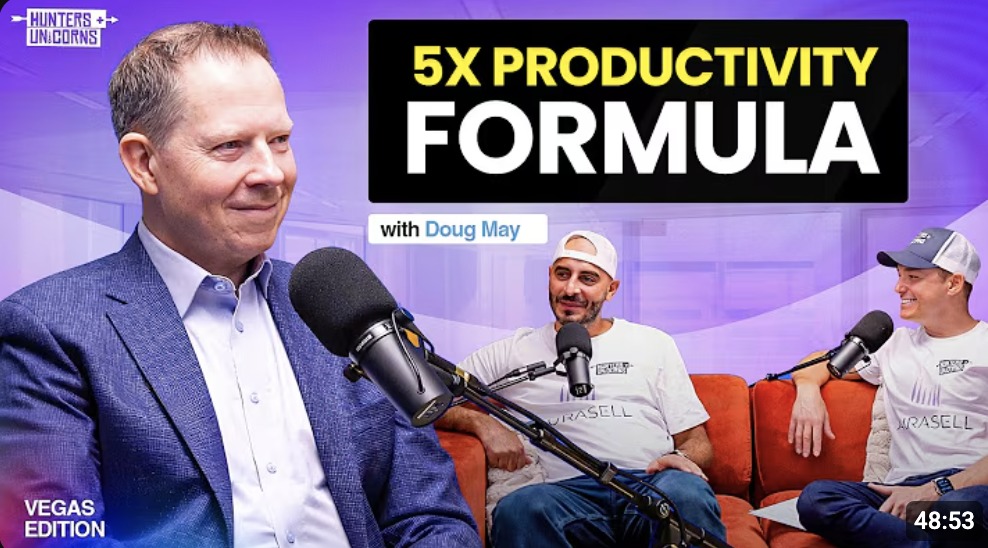
Harness hired May in 2024 as senior vice president of productivity. The title sounded as if someone had promoted a spreadsheet. In practice, it pulled together the teams that make sellers more effective, including revenue operations and strategy, field enablement and value advisory.
May's favorite explanation comes from Formula 1. The driver is visible, but hundreds of people make the car competitive. Engineers read telemetry. Strategists calculate. A pit crew turns a complicated stop into seconds of choreography. When a software company stalls, executives often hire new drivers. May wants them to inspect the garage.
The reported Harness results are unusually crisp: account-executive ramp time cut in half, productivity up 43 percent and win rates improved fivefold through value acceleration. The philosophy behind them is less glamorous than the numbers. Training should measure readiness, not attendance. The question is not whether a representative completed a module. It is whether that person can now handle a real customer situation that was beyond them yesterday.
This helps explain May's long campaign against sales heroics. Heroes can rescue a quarter, but they cannot be forecast, taught or multiplied. A board will not be soothed by a plan in which the final 30 percent arrives because someone usually closes a miraculous deal at the last moment. “You don't get paid extra to do it all by yourself,” May told a podcast host. The effective enterprise seller is a quarterback, assembling specialists and making the collective effort look coherent to the customer.
“The driver alone doesn't win races. The system does.”Doug May
The gap becomes the company
Value Sherpas is the independent version of the work May has been doing inside companies for years. Its clients are growth-stage B2B firms that have reached the awkward altitude where the old playbook begins to fail. The first $20 million may come from product excitement and founder instinct. The road to $200 million demands segmentation, pricing, repeatable messaging, productive hiring and an account of value that survives scrutiny.
May and Wise call the central problem the value gap: the distance between what a company creates and what the customer can see, measure and defend. Strong early growth can hide it. Then sales cycles lengthen, alternatives multiply and margins come under pressure. A customer who quietly benefits but cannot explain the benefit is not as secure as the vendor imagines.
The pair carried the argument into a Harvard Business Review article in August 2026 and are developing it in Bridging the Value Gap. Their contention is deliberately inconvenient. Closing the gap is not merely the job of a talented salesperson near the end of a deal. It requires choices by leadership, coordination across teams and evidence after the sale. In other words, everybody owns value, which is corporate language for saying nobody gets to hide from it.
May's own career forms a neat proof of concept. He began by persuading customers to buy technology that did not fit an established category. He then built teams to do the translating, expanded those teams into systems and finally created a firm to carry the method from one company to another. The visible product is advice. The underlying product is repeatability.
There is a modest lesson in that progression. The best operators are not simply good at doing the work. They notice the mechanism inside the work, name it, test it and make it portable. May noticed that technical value often arrived at the customer's door without identification papers. He has spent three decades giving it something finance can recognize.