smart-buildings
(30)
Groove wants your building to have one number to call
From hotel televisions to apartment Wi-Fi, Groove Technology Solutions sells a practical promise: one team to install the technology, connect the pieces and pick up the phone.

Freespace and the expensive fiction of a full office
The calendar says the meeting room is taken. The sensor says otherwise. Freespace turns that disagreement into decisions about desks, leases and the cost of keeping empty space comfortable.

Nine Workplace Apps Walked Into a Merger. Eptura Wants to Run the Building.
Eptura stitched nine aging-but-useful workplace systems into one worktech platform. The bet is simple: a desk booking, a visitor badge and a broken chiller become more valuable when they live in the same data story.
Modius Is Betting the Data Center’s First Failure Is the Spreadsheet
AI racks are making power and cooling harder to predict. Modius sells the operational layer that lets facility teams see the trouble - and the stranded capacity - before either becomes expensive.

Brivo Put the Office Key in the Cloud - Then Spent 25 Years Teaching Security People to Trust It
Brivo started with a parcel box, pivoted to doors, and made a subscription business out of the least glamorous hardware in a building. Its latest act combines access control and AI video under one roof - with a playbook worth stealing and a few catches worth reading first.

CarbonCents Is Betting Facilities Chiefs Want Lower Bills Before Loftier Carbon Promises
The Clemson-born startup found a practical way into the climate-software market: make scattered building data useful to the people paying the utility bills. Now it is testing whether one dashboard can stretch from boiler rooms to boardrooms.

Xeal’s Contrarian Bet: The Best EV Charger Is the One That Ignores the Internet
After its first connected chargers stranded drivers and drew hate mail, Xeal spent two years moving the transaction off the cloud. The result is a real-estate-first charging business built for the place Wi-Fi goes to die: the parking garage.

Switch Automation Learned the Hard Part of Smart Buildings Is the Part Nobody Sees
The Denver proptech company connects old controls, new sensors and portfolio software in one operational layer. Its useful lesson is wonderfully unglamorous: before a building can become intelligent, someone has to make its data trustworthy.

The Company That Put a Sensor on the Mousetrap
Everyone chasing smart-building glory wanted to control the thermostat. Microshare went after the mousetrap, the toilet paper roll, and the mop - and built a business on the parts of a building nobody wants to think about.

Zan Compute Put Sensors in the Restroom. Now It Wants AI to Run the Cleaning Shift.
The Santa Clara company spent a decade teaching buildings to notice an empty soap dispenser. Its next bet is harder: turning those signals into schedules, work orders and decisions that cleaning teams will actually use.

The Building Knows What’s Wrong. CIM Makes Sure Someone Fixes It.
Most smart-building software stops at the alert. CIM’s PEAK platform follows the problem from noisy sensor data to diagnosis, assignment and proof of repair - giving property teams a practical route to lower bills, fewer breakdowns and better-performing buildings.
The Company Under the Cloud
AI may live in the cloud, but the cloud lives on switchgear, drives and control systems. ABB is the century-old engineering company turning the digital economy's appetite for power into an industrial growth story.
The $4.50 Cleaning Bet That Now Runs 6 Billion Square Feet a Day
ABM began with a bucket, a sponge, a mop and $4.50. Today it sells something far more complicated: the promise that airports depart, data centers stay awake and ballparks are ready before the gates open.
The 140-Year-Old Thermostat Company Cooling the AI Boom
Johnson Controls began with a classroom that was too hot. Today, its chillers, controls and service crews sit at the intersection of two expensive problems: buildings use too much energy, and AI infrastructure produces too much heat.

Trane Technologies
The company behind Trane and Thermo King is turning a century of cooling know-how into an energy-management business for buildings, refrigerated fleets and AI data centers. Its wager is simple: the cheapest new energy is often the energy a machine stops wasting.

Schneider Electric
The 190-year-old industrial group has become the control layer for an electric economy - linking breakers, factories, buildings and AI data centers to the software that decides how power should move.

Honeywell Technologies
After spinning off aerospace and advanced materials, Honeywell is smaller, sharper and focused on one difficult job: teaching the physical world to run with less waste, fewer surprises and more autonomy.

Axross
Axross is a Singapore-based, Y Combinator W22 climate-tech company that builds AI-driven HVAC control systems for industrial facilities. By layering machine-learning optimization, IoT sensing, and building-management-system integration on top of existing cooling infrastructure, Axross helps manufacturers in energy-intensive sectors like pharmaceuticals, semiconductors, and precision manufacturing cut HVAC energy use by up to 30%, lower Scope 2 emissions, and hold production environments precisely stable - without ripping out the equipment they already own.

INTEREL
INTEREL is a Dubai-based smart building technology company that builds the hardware, operating system and IoT infrastructure hotels and multifamily properties use to control HVAC, lighting, shades and guest services from a single connected platform. Its 'Hotel of Things' ecosystem pairs a portfolio of smart thermostats and room controllers with INTEREL OS and the connectBsmart connectivity framework, letting properties automate energy use, integrate door locks, voice assistants and property-management systems, and cut water and power consumption. Founded in 2010, INTEREL has installed roughly 500,000 devices across more than 45 countries and now operates within the Siemens Xcelerator ecosystem.
Smarten Spaces
Smarten Spaces is a Singapore-founded proptech company that builds AI, IoT and big-data software for managing hybrid workplaces and commercial real estate. Its flagship platform - marketed as Jumpree and, more recently, SpaceOnAI - lets enterprises book desks and meeting rooms on 3D floor maps, forecast space demand, roster teams, and analyze how offices are actually used. Founded in 2017 by former Cisco India president Dinesh Malkani, the company serves Fortune 500 clients across 30+ countries and integrates deeply with Microsoft Teams.

Lambent
Lambent is a Boston-based B2B software company that turns existing Wi-Fi and sensor data into anonymous, predictive occupancy and space-utilization analytics. Its SaaS platform, Lambent Spaces, helps space planners at colleges, universities and corporate campuses understand how buildings are actually used - without installing new hardware or tracking individuals - so they can make data-driven decisions about renovations, capacity, energy use and real estate. Founded in 2017 as Armored Things and rebranded to Lambent in 2022, the company works with customers including the University of Tennessee, Knoxville and partners such as Siemens, Planon and HPE Aruba Networks.

Occuspace
Occuspace is a smart-building company that measures how physical spaces are actually used. Its plug-in sensors passively read ambient Bluetooth and WiFi signals - never cameras or personal data - to estimate real-time occupancy, foot traffic and dwell time, then feed the numbers into a dashboard and the free Waitz app. Founded in 2017 by three UC San Diego roommates, it now serves 100+ university campuses plus corporate and federal customers, helping them cut wasted space, save energy and plan facilities from data instead of guesswork.
Spacesforce
Spacesforce (Chinese: 空间原力) is a Chengdu-based SaaS and IoT company building a data-intelligence platform for commercial real estate. Its cloud software connects leasing operations, project management and asset management so that landlords, office-building operators and coworking brands can run their space digitally rather than on spreadsheets. Founded in 2018 by Columbia-trained Donglai Du and NYU-trained Mike Zhang, the company helps traditional developers modernize how they track occupancy, tenants and building performance.
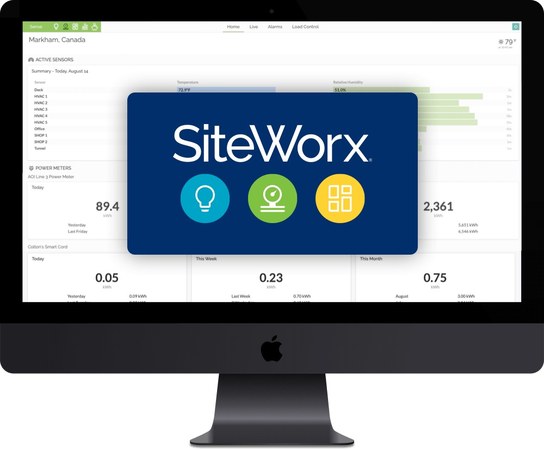
SiteWorx
SiteWorx is a cloud-based energy and facility management platform for industrial and commercial buildings. Built on a foundation of intelligent lighting controls, it unifies sensors, metering, and third-party systems to give operators real-time visibility into water, air/HVAC, gas/steam, and energy/lighting (WAGE) so they can cut waste and reduce operating costs. The platform is the continuation of Digital Lumens' connected-lighting technology, now owned and developed by SiteWorx Software after acquiring the assets in 2023.

PTS
PTS is a global, independent, employee-owned technology consultancy that designs the digital nervous system of buildings - connecting people, technology and space across workplaces, data centres, campuses and smart infrastructure. Founded in 1983 and headquartered in London, PTS advises on everything from audio-visual and networks to cyber and physical security, helping organisations transform their real estate through technology while improving user experience, wellbeing and sustainability.

TEECOM
TEECOM is a technology planning, design, and engineering firm that makes technology work in buildings. Founded in 1997 and led by founder David Marks, the remote-first company partners with architecture, engineering, and construction (AEC) teams to design the unseen layer of modern buildings - structured cabling, networks, audiovisual, acoustics, security, wireless, distributed antenna systems, and emergency responder radio. With 150-plus engineers, designers, and subject-matter experts, TEECOM has delivered integrated technology systems across more than 28 countries for clients like Salesforce.
VergeSense
VergeSense is a Mountain View-based occupancy intelligence company that uses AI-powered sensors and a cloud analytics platform to help enterprises understand how their offices and buildings are actually used. Founded in 2017 by Dan Ryan and Kelby Green, it serves over 200 enterprise customers across 50+ countries and monitors more than 140 million square feet of space.
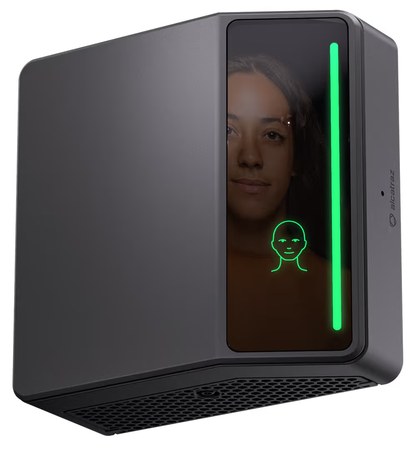
Alcatraz AI
Alcatraz AI builds the Rock and Rock X - AI-powered facial authentication devices that replace badges, fobs and PINs at the door. The Cupertino-based company combines edge computer vision, 3D depth sensing, and privacy-by-design encryption to authenticate people without storing their faces in the cloud, and is used by Fortune 100 firms, hyperscale AI data centers, major U.S. airports, and NFL teams.

R-Zero
R-Zero is a San Francisco-based smart building technology company that started in the pandemic selling hospital-grade UV-C disinfection and pivoted to an IoT and AI platform that cuts HVAC energy use 20-40% by reading real-time occupancy across commercial and healthcare portfolios.

Verdigris
Verdigris is a Mountain View-based AI and IoT company that turns raw electrical data into actionable intelligence for data centers, commercial buildings, and industrial facilities. By clamping high-frequency sensors onto electrical circuits and running proprietary AI algorithms on the resulting waveform data, Verdigris gives facility operators real-time visibility into energy consumption, power quality, and equipment health - detecting failures before they happen, recovering stranded capacity, and driving 20-50% reductions in energy spend. Founded in 2011, the company serves Fortune 500 customers including T-Mobile, Verizon, and NVIDIA across 17 countries.