public-relations
(810)
The Agency That Learned to Hand Out Water
A Richmond production shop became a full-service agency by treating community trust as infrastructure. Its best case study began not with a commercial, but with bottled water, local radio, and a sixteen-hour clock.
Purpose Worldwide Sells the Sentence Before the Story
The Austin firm treats public relations as a business system, not a press-release factory - joining purpose, positioning and measurable growth before anyone asks for coverage.

The PR Firm That Learned to Let Go
Kristi Piehl built a PR agency with newsroom instincts, a measurable promise and a peculiar idea about time: people might produce better work when the boss stops counting their hours.
The Agency That Starts at Zero
Most agencies begin with an answer: a campaign, a website, a press release. Zer0 to 5ive begins with the unnerving possibility that the client has asked the wrong question.

The Agency That Survived the Future It Predicted
Airfoil bet on the internet in 2000, watched the dot-com market collapse, and kept going. Twenty-five years later, the Michigan agency sells something more durable than publicity: a method for making complicated companies understood.

The Little Booth That Became a Marketing Department
American View Productions sells a useful fiction: that a small organization can have a whole marketing department on call. A folding video booth, 73 father stories and one unusually revealing public budget show how the trick works.

The Red Carpet Is Only Ten Percent of the Job
Priscilla Clarke built an agency where nonprofit purpose meets entertainment machinery. The visible payoff may be a headline, a gala or a red carpet - but the real product is the preparation nobody sees.

The News the Internet Forgot
Newz Group built a modern media-monitoring business around an unfashionable fact: some of the most consequential news in America still arrives on paper.
The Fine Print Is the Product
Level Up PR sells visibility, credibility and a promise with conditions. The interesting part is not the press hit - it is the operating system built around making attention repeatable.
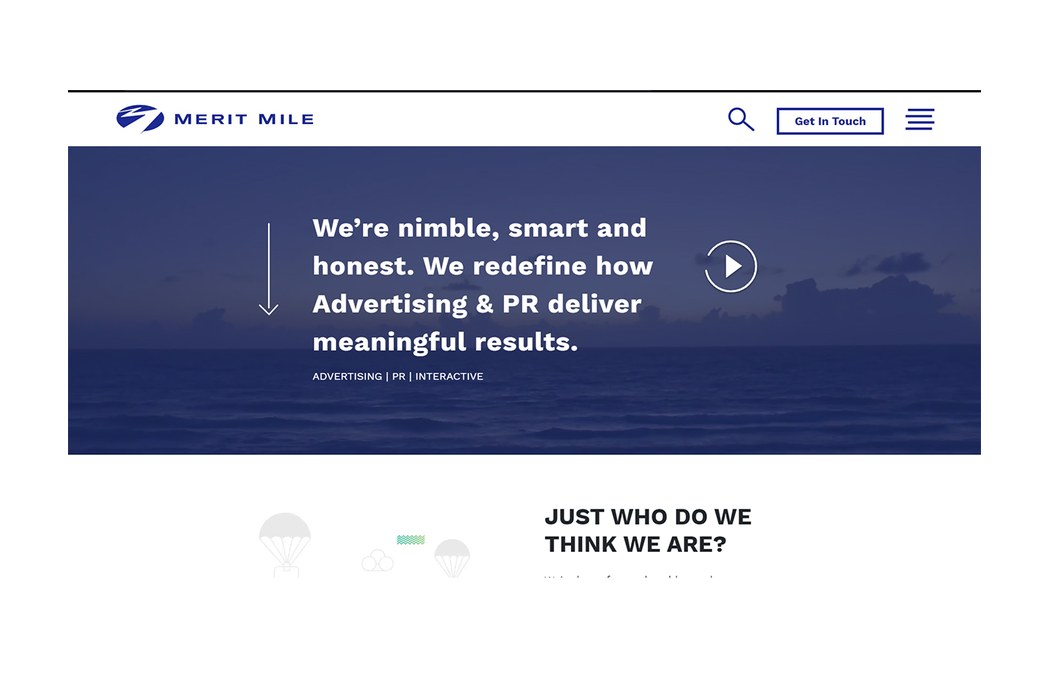
The Little Agency That Made a Lead Knock Twice
Merit Mile is small enough to sit close to the work and experienced enough to sell into complicated rooms. Its most revealing trick is also its simplest: attention does not become a lead until it shows up twice.

The Six-Week Reversal: How Cullari Communications Global Turns Trust Into Infrastructure
The Hershey consultancy does not sell attention for its own sake. It builds coalitions around the people whose trust a health company cannot manufacture - and measures what happens next.
The People You Call When the Plan Meets the Crowd
DigiGeeks Collective sells something more useful than another campaign deck: a trusted bench of specialists that can appear when a mission-driven team suddenly needs more hands, more range, or both.

The Office CONRIC pr + marketing Never Opened
A Fort Myers agency planned its fifth office move, chose distributed work instead, and arrived at the pandemic already living in the future. The decision explains how a local shop became a national one without losing its neighborhood habits.

Gambel Communications Knows the Person Who Knows the Person
The Metairie PR firm has spent 17 years turning a very New Orleans asset - knowing whom to call, and why they might care - into campaigns that move votes, registrations and millions of charitable dollars.
The Lions Bet That a Model Could Be More Than a Measurement
The New York agency started with an unfashionable idea: a model's opinions, oddities, and ambitions might be worth more than perfect measurements. A decade later, that idea has turned representation into a small creative system of its own.

The Agency That Sells Attention Without Buying It
Erica D'Arcangelo started with one client and a blunt constraint: small organizations could not outspend their rivals on ads. Her answer was an agency built to earn attention - one useful page, search result and human story at a time.

The Agency That Put a Three-Eyed Alien to Work for New Mexico
MediaDesk discovered that public information travels farther when it stops looking like public information. Its proof is an Emmy-winning alien, a water campaign with 1.5 million views, and a business built for clients whose hardest product to sell is participation.

The Public Relations Firm That Put Leadership in the Same Room
For 56 years, an Oklahoma firm has argued that reputation trouble usually begins before the press release - in the boardroom, the culture and the quality of the listening.
The Dot That Makes the Chaos Useful
CHAO.S PR is a small New York agency built around a very modern wager: the best campaign is an event, a camera set and a cultural translation desk at the same time.
The Idaho PR Firm That Starts Before the Story
Red Sky built a Boise agency around a useful suspicion: the story a client wants to tell is not always the story its audience needs to hear. So it researches first, then decides whether the answer is a pitch, a training room, a public meeting - or a blue umbrella opened in the Seattle rain.

The Advertising Agency That Put Its Trophy Case in the Attic
Inside a yellow house in Orlando, Appleton Creative has spent more than three decades making brands coherent - and turning an agency lobby into a small piece of civic infrastructure.
The 100,000-Piece Mistake That Taught RMD Advertising What to Sell
An early direct-mail disaster cost RMD an account. The question it provoked - why not pitch only food brands? - became a three-decade lesson in the profitable uses of saying no.

The Space Business Has a Language. Griffin Learned to Speak It.
For nearly three decades, a small Houston agency has sold something aerospace companies cannot fabricate on demand: fluency, trust and the right introduction before the countdown begins.
The Machine Got the Culture Wrong. So Better Together Built Its Own.
A Washington communications shop encountered a small machine error with a large human meaning. The mistake became a research program, then a product - and a useful lesson in what AI still cannot be trusted to understand alone.
Pitchblend Put the Press Release Inside the Experience
A 20-year-old communications agency has a peculiar answer to the attention problem: make the story, the room and the media plan behave like one object.

The Agency That Sold Its Own Best Argument
For more than a quarter-century, Santy told brands to embrace useful change. Then the Scottsdale agency made the advice personal - and engineered an exit that turned a small firm's limits into a larger firm's bench.
The Little Samples That Built Big Beauty
A studio-apartment PR shop made free samples into a growth engine. Four decades later, its name has changed, its toolkit has widened, and its favorite raw material is still the brand nobody quite knows how to explain.

The Small Firm That Refused to Think Small
Peter Stanton left a giant agency when winning business began to matter more than serving it. Thirty-seven years later, his firm has found a curious way to go global: stay independent, then borrow local brains everywhere.

The Razor That Built a 21-Year Relationship
Suzanne Lane began with little PR experience and one useful conviction: ordinary products become interesting when people understand why they matter. A women’s razor proved the point - and became a client relationship that lasted 21 years.

The Founder Who Stayed
Abshire PR spent 25 years turning Savannah relationships into a communications business. Its next act is a careful paradox: change the owner, keep the people who made the firm worth owning.