The awkward moment in communications comes after the plan is approved. A nonprofit has the message. It has the launch date. It may even have a handsome slide deck full of verbs. Then a public figure replies, three partners ask for new assets, the website needs a change, a reporter calls, and someone remembers that the email list has not been cleaned since the previous administration. The strategy has met the crowd.
DigiGeeks Collective was built for this gap between intention and capacity. Based in Arlington, Virginia, it is a network of communications and digital practitioners who gather around social-cause organizations and movements. Founder and CEO Stefanie Cruz does not describe the company as a factory of junior account managers. Its own language is more revealing: community, trust, development, and "surge capacity." The thing for sale is not simply output. It is temporary organizational range.
That distinction sounds small until the work gets loud. An advocacy organization may need rapid-response social media today, a designer tomorrow, a media trainer next week, and somebody patient enough to select a database after the crisis passes. Hiring four people would take months. Calling four strangers creates a second job called managing four strangers. DigiGeeks offers the middle path: people who can be assembled around the assignment and who already understand what collaboration costs.
The career problem became the company
Cruz arrived with an unusually practical education in attention. She worked as an early digital strategist on Capitol Hill, helping congressional offices use emerging social tools to explain legislation and build online communities. Later came senior marketing and digital work at America's Promise Alliance, and movement work connected to the Women's March, Families Belong Together and March for Our Lives. Her public biography says she has spent more than 15 years mobilizing millions of people.
The origin story is less triumphant than most founder lore, which makes it more useful. In a testimonial for career coach Russ Finkelstein, Cruz describes a difficult point in her career. He reminded her that she had options and helped her create a work experience that fit what mattered to her and her family. The first thing to fail was not a product. It was the assumption that serious communications work had to fit one conventional employment shape. The change of mind was personal: consulting could be designed, not merely endured.
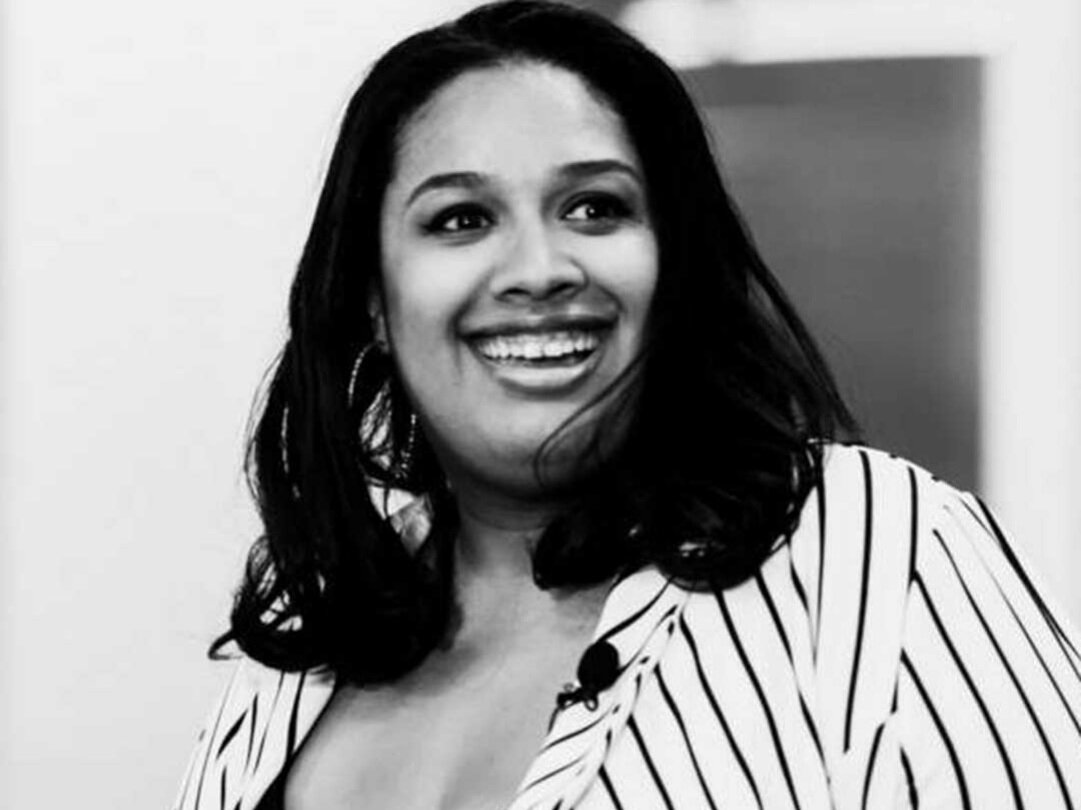
The DigiGeeks name was in use by March 2017, according to its trademark record. That year, the Women's March publicly thanked Cruz and the team for holding down its social media. By 2021, public profiles named Cruz as founder and CEO, consultants were announcing that they had joined, and the name entered commercial use. One new member, Alexander Vassiliadis, explained the attraction neatly: he was going into business for himself, but joining the collective meant he was not doing it alone.
A menu built around the mess
The service list is long because the problem is rarely tidy. DigiGeeks handles rapid-response social media, community management, strategic communications, PR and pitching, op-ed development, crisis coaching and training. It also does websites, UX, graphic design, video, digital events, advertising, email and partnership engagement. A conventional agency might call that full service. Here the logic is modular: pull in the capability the internal team lacks, for as long as the assignment requires it.
Rapid-response social, crisis coaching and community management when public conversation moves faster than approval chains.
Strategy, media training, op-eds, pitching and content that make an institution legible outside its own meeting rooms.
Websites, UX, CMS guidance and email systems that turn one campaign into durable audience infrastructure.
Design, video, digital events and advertising for teams that need finished work, not another recommendation.
The customers visible in public records are exactly the sorts of organizations that encounter uneven demand: nonprofits, schools, advocacy movements and government initiatives. The roster includes work for Church World Service, the March on Washington Film Festival, Boys' Latin of Philadelphia, MBK Yonkers and a Los Angeles County prevention-and-promotion initiative. Vassiliadis has also named the International Rescue Committee, Refugee Congress and /dev/color among clients he served while part of the collective.
What capacity costs
DigiGeeks does not publish a price list. Fortunately, public institutions publish paperwork. Those documents reveal a business that sells defined consulting scopes, not seats in a software product. In 2023, Boys' Latin approved $14,500 for communications and digital strategy. Yonkers approved up to $20,000 in 2025 for DigiGeeks to help MBK Yonkers gather baseline alumni data and advise on a database and email CMS. In 2026, the engagement grew to $65,000, with a wider brief covering the alumni database, platform selection and communications framework.
School communications and digital strategy
$14.5KMBK alumni-network discovery and systems advice
$20KMBK database and communications framework
$65KMarch on Washington Film Festival professional services
$104KChurch World Service digital communications
$164.6KTwo 2021 nonprofit filings show the upper end of the visible work: $104,000 in professional services for the March on Washington Film Festival and $164,600 in digital communications for Church World Service. The useful lesson is not that a DigiGeeks project costs a particular number. It is that the model stretches from a discrete school assignment to six-figure institutional work without requiring the same team shape every time.
The database is part of the message
The Yonkers work is especially instructive because it makes communications look less glamorous and more consequential. The assignment began with alumni data, platform selection and a newsletter system. That is not a viral post. It is the plumbing that makes years of relationships findable. The 2026 expansion suggests a sequence worth copying: start with discovery, learn what the organization can realistically maintain, then build the framework.
That is also where DigiGeeks sits in the market. The alternatives are familiar: hire staff, engage a large agency, or coordinate a handful of freelancers yourself. The collective competes on the space between those choices. It can offer more range than one specialist and less fixed machinery than a traditional agency. Its social-impact focus adds context that a generic marketing shop may need weeks to acquire.
The model has a condition, however. You cannot copy the org chart and expect the same result. A network is valuable only if its members trust one another, know who is good at what, and can enter a client's culture without turning urgency into chaos. It also depends on a client being able to name a real problem and give outsiders enough access to solve it. If every decision requires six approvals, surge capacity becomes a traffic jam with more cars.
The copyable part is a habit
What can another organization borrow? Not the colorful service menu. Borrow the preparation. Build relationships with designers, producers, strategists and operators before the emergency. Test the network on small, bounded work. Write scopes around an outcome rather than a vague promise to "support communications." Pair visible content with the unphotogenic systems underneath it. And treat trust as something operational: clear ownership, honest deadlines, clean handoffs.
- 01Keep a vetted bench before demand spikes.
- 02Buy the missing capability, not every capability.
- 03Begin with a bounded discovery scope when the system is unclear.
- 04Make infrastructure part of communications, not an IT afterthought.
- 05Leave the internal team stronger than you found it.
In 2026, the collective also helped organize a scholarship in memory of founding partner Ileana Alamo Garay. The planned awards support women studying communications, marketing and project management in Puerto Rico and Washington, D.C. It is a small but telling extension of the company's stated culture. A professional community is easy to advertise when projects are flowing. It becomes real when the community decides what it owes its people.
DigiGeeks' homepage uses a blunter summary: "We get sh*t done." Beneath the swagger is a disciplined idea. Modern communications rarely fails for lack of channels. It fails because the work arrives in combinations the org chart did not anticipate. The best response may not be a bigger permanent machine. It may be a phone call to people who already know how to work together.