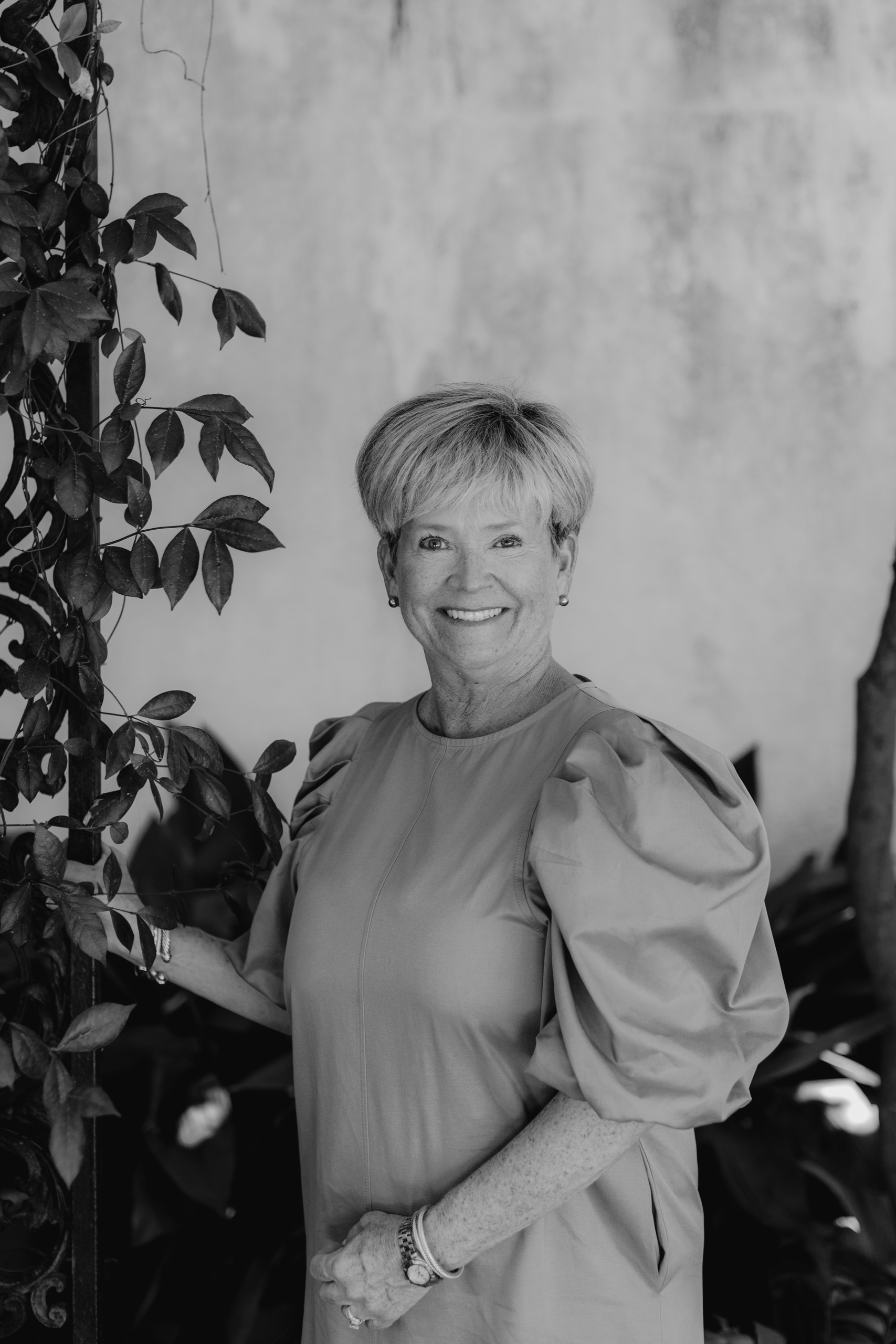
In January 2026, a public-relations firm made an announcement about itself. This is dangerous territory. A baker can eat the crooked cake. A plumber can avoid the leaky tap. But when professional communicators communicate about their own future, every sentence arrives wearing a name tag. Abshire Public Relations said that Shannon Phillips had become owner and CEO. Then came the interesting part: Jennifer Abshire, whose surname remains above the door, was not departing. She would keep working full time as founder and senior strategist. Susan Hancock, president since 2005, would stay too.
The handoff is less a clean break than a three-person relay in which nobody drops out after passing the baton. That suits the business. Abshire PR does not manufacture objects. It sells judgment, introductions, timing and the likelihood that somebody on the other end of a phone will answer. A founder can transfer shares on paper. Transferring twenty-five years of returned calls takes longer.

01 / The contact book before the company
An Olympic event leaves a business legacy
The firm began before it began. From 1992 through 1996, Jennifer Abshire served as executive director of Savannah's Olympic committee, preparing the city to host yachting during the Atlanta Games. The assignment offered a concentrated education in local power: public officials, volunteers, donors, businesses, reporters and the delicate machinery that gets all of them moving in one direction. Before that, nonprofit work at the American Red Cross and Parent and Child had taught her fundraising. At 25, Georgia Southern Magazine reported, she was responsible for bringing in more than $3 million a year.
Four years after the boats left, someone suggested she start a PR company. Abshire initially thought her existing projects were enough. The friend made a sharper observation: if she put a firm around the work, clients would appear immediately. The forecast was right. Her own account says the launch required little money because the relationships and work were already there.
The first failure was pleasantly ordinary. Abshire gave away too much advice. She underestimated how quickly an hour here and a favor there accumulated into real costs, then undercharged clients. The correction was not philosophical. She learned to balance generosity with a price. Anyone selling expertise can copy that: track the invisible work before it becomes the whole job.
“The first product was not publicity. It was access to a judgment already trusted around town.”YesPress observation
02 / What the firm sells now
Nine services, one scarce ingredient
Abshire PR describes itself as taking the puzzle out of PR, a line made literal by its puzzle-piece logo. Its service menu has expanded well beyond the traditional press release. The firm creates content, pitches media, prepares clients for crises, trains teams, produces video, manages social channels, advises executives, develops community programs and consults on philanthropy. Its public work moves between hospital accreditations, hotel openings, bank anniversaries, nonprofit fundraisers, real-estate communities and leadership awards.
The apparent breadth can obscure the consistent job beneath it. A hospital and a hotel have little in common operationally, but each has moments when reputation, local context and clear language matter at once. The firm sits between the organization and the people it needs to persuade. It is part newsroom, part boardroom and, on a difficult afternoon, part emergency service.
Customers include companies, nonprofits and municipalities across coastal and central Georgia, metropolitan Atlanta and the South Carolina Lowcountry. Publicly visible assignments have involved BankSouth, CURE Childhood Cancer, Liberty Regional Medical Center, Savannah Speech and Hearing Center, Vaden Automotive, hospitality groups, residential communities and civic organizations. This is regional specialization rather than narrow industry specialization: the common market is the Southeast, and the common problem is making an institution intelligible to its community.

03 / Small on purpose
The capacity limit is also the pitch
Abshire PR says it keeps a limited client roster to provide hands-on support. That is an operational constraint dressed, accurately, as a benefit. Senior judgment does not scale like software. A firm can automate reports and schedule posts, but it cannot place Jennifer Abshire in two confidential meetings at once. The business model is professional service, sold through ongoing or project work, with senior attention as the premium feature. Prices are not published.
This is also where a regional firm can differ from a national agency. A large competitor may bring specialist departments, national media reach and deep production capacity. Abshire brings context: the civic calendar, the local reporter, the board member who has heard three earlier versions of the proposal. Its alternatives include Savannah firms such as Carriage Trade PR, Lesley Francis PR and RobMark, the larger integrated agency Jackson Spalding, an in-house communications hire, or a patchwork of freelancers.
The model works when a client values counsel, proximity and regional knowledge enough to accept the capacity ceiling. It is less suited to a global campaign requiring round-the-clock teams in several countries, or to a buyer seeking a cheap, self-serve content factory. The very thing that makes the offer credible - senior humans staying close to the work - is the thing that prevents infinite scale.
- The apprenticeshipAbshire runs Savannah's Olympic committee and builds a civic network.
- The firmExisting relationships become a one-person consultancy.
- The second pillarSusan Hancock begins the presidency she still holds.
- The hometown streakThe firm begins its run of Savannah Magazine reader awards.
- The handoffPhillips becomes owner; Abshire and Hancock remain.
04 / The copyable part
Do not confuse an exit with a succession
Phillips did not arrive in January with a new title and a fresh map of the building. She had joined nearly ten years earlier as creative director, built client relationships and helped expand the portfolio. The 2026 transition therefore converted an operating reality into ownership. Abshire kept a role that matches her highest-value skill. Hancock kept the presidency and cultural continuity. Phillips gained authority without being asked to impersonate the founder.
That structure is the story's practical lesson. Founder-led service businesses often treat succession as a single dramatic date. Abshire PR treated it as a long apprenticeship followed by a public edit. The method is copyable, though not instantly: identify the successor while the founder still has energy, let clients experience that person leading, separate ownership from institutional memory, and give the founder a useful role with boundaries.
Four notes worth stealing
- Build the network before you ask it to become a market.
- Measure advisory time, especially the minutes that feel too friendly to bill.
- Limit capacity openly when senior attention is the product.
- Make succession an apprenticeship, not an announcement.
Whether the transfer truly works will be visible later, in renewals, referrals, staff retention and the kind of calls that reach Phillips first. Trust cannot be moved with a press release, even by people who write good press releases. But the design is sensible. The founder stayed. The president stayed. The successor had already spent a decade learning which parts should not change.