The difficult thing about selling a spacecraft is that the spacecraft is almost never the only thing being sold. A company may be offering an antenna, a lunar lander, a pressure garment or a launch. But it is also asking an investor to accept a timeline, a government customer to accept a risk, a reporter to accept an explanation and the public to accept that any of this expensive machinery matters. The product has one name. The audiences have different dictionaries.
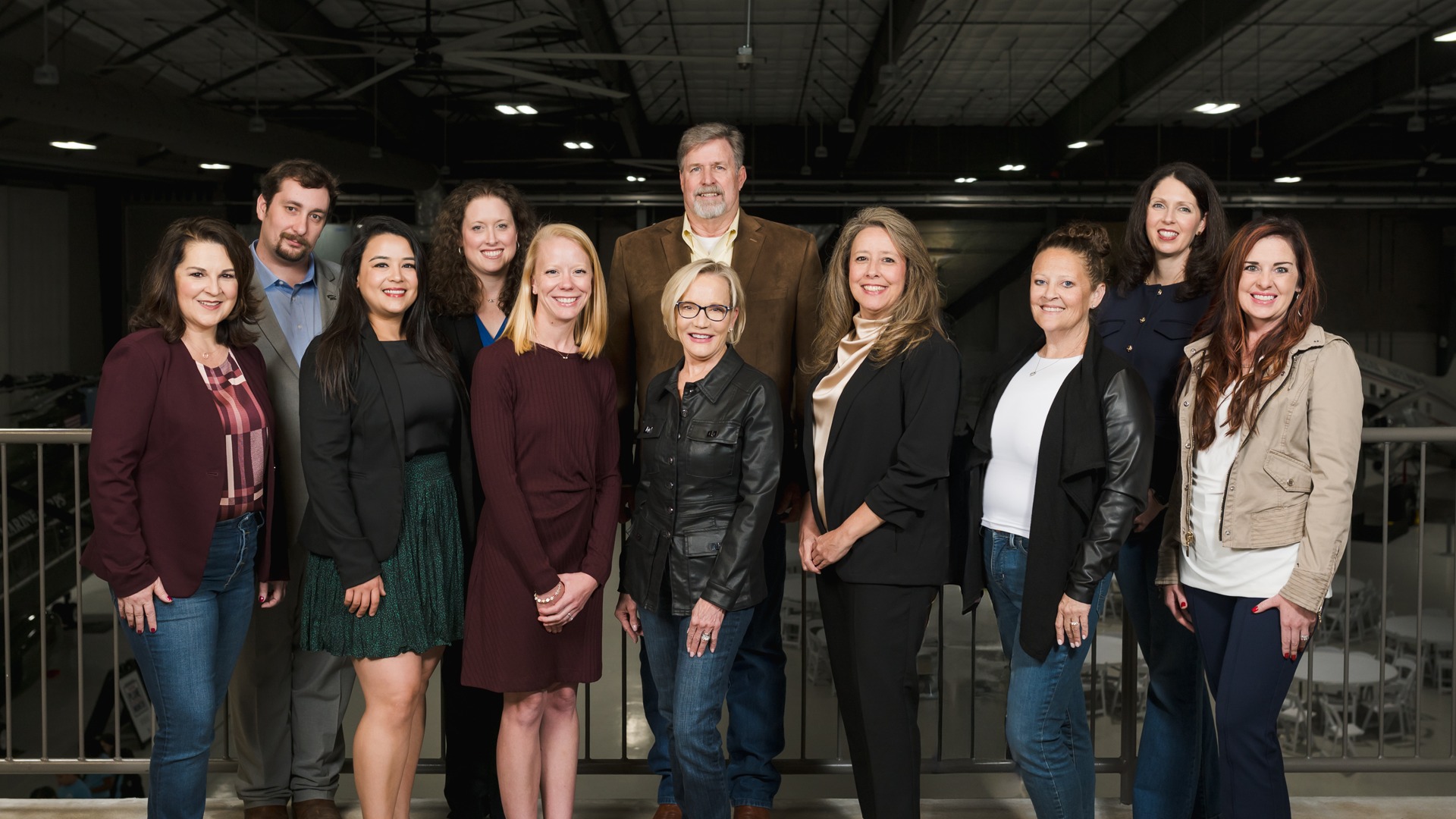
Griffin Communications Group built a business in the gaps between those dictionaries. Founded by Gwen Griffin in Houston in 1997, the privately held agency works across commercial, civil and military space. It handles familiar agency jobs - brand positioning, media relations, creative work, social strategy, advertising and events - but its most telling service has the least fashionable name: relationship building.
That phrase can sound like something printed beneath a handshake photograph. Here it is closer to logistics. Griffin convenes coalitions, introduces people who ought to know one another and helps clients work out which stakeholder must understand which part of the story. Aerospace rewards this kind of mapmaking. The buyer may be the government. The champion may sit in industry. The skeptic may be in Congress. The next employee may be a middle-school student watching Artemis rise from Florida.
A category before it was a category
There is a useful bit of timing in the Griffin story. In 1997, “commercial space” did not yet mean a crowded field of venture-backed launch, satellite and infrastructure companies. Griffin began as a two-person public-relations operation in Bay Area Houston, close to Johnson Space Center and the institutions orbiting it. The agency did not arrive after space became a fashionable market. It aged with the market.
Gwen Griffin had already worked in public relations and promotions at Space Center Houston and in marketing at Kennedy Space Center Visitor Complex. President Jeff Carr later brought experience from NASA’s Johnson Space Center and United Space Alliance. Those résumés matter because the firm’s differentiation is cumulative. A generalist agency can hire an aerospace account lead. It cannot instantly reproduce decades of pattern recognition about missions, procurement, policy, reporters, technical risk and the long memory of a close industry.
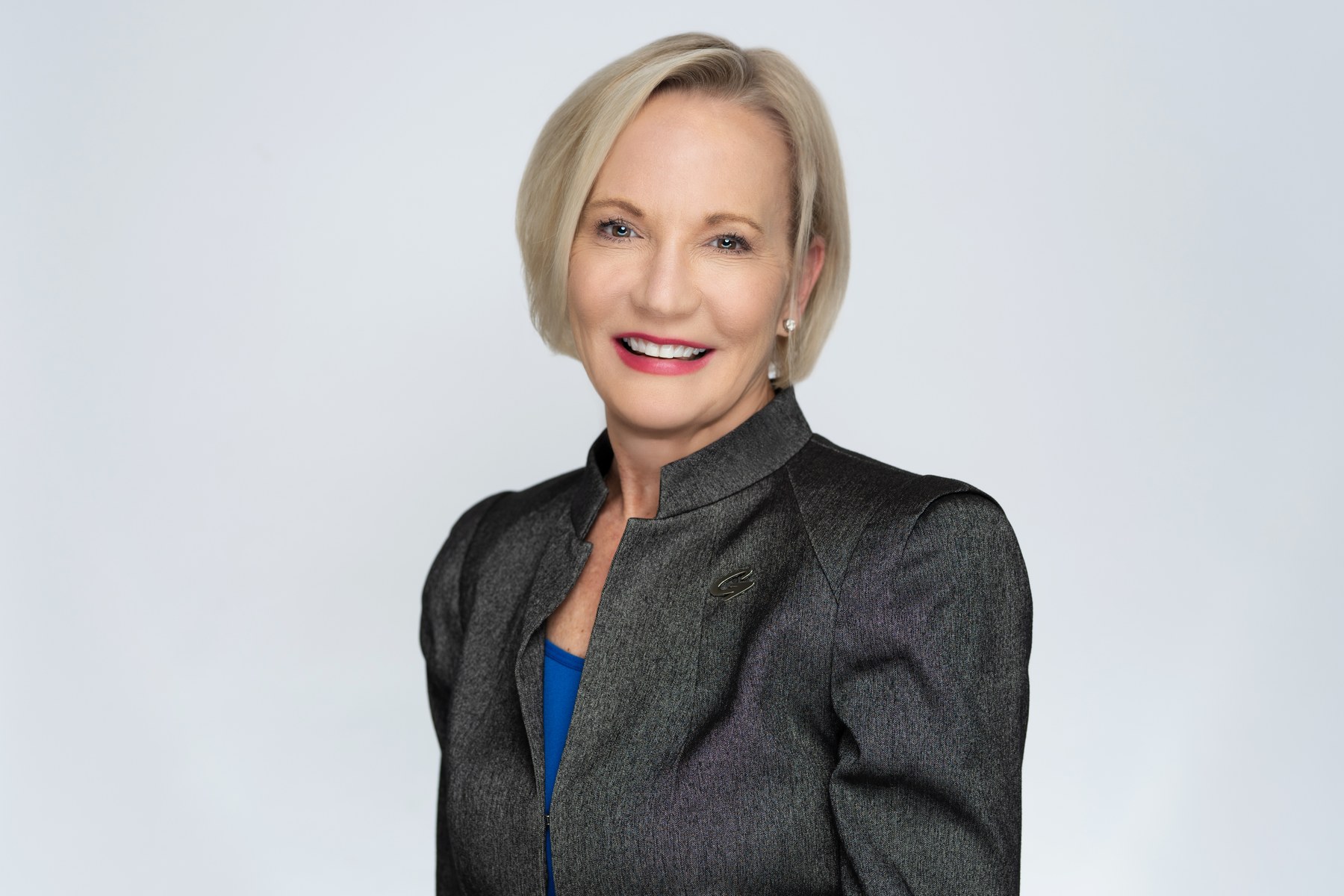
Gwen Griffin started the agency after working on both coasts of NASA's public-facing world. In 2024, she was appointed to the new Texas Space Commission and became its first board chair - an unusually literal example of an agency founder having a seat at the industry's table.
The product is communications. The harder-to-copy asset is knowing which conversation should happen next.
The customer list makes the niche visible. Griffin’s published history includes Blue Origin, Boeing, Northrop Grumman, Aerojet Rocketdyne, NASA programs, Axiom Space, Firefly Aerospace, BlackSky, ILC Dover, the American Institute of Aeronautics and Astronautics, the Astronaut Scholarship Foundation and Kennedy Space Center Visitor Complex. These are not all the same kind of organization. Some sell hardware. Some build constituencies. Some educate. What they share is a need to make complicated work legible without making it sound trivial.
Four jobs around one reputation
Griffin's current offer is organized less like an agency menu and more like a sequence of needs.
The launch is the easy photograph
Aerospace has a peculiar communications problem. Its victories are wonderfully visual; its working life is not. The launch produces fire, noise and a clean upward line. The years before it produce qualification tests, budget decisions, supplier reviews and enough acronyms to make a sentence look encrypted. Griffin’s job is often to find the consequence inside the specification: not merely what a component does, but why a customer, community or policymaker should care.
When things go wrong, the problem reverses. Attention arrives all at once. Carr describes aerospace as inherently high-risk: launches fail, satellites malfunction, supply chains break and cyber threats travel faster than an approval chain. The tactical emergency plan protects people and hardware. The crisis communications plan protects the ability to be believed after the first statement. Griffin’s published framework emphasizes accurate information, a trained executive voice, monitoring and three less technical qualities: character, credibility and compassion.
Longevity does not prove that every campaign worked. It does explain the agency’s wager: in a technical, regulated market, context compounds. Each mission, newsroom call and industry relationship improves the next brief.
The business model is conventional professional services with an unconventional concentration. Clients buy tailored projects or ongoing counsel; Griffin does not publish a rate card. A team spread across Houston, Huntsville, Florida’s Space Coast, Washington, D.C., and Los Angeles supplies the labor. That footprint follows the industry rather than a fashionable agency neighborhood.
Communications as ecosystem work
Griffin’s education work shows the broader logic. The agency helped execute StudentsToLaunch with NASA and AIAA, giving middle-school students from underrepresented communities a chance to experience rocket launches, including Artemis I. It managed Florida Space Days for Blue Origin’s Club for the Future and supported the Conrad Challenge with the Conrad Foundation and Space Center Houston. Those are communications programs, workforce programs and relationship programs at once.
The same instinct appears in Gwen Griffin’s public role. In 2025, she told Texas lawmakers that the state’s new space commission had received 281 grant applications seeking $3.4 billion against $150 million available. The striking number was not Griffin Communications Group’s revenue; the private company discloses neither revenue nor outside funding. It was a measure of the ecosystem around it - crowded, ambitious and in need of translation between companies, capital, public institutions and talent.
Gwen Griffin opens a public-relations shop near the center of American human spaceflight.
Former NASA and United Space Alliance communications executive Jeff Carr joins the firm.
Griffin receives awards for communicating the space story and professional crisis practice.
Gwen Griffin becomes the first chair of the Texas Space Commission.
Client work includes communications around acquisitions, commercial research services and the changing shape of the space economy.
What another company can borrow
Griffin’s playbook is more portable than its network. The first lesson is to choose a narrow market with expensive misunderstandings. Specialization is most valuable when the product is technical, the buyer cautious and the consequences public. The second is to treat relationships as infrastructure, not decoration. A press list is useful; a living map of customers, regulators, partners, educators and credible third parties is better.
A compact field guide for technical teams
- Write the consequence before the specification.
- Give each audience its own reason to care, but keep the underlying claim consistent.
- Build the crisis message and choose the spokesperson before the bad day.
- Measure response, not output: who understood, moved, called or changed position?
- Keep showing up in the institutions that shape the category.
There is a boundary to this model. Deep specialization pays when context, trust and access influence the sale. It offers less leverage to a local consumer business that needs cheap transaction volume, or to a product whose buyers can decide from a price page without a regulator, reporter or coalition in sight. The Griffin approach also takes time. A company cannot schedule three decades of credibility for next quarter.
But for aerospace, time is the point. Rockets are built through sequences of tests. Reputations are, too. The interesting thing about Griffin Communications Group is not that it found glamorous subject matter. It is that the agency stayed long enough to understand the unglamorous machinery around it: committees, classrooms, budget requests, contingency binders and the phone call that gets answered because the person on the other end remembers the last one.