There is a particular kind of confidence that comes just before the expensive mistake. At RMD Advertising, it arrived in the form of a duck and a safety pin. The agency had designed a pre-show mailing for a client attending a national conference for neonatal nurses. A real pin pierced each heavy card. The concept was tactile, clever and approved at a local branch of the post office. Then, on the eve of the show, the postal service stopped all 100,000 pieces as a safety violation.
The client called angry. Founder Sue Reninger spent a sleepless night and came back with the only credible answer: accept blame and create a custom post-show mailing at the agency’s expense. The public account does not reveal the dollar bill, only that the original spend was very large, the replacement was RMD’s to absorb, and the client was eventually lost. This was failure with inventory.
The more useful moment came later, in the conference room, while Reninger broke the news to the staff. One person raised a hand and asked why the agency did not pitch only food brands. It is a wonderfully odd leap. A dangerous direct-mail piece for nurses fails, so you specialize in ice cream. Yet this became RMD’s organizing idea: stop being a generalist, learn one commercial system unusually well, and let that expertise compound.
The sale after the sale
A challenger food brand makes two sales. The obvious sale is to the person pushing a cart or tapping “buy.” The earlier, quieter sale is to everyone who controls access: the broker, distributor, retail buyer, marketplace algorithm and journalist deciding whether the product deserves attention. Most advertising celebrates the first sale. RMD has arranged itself around both.
The Columbus agency offers brand strategy, creative, public relations, social content, influencer programs, paid media, email, web and direct-to-consumer design. That list sounds like many integrated agencies. Then come the less decorative capabilities: retailer support, broker and distributor fluency, Walmart Connect optimization, and crisis help for recalls, plant problems, employee issues and regulator contact. Those are signals of a firm that has spent time near the loading dock, not only the mood board.
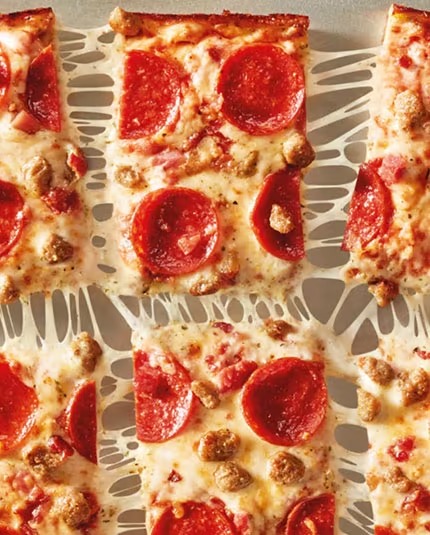
That explains the firm’s customers: not the largest packaged-goods conglomerates buying broad awareness by the acre, but emerging and established challengers that must make every impression pull more than its own weight. The public roster includes Graeter’s Ice Cream, Motor City Pizza Co., Keystone Meats, PorkRinds.com, Daily’s Premium Meats, Panera, BIBIBOP, Saffron Road, McClure’s and Bil-Jac. It is a menu with no culinary logic and one business logic: distinctive products trying to claim more shelf, mind and conversation.
Three products walk into an agency
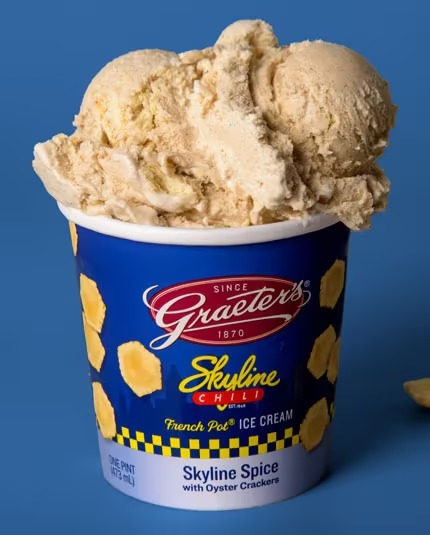
Consider three assignments. Graeter’s had a 19th-century process and a regional reputation. RMD says its decade-plus work helped carry that authenticity through 43 flavor launches, eight store openings and national retail growth, producing 7.2 billion media impressions, $10.5 million in advertising equivalency and a 19:1 return. The move was not to make old-fashioned ice cream look new. It was to make the old-fashioned part travel.
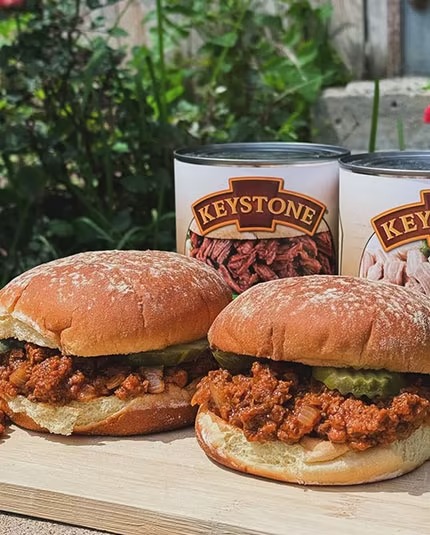
Keystone Meats presented almost the inverse problem. Canned meat does not need a romance novel; it needs visibility at the moment of purchase. RMD’s 2024 Walmart Connect work produced, by the agency’s count, 13.2 million impressions, a 38.48 percent sales conversion rate and a 10:1 return on ad spend. Here the agency behaved less like a storyteller and more like a shelf mechanic.
For PorkRinds.com, the useful doorway was college football. A Barstool Sports campaign paired sports humor with the snack, generating a reported 3.2 million impressions, 44,000 podcast engagements and a 4:1 return in four months. The longer-running Crunch Time Hero award gives a weekly honor to a college player, adds an interview, links sharing to donations for families facing pediatric brain cancer, and sends the season’s winner to Radio Row at the Super Bowl. The snack gets a role in a ritual rather than a logo pasted near one.
A new owner, an old constraint

In early 2024, Matt “Monty” Montgomery announced that he had become RMD’s owner and CEO. He came from nearly two decades at Abercrombie & Fitch, where he moved from graphic design into creative marketing leadership. Apparel taught him that a product can be proof of membership. His current provocation is that nobody wears a logo merely because the logo is attractive. They wear it to announce who they are with. Food, he argues, is belatedly learning the same trick.
This is a change in accent, not category. Reninger’s RMD emphasized gratitude, service and brand lovers. Montgomery talks about communities, cultural speed, front-line observation and the overlap of physical and digital retail. He also warns new executives not to rush into change before learning the people and processes already in place. The specialist constraint remains: RMD still calls itself “the food agency,” reports an eight-year average client tenure, and says its work touches more than $900 million in client revenue.
The company is privately held. Its fees, margins and acquisition terms are not public. A supplied company estimate places annual revenue at about $18.2 million, but there are no public financial filings to confirm it. What is visible is the business model: long agency-of-record relationships, campaign engagements, and a bundle of services broad enough to follow a food product from brand idea to media mention to retail conversion. At roughly 25 employees in supplied data, RMD is selling accumulated pattern recognition rather than a giant bench.
The copyable part is subtraction
The tempting lesson is “pick a niche.” That is too tidy. RMD’s better lesson is to choose a market whose hidden machinery rewards repeated exposure. Food is not merely a collection of appetizing photos. It is perishable inventory, retailer math, broker relationships, taste memories, regulatory risk, social ritual and a shelf crowded with substitutes. Learn those dependencies together and a small agency can know something a larger generalist must relearn on every brief.
Borrow the sequence, not the safety pin
- Own the error quickly and make the client whole where you can.
- Ask what the loss exposed about work you understand unusually well.
- Choose a category with recurring problems, not merely similar-looking customers.
- Build expertise across the full buying system, including the unglamorous gatekeepers.
- Publish outcomes with enough detail that prospects can judge the claim.
The conditions matter
This model is a poor fit when a category is too small to support specialization, when clients want cheap one-off production rather than connected counsel, or when the agency cannot afford to refuse unrelated work. It also weakens when case-study numbers mix unlike measures without context. Focus creates credibility only if the specialist keeps learning faster than the market changes.
RMD’s own failure story makes the final point. Creativity had become more important than the client’s brand and operating reality. The pin was memorable; the mailer was unusable. Three decades later, the company’s best work is described not by how much people notice it, but by whether a retailer gains confidence, a community chooses to participate, and a product moves. The duck has disappeared. The lesson has not.