In 2012, a storm knocked out the server at the Centralia Fireside Guard, a small Missouri newspaper. About 80 percent of its files survived. The rest seemed to have vanished, until Brad Buchanan drove over with a thumb drive. For sixteen months, the paper had been sending PDF pages to Buchanan's company, Newz Group. The archive contained every one. A service built to help other people find newspaper articles had quietly become the newspaper's backup system.
This is the useful way to understand Newz Group. It is not merely a clipping company with a modern login screen, and not quite a software company in the usual self-serve sense. It is a bridge between two incompatible realities. On one side: television transcripts, social posts, dashboards, sentiment scores, real-time alerts. On the other: a weekly paper with no useful website, a county legal notice, a paywalled e-edition, or a printed page that still has to be received and processed. Newz Group makes the second world legible to the first.
A hundred-page detour
Brad Buchanan did not set out to build this bridge. He expected to work in telecommunications, the family trade. He wrote a 100-page plan for a company called GeoTel, hoping to capitalize on deregulation. The plan did not get off the ground. This was the first failure, and the corporate name is the fossil it left behind: Newz Group is still legally GeoTel Corporation.
What changed Buchanan's mind was less epiphany than classified-ad pragmatism. He placed an advertisement in a Columbia newspaper listing his experience and asking for a local business opportunity. That led to the manager of the Arkansas Press Association, who wanted to sell its clipping service. Buchanan bought it in 1995 with two partners. Then he noticed the opening. The clipping trade still ran on paper, scissors, glue, mail, and patient readers. “I saw an industry that had not moved with technology,” he later said.
Newz Group acquired Iowa's service in 1996. Missouri, Kansas, and Kentucky followed in 1997, when Brad's brother Scott and father Waldo joined. By 2007 it had reached a tenth state. Today it works directly with press associations across twelve states, from Arkansas to Wyoming. The company says those relationships give it access to more than 1,900 newspapers, including hundreds that competitors cannot reliably collect from the open web.
“I saw an industry that had not moved with technology.”Brad Buchanan, founder
The crawler ends here
The fashionable story of media intelligence is scale: crawl more pages, ingest more posts, apply more machine learning. Newz Group's story is about permission and supply. A crawler cannot index a physical newspaper it never receives. It cannot lawfully stroll through every paywall. It cannot assume the article on a paper's website is identical to the version laid out in print. Direct publisher and association relationships solve a less glamorous problem: getting the material in the first place.
That distinction matters most outside metropolitan media centers. Newz Group argues that online-only monitoring can miss as much as 40 percent of local coverage once paywalls, e-editions, and papers without websites are counted. Its claim is not that print is winning. It is that “digital” and “complete” are not synonyms. A county official, university, utility, hospital, or contractor may care more about one paragraph in a 5,000-circulation weekly than a passing mention on a national blog.
What the customer actually buys
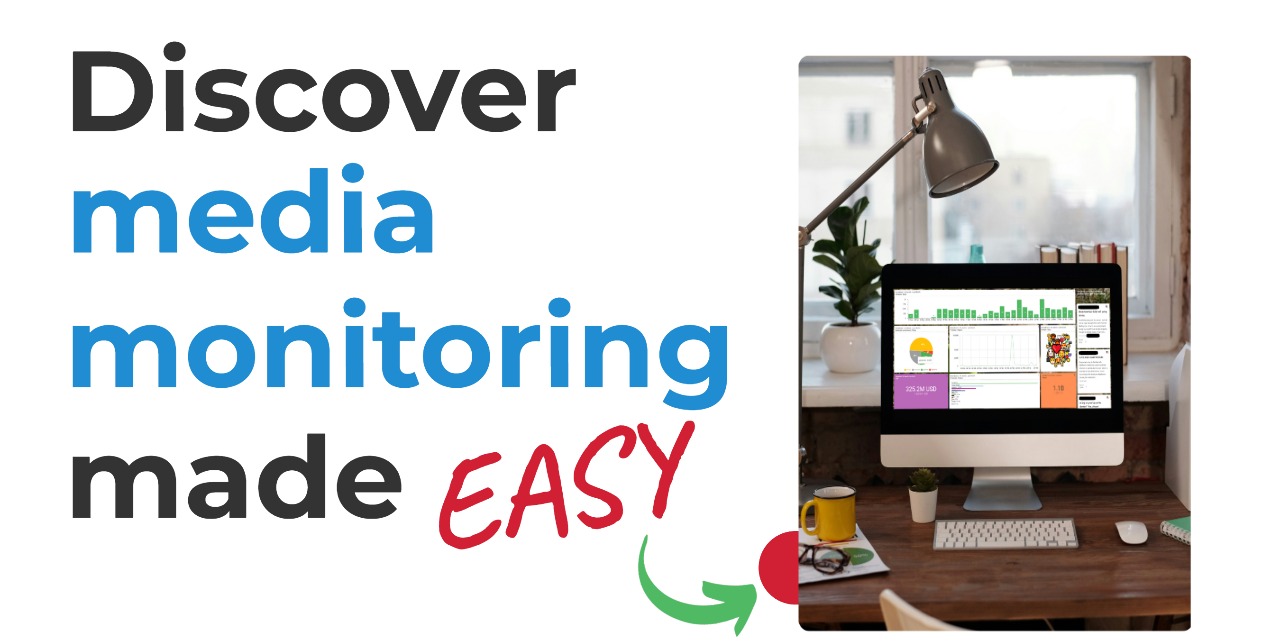
The core product, NewsRadar, gathers print, online news, social media, television, and radio results into one workspace. A user can receive alerts, group stories, edit broadcast clips, translate results, build reports, and track reach, volume, and sentiment. Broadcast coverage comes through TVEyes, spanning all 210 U.S. designated market areas and thousands of international stations. The cross-media application is connected to pressrelations. Newz Group supplies the layer those technology partners cannot reproduce easily: the local newspaper network and the people who tune the monitoring.
Around that center is a surprisingly broad set of adjacent jobs. ContentDesk helps teams draft and distribute releases and newsletters, with access to a database of more than 250,000 international media contacts. InfoBoards turn a topic into a visual tracker. Public-notice and bid monitoring finds construction projects, leadership changes, municipal budgets, and requests for proposals before they become obvious sales leads. Publisher services include digital archives, searchable public notices, e-edition hosting, and preservation.
For communicators
Find the mention, understand its reach, catch a problem early, distribute the response, and measure where it landed.
For business developers
Watch public notices and local reporting for projects, bids, budgets, and buying signals that have not reached a broad market.
The price of knowing
Newz Group does not publish a standard rate card. Its terms say monthly fees depend on the service, media mix, complexity, delivery, and reporting requirements. Unless a service order says otherwise, the minimum term is one month. This is a customized subscription business with managed-service economics, not a $19 dashboard anyone can activate before lunch.
The Texas Historical Commission listed that annual purchase for media delivery and management. Its justification was blunt: Newz Group could reach Texas print stories with no web presence or stories that sat behind paid access, then let the agency share them internally.
Larger federal work shows the other end of the range. A GSA media-clipping software purchase order carried a potential value of $206,862.50 across its term. During the first pandemic shock, Newz Group temporarily inverted the model and offered any U.S. newspaper three months of e-edition hosting at no cost. The logic was both civic and strategic: if rural papers disappeared as advertising dried up, a crucial part of Newz Group's own information network disappeared with them.
Three hundred users, three kinds of urgency
A government communications office wants every mention in one place and a report ready for leadership. A university wants the rural papers that broad monitoring services skip. A contractor wants a bid notice soon enough to compete. Newz Group presents all three as customer patterns, and they reveal why customization is central to the business. The unit of value is not the clip. It is the hour saved, the reputational flare caught, or the contract discovered.
This is also where the company sits in a crowded market. Meltwater, Cision, Muck Rack, Critical Mention, Google Alerts, and specialist tools can all substitute for pieces of the workflow. Some are larger, more automated, or better suited to global online volume. Newz Group's position is narrower: U.S. organizations that cannot tolerate local-news blind spots and want a service team to shape the search. It is enterprise software wrapped around a regional collection operation.
The archive that came back on a thumb drive
The Centralia recovery story is charming because the technology is so ordinary. No predictive model saved the day. Someone had kept the files. That is the hidden discipline in Newz Group's business. In 2009, newspapers began uploading complete PDF editions. By 2015, the archive had passed 20 million pages. Online monitoring arrived that same year; social and broadcast followed in 2019. The old collection habit did not vanish as each new channel appeared. It became the foundation underneath them.
There is a limit to this advantage. If a client cares only about high-volume, open-web conversation, a cheaper automated product may be enough. If direct publisher licensing weakens, the rare supply becomes less defensible. And if a team will not define useful geography, sources, and keywords, customization simply produces expensive noise. Newz Group works best when missing one obscure mention is genuinely more costly than paying to find it.
The copyable bit
The lesson is not “start a clipping bureau.” It is to look underneath a fashionable product category for the neglected input everyone assumes is already solved. Newz Group did not beat web crawlers at crawling. It organized the information the crawler could not see, secured relationships with its owners, digitized the handoff, and then attached the result to the tools customers already understood.
The sequence is worth stealing. Begin with exclusive or inconvenient supply. Narrow it by a customer's actual decision rather than offering one oversized package. Add software where software improves speed and comprehension. Keep humans where ambiguity, rights, and service matter. Finally, protect the health of the suppliers. That last point explains the free e-editions in 2020 as well as any mission statement could.
Thirty years after Buchanan bought an Arkansas clipping operation, Newz Group still lives inside the contradiction he noticed: the news keeps becoming more digital, yet some of the news that matters remains stubbornly difficult to digitize. The company's job is to make that contradiction disappear for the customer. The paper arrives. The page becomes searchable. The obscure paragraph rings an alert. And somewhere in Columbia, the scissors stay in the drawer.