physical-security
(24)
Hanwha Vision Europe wants your cameras to earn their keep
A warehouse conveyor, an airport checkout and a Finnish substation explain Hanwha Vision Europe’s bet: cameras become more useful when they help people act on what they see.

EPIC iO Bet the Camera Was Never the Point
The Fort Mill company is stitching cameras, sensors and wireless links into one operating layer for remote sites - a useful idea whose economics depend less on magical AI than on good placement, clean signals and humans who still make the call.

Evolv Sold the End of Security Lines. Then Reality Walked Through the Scanner
The Boston-area company turned the security checkpoint into a subscription business used by schools, hospitals and stadiums. Its next act depends on proving that speed, detection and sober claims can finally travel together.

Brivo Put the Office Key in the Cloud - Then Spent 25 Years Teaching Security People to Trust It
Brivo started with a parcel box, pivoted to doors, and made a subscription business out of the least glamorous hardware in a building. Its latest act combines access control and AI video under one roof - with a playbook worth stealing and a few catches worth reading first.

BluB0X Put the Security Desk in the Cloud - Now It Wants AI to Run the Building
The Andover company rebuilt doors, cameras, turnstiles and elevators as one cloud service. Its bet is that the winning security system will own less hardware, share more context and tell operators what happened before they ask.
The Two Engineers Who Turned Locked Doors Into a Software Problem
Justin Dagen and Jason Higley spent 15 years wiring up access control for Fortune 100 campuses. Then they built the off-the-shelf product they wished existed - and sold it to the company chasing the same doors.

System Surveyor’s $50 Bet: Turn the Messy Security Site Walk Into a Living Map
Security projects used to shed context at every handoff - from yellow pad to PDF to spreadsheet to technician. System Surveyor built a visual record that follows the cameras, doors and decisions from first walk to final maintenance call.

The Company That Turned Corporate Security Into a Single Screen
Corporate security teams drown in tabs, feeds and spreadsheets. Ontic bet that connecting all of it in one place - now with AI - is worth $287 million to investors and the attention of the Fortune 50.
Intellicene
Intellicene is a Melville, New York-based security software company that builds Symphia, a unified, video-centric platform for physical security operations. Spun out of Verint and Cognyte's Situational Intelligence Solutions business and acquired by Canada's Volaris Group in December 2022, the company connects and correlates data from cameras, access control, intrusion detection and other networked devices so security teams can detect threats and respond to mission-critical events in real time. With roughly 25 years of heritage, it serves retail, airports, transportation, healthcare, safe cities, higher education and industrial customers worldwide.

Lumana
Lumana is an enterprise AI video security company that turns ordinary IP cameras into real-time monitoring, detection and response systems. Founded in 2021 by former Intel computer-vision leaders and based in Los Gatos, California, Lumana pairs its proprietary VIA-1 vision model with vision language models and agentic AI to run analytics on more than a billion images a day - flagging weapons, fires, falls and unauthorized access, cutting false alerts, and letting security teams search footage across 100+ attributes. The company raised a $40M Series A in 2025, bringing total funding to $64M, and counts McDonald's, Meta, the Minnesota Twins and NYU among its customers.
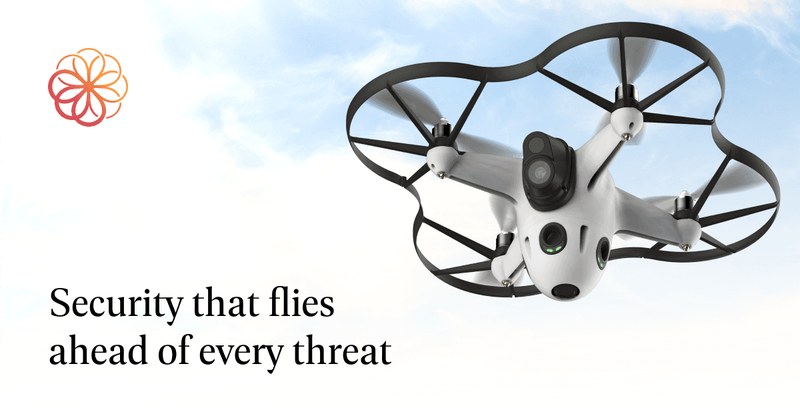
Sunflower Labs
Sunflower Labs builds the Beehive - a fully autonomous, AI-powered drone security system for large outdoor properties. Its 'Bee' drone lives inside a weatherproof 'Hive' base station, launches within seconds of a triggered sensor, patrols a property while avoiding obstacles in nearly any weather, streams HD and thermal video, then returns to recharge on its own. Founded in 2016 and based in Zurich and San Francisco, the company pitches drones as a lower-cost, faster-responding alternative to human security patrols for industrial sites, commercial campuses, and high-value residential properties.
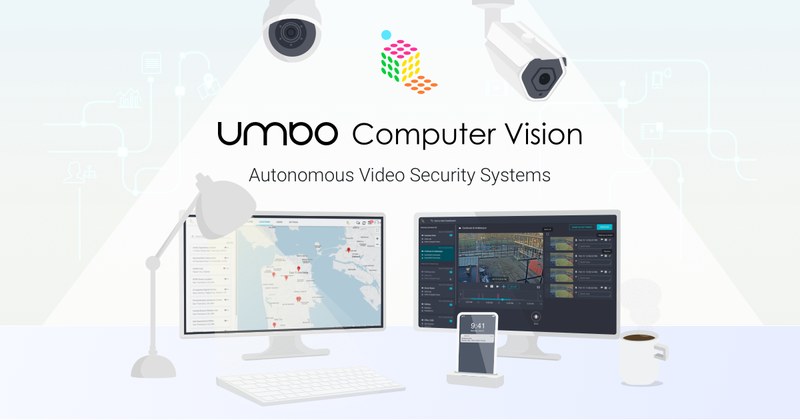
Umbo Computer Vision
Umbo Computer Vision is a San Francisco and Taipei based startup building autonomous video security systems that use deep learning to watch camera feeds the way a human guard would - flagging intrusions, tailgating and wall-scaling in real time while ignoring birds, cats and weather. Founded in 2014 by Shawn Guan, Ping-Lin Chang and Tingfan Wu, the company pairs its SmartDome camera hardware with a neural-net engine called Light and a cloud platform, and has raised roughly $17.6M to sell mostly through security integrators to businesses, schools and public-safety customers.

Monarch
Monarch is a San Francisco based reseller and deployment partner for cloud-managed physical security and connected-operations technology. As an authorized Verkada reseller and Samsara channel partner, it designs and installs AI-powered camera systems, access control, environmental sensors, and fleet dash-cam and GPS telematics for schools, hospitals, warehouses, construction sites, and multi-site enterprises. The pitch is enterprise-grade security without the NVR/DVR complexity - hardware that updates over the air and is managed from a single cloud dashboard.

Athena Security Inc.
Athena Security is an Austin-based physical-security company that builds AI-powered concealed weapons detection and visitor management systems for schools, hospitals, casinos, businesses and public venues. Founded in 2018 by serial entrepreneurs Lisa Falzone and Chris Ciabarra (the pair behind iPad point-of-sale pioneer Revel Systems), Athena combines walk-through metal detection, thermal imaging, lidar, cameras and machine learning to screen roughly one person per second - up to 3,600 people an hour - without asking anyone to empty their pockets or bags. Its flagship Apollo 500 system uses colored light boxes to show operators exactly where a suspected weapon is on the body, and its screening-compliance software helps organizations meet a growing patchwork of state security laws.

Cambridge Terahertz
Cambridge Terahertz is an MIT spinout building a chip-based imaging system that combines the 3D vision of lidar with the see-through power of X-ray, but using human-safe terahertz waves at a thousandth the power of a cell phone. Shrunk from an airport-scale scanner into a palm-sized, two-pound device, its AI-powered sensors detect concealed weapons through clothing and bags, and can see inside sealed packages without opening them. Founded in 2023 by MIT PhD Nathan Monroe, the company raised a $12M seed round led by Felicis with participation from Amazon's Industrial Innovation Fund.

Hirsch Group (fka Vitaprotech)
Hirsch Group (formerly Vitaprotech Group) is a France-based provider of premium, integrated physical-security systems for sensitive and high-security sites. Built by rolling up specialist companies - perimeter-intrusion pioneer Sorhea, access-control firm TIL Technologies, video-analytics maker Foxstream, UK detection specialist Harper Chalice, and others - it made its biggest leap in 2024 by acquiring the security business of U.S. firm Identiv for about $145 million, which brought the iconic Hirsch access-control brand into the fold. In 2026 the whole group unified under a single name, Hirsch, spanning command-and-control (PSIM), access control, video intelligence, credentials, door readers, and perimeter protection, with roughly $185M in revenue and 700+ employees.

PTS
PTS is a global, independent, employee-owned technology consultancy that designs the digital nervous system of buildings - connecting people, technology and space across workplaces, data centres, campuses and smart infrastructure. Founded in 1983 and headquartered in London, PTS advises on everything from audio-visual and networks to cyber and physical security, helping organisations transform their real estate through technology while improving user experience, wellbeing and sustainability.
Deep Sentinel
Deep Sentinel is a Pleasanton, California security company that pairs proprietary AI with live human guards to stop crime while it is happening rather than document it after the fact. Its cameras use computer vision to filter out harmless motion and surface genuine threats to remote 'LiveSentinel' guards, who intervene through two-way audio and a 100+ dB siren within seconds and escalate to police with verified, crime-in-progress information. The company sells to both homeowners and businesses and has expanded into a Bring Your Own Camera program that works with major third-party camera brands.
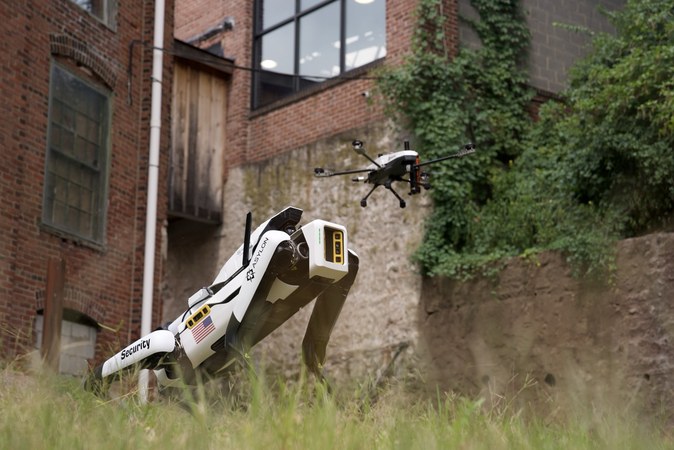
Asylon Robotics
Asylon Robotics builds US-made robotic security systems that pair autonomous aerial drones with ground robots (its Spot-based DroneDog) and AI command software to automate perimeter patrols for corporate campuses, logistics hubs, and critical infrastructure. Sold as Robotic Security as a Service and backed by a 24/7 Robotic Security Operations Center, the platform has run more than 250,000 missions across deployments in 15 U.S. states for customers including Ford, Bayer, GXO, Kia, and Mercedes-Benz Stadium.

Belfry
Belfry is a New York-based vertical SaaS company building the all-in-one operating system for physical security guard companies. Its platform unifies scheduling, timekeeping, GPS-tracked field operations, embedded payroll with tax filing, and automated billing - replacing the spreadsheets and stitched-together tools that security firms historically relied on. Founded in 2022 by Jordan Wallach and Alex Tulenko, Belfry serves hundreds of security businesses and raised a $12M Series A in January 2025 led by Base10 Partners.
Hakimo
Hakimo is a San Francisco-based AI security company founded by Stanford researchers Sam Joseph and Sagar Honnungar. The company builds autonomous AI agents that monitor physical security infrastructure - cameras, badge readers, access control systems - in real time, detecting threats and responding with automated talk-downs before incidents escalate. Serving over 400 properties across construction, automotive, self-storage, corporate offices, and higher education, Hakimo has raised $20.5 million in total funding and delivers a 60% reduction in security incidents for its customers.

Spot AI
Spot AI builds a video intelligence platform and AI camera system that turns ordinary security footage into real-time, searchable intelligence. Through cloud-managed cameras, an intelligent NVR, and Video AI Agents, it helps manufacturers, retailers, schools, and logistics operators detect incidents, automate responses, and pull insights from millions of hours of camera feeds.
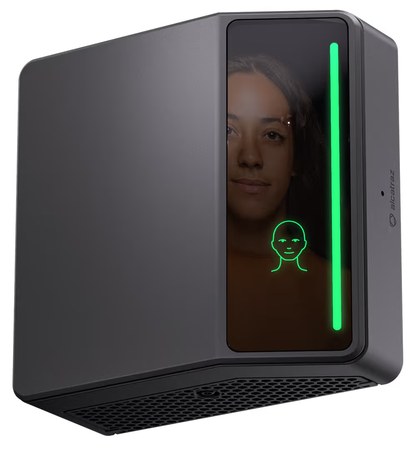
Alcatraz AI
Alcatraz AI builds the Rock and Rock X - AI-powered facial authentication devices that replace badges, fobs and PINs at the door. The Cupertino-based company combines edge computer vision, 3D depth sensing, and privacy-by-design encryption to authenticate people without storing their faces in the cloud, and is used by Fortune 100 firms, hyperscale AI data centers, major U.S. airports, and NFL teams.

Coram AI
Coram AI is a Sunnyvale-based AI video security platform that transforms existing IP camera infrastructure into an intelligent security operation. Founded in 2022 by two PhD-holding ex-Lyft autonomous driving engineers, Coram replaces outdated, hardware-locked surveillance systems with a cloud-native platform featuring natural language video search, real-time AI threat detection, access control integration, and emergency management — all without requiring customers to rip out their existing cameras. The company serves industries from healthcare and education to manufacturing and warehousing, and in January 2025 raised a $13.8M Series A led by Battery Ventures.