medical-imaging
(56)
The Company That Watches the Drug and Runs the Trial
Perceptive can trace a molecule in a scanner, standardize images across hundreds of hospitals, and keep the right study drug moving to the right patient. Its wager is that the handoffs between those jobs matter as much as the jobs themselves.
CapeStart's Real Product Is the Last Mile of Enterprise AI
Most AI projects do not die in the demo. They stall in the unglamorous stretch between a clever model and a system that regulated teams can trust. CapeStart has built a 600-plus-person business around crossing that gap.
CitiusTech Bet Everything on Healthcare. Now It Has to Make AI Behave.
For two decades, CitiusTech refused to become a general-purpose IT shop. That stubborn focus built a valuable healthcare specialist - and now gives it a credible shot at making enterprise AI survive contact with clinical reality.
MAUI Imaging Waited 17 Years for Chips to Catch Up. Now It Wants Ultrasound to See What It Used to Miss.
A father-son garage project spent nearly two decades turning telescope logic into a portable ultrasound system. The first serious proof is in, but the most interesting claims still have to survive larger clinical trials.

Videa Put AI in the Dentist’s Chair. The Real Product Is Trust.
Dentists do not need another dashboard blinking in the corner. Videa’s bet is that AI wins only when it slips into the X-ray, the patient conversation and the paperwork already on the schedule.
The Company That Turned Video Games Into a Cancer Lab
An Allen, Texas company spent years convincing gamers that tracing a line in Minecraft could help fight cancer. Then it had to figure out how to get paid for it.

InsiteOne Put Medical Images in the Cloud Before the Cloud Had a Name
The Connecticut company bet on off-site medical-image archiving in 1999, survived two giant owners, then returned with a broader plan: make radiology data portable, resilient and useful without forcing hospitals into another proprietary corner.
Gestalt Spent Eight Years Building the Boring Layer of Pathology - Now AI Has Somewhere Useful to Work
Most pathology AI companies sell the clever answer. Gestalt sells the place where the slide, the case, the pathologist and competing algorithms can finally meet - a workflow-first bet backed by a $7.5 million Series A.

Canon U.S.A. Sells You a Camera. It Also Prints Your Office, Scans Your Chest, and Etches the Chips in Your Phone.
Everyone knows the red logo from the camera strap. Almost nobody knows Canon also builds hospital scanners, factory-floor optics, and chip-making machines - and files more U.S. patents than almost anyone. Here is the whole company behind the shutter.

Philips Bet the Whole Company on Hospitals - Then a CPAP Recall Almost Broke It
It made light bulbs, then TVs, then the CT scanner in your local hospital. The story of how a Dutch electronics giant reinvented itself as a pure health-tech company - and nearly lost the bet.
Hospitals Bought the AI. Ferrum Health Is Selling the Part That Makes It Work.
Clinical algorithms were multiplying while hospital adoption stayed stuck. Ferrum built the missing last mile - one private route to deploy many models, test them on local patients, and keep watching after launch.

The MRI Wasn't Broken. The Referral Was.
Medmo built a business around the least glamorous part of radiology: everything between a doctor's order and a usable result. After more than one million patient journeys, that connective tissue became valuable enough to reshape the company.

The Ultrasound Machine Wants to Become a Stethoscope
Exo squeezed three ultrasound probes, real-time AI and the paperwork of a hospital imaging program into one pocket-sized system. The harder trick is making bedside scanning routine rather than exceptional.

The MRI Already Has a Chemistry Lab. BrainSpec Wants Doctors to Use It
Most MRI scans show anatomy. BrainSpec reads the chemical signals hiding in the same machine - and turns an expert-only technique into a report designed for clinical use.

Aegis Ventures Is Building Startups Inside Healthcare's Front Door
The New York venture studio has turned 14 health systems into a company-building network - giving young healthcare AI businesses something money alone cannot buy: trust, workflow access and a credible first customer.

The New York Fund That Bet on Robots Before the Robots Could Walk
Parkway keeps a short list of bets and a long memory of building companies. That combination led a New York firm of about 15 people to the front of the humanoid-robot and quantum-computing races.

GE HealthCare
The 130-year medical-technology lineage is no longer selling scanners alone. Its bet is that imaging hardware, diagnostic drugs, cloud software and AI can work as one connected care system - without asking clinicians to become IT departments.
Siemens Healthineers
Its scanners see disease, its lab systems measure it, and its therapy platforms help treat it. Siemens Healthineers has quietly assembled one of healthcare's broadest portfolios - and a business model designed to remain in the hospital long after the machine arrives.

Lumius
Lumius is a Durham, North Carolina medical device company building a fast, affordable, real-time 3D ultrasound system - a '3D camera for the body.' Founded by three Duke PhDs, it replaces the flat 2D slices clinicians must mentally stitch into anatomy with a live volumetric view and AI that flags vessels, nerves, and muscle. The company starts with vascular access and central line placement, where roughly half of first attempts by newer clinicians fail, and plans to expand into clot detection, nerve blocks, tumor diagnosis, and biopsy guidance.

Harrison.ai
Harrison.ai is a Sydney-based clinical AI company founded in 2018 by brothers Dr Aengus Tran and Dimitry Tran. It builds artificial-intelligence software that helps clinicians read medical images faster and more accurately - flagging urgent findings on chest X-rays and brain and chest CT scans, and streamlining pathology review. Its diagnostic products, radiology brand annalise.ai and pathology joint venture franklin.ai, are used at more than 1,000 healthcare sites across four continents, with regulatory clearance in 40-plus countries. The company positions itself as a builder of foundation models for medicine, releasing harrison.rad.1, a radiology-specific multimodal large language model. Harrison.ai raised a US$112 million Series C in February 2025 to fund a US expansion, taking total capital raised past US$240 million.

Qualitas Health Malaysia
Qualitas Health Malaysia is the Malaysian arm of Qualitas Medical Group, one of Asia Pacific's largest privately-held primary healthcare networks. Operating since late 1997, it runs an integrated web of general practice clinics, dental clinics, medical imaging centres, ambulatory care, therapy and rehabilitation, and wound care facilities across Malaysia. It serves both individual patients and corporate clients through services spanning primary care, corporate health screening, occupational health and digital health tools like the Qualitas Plus app. The group is backed by Japan's Sojitz Corporation and private equity firm Southern Capital, and has been reported to be weighing a landmark Bursa Malaysia IPO.
Us2.ai
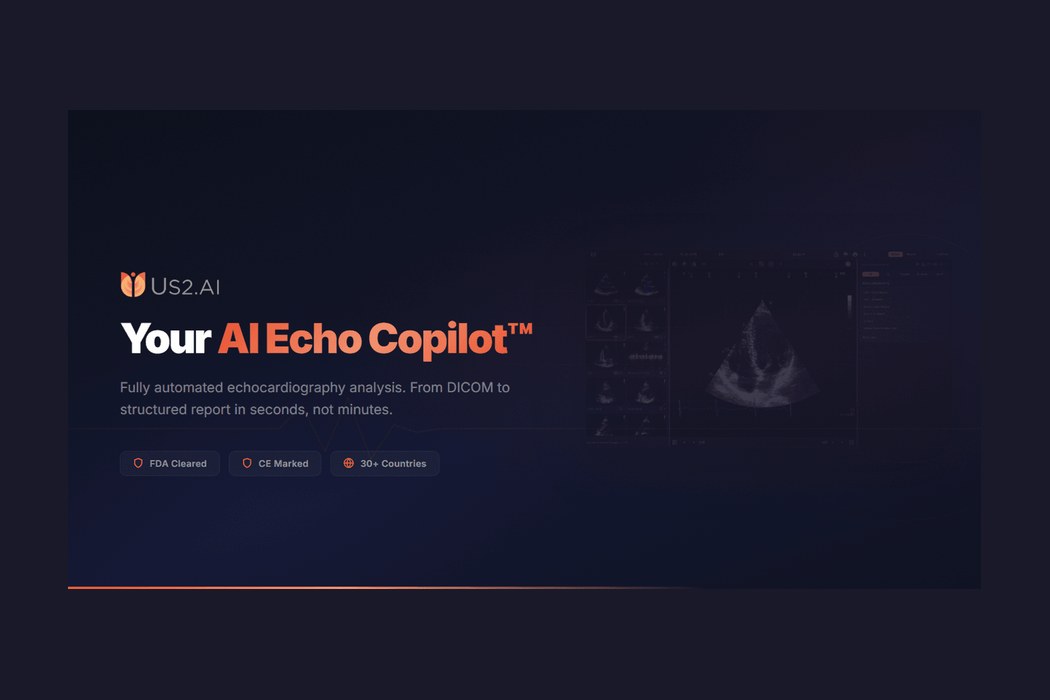
Us2.ai is a Singapore-based medtech company that builds FDA-cleared, CE-marked AI software to automate echocardiography (cardiac ultrasound) analysis and reporting. Its vendor-neutral platform - branded the AI Echo Copilot - turns raw DICOM echo studies into fully editable, structured clinical reports in seconds, detecting conditions such as heart failure, aortic stenosis, pulmonary hypertension and cardiac amyloidosis. Founded in 2017 as eko.ai and rebranded to Us2.ai in 2021, the company aims to widen access to expert-level cardiac diagnostics across hospitals, echo labs and clinical-trial core labs worldwide.

Dandelion Health
Dandelion Health is a New York-based clinical AI and real-world data company that turns de-identified patient records from a network of U.S. hospitals into research-ready datasets and software for drug developers and AI teams. Its multimodal platform combines structured records, clinical notes, medical images, and raw biological signals such as ECG waveforms across roughly 15 million patients, helping pharmaceutical companies design smarter trials, discover biomarkers, generate real-world evidence, and validate healthcare algorithms against diverse populations.

Protege
Protege is a New York-based AI data platform that connects owners of private, real-world data - hospitals, media libraries, motion-capture studios and more - with the AI labs and enterprises that need it to train, fine-tune and evaluate models. It licenses and curates proprietary datasets under strict privacy, IP and compliance controls, so data holders get paid and provenance is preserved. Founded in 2024 by Bobby Samuels and Travis May, Protege has assembled access to billions of clinical notes, hundreds of millions of medical images, and hundreds of thousands of hours of video and audio, positioning itself as core infrastructure for the post-web era of AI development.
iMerit Technology
iMerit is a global AI data solutions company that supplies the labeled, enriched and expert-refined data used to train, fine-tune and evaluate machine learning and generative AI models. Founded in 2012 by Radha Basu, it pairs a specialized human workforce with its Ango Hub annotation platform and its Scholars network of domain experts to serve Fortune 500 clients across autonomous vehicles, healthcare, geospatial and financial services. In June 2026, enterprise-AI firm EXL agreed to acquire iMerit for up to $310 million.

Braid Health
Braid Health is a San Francisco health-tech company building an FDA-cleared, AI-powered diagnostic collaboration platform for medical imaging. Founded in 2018 by Apple and Twitter alumni Kevin Quennesson and Alessandro Sabatelli, Braid pairs AI imaging copilots with board-certified radiologists to deliver faster, lower-cost reads of MRI, CT, ultrasound and X-ray studies. It serves urgent care networks, health systems and retail clinics, and in 2026 launched a direct-to-patient second-opinion service that offers expert radiologist re-reads for $199.
CareRay Digital Medical Technology Co., Ltd.
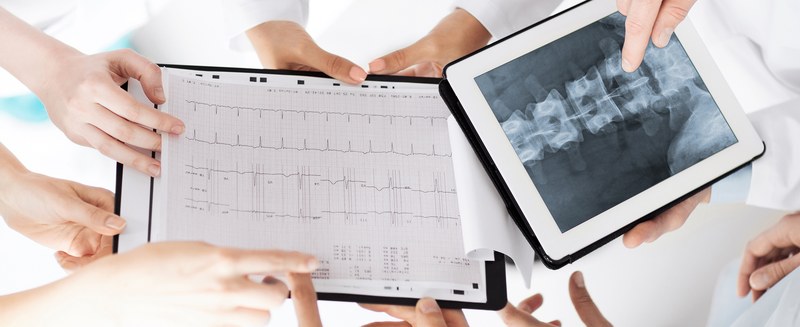
CareRay Digital Medical Technology is a Suzhou, China-based developer and manufacturer of digital X-ray flat panel detectors, the light-sensing components that turn radiation into diagnostic images. Founded in 2007, the company built its reputation on direct-deposit cesium iodide (CsI) scintillator technology and, in 2011, released what it describes as China's first commercially available direct-deposit CsI flat panel detector. CareRay supplies fixed, portable and wireless detectors for radiography, mammography, fluoroscopy, dental and industrial non-destructive testing, selling primarily as an OEM component partner to imaging-system builders worldwide, with a satellite operation in California's Silicon Valley.

Chipiron
Chipiron is a Paris-based medical-imaging startup building a compact, low-cost MRI scanner that runs at an ultra-low magnetic field (below ~30 millitesla, roughly 1,000x weaker than a hospital MRI). Its patented low-Tc SQUID quantum detection system plus AI noise cancellation and reconstruction are designed to recover clinical-grade image quality without a shielded room, without helium, and at a fraction of the cost, size, and infrastructure of conventional machines. The company's stated aim is to make MRI accessible everywhere, starting with breast imaging, and eventually reach patients, clinics, and remote settings that today's scanners can't serve.

EchoPixel, Inc.
EchoPixel is a Silicon Valley medical visualization company that turns ordinary CT, MRI and ultrasound scans into life-size, interactive 4D holograms of a patient's own anatomy. Its FDA-cleared True3D platform and Holographic Therapy Guidance (HTG) let surgeons and interventional cardiologists reach in and manipulate a digital twin of a heart or organ - no headset or glasses required - to plan and guide complex, minimally invasive procedures.
Vista AI
Vista AI (formerly HeartVista) builds AI software that automates MRI exams so any technologist can capture consistent, high-quality scans without a specialist on site. Spun out of Stanford's Magnetic Resonance Systems Research Lab in 2012, its FDA-cleared cardiac MRI product turns a manual, expert-dependent procedure into a largely automated one, and the company is expanding into brain, prostate and spine imaging. Backed by Khosla Ventures and a roster of major U.S. health systems, Vista AI positions automation as a fix for the gap between soaring MRI demand and a shortage of skilled technologists.