The modern dental appointment contains a peculiar act of faith. A clinician points at a smoky gray patch on an X-ray. The patient squints. Somewhere between “interproximal lesion” and the price of a filling, trust must materialize. Videa has built a company inside that gap. Its software places colored markers and measurements over dental radiographs, giving clinicians a second read and patients something legible to look at. The image is still evidence, not a verdict. The dentist still diagnoses. But now two people can discuss the same tooth instead of conducting a small seminar in grayscale.
That was the wedge. Videa, founded in 2018 as VideaHealth, now sells a broader AI platform to independent practices, dental groups and dental service organizations, or DSOs. Clinical Assist analyzes images. Voice Notes drafts documentation from patient conversations. Voice Perio charts gum measurements hands-free. Daily Dashboard surfaces tasks and treatment opportunities. Insights compares performance across providers and locations. Clean Claims assembles claim support, while AutoVerify tackles insurance eligibility. The company has traveled from the cavity to nearly everything surrounding the cavity.
The first market was not teeth
Florian Hillen studied medicine in Germany, worked around healthcare startups and pursued machine-learning research at MIT and Harvard. He initially thought mammography was where AI could matter most. Five companies and a stretch of research later, he changed course. Dentistry had a conspicuous quality-control problem: one X-ray could produce different opinions from different practitioners, and most dentists did not have the feedback loop of a specialist radiologist.
The economics also behaved unusually well. Earlier, more consistent detection could help a patient receive simpler care. It could help a practice explain necessary treatment and earn revenue. Large dental groups wanted a common clinical baseline across hundreds of locations. Hillen has called it a rare healthcare “win-win.” MIT’s Delta V program supplied an initial $50,000. A $5.4 million seed round followed in 2019, then $20 million in Series A financing in 2022 and a $40 million Series B in January 2025.
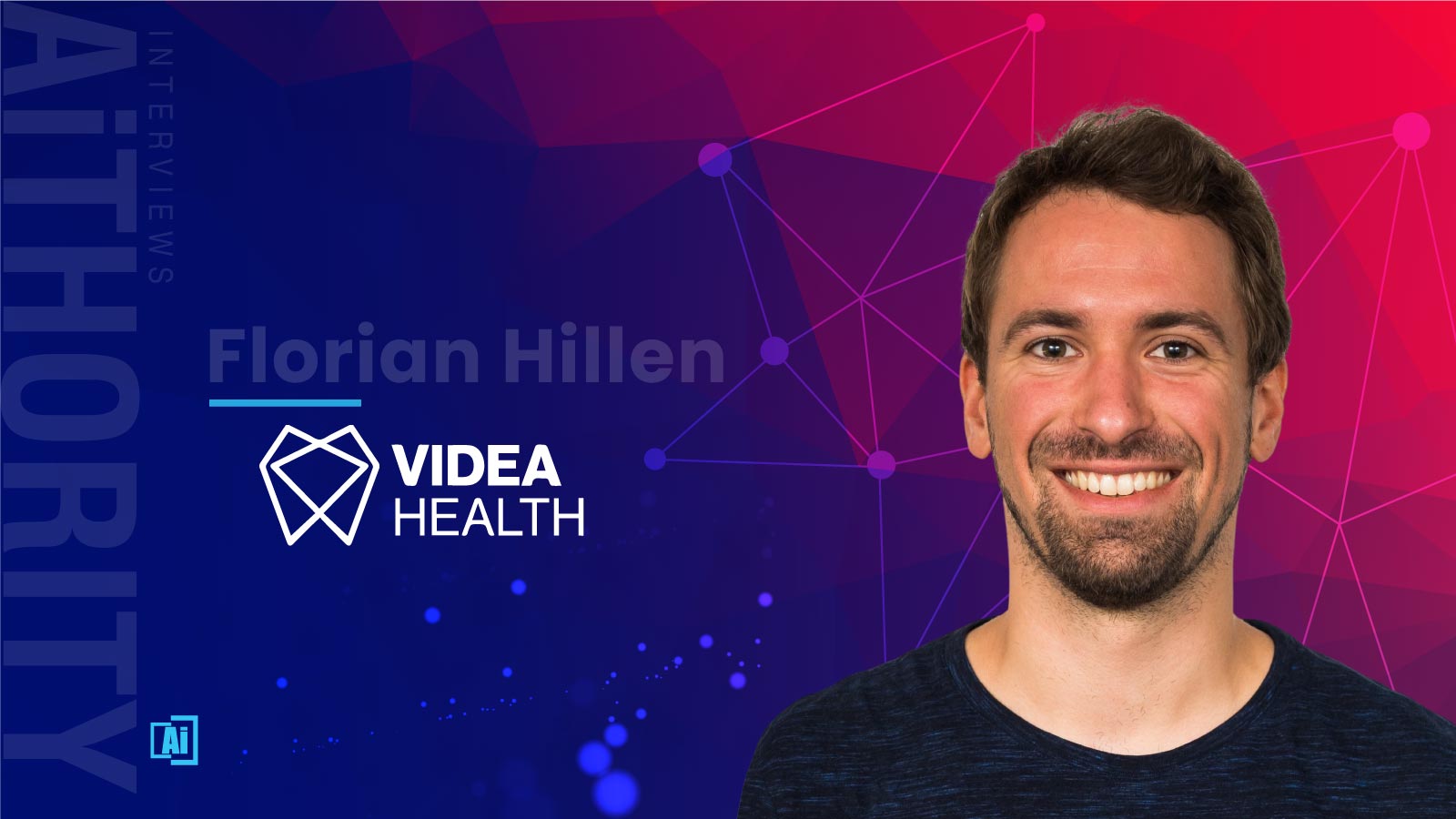
“If you go to three different dentists you might get three different opinions.”Florian Hillen, founder and CEO
Regulation first, then the waiting room
Medical software does not get to ship on vibes. Videa’s early technical and commercial test was caries detection. In 2022 the Food and Drug Administration cleared Videa Caries Assist as computer-assisted detection software. In the study submitted for that clearance, dentists using the system missed 43 percent fewer caries and made 15 percent fewer erroneous detections, according to the company’s account of the trial. A broader clearance announced in 2024 covered more than 30 algorithms across common conditions, including pediatric use.
What moved, according to Videa
FDA-study figures and DSO adoption are company-reported. The software assists clinical review; it does not replace a dentist’s judgment.
The harder failure arrived after accuracy: adoption. A clinically interesting overlay is useless if a dentist has to export an image, open another program and remember another password while a patient waits. Videa’s answer was integration. A 2022 partnership with Henry Schein One put its detection technology inside Dentrix as Detect AI. New bitewings could be analyzed automatically in an existing imaging workflow. Later, the Impact Panel added plain-language visuals, diagrams and take-home material inside Dentrix and Dentrix Ascend.
This is where the product becomes less theatrical and more persuasive. Videa does not ask a patient to trust “the algorithm.” It lets the dentist point to a marked area, add history and clinical context, and explain why treatment is or is not appropriate. One can reasonably worry that software which surfaces more treatment also benefits the seller and the practice. The safeguard is not a cheerful interface. It is validation, transparent limits and a clinician who remains accountable.
A platform built around what happens next
Competitors Pearl, Overjet and Denti.AI also apply machine learning to dental imaging. Videa’s distinction is its increasingly explicit focus on the chain after detection. A finding must become an intelligible conversation, a complete note, a treatment plan, a scheduled procedure and, eventually, a clean claim. The company now calls itself the platform “built for what happens next.” That is marketing language, but it identifies the real contest: not who draws the cleverest box on an X-ray, but who removes the most friction without flattening clinical nuance.
Customers show why this expands well in groups. Heartland Dental brought Videa to more than 1,500 supported practices in a rollout the company says took under ten weeks. Dentalcorp selected it for more than 550 Canadian practices. Named users also include MB2 Dental, Tend, Mosaic Dental Collective and Great Expressions. Videa reported more than 90,000 clinicians using its technology in 2026 and says eight of North America’s ten largest DSOs have adopted it. Those are company figures, not an independent census, but the pattern is meaningful: standardization becomes more valuable as locations multiply.
The money is hiding in plain sight
Dental AI has an unusually visible return-on-investment story. A radiograph is already in the patient record. If software helps a clinician notice an appropriate procedure earlier, explain it more clearly and document it completely, the practice may improve care and collect more revenue without buying another scanner or adding an appointment type. Videa says early OrthoAI pilots produced 14 percent more aligner treatment plans in 30 days, while targeted prompts drove a twelvefold increase in 3D scans among likely candidates. Those results are commercial pilot reports, not a promise that every office will repeat them.
The tension deserves to stay in view. More accepted treatment can mean less delayed disease, but it can also make an algorithm look like a sales assistant wearing a lab coat. Videa’s most credible answer is to keep the recommendation inspectable. OrthoAI looks for signs such as spacing and crowding; ImplantAI flags sites that may merit evaluation. Neither knows every contraindication, preference or detail of a patient’s health. The software should begin a better examination, not end one. A responsible buyer should measure false positives, changes in treatment mix and patient outcomes alongside production.
That same discipline applies to administrative products. Saving ten minutes on a note is useful only if the note is accurate. A clean claim is valuable only if its documentation is defensible. The platform’s commercial logic is strongest when every automation leaves a human a clear place to check the work.
The part founders can steal
Start with one visible error
Videa began with missed cavities, a measurable problem on an image everyone already captured.
Earn the boring trust
Clinical testing and FDA review made the product harder to dismiss and harder to copy casually.
Borrow the workflow
Dentrix distribution put the feature where the work happened instead of creating a new destination.
Follow the unfinished job
Detection led naturally to explanation, notes, analytics, eligibility and claims.
The sequence matters. A startup that begins by promising to “transform the dental enterprise” has given itself seven products and no reason to be invited chairside. Videa earned that invitation with a narrow second-opinion tool, then followed the work downstream. It also learned that rollout is part of the product. Training champions, measuring usage and respecting the practice’s existing rhythm are not customer-success garnish; they determine whether the model ever reaches a patient.
Where the playbook breaks
Videa does not publish standard pricing. The company sells tailored subscriptions and enterprise deployments, sometimes through software partners, so “what did it cost?” has no honest public dollar answer for a practice. Buyers need the full quote: locations, providers, implementation, imaging compatibility, contract term, support and any channel fees. The platform may be too broad for a solo dentist who wants only a second read, especially if a cheaper point solution covers the same narrow job.
It will also underperform without digital imaging, reliable integrations and a team prepared to change small habits. AI can highlight a possible lesion, but poor images, incomplete history or an edge case still demand professional skepticism. OrthoAI’s aligner prompts, for example, focus on spacing and crowding rather than every orthodontic variable. Implant recommendations similarly require more clinical context and imaging. The honest promise is assistance, not omniscience.
The hidden competition is not another neural network. It is the extra click a busy clinician refuses to make.
Videa’s latest chapter makes the wager larger. In April 2026, VideaHealth became simply Videa, a name derived from the Latin videre, “to see.” The company opened its broader platform to independent practices and introduced ambient intelligence intended to turn patient-provider conversations into operational insight. The mission remains audacious: help clinicians deliver better care to one billion patients. The route is satisfyingly unglamorous - make the X-ray clearer, the explanation calmer, the note faster and the claim less annoying.
That is what Videa actually did. It found a clinical inconsistency, proved a focused tool, attached distribution to incumbent software, watched workflow friction fail first, and expanded into adjacent jobs. Other founders can copy the order, though not the shortcuts. In regulated work, the clever demo is only the opening scene. The company is built in the long stretch between a model being right and a human being willing to use it.