clinical-decision-support
(56)
The ER Vet Who Turned a Paper Treatment Sheet Into Veterinary Medicine's Operating System
Instinct Science started with one emergency veterinarian's annoyance at paper treatment sheets. Nine years, two acquisitions, and more than 360,000 veterinary users later, it is attempting something larger: turning the medical record from a filing cabinet into a clinical co-pilot.

Healthcasts Spent 25 Years Turning the Doctors’ Hallway Conversation Into a Search Engine
The company started by streaming medical seminars at a fraction of the cost. Now it is betting that the most useful answer in medicine is often the one a verified peer has already learned the hard way.
RhythmX AI's $50 Million Bet: The Useful Part Comes After the AI Scribe
Most clinical AI is trying to write the note. RhythmX AI wants to decide what deserves the doctor's attention next - and its merger with Get Well reveals why distribution may matter as much as the model.
DARI Motion Wants to Turn a Five-Minute Movement Test Into Orthopedics' Second Opinion
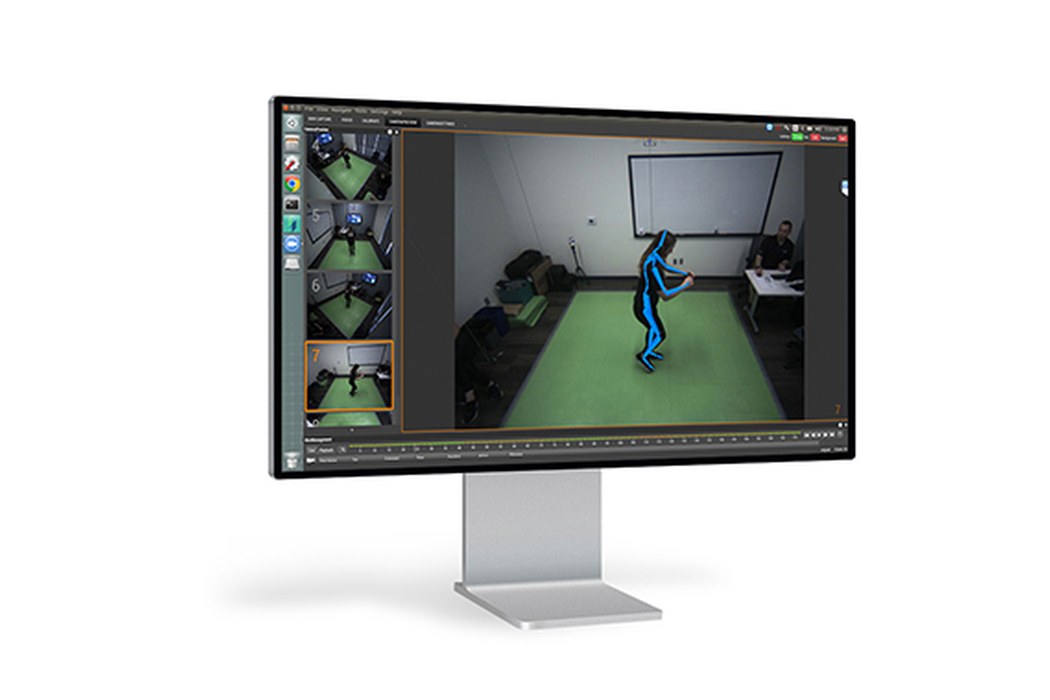
The Kansas company stripped the markers and force plates out of a biomechanics lab. Now it is selling clinics and performance teams a faster way to turn ordinary movement into longitudinal evidence - with useful limits that buyers should understand.

Videa Put AI in the Dentist’s Chair. The Real Product Is Trust.
Dentists do not need another dashboard blinking in the corner. Videa’s bet is that AI wins only when it slips into the X-ray, the patient conversation and the paperwork already on the schedule.
The Startup Teaching AI to Read a Doctor's Bad Handwriting
Most healthcare data is a mess of faxes and scanned charts nobody can read at scale. Keebler Health built AI to read all of it - and to prove exactly where it found each diagnosis.
The Chicago lab teaching hospitals to read your blood before sepsis reads you
Sepsis kills more Americans than all cancers combined and hides in plain sight. Prenosis spent a decade building a biobank and an algorithm to catch it in the first 24 hours - and got the FDA to say yes.
Inside the Atlanta Startup Rewiring How Cancer Gets Decided
OncoLens turned the tumor board - medicine's oldest committee - into AI-backed software now running inside 225-plus cancer centers. It started with a daughter watching her father get conflicting advice.
Silver Health Plus
Silver Health Plus is building an at-home care operation around a single wager: that the sickest 5% of Medicare patients decline on a schedule you can watch - and interrupt.
Evolent
The company betting that the most expensive corner of American medicine - cancer, cardiology, and back surgery - can be run better when the people paying for care and the doctors delivering it are finally pulling in the same direction.

Amwise Diagnostic PTE. LTD.
Amwise Diagnostic is a Singapore- and Taipei-based cancer genomics company behind RecurIndex, a multi-gene test built specifically on the genomes of Asian breast cancer patients. It reads a tumor's genetic profile alongside clinical factors to estimate the five-year risk of local recurrence and distant metastasis, helping physicians and patients decide whether chemotherapy or radiotherapy is actually needed - and helping many avoid treatment they don't.

Harrison.ai
Harrison.ai is a Sydney-based clinical AI company founded in 2018 by brothers Dr Aengus Tran and Dimitry Tran. It builds artificial-intelligence software that helps clinicians read medical images faster and more accurately - flagging urgent findings on chest X-rays and brain and chest CT scans, and streamlining pathology review. Its diagnostic products, radiology brand annalise.ai and pathology joint venture franklin.ai, are used at more than 1,000 healthcare sites across four continents, with regulatory clearance in 40-plus countries. The company positions itself as a builder of foundation models for medicine, releasing harrison.rad.1, a radiology-specific multimodal large language model. Harrison.ai raised a US$112 million Series C in February 2025 to fund a US expansion, taking total capital raised past US$240 million.
Mesh Bio
Mesh Bio is a Singapore-based health deep-tech company that uses digital twin technology and predictive analytics to help clinicians detect and manage chronic diseases earlier. Its DARA platform automates health-screening report generation and risk stratification, while HealthVector Diabetes - approved as a Software as a Medical Device by Singapore's Health Sciences Authority - forecasts diabetes complications years before onset. Founded in 2018 by Andrew Wu and Arsen Batagov, the company serves more than 40 healthcare groups across Asia and has assessed over 300,000 patients.
Qritive
Qritive is a Singapore-based healthtech company building AI-powered digital pathology software that helps pathologists detect, grade and classify cancer from whole-slide images. Its Pantheon platform digitizes the entire histopathology workflow, and a suite of hardware-agnostic AI modules - covering prostate, colon, breast, gastric, lymph node metastasis and immunohistochemistry - assist pathologists in reaching faster, more consistent diagnoses. The company sells to hospitals, pathology labs and pharmaceutical partners across Asia-Pacific, the US and the Middle East.
TachyHealth
TachyHealth is a UAE-based healthcare AI company that helps hospitals, clinics and insurers close the gap between clinical care and payment. Founded in 2018, it builds AI-driven tools for medical coding, claims review and auditing, and clinical decision support - branded AiCode, AiReview and AiGuide - aimed at reducing administrative burden, controllable revenue loss and claim denials while advancing value-based care across the Middle East and Africa. In October 2025 it raised a $5M Series A led by Saudi insurer Tawuniya.

Us2.ai
Us2.ai is a Singapore-based medtech company that builds FDA-cleared, CE-marked AI software to automate echocardiography (cardiac ultrasound) analysis and reporting. Its vendor-neutral platform - branded the AI Echo Copilot - turns raw DICOM echo studies into fully editable, structured clinical reports in seconds, detecting conditions such as heart failure, aortic stenosis, pulmonary hypertension and cardiac amyloidosis. Founded in 2017 as eko.ai and rebranded to Us2.ai in 2021, the company aims to widen access to expert-level cardiac diagnostics across hospitals, echo labs and clinical-trial core labs worldwide.
Ataraxis AI
Ataraxis AI is a New York-based precision-oncology company building AI-native cancer diagnostics. Founded in 2022 by physician-scientist Jan Witowski and AI researcher Krzysztof Geras, it developed Kestrel, a digital-pathology foundation model trained on hundreds of millions of tissue images. Its flagship platform, Ataraxis Breast, reads standard pathology slides to predict recurrence risk and estimate whether an individual patient will benefit from chemotherapy - reported to be roughly 30% more accurate than the current standard of care - returning results within about an hour and without additional tissue procedures.

BostonGene
BostonGene is a Waltham, Massachusetts biotechnology company that applies AI-driven multiomics to cancer. Its Tumor Portrait platform integrates DNA and RNA sequencing with immune and tumor-microenvironment analysis into a single test, producing molecular profiles that help oncologists select therapies and help pharmaceutical partners design trials, identify biomarkers, and accelerate drug development. Founded in 2015 and led by CEO Andrew Feinberg, the company reached unicorn status in 2022.
C8 Health
C8 Health is a healthtech company building an AI-powered best-practices implementation platform for hospitals. It consolidates scattered clinical protocols, guidelines and reference material into a single, site-specific source of truth, then delivers vetted, role-aware answers to clinicians at the point of care through search, mobile-friendly formats and a natural-language AI assistant. Founded in 2022 and used across 100+ U.S. hospitals, the company aims to close the gap between medical evidence and day-to-day clinical practice.

Cleerly
Cleerly is a Denver-based digital healthcare company using FDA-cleared artificial intelligence to analyze coronary CT scans and non-invasively measure plaque, stenosis and the likelihood of ischemia in the heart's arteries. Founded in 2017 by cardiologist James K. Min, the company builds machine-learning software that turns a routine CCTA scan into a quantitative, vessel-by-vessel picture of coronary artery disease - aiming to catch atherosclerosis earlier and help physicians prevent heart attacks rather than react to them.
Cytovale
Cytovale is a San Francisco-based medical diagnostics company that built IntelliSep, an FDA-cleared blood test that helps emergency departments identify patients at risk of sepsis in about eight minutes. Instead of hunting for a pathogen, the test reads the immune response by measuring the biomechanical properties of white blood cells using microfluidic deformability cytometry, high-speed imaging and machine learning. Founded on academic research that began in 2007 and incorporated in 2013, the company is applying its rapid host-response platform to one of medicine's most time-sensitive and deadly conditions.

Huma
Huma is a London-based digital health technology company that builds a regulated, modular software platform used by hospitals, pharmaceutical companies and governments to run remote patient monitoring, 'hospital at home', companion apps and decentralized clinical trials. Founded in 2011 as Medopad and rebranded to Huma in 2020, it combines predictive algorithms, digital biomarkers and real-world data with a no-code Huma Cloud Platform so partners can launch regulated, disease- and device-agnostic health apps. Its Software as a Medical Device holds EU MDR Class IIb, US FDA Class II and UK MHRA registrations, and its technology has reached thousands of hospitals and tens of millions of patients worldwide.

Neuroglee Health
Neuroglee Health is a Boston-based digital health company building value-based, at-home dementia and cognitive care. It pairs a virtual interdisciplinary clinical team - advanced practice nurses, social workers, pharmacists and care navigators supervised by neurologists and geriatric psychiatrists - with evidence-based digital therapeutics to support patients with mild cognitive impairment through late-stage dementia and their care partners. Founded in 2020 by Aniket Singh Rajput, the company works with Mayo Clinic on its Neuroglee Connect platform and participates in the CMS GUIDE Model to deliver comprehensive, longitudinal dementia care to Medicare beneficiaries at no cost to families.
Percipio Health
Percipio Health is a Plano, Texas company that turns an ordinary smartphone into a whole-person health monitor, using AI to read vision- and voice-based biomarkers - vitals, medication adherence, brain health and social determinants - without any dedicated medical devices. Founded by digital-health veterans Eric Rock and David Lucas, the team behind Vivify Health and MEDHOST, the platform helps health plans and providers catch rising-risk and high-risk patients earlier and manage large populations at lower cost. It launched publicly in January 2025 alongside a $20M Series A led by UPMC Enterprises, WAVE Ventures and Labcorp.

Regard
Regard is a New York-based healthcare AI company that builds a clinical insights platform acting as an AI co-pilot for physicians. It reviews the full electronic health record - not just the sliver of chart data doctors typically read - to proactively surface likely diagnoses and draft near-complete clinical documentation before a patient is seen. Used by clinicians across 150+ hospitals, Regard aims to reduce missed diagnoses, ease documentation burden, and recover otherwise-lost hospital revenue.
Reveal HealthTech
Reveal HealthTech is a New York-based AI transformation partner for U.S. healthcare and life sciences organizations. Founded in 2023 and incubated by W Health Ventures and 2070 Health, the company pairs clinical expertise with engineering and design to turn AI concepts into deployed products for hospitals, pharma, and digital health innovators. Its flagship products include BioCanvas for clinical trial recruitment, Prism AI for workflow automation, and CareIQ for care coordination. Reveal raised a $7.2M Series A led by Leo Capital in September 2025 and runs teams across the U.S. and Bengaluru, India.
Vytalize Health
Vytalize Health is a value-based care enabler and Accountable Care Organization (ACO) that helps independent primary care physicians care for Medicare patients while lowering the total cost of care. Founded in 2014 and headquartered in Hoboken, New Jersey, it pairs a physician-built clinical data platform (Vytal Insights) with a wraparound clinical team and virtual clinic (Vytal Care) so small practices can succeed in Medicare's advanced value-based programs like ACO REACH and MSSP. The company serves hundreds of thousands of Medicare beneficiaries across dozens of states and was named the No. 1 fastest-growing private company in America by Inc. in 2024.

EchoPixel, Inc.
EchoPixel is a Silicon Valley medical visualization company that turns ordinary CT, MRI and ultrasound scans into life-size, interactive 4D holograms of a patient's own anatomy. Its FDA-cleared True3D platform and Holographic Therapy Guidance (HTG) let surgeons and interventional cardiologists reach in and manipulate a digital twin of a heart or organ - no headset or glasses required - to plan and guide complex, minimally invasive procedures.

Evidium
Evidium is a San Francisco healthcare-AI company building what it calls 'Referenced AI' - a neurosymbolic platform that turns medical evidence into computable knowledge. Rather than a black box, it projects patients across a computable map of clinical states and the transitions between them, so every insight traces back to guidelines, charts, and research. Founded and led by Carl Bate, the company sells transparent clinician-quality insights and probabilistic risk forecasts to health systems, insurers, and payviders, and closed a $22M Series A co-led by Health2047 (the AMA's venture studio) and WGG Partners in November 2025.

RISA Labs
RISA Labs is a Palo Alto healthtech company building an AI operating system for oncology. Its platform, BOSS (Business Operating System as a Service), decomposes the paperwork-heavy work of cancer care - prior authorization, benefits verification, eligibility checks, denial management - into micro-tasks handled by a network of AI agents, digital twins, and reinforcement learners that plug into EHRs and payer portals. Founded in 2024 by IIT Kanpur alumni Kshitij Jaggi and Kumar Shivang, RISA aims to cut the days-long administrative delays that keep cancer patients waiting for treatment.