A biomechanics lab has a way of making a person look guilty. Reflective dots go on the body. Cameras take their positions. A force plate waits underfoot. A specialist watches. The data may be excellent, but the ritual announces that this is expensive science, built for research protocols and elite athletes rather than the Tuesday-afternoon patient with a repaired knee.
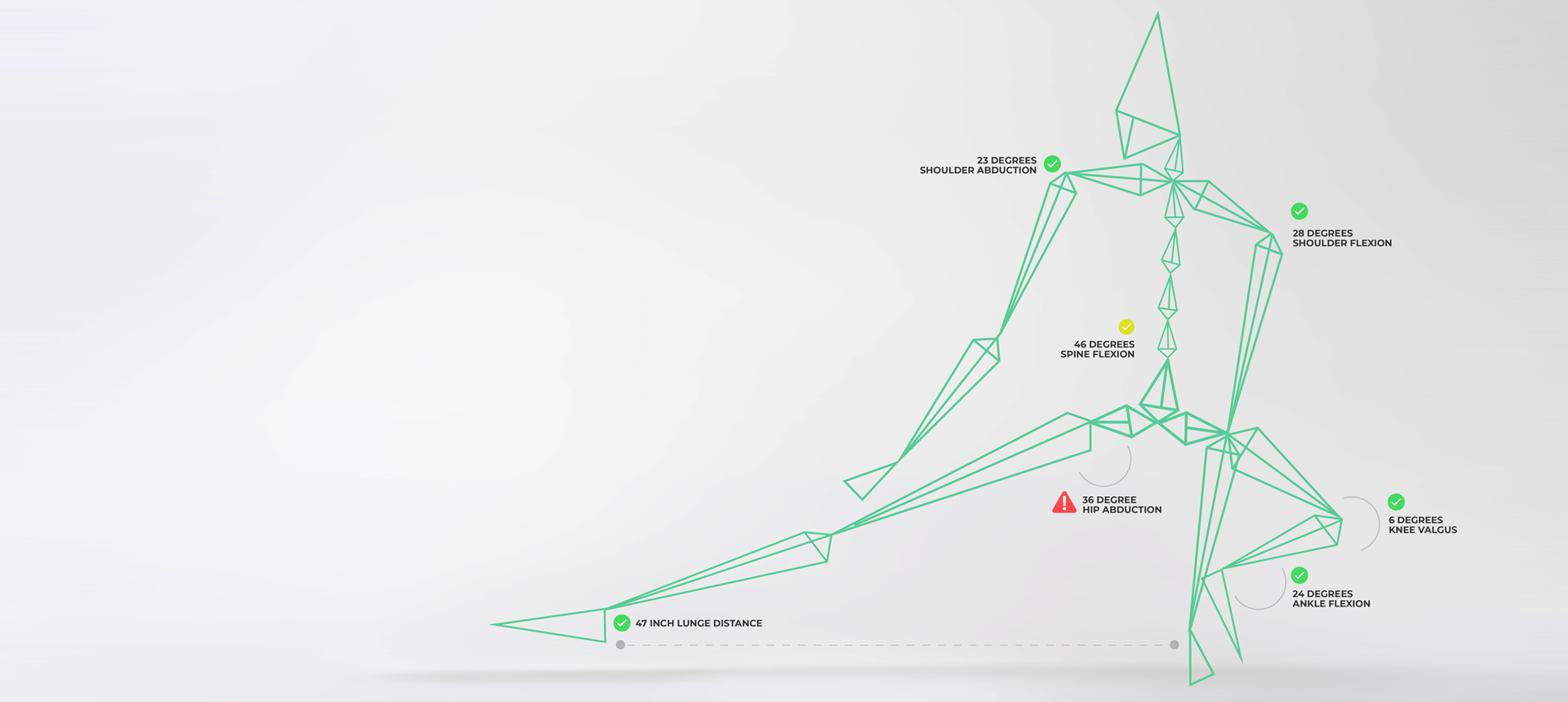
DARI Motion built its company around removing that ritual. Its system records a person moving in ordinary clothing with synchronized cameras, reconstructs a 3D skeleton, calculates kinematics and kinetics, and sends the analysis to the cloud. The company says a capture can take about five minutes and the processed results can return in roughly 20 seconds. The customer is not the person lunging in the box. It is the orthopedic clinic, physical-therapy practice, university, performance program or workplace-health team that needs an objective baseline and a way to compare the next visit with the last one.
A capture system wrapped in a decision loop
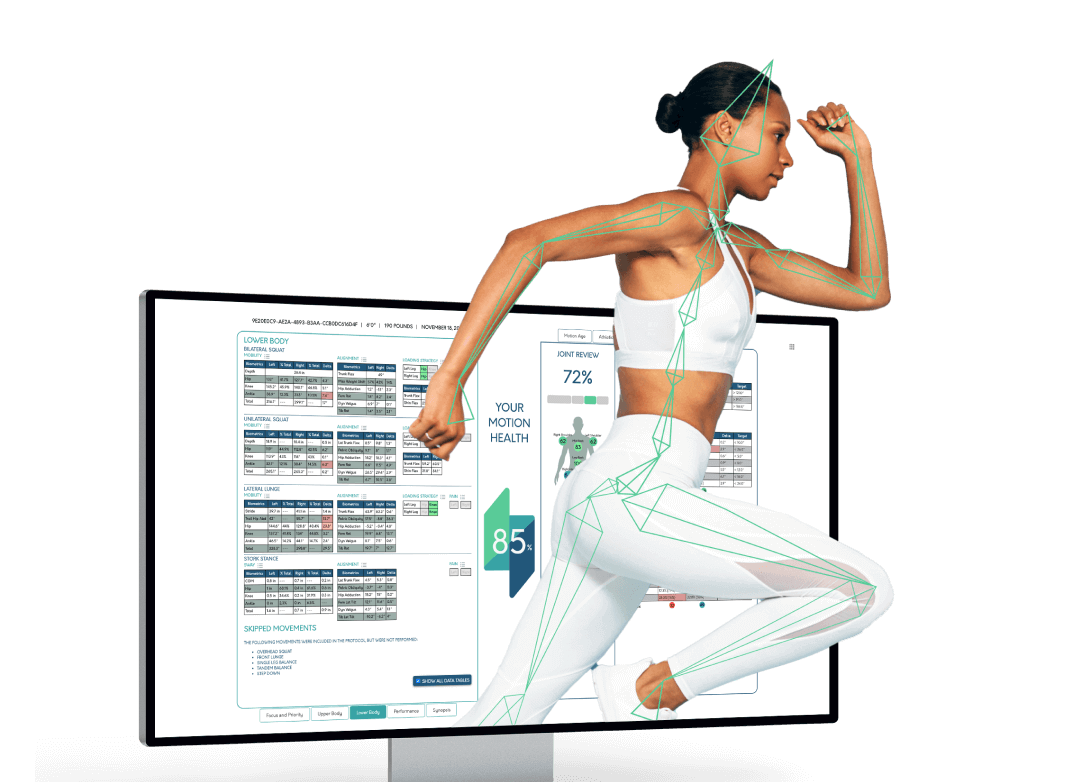
DARI's advantage is easiest to miss in a camera demo. Markerless capture is only the front door. Behind it sit patient intake, automated collection, cloud processing, a web dashboard, raw-data review, comparison with normative populations, longitudinal reporting and exports that can be attached to the medical record. Its models organize motion into categories such as mobility, alignment, sway, force and performance. Other views answer narrower questions: How ready is this athlete today? Does this joint move inside a normative range? Is the patient's post-operative pattern improving?
That packaging matters. A clinic does not earn much from owning an exquisite data stream that takes two days to interpret. DARI is selling a finished appointment: collect, process, explain, document. Its FDA-cleared DARI Health device is intended to quantify and graphically display movement for uses including pre- and post-rehabilitation evaluation and physical therapy. DARI Performance adapts the same foundation to athleticism, readiness, throwing, swinging and running. Wellness programs use baselines for workers, first responders and otherwise healthy populations.
The first score was almost too tidy
Founder and CEO Patrick Moodie's interest in movement was personal before it was computational. A broken arm while pitching in high school made ordinary function suddenly conspicuous. Years later, after DARI was founded in 2009, the early Functional Movement Assessment reduced performance to a point system: jump higher, squat lower and lunge farther to gain points; lose them for poor biomechanics. Statistical comparison produced an image of an elite mover.
The first thing to age badly was the idea that one score could carry the whole conversation. Moodie tested himself and learned he was a good mover, not an elite one. More important, a later musculoskeletal exam confirmed issues the report had surfaced before he felt pain. He pursued corrective work and described improvements in mundane tests of life: putting on socks, lifting his children, getting out of a car. The product's center of gravity shifted from ranking a performance to explaining a profile. Today's models separate readiness from athleticism, mobility from alignment, and a population comparison from a person compared with their own baseline.
“It needed to be simpler to approach.”Patrick Moodie, founder and CEO
That is the company in one sentence. DARI is not trying to eliminate biomechanical complexity. It is trying to hide enough of the machinery that a clinician can use the result without becoming a biomechanist. The raw measurements remain available, while visual alerts and models make the first read faster.
The entry price is public. The economics are local.
DARI's newer reservation site lists two entry configurations. Perception pairs four cameras, a computer and mobile truss with capture, cloud processing, portal viewing and emailed reports. Shift adds four more cameras plus gait analysis, CSV export and video review. Both are annual subscriptions with three-year commitments. More capable Expert and Reveal configurations require a quote.
Per year · paid annually · three-year contract
Per year · paid annually · three-year contract
The sticker is only the first line of the calculation. Buyers need suitable space, reliable connectivity, staff training, integration into appointments and enough scans to make longitudinal comparison routine. DARI advertises reimbursable clinical codes, but reimbursement depends on setting, payer, documentation and medical necessity. A sports program has a different return: fewer hours spent setting markers, faster retesting and a shared language between coaches, trainers and medical staff.
04 / The marketBetween the expert lab and the practiced eye
DARI sits in an unusually crowded gap. At one end are marker-based laboratory systems from companies such as Vicon and Qualisys, direct force plates and wearable inertial sensors. They can be excellent tools, but they bring their own setup, staffing and interpretation burdens. At the other end is the experienced therapist watching a squat, perhaps with a phone camera and a functional test. Cheap, quick and hard to standardize across people, sites and months.
DARI's customer page names hospitals, orthopedic groups, universities, the Los Angeles Angels, performance centers and wellness operators. Partners include Hospital for Special Surgery, Sano Orthopedics, Intermountain Health, EXOS and the American Sports Medicine Institute. In 2021 DARI also acquired The Captury, the German Max Planck spin-off whose markerless Captury Live software formed the technical basis of DARI's products. That deal turned a critical dependency into owned infrastructure while leaving The Captury operating independently in Saarbrücken.
05 / Evidence and restraintUseful measurement is not mechanical truth
The evidence is more interesting than either a sales pitch or a dismissal. DARI's kinetic validation compared calculated vertical ground-reaction force with a force plate and reported strong agreement, although the published test involved only five healthy men performing squats. A 2018 Parkinson's study found DARI-derived kinematic data could help distinguish some patient states. The FDA cleared DARI Health in 2019 as substantially equivalent to an existing interactive rehabilitation exercise device.
Three labels worth keeping separate
- FDA-cleared: the device met a substantial-equivalence pathway for its stated use. It does not mean every risk score predicts an injury.
- Validated: specific measurements or models performed against a comparator under specific study conditions.
- Decision support: data informs a trained person's judgment. It does not replace history, examination or diagnosis.
Independent work supplies the brake pedal. A large military-trainee study using a DARI device found poor reliability for the tested movement-screen variables and did not support using them to predict musculoskeletal injury in that setting. Broader reviews of markerless motion capture find promise in faster collection and ordinary clothing, but warn that joint centers and angles vary by algorithm, movement, camera arrangement and the reference used for comparison.
Conditions matter. DARI is a weak fit when a buyer expects a screen to diagnose disease, predict a rare injury by itself, replace direct force measurement in every research protocol or detect changes smaller than the system's repeatability. It also struggles as shelfware: without consistent protocols and follow-up scans, the normative database becomes an expensive conversation piece. It works best when the decision is repeated, time matters, the movement fits a validated protocol and a qualified human owns the interpretation.
06 / What to copySell the loop, not the impressive demo
The transferable lesson is not “add cameras.” DARI took a specialist workflow and designed backward from the moment somebody must act. A clinician needs the scan during the appointment. A trainer needs the athlete compared with the athlete's own baseline. An administrator needs a report and a plausible billing path. A patient needs a sentence they can understand.
The DARI playbook, without the skeleton
- Find an expert process whose setup time blocks routine use.
- Standardize collection before adding a clever score.
- Turn raw data into a few question-specific models.
- Keep the underlying detail available for expert review.
- Build the follow-up comparison into the first appointment.
DARI's recent ADAM software pushes that logic further. The on-screen guide can walk a subject through an evaluation without a dedicated operator. If it preserves data quality, self-guided capture could improve throughput and make the machine less dependent on one trained staff member. If it does not, automation merely moves inconsistency upstream. That is the product question to watch.
The company's newer language calls DARI “the best second opinion in orthopedics.” Strip away the advertising adjective and “second opinion” is a smart boundary. Movement data can challenge an assumption, quantify progress and make a baseline visible. It can tell a provider where to look closer. The first opinion still belongs to the person responsible for the patient.