market-intelligence
(65)
The Conference Company That Became a Crypto Terminal
Blockworks lost 82% of its revenue when conferences vanished. The rescue - podcasts, research, and a data platform - became a more interesting company than the one the founders had planned.

MZ North America and the Strange Business of Being Understood
Public companies rarely suffer from a shortage of facts. They suffer from facts arriving in the wrong order. MZ North America built a business around fixing the sequence - then finding the investors willing to listen.

GeneOnline Turned Biotech News Into a Map for Finding the Next Deal
The bilingual publisher spent years explaining Asian biotech to the world. Then it packaged the map behind the reporting into BIODND - an AI-assisted database built for the people hunting companies, capital and partners.

Big Valley Marketing asks a better question: Who needs to care?
A technology company can explain every feature and still leave its audience cold. Big Valley Marketing works on the missing connection between what a business builds, what it says, and why anyone should pay attention.

Before the cargo moves, the paperwork has to travel
The Arab-Brazilian Chamber of Commerce turns relationships into the practical machinery of trade. Its toolkit runs from Arabic translation to a digital system that helps export documents reach Jordan without a courier.

Green Street puts a price on the property market’s blind spots
Buildings trade slowly. Opinions travel fast. Green Street has spent four decades connecting the two, selling investors a more informed view of what real estate is worth.
AppTweak wants every app download to earn its keep
The Brussels company built its business helping apps get found. Its next act connects keywords, advertising and customer feedback to a harder question: which growth is worth paying for?

Defaqto’s five stars hide a much bigger business
The familiar insurance badge is the shop window. Behind it, Defaqto sells the data and software that help financial companies design products, compare rivals and explain their decisions.

JATO Dynamics knows what’s hiding in the options list
A model name tells you surprisingly little about a car. JATO turns specifications, finance offers and registration records into a working map of the automotive market - for the businesses deciding what to build, sell and finance.

Brands Were Copying Amazon Reviews Into Excel. Revuze Turned the Mess Into a Daily To-Do List
Revuze started with a travel-planning idea, found its real market in retail, and built an AI system for turning scattered customer comments into product fixes, sharper listings and earlier warnings. The bet is simple: a complaint becomes valuable when someone knows what to do next.

The 58-Year-Old Printer That Turned the Deal Room Into an AI Operating System
Datasite escaped the slow fade of financial printing by betting the company on one useful piece of software. Now it wants to own the entire private-market workflow - from finding a target to interrogating the deal room with AI.
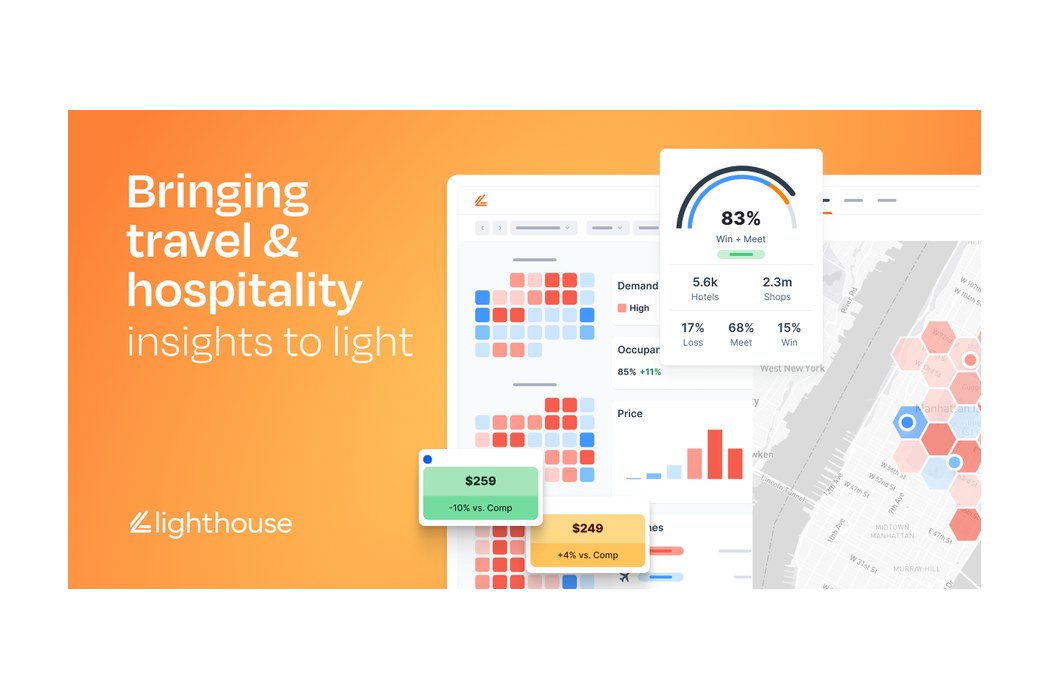
A $370 Million Bet That Hotels Want One Brain, Not Ten Dashboards
Lighthouse started by showing hotels what competitors charged. Now it wants to become the commercial operating system behind every room sold - a much bigger promise, backed by a much bigger check.

AlphaSense Turned Ctrl+F Anxiety Into a $7.5 Billion Research Machine
AlphaSense began with an analyst's fear of missing one decisive sentence. Fifteen years, five acquisitions and more than 500 million documents later, it wants to turn research from a scavenger hunt into an always-on system.

Liminal Sold the Conference. Now It Wants to Be the Memory of the Identity Market.
A consultancy born around digital identity sold its signature event, turned years of buyer evidence into software, and raised $8.5 million to make market intelligence behave less like a report and more like infrastructure.

CB Insights Turned a $100,000 PDF Into a Crystal Ball for Corporate Strategists
The company started with a crisis-era survey, a clumsy name and a report priced far too cheaply. Its evolution into a 12-million-company intelligence system offers a sharp lesson in turning free insight into expensive software.
YipitData’s Coupon Business Died. The Data Exhaust Became a $1 Billion Company
Yipit started by saving shoppers from coupon-email purgatory. When daily deals cooled, its founders discovered that hedge funds would pay far more for the machinery underneath - a pivot worth studying by anyone sitting on an overlooked data asset.

Axiom Health Spent Five Years Turning MedTech Spreadsheets Into Answers - Then Sold the Machine
Medical-device teams were drowning in data but still waiting weeks for answers. Axiom Health built the co-pilot it wished existed - and its 2025 sale to Sorcero shows where vertical AI gets valuable.

Radix Wants to Make Apartment Data Public - And Turn the Rent Roll Into an Intelligence Business
The Scottsdale proptech company began by killing the weekly apartment market survey. A decade later, it is trying a harder trick: putting renters, operators and investors on the same set of numbers.

The startup teaching AI to hire humans
A former DeepMind scientist and a SoftBank operator built voice AI that interviews people about what they are actually good at - then sells that expertise to hedge funds, AI labs and consultancies. Andreessen Horowitz just put in $22.75M.
Headset Turned Cannabis Receipts Into a Map - Now the Map Can Place the Order
Cannabis has thousands of products, fragmented rules and no universal product code. Headset built the translation layer - then moved from describing the shelf to helping operators decide what belongs on it.

The Company That Reads Every Bank Website in America So Fintech Vendors Don't Have To
Founders Steve Cotton and Curry Pelot already sold one bank-analytics company to Fiserv. The second time around they decided to index every financial institution in the country - and the software each one quietly runs.

York IE Wants to Be the Startup Department You Forgot to Hire
The New Hampshire firm has turned a familiar founder complaint - too many advisers, not enough doers - into a business spanning investment funds, market intelligence and embedded operating teams.
The Conference Company Building Rooms for Problems Too Specific for Davos
TBM Group has made a business from the questions that rarely reach a main stage - battery-factory dry rooms, wind-blade maintenance, tax operations and data lineage. Its product is not spectacle. It is a carefully filtered room.

Ad Age Keeps Score on the People Who Sell You Everything
For nearly a century a Chicago-born trade paper has counted the ad industry's biggest spenders and sharpest talent. Its data desk is the reason Madison Avenue reads it before breakfast.

The Company Mapping the Invisible Software Inside 40 Million Businesses
HG Insights built its business by reading the digital exhaust of corporate technology. Now it wants to turn that sprawling evidence - from software installs to buyer research - into an operating system for B2B growth.
Dynatron Software, Inc.
The quiet profit center inside a dealership is the service lane. Dynatron turns its messy repair-order data into pricing discipline, warranty revenue and measurable action - pairing software with coaches who keep the dashboard from becoming wallpaper.

SEMI
For 55 years SEMI has been the connective tissue of the chip industry - the neutral ground where rival equipment makers, materials suppliers and fabs agree on the rules, sizes and safety norms that let a wafer built in one country be tested in another.

S&P Global
It scores the debt of nations, names the index in your retirement account, and prices the oil in your tank. Meet the 165-year-old data company most people have never Googled.
Crustdata
Crustdata is a San Francisco company that supplies real-time company and people data through clean APIs and webhooks built for AI agents. Founded in 2024 and part of Y Combinator's Fall 2024 batch, it pulls live data from many primary sources so AI SDRs, recruiting tools, and investment platforms can find the right person, watch for job changes and funding rounds, and act on fresh signals instead of stale databases.

NewsCatcher
NewsCatcher is a news and web search API company that turns the open web into a clean, structured database of real-world events. It pulls from 90,000+ global sources, then deduplicates, enriches, and standardizes the articles so risk, finance, and AI teams can query news the way they query a database. Founded by Artem Bugara and Maksym Sugonyaka, it went through Y Combinator in Summer 2022.