industrial-iot
(36)
OSC Top Solutions Group Wants Your Network to Earn Its Keep
The Colombian integrator grew by following its customers across borders. Now it is selling a harder promise: making the networks, security systems and people behind critical infrastructure work together.

Ground Control and the art of sending less
A water level, a missing buoy, a glacier’s temperature: Ground Control makes a business of getting small, consequential messages out of places ordinary networks cannot reach.

Microlise follows the money out of the depot
A truck leaves, and the costs keep moving. Microlise connects drivers, deliveries and dispatchers - and its own setbacks show how much now depends on that connection.
Plataine Wants the Factory to Make the Next Call - Before the Expensive Roll Expires
A roll of carbon fiber can expire, a tool can vanish and one late machine can scramble the week. Plataine built an industrial decision layer for exactly that mess - and its best evidence is measured in saved material, recovered hours and fewer wrong cuts.
Geoforce Put a Tracker on the Stuff Nobody Else Wants to Track
The Plano company built a business around an unglamorous problem: expensive equipment keeps moving, paperwork lies, and cell service disappears. Its answer is hardware tough enough for the field and software that makes every reliable ping useful.

EPIC iO Bet the Camera Was Never the Point
The Fort Mill company is stitching cameras, sensors and wireless links into one operating layer for remote sites - a useful idea whose economics depend less on magical AI than on good placement, clean signals and humans who still make the call.

The Software Company You Notice Only When Everything Goes Wrong
Wind River put an operating system on Mars, watched it stumble, and helped patch it from Earth. Four decades later, its business still rests on the same promise: make complicated machines behave when the deadline is literal.

Blues Put 10 Years of Connectivity in a Tiny Card - So Hardware Teams Can Skip the Telecom Homework
Ray Ozzie’s latest company turns the messiest parts of industrial IoT into a small module and a JSON request. The payoff is speed; the tradeoff is that Blues works best when machines whisper useful data, not when they stream the world.

Guidewheel Put a Fitbit on the Factory Floor - Then Found a Bigger Business Hiding in the Downtime
Factories do not need another grand digital-transformation promise. They need to know why Line 3 stopped at 2:17 p.m. Guidewheel built a business by making that answer fast, legible and useful on machines old enough to collect a pension.
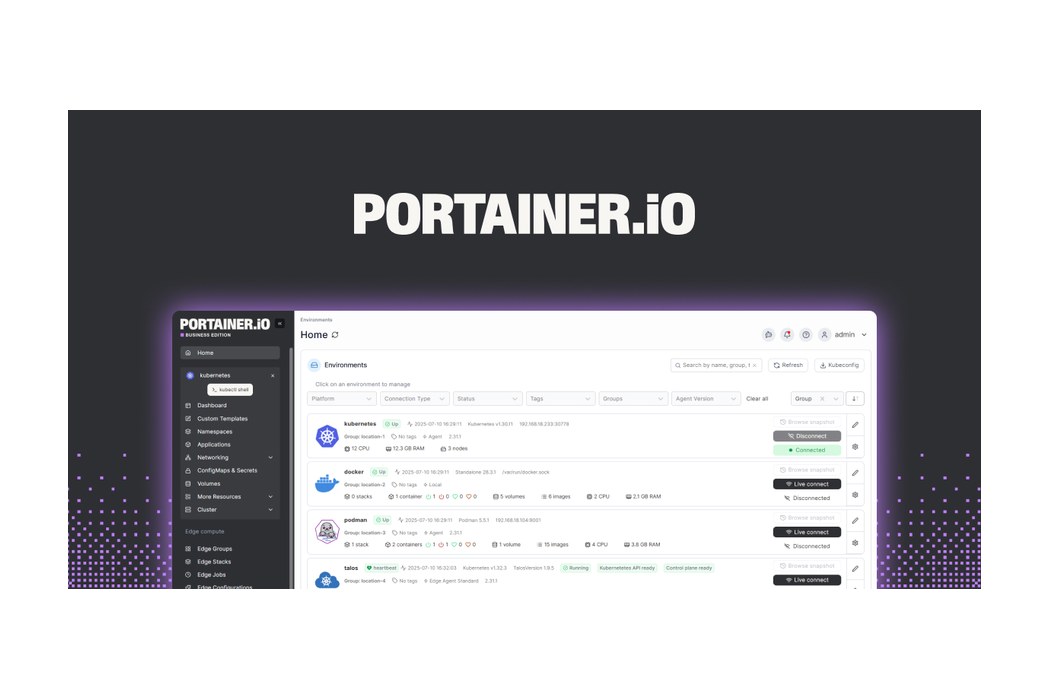
Portainer Turned Kubernetes Expertise Into a Button - Now 1 Million Users Want the Shortcut
The Auckland company started by taking the migraines out of Docker. Its bigger business is selling operational control to teams that cannot afford to make every employee a Kubernetes expert.
Relay Tried to Replace the Kids’ Phone. Frontline Workers Found the Bigger Job.
A $99 screen-free gadget for children found its real market in hotel corridors, stadium kitchens and factory floors. Relay’s second act is a useful lesson in letting an unexpected customer rewrite the pitch.
The Minneapolis Shop That Turns Lab IP Into Real Companies
Most venture firms write checks and wait. Invenshure hires the scientists, licenses the patents, and builds the company itself - one hard problem at a time.

When Heavy Machines Break, Elevāt Makes Them Talk Back
The Seattle startup wires up off-highway equipment - tractors, cranes, fire trucks - and hands technicians an AI that reads the machine's mind before anyone opens the panel.

Altizon Gave the Factory Floor a Brain That Talks Back
A Princeton-and-Pune software company spent a decade wiring up shop floors. Now it is betting the most useful worker in the plant will be a piece of software you can talk to.

Blue Pillar Made Old Machines Talk - Then Generac Bought the Conversation
Hospitals, utilities and microgrids were full of useful machines that could not share data. Blue Pillar found a practical business in connecting the awkward old stuff - often in days, sometimes for a few thousand dollars - and became part of Generac in 2022.

The Tiny Sensors Trying to Put Factory Emergencies Out of Business
Waites has planted more than half a million sensors across six continents, listening for the faint mechanical clues that precede expensive failure. The clever part is not merely hearing the warning - it is turning that signal into a repair someone can actually make.
Rockwell Automation
It started in 1903 with a $1,000 bet on a better motor controller. A century later, Rockwell Automation runs the machinery behind cars, medicine and microchips - and is quietly wiring the factory floor into the cloud.

L&T Technology Services
It is not the household name behind your car, your MRI machine, or your factory floor - but the outsourced engineering brain that helped design them just might be.

Hitachi
The 1910 mining-repair shop that quietly became the backbone of the world's power grids and railways is now betting its next century on AI you can touch.

AIRLINQ
The connected world runs on a mess of SIMs, carriers, invoices and national rules. AIRLINQ wants to turn that mess into one control panel - and make every connected car, meter and machine easier to operate as a business.

Auk Industries
A Singapore startup wants to be the 'Fitbit for machines' - snapping cheap sensors onto any factory line and turning decades-old equipment into a live data feed in days, not months.
Ackcio
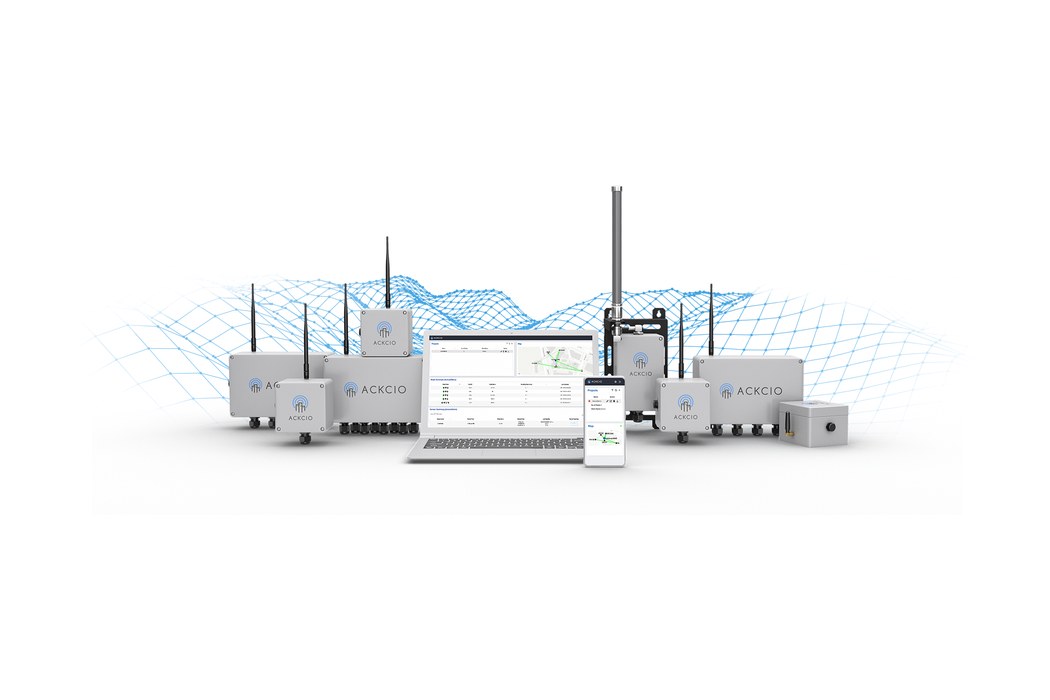
Ackcio is a Singapore deep-tech company that builds reliable wireless data acquisition systems for industrial monitoring. Its flagship Ackcio Beam platform uses a patented long-range, self-healing wireless mesh network to connect geotechnical and structural sensors on construction sites, mines, dams, rail lines and other infrastructure - replacing manual readings and fragile cabling with automated, real-time data that works even underground and off the grid.

Groundup.ai
Groundup.ai is a Singapore-based industrial AI company that helps asset-heavy operators prevent unplanned machine downtime. It pairs proprietary, magnetic-mount IoT sensors - which capture vibration, temperature and sound - with an agentic AI platform called GINA to move maintenance from reactive firefighting to a predictive, self-monitoring discipline it brands as Cognitive Maintenance. Founded by serial entrepreneur Leon Lim, the company serves manufacturing, maritime, defense, oil & gas and infrastructure clients across Asia and the Middle East.

Morse Micro
Morse Micro is a fabless semiconductor company based in Sydney, Australia, that designs Wi-Fi HaLow (IEEE 802.11ah) chips for the Internet of Things. Its sub-1 GHz system-on-chips deliver roughly ten times the range of conventional Wi-Fi at a fraction of the power, letting a single access point connect thousands of sensors, cameras and devices across homes, factories, farms and cities. Founded in 2016 by Wi-Fi chip designers Michael De Nil and Andrew Terry, the company has raised more than US$190 million and ships its award-winning MM6108 and second-generation MM8108 silicon to customers worldwide.

InfluxData
InfluxData is the company behind InfluxDB, the open source time series database purpose-built for high-volume, timestamped data from sensors, applications, infrastructure, and IoT devices. Founded in 2012 and led by CEO Evan Kaplan and founder/CTO Paul Dix, InfluxData rebuilt its engine in Rust on the Apache Arrow, DataFusion, Flight, and Parquet stack for InfluxDB 3. The platform is used by more than 1,900 paying customers - including Tesla, IBM, Cisco, PayPal, and Nordstrom - to collect, store, and analyze real-time data at scale.

Lantronix
Lantronix is an Irvine, California-based global provider of secure IoT and remote environment management solutions that combine intelligent hardware, connectivity, software-as-a-service and engineering services. Founded in 1989 and publicly traded on Nasdaq as LTRX, the company builds device servers, IoT gateways, cellular routers, console servers and PoE switches, paired with cloud management platforms like Percepxion and ConsoleFlow, to help organizations connect, compute, comprehend and control equipment at the edge across automotive, industrial, smart city, defense and enterprise IT markets.

Amper Technologies
Amper Technologies is a Chicago-based industrial IoT company that helps manufacturers see and improve what happens on their shop floors in real time. Its FactoryOS platform pairs non-invasive sensors that clip onto any machine - regardless of age or brand and install in about ten minutes - with AI-driven analytics that track machine utilization, OEE, downtime, labor and job performance. Founded in 2016, Amper turns legacy factory equipment into a source of live production data without expensive retrofits or complex IT integrations, and was acquired by ECI Software Solutions in December 2025.

Cogniac Corporation
Cogniac Corporation is a Silicon Valley company building an enterprise-grade, no-code computer vision platform that lets non-experts train and deploy AI models on visual data. Founded in 2015 by Ruckus Wireless veteran Bill Kish and Amy Wang, Cogniac turns cameras and images into operational insight - inspecting products, detecting defects, monitoring safety, and automating document handling across manufacturing, transportation, automotive, government, and logistics. Backed by roughly $46M from investors including National Grid Partners, Cisco Investments, and Autotech Ventures, it counts BNSF Railway, Ford, Georgia-Pacific, Doosan Bobcat, and Trimac among its customers.
SiteWorx
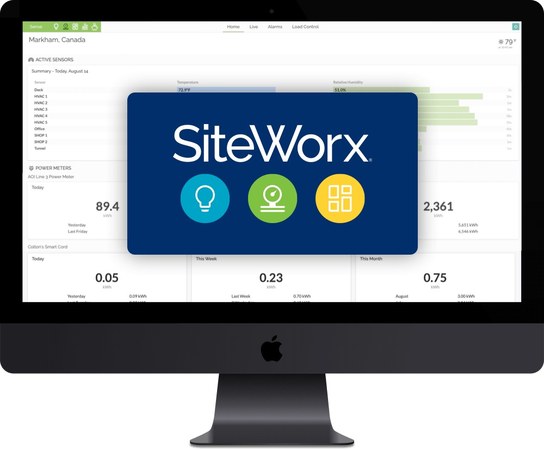
SiteWorx is a cloud-based energy and facility management platform for industrial and commercial buildings. Built on a foundation of intelligent lighting controls, it unifies sensors, metering, and third-party systems to give operators real-time visibility into water, air/HVAC, gas/steam, and energy/lighting (WAGE) so they can cut waste and reduce operating costs. The platform is the continuation of Digital Lumens' connected-lighting technology, now owned and developed by SiteWorx Software after acquiring the assets in 2023.

Applied Brain Research
Applied Brain Research (ABR) is a Waterloo, Ontario AI hardware company spun out of the University of Waterloo's Centre for Theoretical Neuroscience. It builds brain-inspired chips and software that run real-time AI - full-vocabulary speech recognition, text-to-speech and sensor processing - directly on edge devices at power levels measured in milliwatts. Its patented state-space models and the Legendre Memory Unit power the TSP1 Time Series Processor, which ABR calls the world's first single-chip solution for full-vocabulary speech recognition, doing the work of cloud voice AI while consuming 10 to 100 times less power.