A few days after Mars Pathfinder bounced onto the red planet in July 1997, the spacecraft began rebooting. The resets did not destroy science data, but they cut short operations and consumed something no mission can replenish: attention. Millions of miles away, engineers replayed the workload on a replica and found a scheduling trap. A low-priority weather task held a shared resource. A medium-priority communications task repeatedly interrupted it. The high-priority data task waited, missed its deadline, and triggered the watchdog. In real-time computing, this is called priority inversion. On Mars, it looked like a machine losing its nerve.
The operating system was VxWorks, made by Wind River. The fix was almost comically small: switch on priority inheritance so the low-priority task could temporarily borrow the urgency of the blocked high-priority task, finish, and get out of the way. Engineers tested the change on Earth and uploaded it. The more consequential choice had been made years earlier. The mission had launched with tracing tools, a symbol table and a C interpreter still available. The spacecraft carried the means to explain and alter itself.
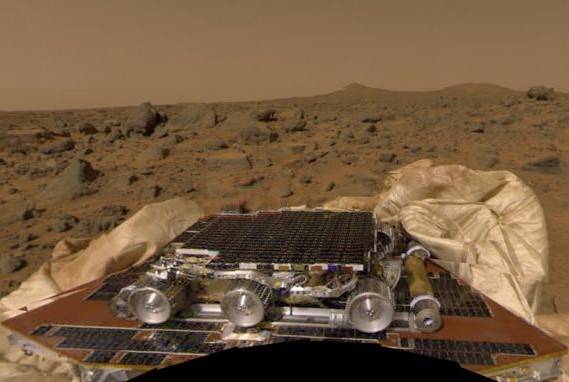
“Test what you fly and fly what you test.”Glenn Reeves, JPL chief engineer, recounting Pathfinder
The product is the deadline
Wind River does not make the application a passenger sees or the robotic arm a surgeon moves. It makes the layers underneath: operating systems, embedded Linux, hypervisors, cloud infrastructure, compilers, simulators, test systems, fleet-management tools and the engineering services needed to certify the lot. The customer is rarely buying a prettier interface. It is buying confidence that important work finishes within a known window, even when processors are busy and hardware is awkward.
That distinction separates real-time from merely fast. A laptop that opens a tab in 80 milliseconds most of the time is pleasant. A flight-control task that responds in 80 milliseconds on average but occasionally needs two seconds may be unusable. VxWorks is built for deterministic behavior and can support evidence for standards including DO-178C in aviation, ISO 26262 in automotive systems, IEC 61508 in industrial equipment and IEC 62304 in medical software. Wind River says its embedded platforms have been involved in more than 600 safety-certification projects.
The business model follows the risk. Wind River sells enterprise licenses and subscriptions, long-term support, security maintenance, certification materials, training and professional services. Broad prices are negotiated rather than posted. That makes comparison shopping awkward, but the relevant denominator is not the cost of a kernel. It is the cost of integrating an alternative, proving it safe, maintaining it for a decade or more, and explaining the decision after a failure.
A garage company grows into invisible infrastructure
Jerry Fiddler started Wind River in a Berkeley garage in 1981 and was joined by his former Lawrence Berkeley Laboratory colleague David Wilner. The name came from a Wyoming mountain range where Fiddler vacationed. The early consultancy had an agreeably strange client list - the NFL and filmmaker Francis Ford Coppola among them - before narrowing onto embedded development. VxWorks arrived in 1987, Wind River went public in 1993, and the Tornado graphical development environment followed in 1995.
Mars made the brand legible outside engineering circles. But the larger commercial trick was repetition. The same core problem appears in an avionics display, a radiotherapy machine, an industrial robot and a telecom base station: coordinate constrained computing, tolerate faults, secure updates and preserve predictable performance. Public customer stories name NASA/JPL, Ford, Siemens, Collins Aerospace, Verizon, Boost Mobile, Vodafone, Olympus, Varian, KUKA and Yaskawa. This is not one vertical. It is a market organized around consequences.
How the small task blocked the urgent one
The watchdog saw the missed deadline and reset the computer. Priority inheritance let the lock holder finish before medium-priority work could interrupt it.
Ownership changed three times as the market expanded. Intel paid about $884 million in 2009, when Wind River reported $359.7 million in annual revenue and more than 1,600 employees. TPG acquired it from Intel in 2018 for an undisclosed sum. Aptiv completed its purchase in December 2022 at a final value of $3.5 billion. The multiple says something about what had accumulated: not simply source code, but processor support, certification work, integration knowledge, customer relationships and a reputation earned over product lives measured in decades.
From one machine to a thousand small clouds
The strategic question is whether Wind River can extend that trust without diluting it. Its portfolio now stretches well beyond VxWorks. Wind River Linux packages the flexibility of the Yocto ecosystem with commercial maintenance and vulnerability work. Helix Virtualization Platform lets safety-critical and general-purpose operating systems share a processor while remaining isolated. eLxr Pro adds supported, Debian-derived enterprise Linux for cloud-to-edge workloads.
Wind River Cloud Platform attacks a different scale problem: operating virtual machines and Kubernetes containers across distributed private clouds. A telecom network can contain thousands of physically remote sites that must be provisioned, patched and observed as a fleet. Boost Mobile chose Wind River technology for what it described as the largest containers-as-a-service vendor changeover on an Open RAN network, one providing 5G voice coverage to more than 200 million Americans. Here, “real time” is no longer one processor meeting one deadline. It is the operational discipline required to keep a national network consistent.
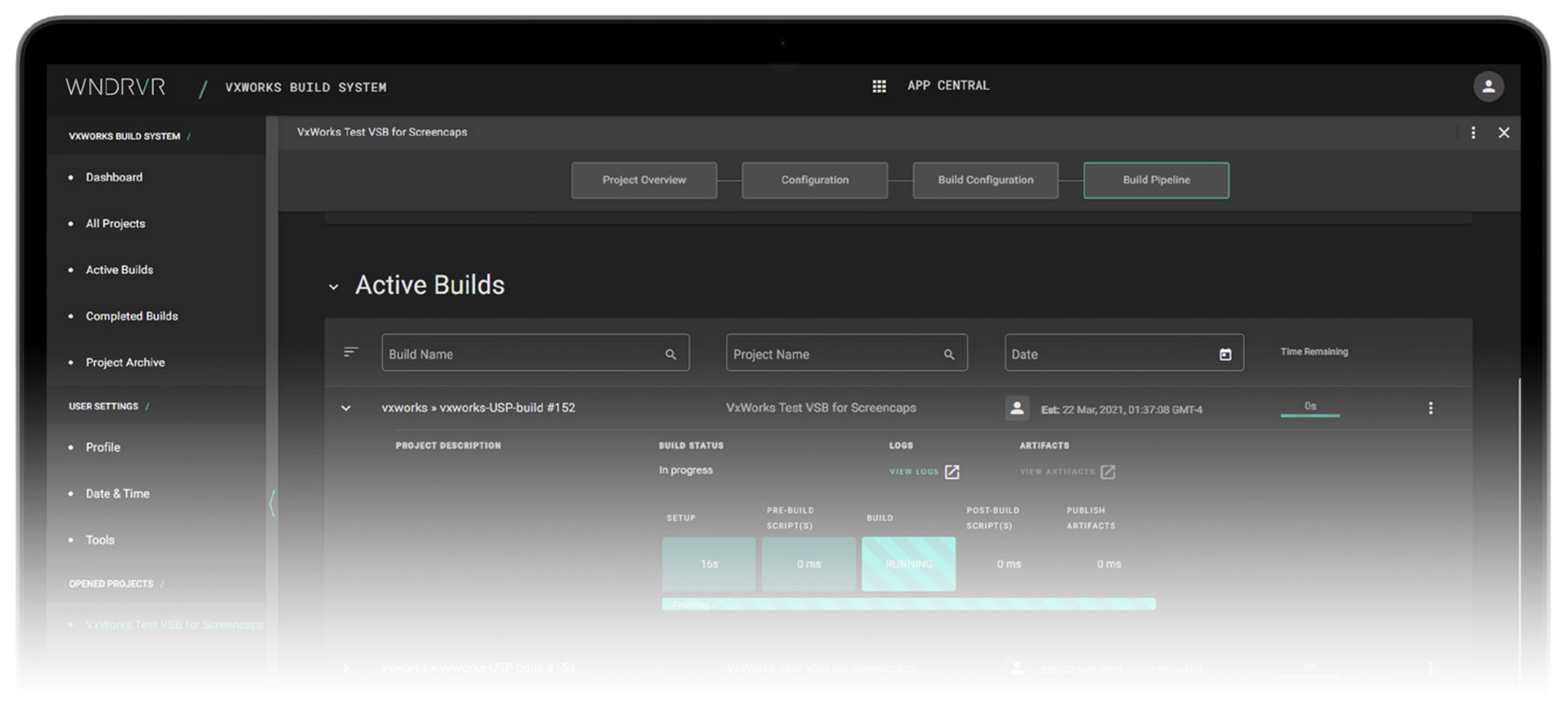
Studio Tools connect the stages: cloud workspaces, compilers, pipelines, simulated hardware, remote physical labs, automated testing, system management and analytics. The pitch is a continuous loop from building software to observing it in the field. The company is also putting AI into that loop. Work with Encora and NVIDIA demonstrated conversational operations for on-premise systems; a 2026 collaboration with AMD put Open RAN and AI inference on shared infrastructure. Useful, perhaps, but the burden of proof is higher here than in a demo. In a critical system, an AI assistant must sit behind explicit permissions, deterministic controls and an audit trail.
| Choice | What you gain | What you own |
|---|---|---|
| Wind River | Integrated RTOS, Linux, cloud tools, certification support and long lifecycle services | Commercial cost, vendor dependency and integration with your application |
| QNX / Green Hills | Comparable safety pedigree in markets where their architecture or ecosystem fits better | A different toolchain, partner network and migration path |
| Open source / in-house | Control, flexibility and lower license cost | Hardening, CVE response, board support, evidence, staffing and long-term maintenance |
What changed minds on Mars
The Pathfinder anomaly had appeared during preflight tests, but it was intermittent and arrived while the team was focused on entry and landing. It was treated as a glitch. What changed minds was not a persuasive meeting. It was reproduction. Engineers ran recorded activities against the replica until the trace exposed the exact interleaving of tasks. The evidence converted a spooky symptom into a scheduling diagram and a testable fix.
Pathfinder itself cost $265 million and was developed in three years under NASA's lower-cost Discovery approach. Wind River's software was one part of that system, not the whole achievement and not the sole cause of the resets. That nuance matters. Reliability vendors can tempt customers into magical thinking: buy the certified platform and failure disappears. Pathfinder teaches the opposite. Good infrastructure makes faults bounded, observable and repairable. It does not repeal complexity.
The five things worth copying
- Ship observability with the product. A remote system without usable traces is a rumor generator.
- Maintain a representative twin. Reproduction beat speculation because JPL could replay the real workload.
- Design the update path before launch. Recovery should not depend on physical access.
- Test timing under contention, not just components in isolation. Average speed hides deadline failures.
- Treat watchdog resets as containment, then keep enough evidence to find the underlying cause.
Where the premium stops making sense
Wind River is not the automatic answer to every embedded project. A disposable sensor, hobby device or low-risk appliance with generous timing margins may run happily on Zephyr, FreeRTOS or a maintained Linux build. A capable team with stable hardware, strong open-source expertise and no formal certification burden may prefer to own the stack. Cloud Platform is also an elaborate answer if a company has a handful of ordinary servers rather than many distributed, constrained or sovereignty-sensitive sites.
The proposition weakens when product lives are short, failure is cheap, hardware access is easy, or vendor independence matters more than integrated support. It strengthens when certification dominates the schedule, a recall is painful, compute is constrained, workloads mix levels of criticality, or the machine will operate somewhere technicians cannot casually visit. Mars is merely the most photogenic version of the condition.
The next deadline
Wind River now has to reconcile two tempos. The embedded world prizes controlled change, stable interfaces and support measured in years. Cloud and AI markets reward rapid iteration. The company’s advantage is knowing why the first tempo exists. Its risk is pasting cloud vocabulary over products whose buyers care about evidence more than adjectives.
Founded in a Berkeley garage.
VxWorks enters the market.
Pathfinder lands, resets, and receives its remote fix.
Intel acquires Wind River for about $884 million.
Aptiv closes its $3.5 billion purchase.
Partnerships push private cloud and edge AI deeper into critical infrastructure.
The cleanest description of Wind River is not “an RTOS company” or “an edge platform.” It is a company that sells managed uncertainty. Sometimes that means a microsecond deadline on one processor. Sometimes it means updating a thousand sub-clouds without turning a network into a thousand snowflakes. The interface changes. The job remains stubbornly familiar: know what can fail, leave yourself a way to see it, and make sure the recovery arrives before the consequence.