Consider the pet tracker. It must fit a cat, stay light, and wake when its owner needs it. Then the mobile operator changes the network. Kippy’s early trackers used GSM/GPRS; as those networks began giving way to newer technology, the company had to rethink what went inside the collar.
Kippy chose a Telit Cinterion LTE-M module for its newer trackers. In the published customer account, battery life reached up to fifteen days, more than twice the earlier model’s. Engineers helped with schematics and antenna tuning. A consumer promise depended on decisions most pet owners would never see.
- Modules connect devices. NExT manages connectivity.
- deviceWISE connects factory equipment and software.
- Budget for keeping it working.
“Telit Cinterion’s team behaved like an extension of our R&D department.”
Silvia Lupini · Brand Manager, Kippy
01The product behind the product
Telit Cinterion occupies this hidden territory. Its customers build the thing you recognize: a meter, a tracker, a machine. Telit Cinterion supplies wireless modules, connectivity, positioning technology, industrial software, and engineering services. Its business is helping those pieces cooperate after the prototype has become somebody else’s daily responsibility.
The portfolio stretches from low-power cellular connections to 5G, alongside Wi-Fi, Bluetooth, and satellite-positioning modules. NExT supplies IoT connectivity and SIM management. deviceWISE links industrial equipment with business systems. Customers can buy particular pieces or combine them. Hardware sales sit alongside connectivity plans, software licenses, and project work. The buying decision extends beyond the component invoice.
Security adds work throughout that relationship. After the Cinterion combination, Telit Cinterion described aligning product-security strategies with Thales, including the way products are designed and maintained. For a buyer, the implication is to ask who owns updates and vulnerability handling for each part of the system. A secure module still sits inside a larger device and a larger operating process.
That breadth matters because an IoT device crosses several organizational borders. Someone designs the circuit board. Someone chooses the carrier. Someone manages the software. When the connection stops, the customer experiences one broken product. An integrated supplier offers a way to reduce the number of handoffs needed to investigate it.
02A beehive is a demanding customer
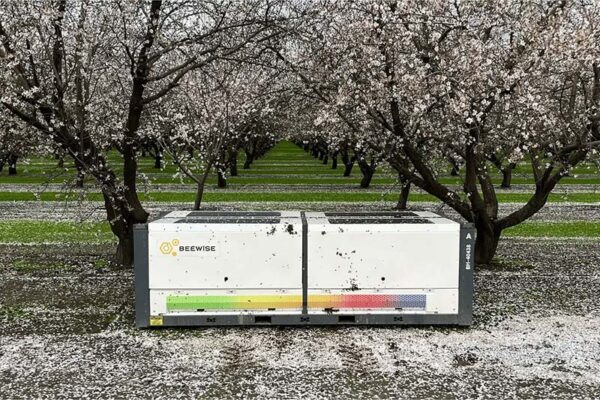
Beewise makes the problem wonderfully concrete. Its BeeHome is a solar-powered robotic hive that uses machine vision to identify trouble and support interventions. The hive may be clever, but it lives where bees work. Rural mobile coverage can be inconsistent.
Telit Cinterion’s account describes an LTE module paired with NExT services that select an available network for each location. The point is less work for installers and beekeepers choosing an operator. Connectivity becomes part of the agricultural tool. For a device designer, the lesson is practical: test the connection where the product will live.
03Fifteen years is a long contract
The arithmetic becomes sharper with electricity meters. Aidon’s devices can remain installed for ten to fifteen years. During that interval, coverage changes and operators reorganize their networks. A better tariff is less attractive if switching requires somebody to visit each meter and replace its SIM.
Aidon worked with Telit Cinterion on remote operator-profile changes, combining an embedded eSIM, cellular module, provisioning tools, and a management portal. The approach makes a long-lived device less dependent on its initial network arrangement. My reading of the case: the valuable feature is the ability to change your mind after installation. That is worth specifying before a fleet leaves the factory.
A smart meter’s service life in the Aidon case. The network may change sooner.
04The second name cost a stake
Telit’s own history is a succession of additions. It began as Telital, an engineering business, in 1986; its first M2M module arrived in 1998. Acquisitions later added connectivity and software expertise. DBAY took the company private in 2021. The Cinterion name followed the combination with Thales’ cellular IoT business, effective January 2023.
The transaction’s currency tells its own story. Thales received a 25% interest in the combined company; its financial reporting records no cash movement. Telit gained another cellular product portfolio and a relationship with a security specialist. The automotive module business was subsequently sold to Kontron, sharpening the industrial emphasis. Together, those moves suggest a deliberate choice about where to concentrate expertise.

05The factory already has equipment
Inside a factory, the challenge is often getting existing machinery to exchange useful information. deviceWISE EDGE advertises more than 400 drivers, including connections for established automation brands and industrial protocols. Its graphical tools let teams collect data, set alarms, calculate performance measures, and connect equipment to enterprise applications.
Adding AI introduces another dependency: the model needs operational context. The September 2026 IMTS announcement described deviceWISE demonstrations combining cameras, machine data, and robot fault recovery. Those are demonstrations, rather than proof that every factory can run autonomously. They illustrate the direction: interpret what happened, then help an operator decide what to do.
A separate September announcement proposed lightweight AI inside selected future cellular modules, using the LiteRT runtime. Availability was expected in the fourth quarter of 2026. Running inference on an existing application core could simplify a device design, provided its model fits the available computing resources. A large vision workload still calls for a different hardware calculation.
06Buy for the years after launch
Telit Cinterion competes in a market where Quectel also supplies cellular and positioning modules. Its pitch joins that component business to connectivity, industrial integration, and engineering support. The useful comparison is the total work required for your deployment. A team with mature internal software and carrier relationships may need only a module.
Geography belongs in that calculation too. In September 2026, Telit Cinterion announced planned October production in Bristol, Pennsylvania, with manufacturing partner MFG Innovations. The operation would assemble and test selected products using a global component supply chain. It adds a domestic production option for customers with sourcing requirements.
An honest cost comparison needs a time horizon. Start with the device bill of materials, then add connectivity, integration, certification, and field support. Estimate how often someone may need to touch the installed equipment. Those estimates will vary by project; the point is to make them explicit. Remote provisioning has a different value when the device sits inside an inaccessible meter cabinet than when it sits on an engineer’s desk. The supplier decision should reflect that difference.
The latest partnerships follow the same operational logic: Nokia for demanding industrial environments, Commstar Radio for multi-network public-service communications. Neither removes the need to validate coverage, power use, security, and integration at the actual site. Multiple networks help only where usable networks exist. Put those checks in the pilot budget, alongside hardware, data plans, and software. Then ask how a failed device will recover.