The building was 2.3 million square feet. The shutdown would last two days. Somewhere inside that vast manufacturing and data center facility, the radios were failing to reach the places they needed to reach. Day Wireless Systems had the job of replacing the in-building radio distribution system. Installing it was one deadline. Proving that it worked was another.
- PCTEL makes antennas and the equipment that tests wireless coverage.
- Its buyers include network operators, equipment makers, industrial businesses, and public safety integrators.
- A Day Wireless case study reported 75% fewer technician-hours for coverage testing.
- Amphenol acquired the company in December 2023.
This is a good place to meet PCTEL, because the usual introduction - antennas, 5G, industrial connectivity - misses the human complication. A network has to work. Someone also has to demonstrate that it works, in a form another person can inspect. The inspector is unlikely to be persuaded by the elegance of the installation.
Twenty hours became five
In PCTEL’s published account, Day Wireless tested both public safety and private life-safety coverage with one technician in five hours. The comparable manual process could take twenty technician-hours. The facility met public safety coverage requirements for occupancy seventeen days ahead of schedule. These are results from one customer project, rather than a promise about every building.
One reported customer project. Comparable manual effort versus actual testing effort.
The old system had gaps; the team also lacked historical coverage data. A baseline test gave them something solid to compare with the replacement. That sequence matters: measure, change, measure again. Without the first measurement, an upgrade can become an expensive argument about how things used to feel.
“We did the coverage testing in about 25% of the time planned.”Jason Chambers / Day Wireless
The reported improvement went beyond speed. Test results could move into acceptance reports without a technician copying readings from a floor plan into a spreadsheet. Day Wireless subsequently used the equipment more often for preliminary surveys, including deciding whether a coverage system was needed at all. The evidence had become useful before the sale as well as after installation.
The antenna and its alibi
PCTEL’s business has two closely related sides. One puts a wireless connection into the world. The other measures what happened to it. The antenna catalog covers cellular, Wi-Fi, satellite navigation, and private radio applications, with embedded designs, vehicle-mounted products, and custom engineering.
A combination antenna places several wireless functions in one housing: GNSS for positioning, cellular for a wide-area connection, Wi-Fi for a local one. A fleet vehicle or industrial machine may need all three. Consolidating them makes packaging simpler, but the engineering still has to account for frequency bands, isolation, mounting, and the surrounding equipment.
There is a pleasingly unglamorous side to this work. PCTEL lists near-field measurement chambers, a forty-foot tapered antenna chamber, electromagnetic simulation software, and an environmental laboratory. The test menu includes temperature, humidity, salt fog, ultraviolet exposure, water ingress, and vibration. A fine signal on a laboratory bench is an incomplete recommendation for something destined for a vehicle roof.
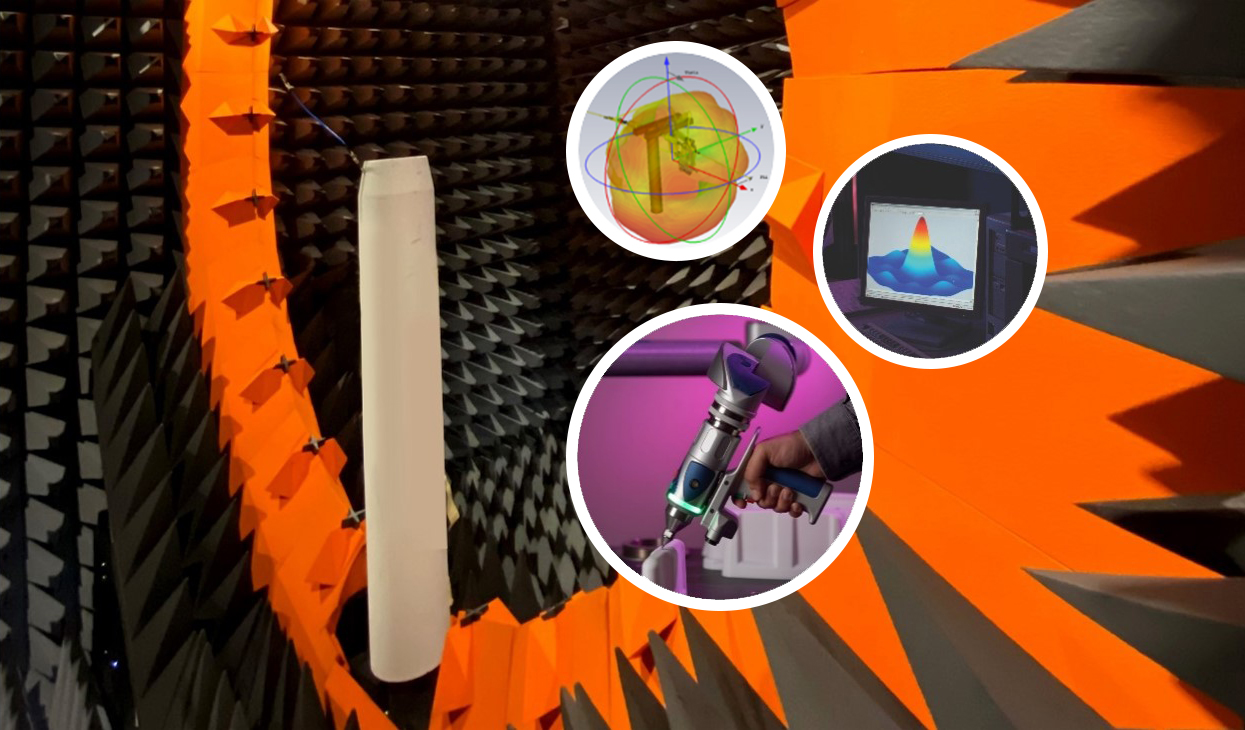
The company describes an ISO 9001:2015-certified quality management system. Its careers material emphasizes education, collaboration, and calculated risks. Those are employer-stated values; the more concrete glimpse of its working habits is the equipment list. This is a business where ideas eventually have to submit to measurement.
A walk becomes a record
On the testing side, scanning receivers collect RF measurements during walks, drives, and monitoring sessions. Gflex and IBflex serve different requirements; the bands, protocols, and options matter. Buying a scanner starts with the networks you intend to measure, rather than choosing the largest number on a specification sheet.
The public safety testing kit brings together an IBflex receiver, SeeHawk Touch tablet software, accessories, and an initial one-year SeeHawk Central subscription. The receiver gathers measurements. Touch supports field testing. Central handles cloud reporting and workflow. Optional capabilities extend the system into commissioning and uplink tests.
The distinction between uplink and downlink is especially useful. Hearing a radio network inside a building does not establish that a transmission from inside can get back to the network. PCTEL’s uplink approach synchronizes field testing with SeeHawk Monitor at the radio site. The return journey deserves its own examination.
In March 2026, PCTEL announced multi-layer analysis in Central: one in-building grid test can support several reports about cellular, public safety, private radio, and 9-1-1 coverage. The practical attraction is fewer repeated walks. The same measurements can answer different questions for a building owner, an integrator, and a public safety official.
Colorado puts a price on listening
There is a different problem once a network is operating: interference can appear between inspections. SeeHawk Monitor uses remote test units to watch spectrum and support uplink testing. In May 2024, PCTEL described Castle Rock Microwave’s deployment for Douglas County, Colorado, intended to support hundreds of responders from twenty public safety agencies.
Douglas County’s approved purchase through Castle Rock Microwave for PCTEL SeeHawk Monitor.
The county’s March 12 meeting record supplies the purchase amount. It is a useful glimpse of deployment economics, not a catalog price for one receiver. Scope, configuration, and integration make those different questions. PCTEL also reported two days of on-site training for county technicians and the support team.
A March 2026 Monitor update adds interference location estimation. When multiple remote units detect a noise event, software estimates where it originated. Field personnel can then use mapping information and a handheld tool such as SeeWave to find the exact source. An estimate narrows the search; the field investigation finishes it.
A specialist inside a larger machine
PCTEL sells physical products, software, and the support surrounding them. Direct sales and distributors connect it with equipment manufacturers and operators. Subscriptions, software options, calibration, repairs, upgrades, and training extend the relationship beyond delivery. The business sits between the component supplier and the team responsible for a working network.
There are alternatives in each part of the catalog. Taoglas sells combination antennas; Rohde & Schwarz offers drive and walk-test scanners. PCTEL’s distinguishing feature is the breadth of its antenna engineering and network-testing portfolio, including a public safety workflow that carries measurements into reports. That breadth does not establish that every product will suit every buyer.
The financial picture before the acquisition gives the business some scale. PCTEL reported $99.4 million in 2022 revenue: $69.7 million from antennas and industrial IoT devices, and $30.6 million from test and measurement. Fourth-quarter antenna and IoT revenue fell partly because customers held high inventories, while testing revenue rose. Demand for connectivity does not spare its suppliers the inventory cycle.
Amphenol’s acquisition closed on December 15, 2023. The announced transaction valued PCTEL’s equity at approximately $139.7 million, with shareholders receiving $7 per share in cash. It was a change of ownership, rather than a venture funding round. Earlier, PCTEL had bought Sweden’s Smarteq Wireless, extending its antenna applications and European presence.
The next signal, and the next decision
In February 2026, PCTEL announced SeeHawk Scout, a portable signal intelligence platform combining cellular decoding with DeepSig’s OmniSIG AI-based classification. Here AI has a defined task: help identify RF signals. The platform is aimed at spectrum management, security, regulatory, and other mission-critical intelligence applications.
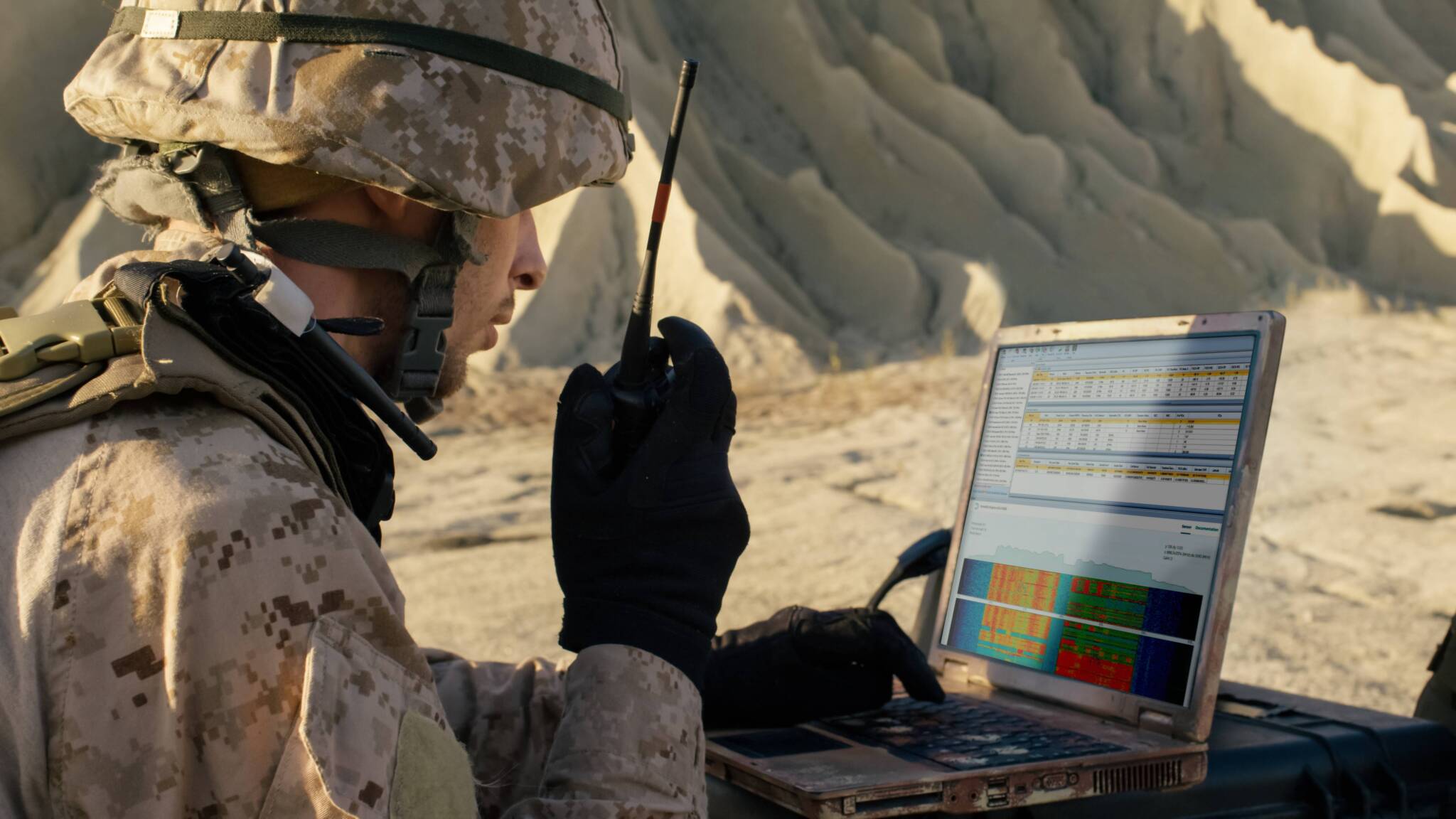
The useful lesson for a reader is less exotic. Establish a baseline before changing a system. Collect repeatable measurements. Make the report understandable to whoever must approve the work. Investigate both directions of communication. That discipline can be copied even when the equipment comes from another supplier.
It depends on choosing compatible hardware and software options, following the relevant test procedure, and having people able to act on the results. A coverage map cannot repair an antenna or remove an interfering transmitter. PCTEL’s contribution is to make the problem specific enough that the next decision can be an engineering decision. In a large building, that is a considerable improvement on walking around and hoping.