At ten devices, BOBST had a problem. The Swiss packaging-equipment maker was putting computers into machines around the world, and the prosaic work of maintaining them was already getting difficult. Luciano Torres, its IoT platform product owner, recalled that even a fleet of about ten made updates hard to manage. A company can buy an ingenious sensor and write an ingenious application. Then somebody has to patch the operating system in a factory three time zones away. The second job is the one that makes the first possible.
- ZEDEDA manages software and computing infrastructure across dispersed physical sites.
- Its open EVE-OS foundation runs beneath a paid orchestration service.
- Customers cite fewer field visits and faster deployments; pricing is negotiated by contract.
ZEDEDA, founded in 2016 and based in San Jose, has made a company out of this neglected interval between a cloud dashboard and an actual machine. It provisions edge computers, secures them, and coordinates applications across sites that may be remote, dusty, bandwidth-limited or simply staffed by people whose job is something other than IT. Its customers include industrial-equipment makers, energy operators, automakers and maritime businesses. The company said in August 2026 that its platform was deployed in more than 100 countries. That figure is company-reported, but it gives the shape of the assignment.
The small failure that comes first
BOBST already used Azure IoT and had edge devices in the field. Its problem was the layer beneath the application: software updates, configurations, security patches and operating-system versions. It worked with ZEDEDA to put those tasks under central control while keeping its Azure environment. BOBST said the project brought device-management production readiness forward by six months. In ZEDEDA's account, a first proof of concept appeared in days and production readiness followed in under two months.
That sequence matters. The obstacle was not a shortage of ideas for connected packaging presses. The obstacle was a maintenance routine that stopped being routine once the machines dispersed. BOBST's account suggests a question any team can ask before its next pilot: Who changes the software on device number eleven, and who knows whether the change worked?
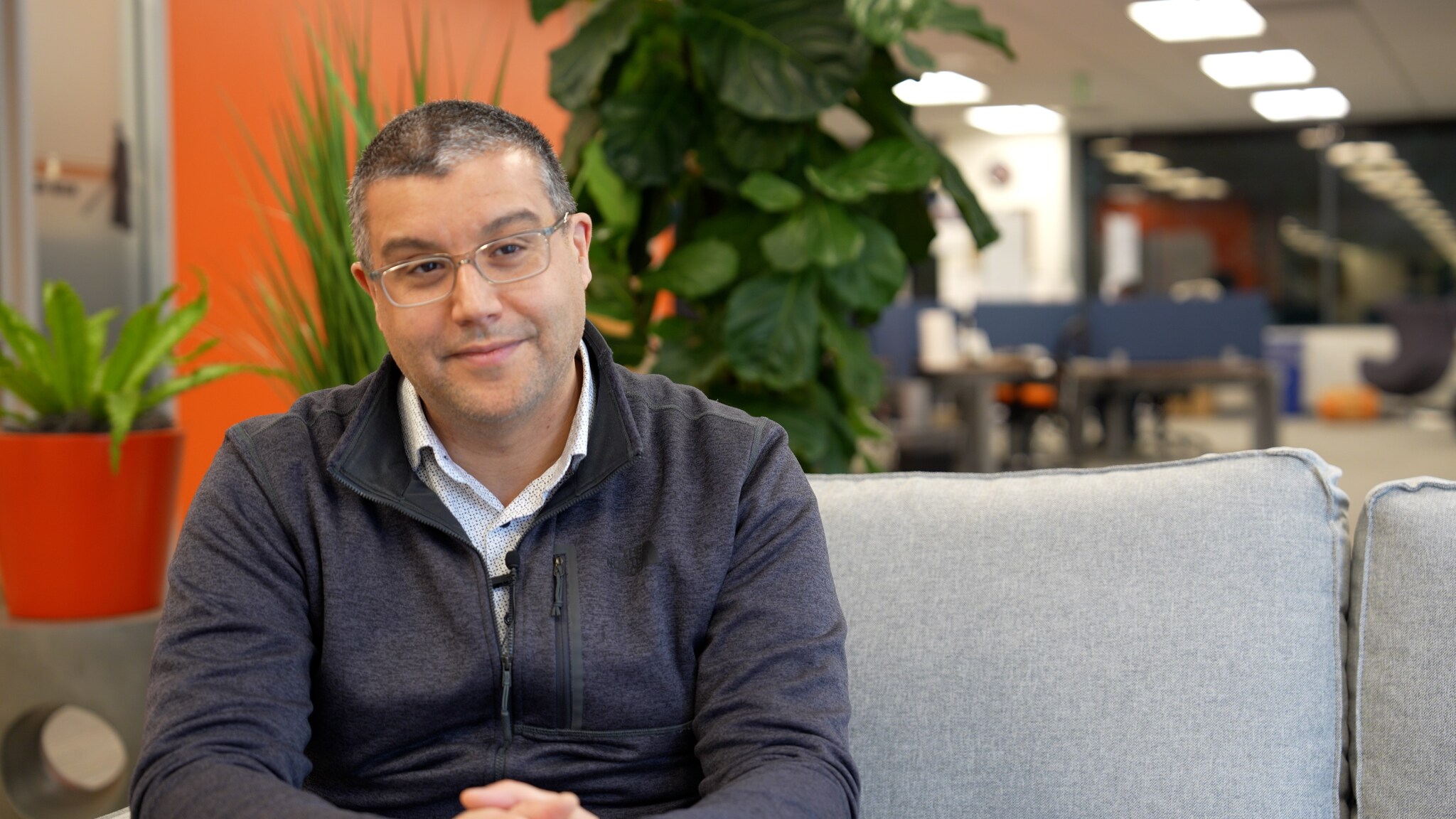
“When we were at about 10 [devices] it was already getting really hard to manage the devices.”Luciano Torres / BOBST
The same puzzle becomes more vivid in a solar field. PV Hardware makes solar trackers and SCADA systems for utility-scale installations. Its remote sites can have limited internet access, no field IT staff, and expected operating lives of 25 to 40 years. Devices could wait six months to a year between provisioning and deployment. PV Hardware moved more of the setup into the factory, then used ZEDEDA to update applications and the base operating system remotely, with recovery if an update failed. Its CTO, Ivan Arkipoff, reported cutting overall provisioning and field installation time by up to 75%.
A control plane with muddy boots
ZEDEDA's answer has two distinct pieces. EVE-OS is the open-source operating system installed on an edge node. It abstracts a varied collection of hardware and lets virtual machines and containers share the device. In 2019 ZEDEDA handed the Project EVE code to LF Edge, part of the Linux Foundation. The commercial platform supplies the orchestration around it: onboarding, policy, application deployment, monitoring, security and fleet management. The open base is a practical choice when an enterprise owns a mixture of old and new equipment and may be wary of a single supplier controlling every layer.
EVE-OS sits on the machine; ZEDEDA's service coordinates the estate.
Its security design begins with the assumption that an unattended device can be touched. EVE-OS uses hardware-backed identity where supported, signed updates and a pull-based control flow. According to ZEDEDA, its nodes expose no remote login shell, and a controller does not push arbitrary commands into them. These choices narrow the attack surface and make remote updates less dependent on the kindness of a perfectly behaved network. They also reveal ZEDEDA's expertise: not just moving an application, but keeping a long-lived device accountable after it has left the building.
When one site becomes 70,000
One ZEDEDA case study describes an unnamed German automaker trying to modernize an estate of more than 70,000 dealerships, factories and service centers in 153 countries. Its older infrastructure lacked the capacity for new software and data-heavy vehicles; tighter cybersecurity requirements added a deadline. ZEDEDA describes a single dashboard for remote management, hardware abstraction and integration with Fortinet's next-generation firewall. The case study frames global software delivery as an expected result, so it should be read as a program and target, not proof that every location has finished migration.
This is where the competitive position becomes clearer. A cloud provider can manage cloud resources, an industrial supplier can manage its own machines, and an internal team can assemble Kubernetes and open-source tools. ZEDEDA sells the connective tissue across different hardware, legacy virtual machines, modern containers and several networks. Its buyers pay for a consistent operating method across sites that were never designed to look alike. A small, well-connected deployment with homogeneous machines may find less reason to add another platform; the advantage grows with distance, variety and the cost of sending someone out.
The new cargo is AI
In 2023 ZEDEDA added a managed Kubernetes service for small edge clusters. In 2025 it introduced Edge Kubernetes App Flows, which handles application packaging, GitOps delivery and observability on those clusters. Its 2026 Edge Intelligence Platform extends the pitch to models, inference and agents. The chronology tells a coherent story. First make the machine manageable; then make clusters manageable; then ask whether an AI model can be governed across the fleet without a fresh field visit for every update.
The September 2026 partnership with chipmaker Ambarella follows that logic. ZEDEDA says EVE-OS now runs on Ambarella's N1 edge AI processors, so models on power-efficient devices can be deployed and maintained from one control plane. The partners demonstrated vision and language workloads. An impressive camera demo, though, is merely the first frame of a much longer film: camera number five thousand still needs identity, updates, rollback and a person who can tell whether it is working.
The business is subscription software. ZEDEDA's service terms scope licenses by the number of managed instances and put fees in an order form; professional services may be added. It has also described pay-as-you-go and white-label arrangements for equipment makers and integrators. There is no public standard price. That means a prospective customer has to compare a quoted fee with its own deployment labor, bandwidth, downtime and field-service bills. ZEDEDA raised a $72 million Series C in 2024, led by Smith Point Capital, after a $26 million Series B in 2022. The capital helps explain its push toward large, long-lived enterprise programs, but it is the customer arithmetic that decides whether the platform earns its place.
What to borrow from the edge
- Count the work of updating and troubleshooting devices before the pilot grows.
- Prepare devices centrally, then make field installation simple enough for a non-specialist.
- Test an interrupted connection and a failed update before calling the rollout ready.
- Compare the full cost of a platform with the site visits and delays it can remove.
ZEDEDA's story is less a prediction about the future than a correction to an old assumption. The cloud made software feel placeless. Solar farms, presses, dealerships and ships insist that software has a location, a connection, a lifespan and often a locked door. ZEDEDA's bet is that those stubborn physical details deserve a proper operating system of their own.