The truck leaves the depot, and an expensive guessing game can begin. Is it on schedule? Has it spent twenty minutes idling? Will the shop be ready to unload? For Microlise, those questions are the business. Its software and vehicle electronics let transport teams compare what they intended to happen with what is happening on the road, then carry the record through to delivery.
The company lives in the machinery behind an ordinary shopping trip: replenishment trucks, refrigerated loads, delivery windows and drivers trying to finish a complicated shift. Its attraction is practical. Small amounts of wasted fuel, time and capacity become substantial when repeated across a fleet. Microlise sells the means to see those losses and organise a response.
The warehouse door was the blind spot
Microlise did not begin with a truck. Keith Bendon founded it in 1982, working from home with two software developers on warehouse management software. By the end of that decade, the business had grown to 50 staff. It also developed radio data terminals carried by workers or mounted on forklifts, building experience in the awkward meeting place between software and physical work.
The decisive complaint came around the start of the millennium. In Microlise’s account of its history, a customer could track stock, storage positions and picking inside a warehouse, then lost visibility when the goods left with a driver and paperwork. The company followed that gap into vehicle tracking and proof of delivery. It is a pleasingly unglamorous origin for a connected-technology business: somebody wanted to know where the goods had gone.
That background still helps explain its position. Microlise designs and develops hardware, firmware and applications, while also installing systems and supporting customers. Its expertise stretches across devices, operational data and the routines of transport offices. For a customer, the attraction is having those pieces work together through the same supplier.
A journey with a paper trail
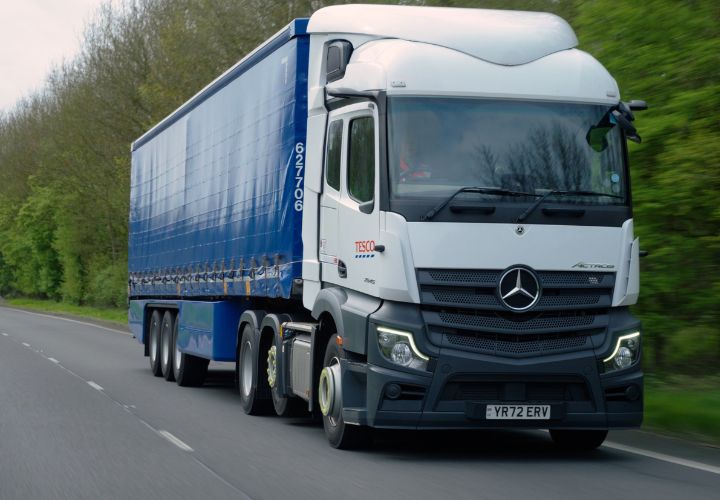
Start before departure. Planning & Optimisation arranges stops around delivery windows, vehicle capacity, dimensions and road restrictions. Journey Management follows execution: the route taken, schedule adherence and arrival expectations. A transport planner can look for departures from the plan while there is still time to respond.
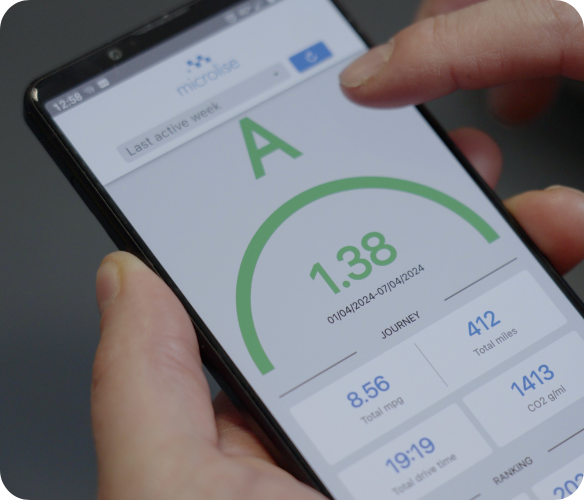
Along the way, telematics records vehicle activity. Driver Performance tools turn driving information into feedback that managers can use for coaching. Trailer tracking and temperature monitoring address other practical questions: where the equipment is, and what is happening to the load. These are separate operational needs, which helps explain why the product catalogue is broader than a tracking screen.
At the destination, electronic proof of delivery earns its keep by recording more than success. SmartPOD lets a driver record quantities, explain non-delivery and photograph damaged items. Workflows and report templates can be configured. A missing carton becomes something customer service can investigate promptly, with evidence attached, rather than a puzzle reconstructed from a phone call and a paper slip.
The market extends beyond supermarket trucks. Microlise also offers remote asset management for manufacturers and equipment operators, with location, usage and health information. Its JCB relationship places it in connected machinery; MAN Truck & Bus UK has worked with it on telematics since 2008. In May 2026, Microlise reported more than 2,500 customers and over 800,000 subscriptions, with connected assets in 197 countries. Those are measures of different things, not interchangeable counts of paying fleets.
Samsara and Geotab sell overlapping telematics and fleet-management capabilities. Microlise’s case rests on the combination of transport planning, execution, delivery, compliance and equipment connections, backed by implementation experience. That breadth gives a buyer specific workflows to compare. It does not establish that every fleet needs the whole collection.
The saving came with homework
Tesco.com provides an unusually concrete historical example. In a 2011 account, fleet training manager Cliff Cheeseman reported more than a 10% improvement in fuel consumption during the first year after telematics implementation, worth over £1.4 million in fuel costs. A further 4% saving followed in year two.
The work behind those figures matters. Tesco used store-level baselines, targets, driver assessment and training. Speeding reports were followed by debriefs. The reported daily infringement count fell from around 20,000 initially to 12,000 when reporting was introduced, then to about 2,000 as improvement processes continued. The useful lesson is the sequence: measure, discuss, change behaviour, measure again. Installing the equipment was the beginning.
Approximate figures reported in 2011. Stages in one customer’s programme, not a controlled experiment or a forecast.
A later Tesco Journey Management rollout shows the installation burden. Microlise described fitting hardware and software across more than 2,500 vehicles and 19 depots in six weeks. The work included rugged driver tablets and user training. This is operational change conducted around vehicles that still have deliveries to make.
In its more recent Tesco case study, Microlise reports 99% on-time deliveries for large stores and 96% for convenience stores. Customer-success staff helped revive the Driver Excellence initiative and examined system data quality. The details suggest that maintaining the information, and helping people interpret it, remains part of the job long after installation.
“I can’t imagine what my day would look like without the Microlise system”
Jamie Futcher / Lead Transport Manager, Tesco
For another fleet, the sensible thing to copy is that operating discipline. Pick a measurable problem, establish a comparable baseline and give somebody responsibility for acting on the result. Fuel savings quoted by a customer are gross outcomes, not the software’s purchase price. A buying decision still needs to account for hardware, installation, subscriptions, integration and the staff time required to use the system.
The price of being connected
Microlise’s own disruption supplies the uncomfortable part of the story. A cyber attack in October 2024 encrypted data and interrupted customer tracking services. In his subsequent account, chief executive Nadeem Raza said about 80% of customers were affected and most systems were recovered within ten days. That was a substantial restoration effort, and a substantial interruption for people depending on the service.
The 2024 accounts recorded £4.38 million of incident-related impact: £429,000 in professional and related fees, £1.52 million in revenue reductions and credits, and £2.431 million in provisions for consequential customer losses. Those categories matter. A provision is not automatically a cheque already written, and a service credit is different from a technical-recovery bill.
Professional costs + service credits + customer-loss provisions
One recovery detail is especially memorable. Raza told ICAEW that a label printer had worked undisturbed for six years; after the attack, locating its software and backup became a problem. Customers’ own password and certificate-reset requirements also added work. The company accelerated its security programme and staff training. The practical lesson is to rehearse restoration at the level of real jobs, including the forgettable device somebody needs to finish one.
Software with a hardware problem
Microlise went public on AIM in July 2021 with the ticker SAAS. Its £61.2 million placing included £18.6 million of gross proceeds for the company and approximately £42.6 million for selling shareholders. The distinction puts the funding story in proportion: only part of the headline sum was new company capital.
For 2025, the group reported £84.0 million in revenue, including £58.8 million of recurring revenue. Subscriptions provide a continuing income stream, while hardware and other non-recurring work add a different rhythm. Adjusted EBITDA fell to £8.3 million from £11.3 million. The business also incurred £2.408 million in restructuring costs as it responded to weaker demand.
The August 3, 2026 trading update sharpened that contrast. Unaudited first-half revenue fell 10% to £39.5 million, while direct-customer annual recurring revenue increased 12% to £47.1 million. Microlise cited softer OEM revenues, hardware component availability and project timing. Annual recurring revenue is a run-rate measure, so it should not be mistaken for sales booked during the half.
The product direction is integration. Microlise One, announced in March 2025, aims to give the portfolio a single interface. The 2026 update described an API management platform and integration-mapping tool. Streamax adds AI distraction cameras and connected video; Ferdia brings coach bookings and operations into contact with fleet data. Each addresses another place where information has to pass between systems.
The next shift is the test
The company’s stated culture prizes solving customers’ actual problems and continuous improvement. Its graduate programme has offered mentoring across software, operations and product teams. That mixture suits a business in which a useful feature must survive contact with the transport office, the driver and the installation engineer.

The limits follow from the same evidence. Poor input data weakens the plan. Reports left unread cannot coach a driver. A fleet needing only basic location tracking may struggle to justify a broader deployment. And shared software creates an operational dependency that needs a tested recovery arrangement. These are buying questions, not reasons to assume every reported saving will travel intact to another business.
Microlise’s enduring proposition is easy to recognise: keep the goods visible after the warehouse door closes. The demanding part is everything that follows - fitting equipment, joining records, teaching people, handling exceptions and keeping the service available. The result should show up in the next working day: less wasted fuel, a better-informed dispatcher, or an explanation for the carton that did not arrive.