hybrid-work
(31)
The Office Is Now a Variable Cost
Gable began with a peculiar question: what if an office behaved less like a headquarters and more like cloud computing? Pay for what people use, see the demand in real time, and stop pretending every empty desk is a strategy.

Trip.com Group Wants the Whole Trip
Flights, beds, train tickets, even the itinerary: Trip.com Group wants a role in every part of your holiday. Its sprawling business reveals both the value of a travel middleman and the trouble that comes with having too much power.
AVI-SPL UK & Ireland: The business behind the ‘Join’ button
A meeting room is easy to photograph and harder to keep working. AVI-SPL UK & Ireland builds the technology, trains the people and stays on call - a business that now stretches from an Edinburgh innovation lab to a coordinated European operation.
Freespace and the expensive fiction of a full office
The calendar says the meeting room is taken. The sensor says otherwise. Freespace turns that disagreement into decisions about desks, leases and the cost of keeping empty space comfortable.
Charterhouse Is the Plumbing Behind Britain’s Hybrid Office
The London technology group has spent three decades turning phones, networks, meeting rooms and security into one managed service. Its most persuasive product is not a box or an app - it is having one number to call when the whole stack misbehaves.
LoopUp Bet Its Future on the Least Glamorous Part of Microsoft Teams
The conference-call company watched Teams swallow its old market, then rebuilt itself around the stubbornly local business of global phone service. The result is a useful lesson in choosing the complicated problem your platform partner cannot solve alone.
Nine Workplace Apps Walked Into a Merger. Eptura Wants to Run the Building.
Eptura stitched nine aging-but-useful workplace systems into one worktech platform. The bet is simple: a desk booking, a visitor badge and a broken chiller become more valuable when they live in the same data story.
Appspace Put the Office on One Dashboard - Now It Has to Prove One Platform Beats the Pile
Appspace spent two decades turning office screens into a business. Then hybrid work blew up the definition of an office - and pushed the company into a bigger, riskier bet: one operating layer for every workplace surface.
NimbleWork Spent 24 Years Turning the Messy Middle of Project Management Into a Product
The company formerly known as Digite is betting that the next project-management winner will not force every team into one doctrine. Its pitch is more practical: make the work visible, connect strategy to delivery, and let AI handle the blank-page chores.
The Office Is Half Empty. OfficeSpace Software Wants to Make That Useful.
Hybrid work turned every floor plan into a moving target. OfficeSpace is betting that the winner will not be the company with the prettiest desk-booking app, but the one that can turn workplace chaos into decisions.
Upflex Is Turning the Office Lease Into a Playlist
The New York startup survived the empty-office years by moving beyond coworking passes. Now it wants to be the control panel for every desk a company owns, leases or borrows.
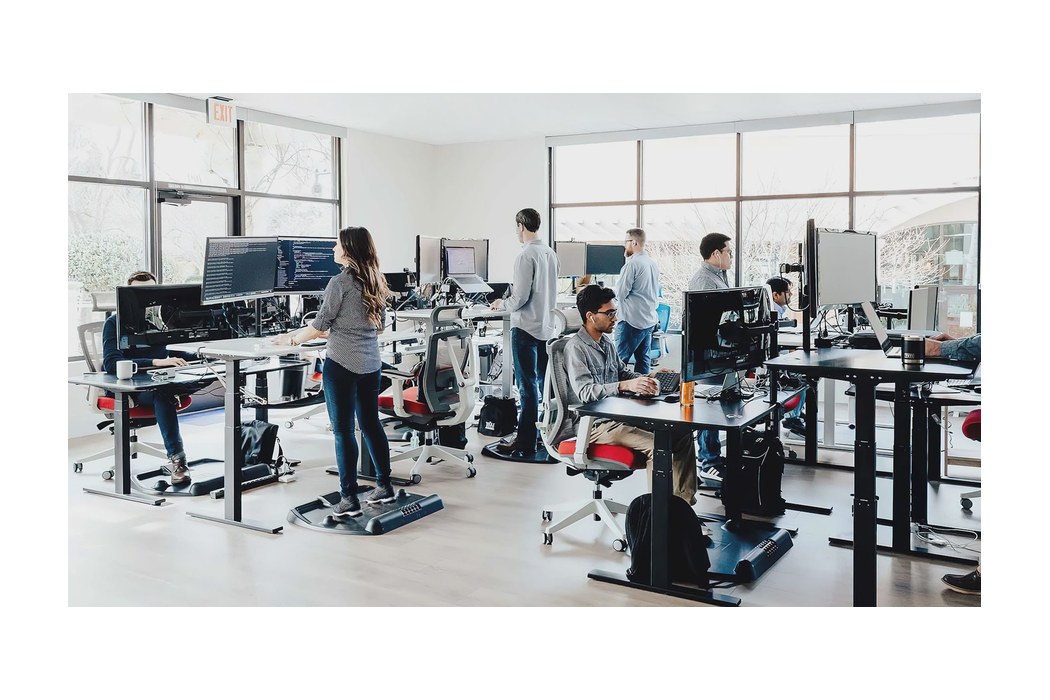
Autonomous Started With a Standing Desk. Now It Wants Your Whole Office to Think.
A New York furniture startup shipped millions of desks and chairs to more than 30 countries, then bet its next act on a stranger idea: hardware that reasons. Here is how a Kickstarter desk turned into an AI hardware workshop.
The $4.5 Billion Company Hiding Under Your Palm
Logitech turned a 1981 farmhouse and a wooden mouse into the hardware layer of modern work, play and streaming - and it is quietly betting the next decade on AI, video and recycled plastic.
HP Is Turning the Office Supply Closet Into an AI Business
The company that put calculators in pockets and printers beside desks now wants to manage the whole workplace - PCs, rooms, security, support and AI included. Its advantage is not novelty. It is the unglamorous power of being everywhere work already happens.
Regus
Mark Dixon turned a plain observation - real business happening at cafe tables - into Regus, the flexible-office network that now spans thousands of locations and quietly outlasted the startup that was supposed to bury it.
Owl Labs
Owl Labs is a Boston-based company that builds AI-powered, 360-degree video conferencing devices for hybrid organizations. Its flagship Meeting Owl line is an all-in-one camera, microphone, and speaker that automatically pans and zooms to whoever is talking, aiming to give remote participants an equal seat at the table. Combined with its Owl Intelligence System software and its widely cited annual State of Hybrid Work report, Owl Labs positions itself at the intersection of meeting-room hardware and the broader conversation about how distributed teams work.

Switchboard
Switchboard was a cloud coworking platform built for remote and hybrid teams. Instead of screen-sharing and tab-juggling, it put video and live, editable web apps - Google Docs, Figma, Jira, Trello and more - side by side in persistent virtual rooms, so a team could return to a project exactly where it left off. Founded in 2020 by serial entrepreneur Amir Ashkenazi, the company raised roughly $38 million from investors including Sequoia Capital, Icon Ventures, Spark Capital and HubSpot Ventures, and held five patents. In late 2024 Ashkenazi wound down Switchboard and pivoted the company into Airtop, an AI web-agent and browser-automation platform.

Density
Density is a San Francisco-based people-analytics company that builds privacy-first sensors and software to measure how offices, buildings, and other spaces are actually used in real time. Founded in 2014 by Andrew Farah, it pairs radar and depth-sensing hardware with its Atlas analytics platform to help enterprises cut real estate costs, plan hybrid workplaces, and understand utilization without cameras or personally identifiable data. Backed by more than $225 million in funding and a $1.05 billion valuation, Density serves Fortune 500 customers across dozens of countries.
DTEN
DTEN is a San Jose-based hardware company that builds all-in-one video conferencing and collaboration devices for hybrid workplaces, schools, and healthcare. Founded in 2015 by Wei Liu and closely tied to Zoom, DTEN pioneered the all-in-one touchscreen meeting appliance with its D5 and D7 lines and today ships AI-enhanced systems certified for both Zoom Rooms and Microsoft Teams Rooms, combining 4K cameras, microphone arrays, touch whiteboarding, and cloud device management in a plug-and-play package.

Codi
Codi is a San Francisco startup rethinking the office for hybrid work. It began by offering private, fully serviced, turnkey offices on short leases - a flexible alternative to WeWork-style co-working and traditional multi-year commercial leases - and has since expanded into an AI-powered platform that automates office management tasks like cleaning, pantry restocking, and vendor coordination. Founded in 2018 by Christelle Rohaut and Dave Schuman, Codi has raised roughly $23 million, including a $16 million Series A led by Andreessen Horowitz.
Kadence
Kadence is a workplace operations ("WorkOps") software platform that helps enterprises coordinate people, time and space across hybrid and distributed teams. Born from the pandemic-era pivot of wireless-charging startup Chargifi, the San Francisco- and London-based company unifies desk and room booking, visitor management, team scheduling, occupancy analytics and AI-powered coordination into one platform. Kadence is used by more than 10,000 teams across 40+ countries, including Boeing, Ashurst and BDO, and raised a $20M Series A in 2025 led by High Alpha.
Robin
Robin is a Boston-based workplace management platform that helps companies run hybrid offices - booking desks and meeting rooms, mapping floor plans, managing visitors, and measuring how space actually gets used. Founded in 2014 by brothers Sam and Zach Dunn with Brian Muse, Robin now serves thousands of organizations worldwide, including HubSpot, Peloton, Riot Games and UNICEF, and has layered AI agents on top of the office to automate the busywork of getting people and rooms in the same place.
SoWork
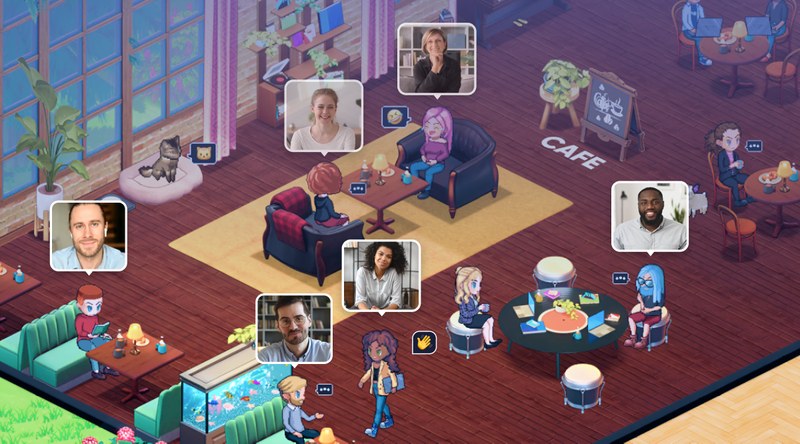
SoWork is a generative-AI-enhanced virtual office platform that gives distributed teams a persistent, customizable workspace where avatars work side by side, spatial audio recreates hallway serendipity, and AI quietly captures meeting notes and action items. Founded at Harvard by three co-founders and legally incorporated as Sophya, Inc., the company raised a $15M seed round led by Talis Capital in 2021 and counts teams from startups to large enterprises among its users - with a stated mission to move workplaces from the earth to the cloud.

Omnissa
Omnissa is an independent digital work platform company spun out of VMware's End-User Computing business after KKR's roughly $4 billion acquisition closed on July 1, 2024. Led by CEO Shankar Iyer, it builds the autonomous workspace: a unified platform spanning Workspace ONE (unified endpoint management), Omnissa Horizon (virtual desktops and apps / DaaS), and Omnissa Intelligence (analytics and digital employee experience), increasingly stitched together with trusted, AI-driven automation. The company serves more than 26,000 customers worldwide, including a majority of the Fortune 500, with about $1.5 billion in annual recurring revenue and roughly 4,000 employees.

Mio
Mio is an Austin, Texas company that makes enterprise chat platforms talk to each other. Instead of forcing a whole organization onto a single tool, Mio sits in the middle and federates the public APIs of Microsoft Teams, Slack, Google Chat, Zoom Team Chat and Cisco Webex so a message typed in one app lands natively in another. Founded in 2015 by Tom Hadfield and James Cundle and backed by Y Combinator, Khosla Ventures, Zoom and Cisco, Mio turns the messy reality of multi-platform companies (and the partners they work with) into a single, interoperable conversation.
Nerdio
Nerdio builds software that automates and simplifies the deployment, management, and cost optimization of Microsoft cloud technologies - Azure Virtual Desktop, Windows 365, Microsoft 365, and Intune. Born as an internal tool at a Chicago managed service provider, Nerdio spun out in 2020 and now serves over 23,000 customers worldwide through two flagship products: Nerdio Manager for Enterprise and Nerdio Manager for MSP. In March 2025 it raised $500 million from General Atlantic at a $1 billion+ valuation.
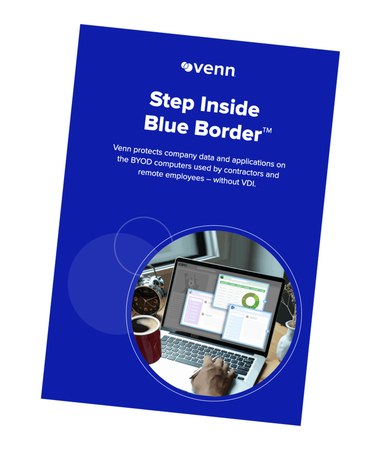
Venn
Venn is a New York cybersecurity company that secures remote and hybrid work on personal, unmanaged, or contractor-owned computers. Its patented Blue Border technology installs a lightweight agent that creates a company-controlled Secure Enclave on any Windows or Mac machine - work apps run locally inside a literal blue border where data is encrypted and isolated from personal use, with no virtual desktop, no remote session, and no shipped laptop required.

Webex
Webex is the collaboration platform born from one of the web's first conferencing companies and now run by Cisco. It bundles meetings, calling, messaging, webinars, contact center, and a line of conference-room hardware into a single suite, layered with AI for transcription, real-time translation across dozens of languages, and agent assistance. It serves enterprises, governments, schools, and hospitals that need secure, large-scale communication for distributed teams.

Envoy
Envoy is a workplace platform that helps over 16,000 organizations run smarter offices - from front-desk visitor sign-in and package deliveries to desk booking, meeting rooms, and workplace analytics. Founded in 2013 in San Francisco by ex-Twitter engineer Larry Gadea, Envoy became a unicorn in 2022 after a $111M Series C.
VergeSense
VergeSense is a Mountain View-based occupancy intelligence company that uses AI-powered sensors and a cloud analytics platform to help enterprises understand how their offices and buildings are actually used. Founded in 2017 by Dan Ryan and Kelby Green, it serves over 200 enterprise customers across 50+ countries and monitors more than 140 million square feet of space.