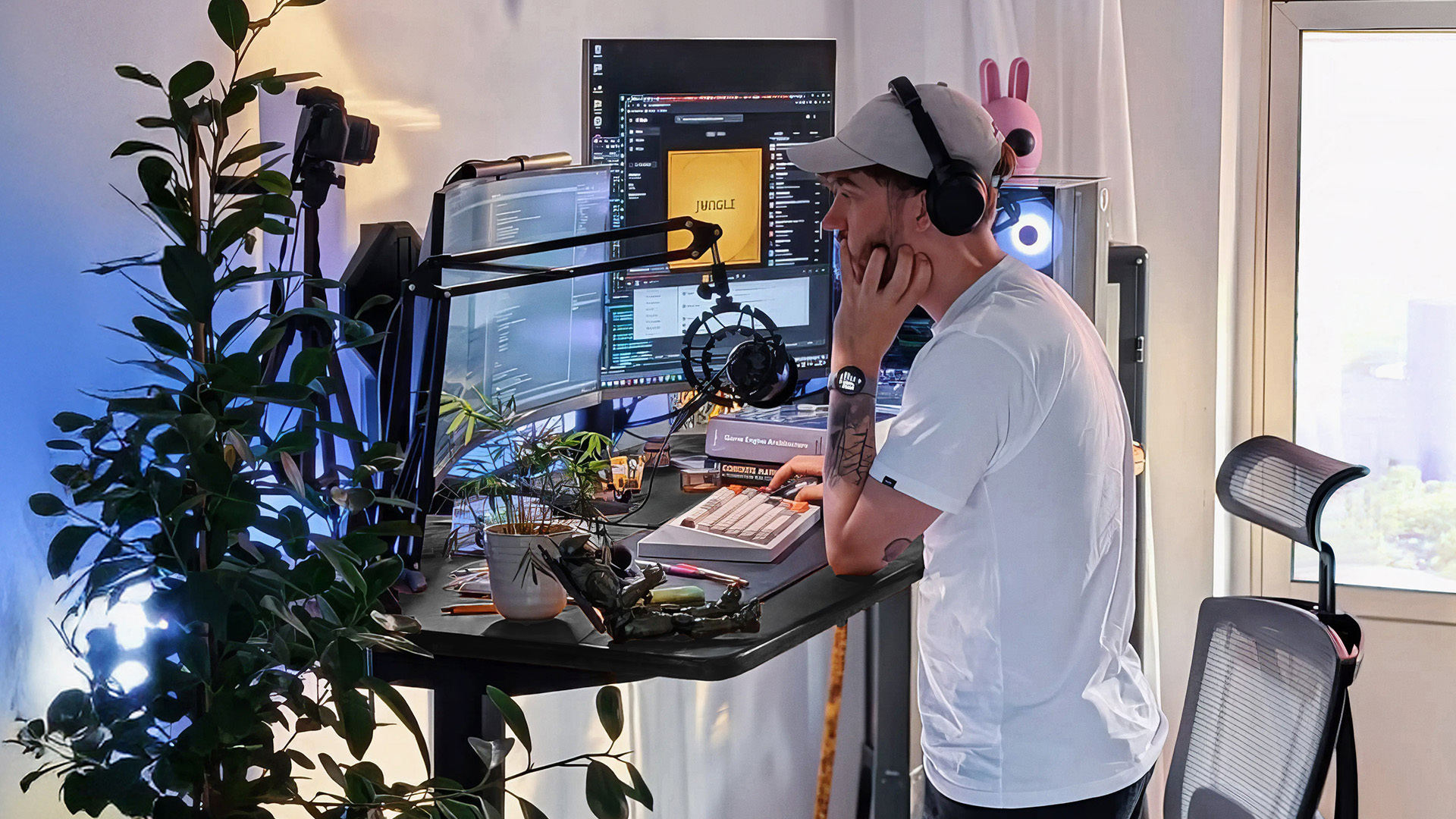
The standing desk is a strange place to start a technology company. It does not run software, it does not phone home, and for most of the last century it did one thing: it went up, and it went down. And yet that is exactly where Autonomous Inc. planted its flag in 2015 - a New York outfit that decided the most neglected computer in your life was the slab of steel and laminate you leaned on eight hours a day.
A decade later the bet looks less eccentric. Autonomous now says it has shipped more than three million products to over 30 countries, serves upward of a million daily users, and pulls in an estimated $150 million a year - all by selling desks, chairs, and, more recently, prefab backyard offices directly to the people who use them. The furniture was never the whole plan. It was the on-ramp.
01 / OriginFrom a home robot to a Kickstarter desk
Founder and chief executive Duy Huynh did not set out to sell furniture. His first company, Robotbase, was a New York robotics startup building a home assistant robot named Maya - a friendly camera-and-voice machine meant to run the house. It was ambitious, early, and hard to ship. Rather than force it, Huynh did the thing most founders avoid: he kept the team and the engineering DNA, and changed the product entirely.
The pivot became Autonomous. The reasoning was almost contrarian - instead of a robot people had to be convinced they needed, start with an object everyone already owns and nobody loves. The first Autonomous product was a smart electric standing desk, crowdfunded in May 2015. It worked. The Kickstarter campaign reached roughly 570% of its goal; a follow-on Indiegogo campaign hit about 1,257%. By early 2016 the company had formally launched and taken on seed backing from Haitao Capital.
02 / The ModelWhy the desks cost less
The commercial trick underneath Autonomous is not the electronics - it is the supply chain. The company is vertically integrated: it designs and manufactures its own products and sells them straight to customers online, with no showroom, no distributor, and no retail markup layered on top. That is how a SmartDesk lands well under the price of a comparable ergonomic-brand desk, and how the SmartDesk 3 could ship in 2017 at around $549 while carrying a touchscreen.
To make that work at volume, Autonomous runs its own warehouse network - locations across New York, San Francisco, Shenzhen, Saigon, and the UK - so it controls cost and inventory from factory floor to front door. The customer base skews toward the people hybrid work created: remote workers, startups, and small-to-mid teams kitting out home and shared offices. The company reports more than 130,000 teams among its buyers.
The problem it is actually solving is a mundane one that turned urgent almost overnight. When offices emptied out, millions of people inherited the job of furnishing a workplace they never planned to build - and discovered that ergonomic furniture was priced for corporate purchasing departments, not individuals. Autonomous' answer was to strip the category down to its useful parts (a frame that moves, a chair that supports a spine, an app that remembers your presets) and price it for one person paying with their own card. The bulk-discount B2B side then sells the same catalog to teams that want a consistent setup across dozens of home offices.
03 / CatalogDesks, chairs, and a backyard office
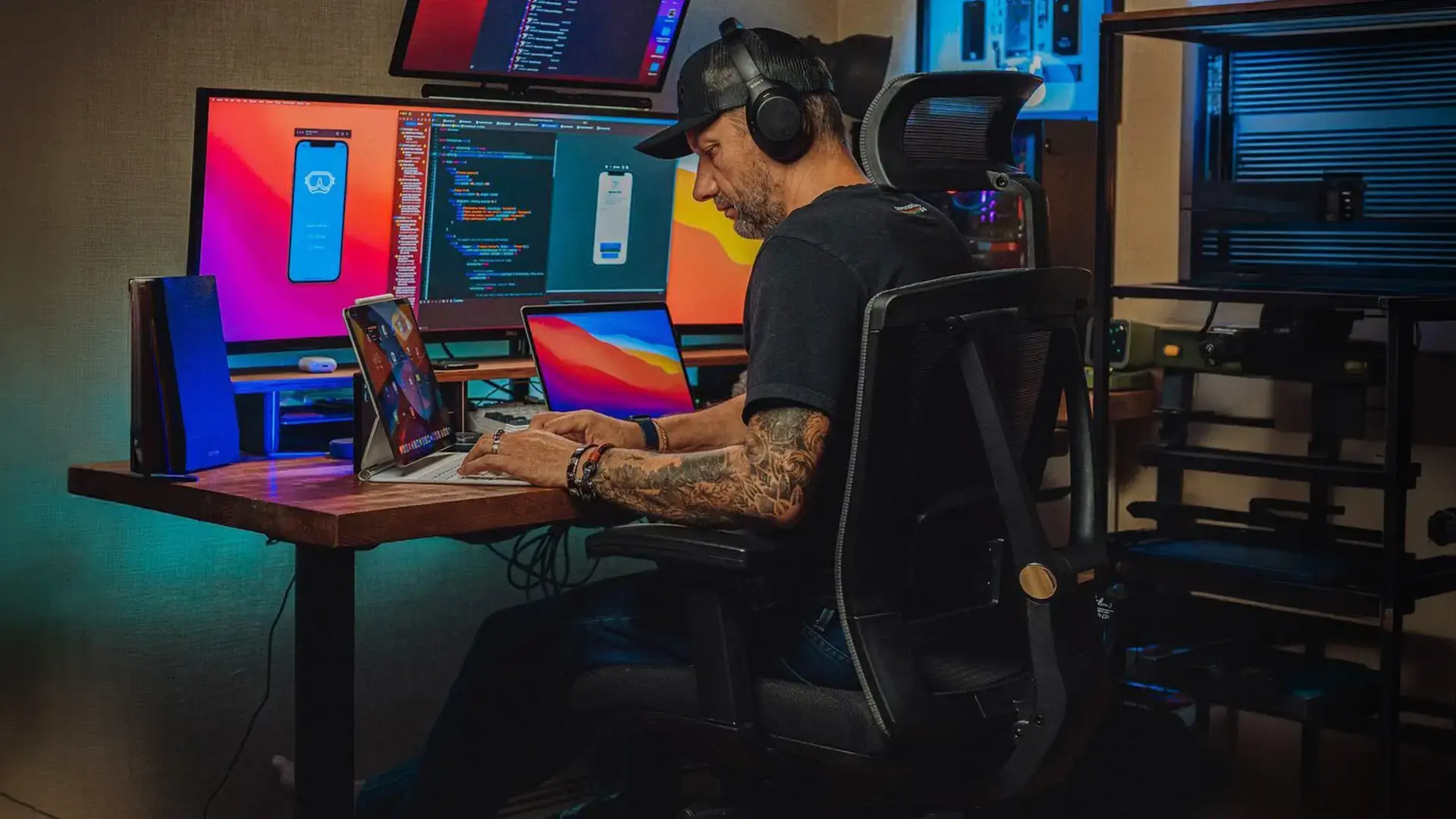
The core catalog is easy to underestimate because it looks ordinary. The SmartDesk line - Core, Pro, Connect, and the newer SmartDesk 5 - covers dual-motor electric frames with programmable memory presets and app or touchscreen controls. The ErgoChair family (Core, Pro, Curve, Ultra 2) handles seating, with adjustable lumbar support, breathable mesh, and, on the Pro, up to nine degrees of adjustment.
Then it gets less ordinary. As remote work reshaped demand, Autonomous introduced the WorkPod in 2021 - an insulated, prefabricated studio you drop in a backyard as a standalone office, starting around $15,000, with smaller WorkPod mini and Versatile variants following. It is a logical extreme of the same idea: if the office moved into the spare room, sell the room too.
04 / The TurnGiving hardware a mind of its own
Here is where the robot company shows through again. The SmartDesk 3, launched in 2017, was pitched as the world's first AI-powered standing desk - a 7-inch touchscreen running Autonomous' own OS, tracking how long you sat or stood and nudging you to move, syncing with your calendar, even learning your habits over a week. Critics at the time found it gimmicky. In hindsight it reads more like a first draft.
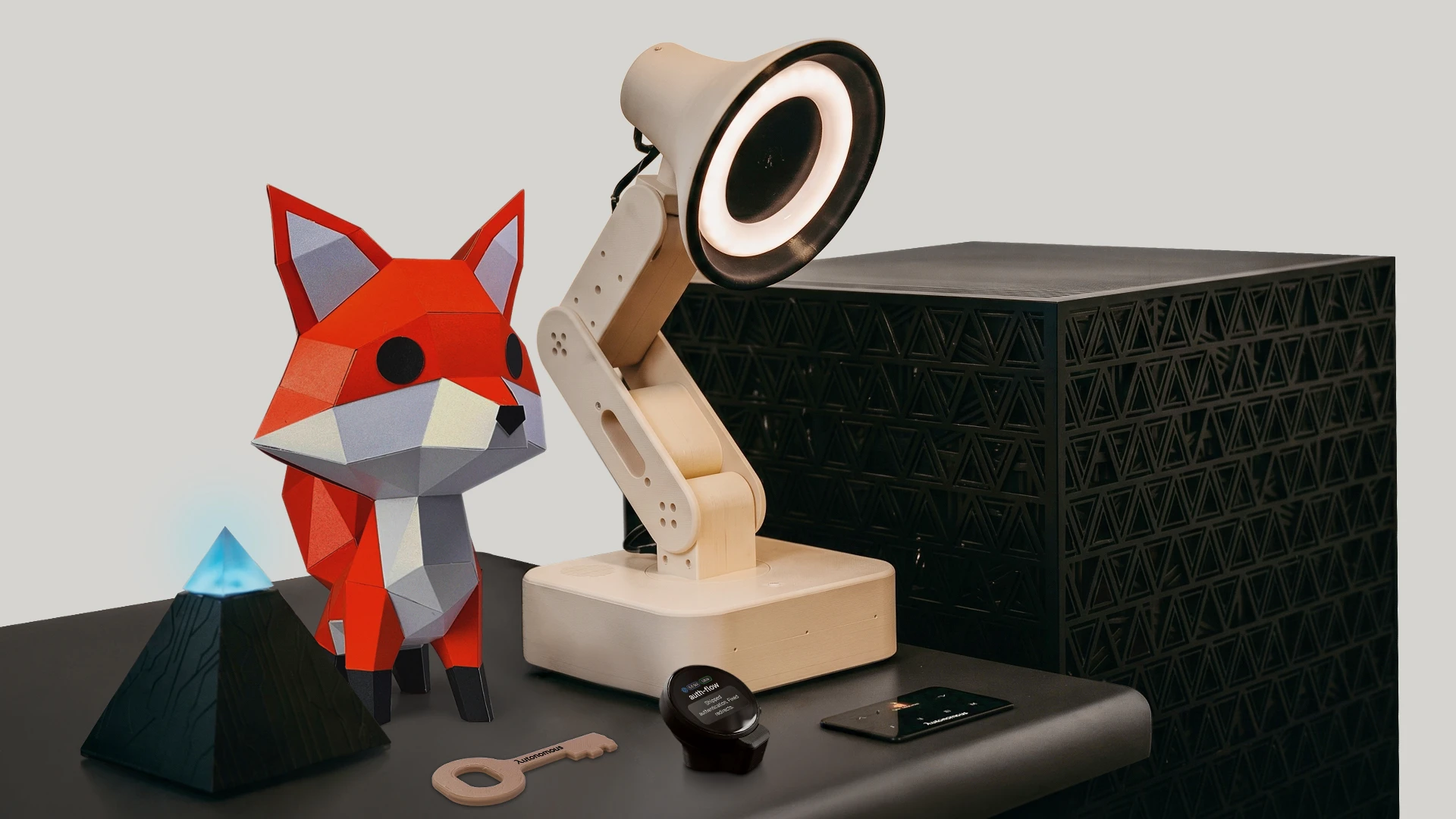
In 2025 the company made the ambition explicit, rebranding itself publicly as an "AI hardware workshop" with a blunt thesis: software got AI, and hardware didn't. The centerpiece is Brainy, a desktop deep-learning workstation that delivers over a petaflop of AI performance, scales from two to eight NVIDIA RTX GPUs, and can fine-tune and run models up to 70 billion parameters locally - a private alternative to renting cloud GPUs. Alongside it, Autonomous has previewed a personal AI computer it calls Lamp and an AI-enabled Thinking Desk, and spun up a robotics vertical, Future Labs.
05 / ContextWhere it sits in the market
On paper Autonomous competes on two fronts. In furniture it lines up against Uplift, Fully, Vari, and Flexispot on desks, and against Herman Miller, Steelcase, and Secretlab on chairs - a crowded aisle where its edge is price and direct distribution, not prestige. In its newer AI machines, the comparison shifts to boutique deep-learning workstation builders and cloud GPU rental services, where the pitch is data privacy, no latency, and lower long-run cost.
What makes the company genuinely unusual is the arc connecting those fronts. Autonomous is, in the plainest terms, a boring business funding a weird one. Ergonomic chairs and adjustable desks throw off steady margin; that margin is being poured back into the on-device AI bet Huynh has been circling since the Maya days. Few furniture companies have a robotics lab. Few robotics companies survive by selling office chairs.
The expertise, then, is not any single discipline - it is the seam between two. Autonomous employs roughly 390 people spanning hardware engineering, industrial design, manufacturing, and software, which is what lets a desk carry an operating system and a workstation ship with a full deep-learning stack (ONNX, PyTorch, TensorFlow, and NVIDIA's CUDA toolchain) pre-integrated. The culture Huynh describes is iterative and unromantic: prototype, test, break, remake, and treat every customer complaint as a line item on the roadmap. It is a slow way to build a company. It is also why a furniture brand can credibly ship an AI computer.
06 / TimelineTen years, one long pivot
07 / TakeawayWhat you can borrow from it
The reproducible part of Autonomous is not the AI - it is the sequencing. Pick a product people use for hours and rarely think about. Own the manufacturing so the price is honest. Sell direct so there is no tax between you and the buyer. Treat customer complaints as the roadmap. Then use the margin from the dull, dependable thing to fund the ambitious one you actually care about. The desk was never the point. It was the patience.
Where it might not work: the model leans on manufacturing control and thin margins, which punishes anyone without scale or supply-chain reach, and the AI-hardware turn is young - a petaflop on your desk is a real product, but the market that needs one locally is still forming. Autonomous has earned the right to make the bet. Whether furniture buyers follow it into deep learning is the open question of its next decade.