health-tech
(68)
Anthill Ventures wants your next investor to meet your next customer
The venture firm pairs early-stage capital with a route to buyers. Its bet: a useful introduction can change a startup’s prospects faster than another polished pitch deck.

Capsule wants to take the pharmacy off your to-do list
The prescription is the easy part. Capsule built a pharmacy around everything that happens next - and discovered how much work it takes to make medicine feel effortless.

Kyruus Health and the Mystery of the Empty Appointment
Patients wait months. Appointment slots sit unused. Kyruus Health built a business in the gap between the two - by teaching healthcare organizations to know whom they can actually book.
The Notebook Nobody Could Read
A family wanted to know what happened during a home-care visit. ClearCare turned that missing answer into software for thousands of agencies - after discovering that a care note means little without the machinery to act on it.

The Wellness Agency That Learned to Sell the Argument, Not the Ice Bath
Jack Taylor built a PR business around a peculiar modern problem: a useful wellness product is often easier to invent than to explain. Its answer is part newsroom, part switchboard and part cultural timing exercise.
The Indian Incubator Where Founders Have to Build the Thing
On a 40-acre campus outside Ahmedabad, iCreate gives deep-tech founders what pitch decks cannot: tools, technical scrutiny, patient mentors and a route from prototype to paying market.
Remarkable Built an Accelerator Around the People Tech Usually Meets Last
A rough solar-powered wheelchair revealed a polished idea: disability-led inventions need more than applause. Remarkable built the training, capital and human feedback loop to help them become businesses.

Chloe Capital wants the meeting to end with a check
The venture firm pairs women and underrepresented tech founders with investors, then puts its own money into selected companies. From caregiver training to climate technology, its portfolio tests whether a wider search can uncover overlooked businesses.
LYVA Labs backs the awkward bit between invention and income
A working prototype is a beginning. Liverpool’s publicly backed innovation company supplies early money, specialist help and introductions to get the business moving too.
Nourish Care found its big idea in the paperwork
A care-home volunteer spotted a problem hiding in plain sight: carers were recording everything, but useful information was hard to retrieve. Nourish turned that frustration into a software business spanning care plans, staff rotas and the economics of care.
The Sisters Who Bet a Healthcare Ad Agency Could Run Without an Office - and Sold It in Ten Years
Barbara Pantuso and Lisa Reid started a remote healthcare agency before remote was cool, sold complex science as clear stories, and cashed out to Supreme Group ten years later. Here is how they did it - and what a small shop can steal from the playbook.
Syntax Health Put a $7.5 Million Bet on Healthcare's Ugliest Spreadsheet - and Made Payers Show Their Math
A failed contract meeting convinced Rachael Jones that value-based care did not need another slogan. It needed a shared calculator - one that could expose hidden risk, price incentives, and let both sides negotiate from the same page.
Diem Health Raised $510,000 to Cut Out Staffing Agencies. Then the Marketplace Went Quiet.
The Bay Area startup tried to replace phone trees and staffing middlemen with a map, a calendar and instant clinician matching. Its short public trail offers a sharper lesson than another tidy startup victory lap.

The Startup Betting Your Ears Know Your Heart Better Than Your Wrist
synseer's HealthBuds skip the wrist and the fingertip, reading your heartbeat through sound inside your ear canal. It is a bet that the next big health tracker is a thing you were already wearing to take calls.
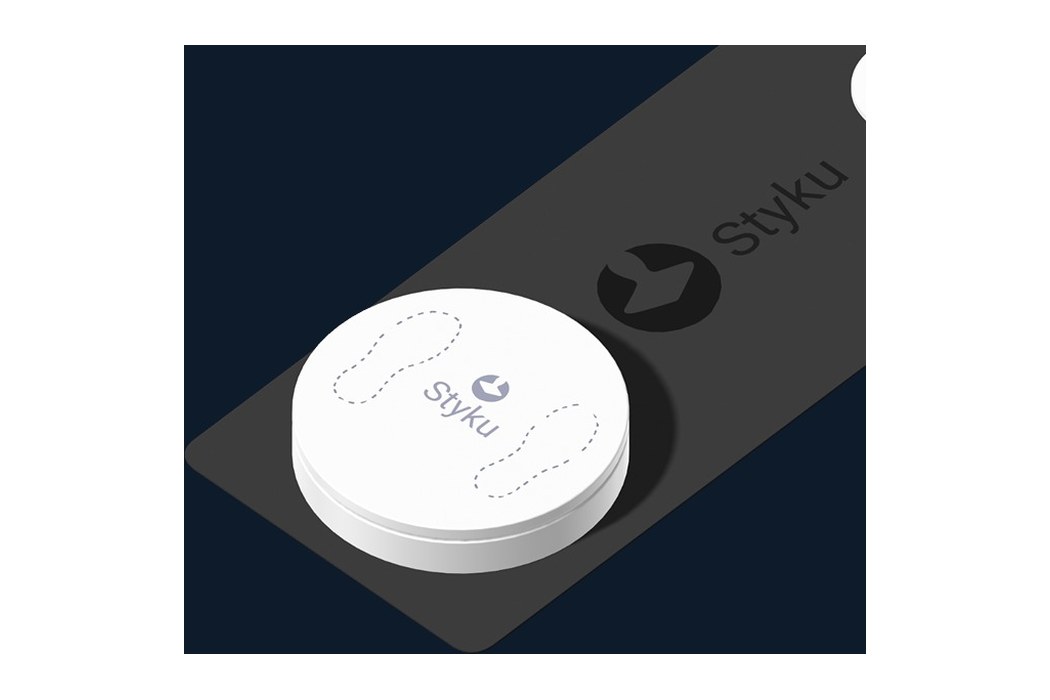
The Scale Lies. Styku Built a Spinning Camera That Doesn't.
A physicist who once worked on NASA's human spaceflight program bet that people quit diets because a bathroom scale can't show progress. His answer: a rotating infrared camera that turns your body into data - and, lately, a health screen.
The Company That Cleans Up Healthcare's Messiest Data Before Anyone Else Can Read It
Everybody wants to do AI on healthcare data. Almost nobody wants to spend two years cleaning it first. Kythera Labs turned that dirty job into a business.
The Family Office That Treats Capital Like a Contact Sport
Wasson Enterprise is a 16-person family office with an operator's reflex: write the check, open the network, then help with the awkward work of growing. Its portfolio stretches from pharmacy automation to recycled plastic, but the common product is practical leverage.

The Tiny Fund With a Taste for Very Large Problems
Vast Ventures runs a compact New York operation with an unusually wide lens - from sleep hardware and medical access to digital money and lab-grown diamonds. The through-line is not a sector. It is a five-part manifesto about what technology should make better.
Rock Health Built a Three-Lane Highway Through Digital Health
The San Francisco institution does not make a health app. It does something harder to package: it helps capital, evidence, and healthcare operators find one another before expensive ideas become expensive mistakes.
The Health Fund With 300 Insiders on Call
Wavemaker 360 built a healthcare-only venture firm around an unusually practical idea: the people funding the portfolio can also help its founders enter the rooms where healthcare gets bought.

The Venture Firm Built on Steel - and Its Famous List of Mistakes
Bessemer Venture Partners has spent decades funding technological change while publicly cataloguing the giants it once declined to back. That combination - patient capital, partner autonomy and an unusual appetite for admitting error - explains how a steel-era family office became a $20 billion venture platform.
The Quiet Machine Behind One in Three American Adults
Quest Diagnostics is easy to mistake for a chain of blood-draw centers. Its real product is a national system that moves specimens, data and decisions through American healthcare at unusual scale.
The Life Insurer That Would Rather You Stay Alive
At 164, John Hancock is recasting the oldest bargain in insurance: instead of waiting to pay after death, it rewards customers for living better now. The experiment links life insurance to wearables, cancer screening, longevity research and a growing stack of health technology.
Peloton Interactive
Peloton built a camera-ready fitness studio around a stationary bike. Now its higher-margin subscriptions, AI coaching and move into commercial gyms reveal the more durable idea underneath: fitness that feels scheduled, social and personal wherever you train.

Beacon Health
Beacon Health is a Y Combinator (W26) startup building AI agents that operate real electronic health record systems the way a human employee would - clicking through Epic, athenahealth, and eClinicalWorks to close care gaps, capture risk adjustment codes, handle prior authorizations, and run preventative screening outreach. Aimed at primary care practices in value-based care arrangements, the product turns recorded EHR workflows into deployable agents so small practices can chase quality measures and shared-savings revenue without hiring more back-office staff. Founded in 2025 by Mark Pothen and Obinna Akahara, the company has gone live with an independent physician association covering roughly 40,000 patients.
Amigo
Amigo is a New York-based healthcare AI company that builds a platform for designing, training, and deploying patient-facing clinical AI agents. Using a 'digital residency' model, its agents train on millions of simulated patient scenarios before handling real interactions such as intake, triage, care navigation, and 24/7 patient support. Founded by Ali Khokhar and John Xing, Amigo integrates with major EHRs (Epic, Oracle Health, Athenahealth), operates in 100+ languages, and reports more than three million patient encounters with zero safety incidents. It raised an $11M Series A in March 2026 led by Madrona, bringing total funding to $17M.

Joyful Health
Joyful Health is a New York-based health-tech company building AI-powered financial infrastructure for healthcare revenue. Its platform connects fragmented revenue cycle systems - EHRs, billing software, clearinghouses, payer portals, and bank deposits - into a single structured view of every claim's lifecycle, then pairs AI with experienced revenue cycle operators to investigate denials, file appeals, and recover unpaid and underpaid insurance claims. The company targets the roughly $125 billion U.S. providers lose to denied and underpaid claims each year and charges on a performance basis tied to recovered revenue.
Marigold Health
Marigold Health is a Boston-based digital behavioral health company that combines certified peer recovery coaches with a 24/7 anonymous, text-based support community. Natural language processing scans member conversations to flag emerging needs and route human support where it matters most, helping people with mental health and substance use conditions stay engaged in recovery. Marigold contracts primarily with Medicaid and dual-eligible health plans under value-based arrangements, and became the largest provider of peer recovery supports in Delaware.

Vim
Vim is a healthcare technology company that builds a middleware and developer platform connecting data to clinical workflow at healthcare's 'last mile' - the point of care. Its EHR-agnostic Vim Connect layer sits on top of popular electronic health records, pulling in insights and applications from payers, health plans, and digital-health innovators and surfacing them directly inside a provider's existing workflow. By automating tasks such as care gap closure, diagnosis capture, prior authorization, referral management, and chart retrieval, Vim helps payers and providers align on value-based care while reducing administrative burden for clinicians.

Wheel
Wheel is an Austin-based virtual care company that provides the behind-the-scenes infrastructure powering telehealth for health plans, retailers, pharma and digital health brands. Rather than running its own branded clinic, Wheel supplies a configurable platform, a nationwide network of licensed clinicians and the compliance and operations layer companies need to launch and scale virtual care programs. Its Horizon platform, launched in 2024, layers AI and condition-specific care programs on top of a data-first EHR. Wheel says it has delivered care to more than four million people and has raised roughly $216 million, including a $150 million Series C in 2022.