A founder can leave a startup event with a pocketful of business cards and exactly the same bank balance. Chloe Capital has built its pitch around changing that ending. The venture firm brings women and underrepresented entrepreneurs into rooms with investors, prepares them to raise money and commits capital to selected businesses itself. The networking has a destination.
For its 2026 New York City Founder Fellowship, that intention comes with a number: at least $300,000 invested across at least three companies. Fifteen teams participate in Chloe’s cohort. Acceptance buys neither an automatic check nor a fixed valuation. It offers a structured chance to build the relationships that can lead to a financing decision.
The distinction is central to understanding Chloe. It manages venture investments and runs programs around them, concentrating on technology businesses whose leaders have been underrepresented in conventional financing networks. Its work stretches from climate and energy to health, education and the workforce. These are places where a useful invention can still face a painfully slow journey to a customer’s budget.
cohort teams3+
companies to receive investment
One cohort. Selective investment. Terms depend on the company’s financing round.
She was already doing everything except investing
Chloe began in 2017, co-founded by Elisa Miller-Out and Kathryn Cartini. Miller-Out had spent years building software businesses and helping other entrepreneurs. She had led Singlebrook, a custom software company, for more than a decade and oversaw the sale of a division in 2016. Mentoring founders became part of her professional life, alongside building her own companies.
In a 2022 interview with Cornell’s BR Venture Fund, she described the realization behind the switch: “I realized that the only part I wasn’t doing was moving the capital.” She already knew founders, organized communities and connected people with resources. Becoming an investor added the financial decision to work she was doing anyway.
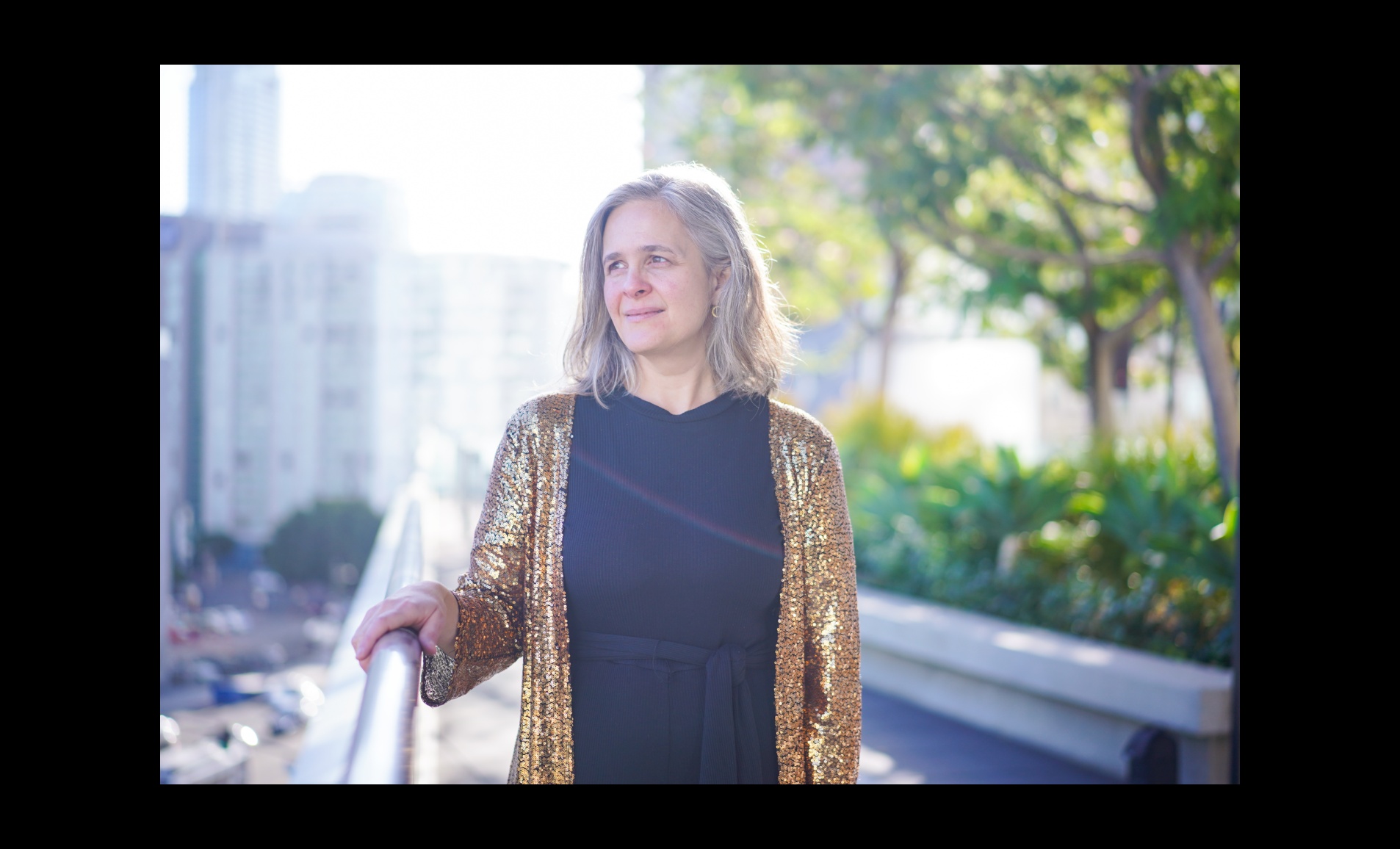
That background remains visible in the team. Partner Myneco Ramirez has worked in technology infrastructure and built businesses of her own. Partner Kristina Klaas brings experience in operations and raising both investment and non-dilutive capital. Their published responsibilities span programs, investor relations and fundraising. Chloe’s outward culture is heavily concerned with the work surrounding a financing: preparation, introductions, follow-through.
The firm is headquartered in Ithaca, with additional locations in New York City and Chicago. Its proximity to Cornell is more than a mailing-address curiosity. University relationships have helped it connect entrepreneurial training, regional economic development and investors. A venture firm can search nationally while doing some of its most useful work through very local institutions.
A wider search, with a commercial filter
Chloe’s argument is that conventional investor networks leave worthwhile businesses underexamined. Its response is to widen the search and spend time with the founders it finds. The company website currently reports 56 portfolio companies and 130 accelerator companies. Those are different populations, with potential overlap, and tell different stories about the firm’s investment activity and program reach.
In describing the strategy to BR Venture Fund in 2022, Miller-Out emphasized companies with products in the market and early evidence of demand. Revenue helped, but users or important partnerships could also demonstrate traction. Enterprise software was a particular interest. The accelerator format gave investors time to observe founders working through questions, rather than relying entirely on a polished pitch.
Look at the portfolio and the thesis becomes less abstract. Airpals tackles workplace logistics. GreenIRR measures emissions for trucking fleets. FibrX uses sensors and software to monitor infrastructure. These businesses have identifiable buyers and operational problems to solve. Their appeal depends on whether the product earns a place in a customer’s routine, and eventually in a customer’s spending.
Chloe announced those investments in February 2026 alongside inCitu, which turns urban planning data into augmented-reality experiences, and CLIP, whose attachment adds electric assistance to an ordinary bicycle. The announcement identified CLIP as a returning 2024 fellow. A cohort may end; the investment relationship can continue. The bicycle, meanwhile, gets to keep being a bicycle.
Who pays, who participates, who gets the check
There are several constituencies around Chloe’s table. Founders seek financing and help raising it. Fund investors supply capital to pursue investment returns. Institutions partner on programs that support entrepreneurship. Treating all three as customers of one simple product would miss how the organization operates.
Bank of America’s investment in Chloe Capital’s Fund I, announced in July 2022, illustrates the fund side. A large institution backed a manager that would then invest in startups. The announcement also described a recent Pittsburgh program committing $300,000 to three women-founded businesses. Institutional backing and founder financing occupy separate steps in the same chain.
The practical terms vary. Chloe’s published ImpactAssets profile describes initial checks of $100,000 to $250,000 and potential follow-on investment up to $1 million. That profile identifies convertible notes as its primary investment instrument. These figures describe a published investment approach, rather than a standing offer to every applicant.
Its 2026 fellowship FAQ says investment terms depend on the open round and whether another lead investor is in place. If Chloe leads, it typically uses convertible notes. For a founder, the important cost question therefore extends beyond the calendar: an investment agreement can affect future ownership. A program invitation and a financing agreement require separate consideration.
Bring people inPartners, founders and investors
Work togetherMentoring and fundraising preparation
Make decisionsSelective investment and continued support
The program has a postcode. The fund travels.
The New York fellowship is geographically specific: at least one founder must live in the city’s five boroughs. It combines virtual sessions with mandatory in-person days. Chloe says founders elsewhere can apply directly for investment outside the accelerator. Its 2026 program page lists fall 2026 as the next application period.
NYCEDC’s wider fellowship has four operators serving 60 startup teams in 2026. Alongside Chloe are Company Ventures, Newlab and Visible Hands. These are useful alternatives for founders comparing fit: Company Ventures describes a mentor-led, zero-equity program, while Newlab concentrates on critical technologies and industrial sectors. Chloe emphasizes its gender and diversity lens and direct investment opportunities.
The network has produced concrete introductions. Elektra Health co-founder Jannine Versi told NYCEDC that Chloe’s 2024 fellowship connected her company with investors who invested and with strategic partners supporting its women’s healthcare work. That is the relevant unit of progress for a founder: a relationship that changes what the company can do.
Program support also reaches the less glamorous line items. Chloe’s Growth Kit offers free and discounted business services, and the current fellowship promises continuing access to its resource database. Cloud services, customer management and professional support may lack the theater of a pitch stage, but they belong in the operating budget.
When the venue disappeared, the investment survived
Chloe had already tested whether its model needed everyone in the same room. In May 2020, a program planned for Charlotte moved online during the pandemic. The firm’s account says it chose to proceed rather than postpone. BridgeCare received a $100,000 investment during that virtual program, run in partnership with ECMC Foundation.
The episode offers a modest, copyable lesson for anyone organizing founder support: decide which outcome must survive a disruption. The location changed; the financing objective stayed. It is also a useful reminder that an accelerator’s value depends on what participants can accomplish through it, not simply on the production quality of its closing event.
A year later, Chloe and Cornell launched Diversity in ClimateTech with NYSERDA support. Cornell described a division of labor: entrepreneurship training, customer discovery and regional connections on one side; fundraising preparation and investor introductions on the other. Founders could come from outside the region, provided they intended activity that benefited New York’s Southern Tier.
Chloe’s November 2021 account named a $250,000 investment in Change Finance and $200,000 for COI Energy. The latter works on detecting and reducing wasted energy in buildings. The sums give the partnership substance. A university-linked program had become a route to specific investments in businesses with specific jobs to do.
The technology worked. The hospital still had questions.
FIGUR8, a Chloe portfolio company founded by Nan-Wei Gong, shows how difficult the next stage can be. Its musculoskeletal assessment technology offered clinicians more objective information about movement and recovery. In Miller-Out’s June 2026 Inc. column, Gong described an adoption problem: clinical enthusiasm did not remove workflow complexity or the need to demonstrate value to insurers.
“Providers didn’t need another gadget.”
Nan-Wei Gong, FIGUR8 founder
In Elisa Miller-Out’s June 2026 Inc. column
The company adjusted around clinical usefulness and health economics instead of emphasizing technical features alone. The lesson for a founder is uncomfortable and practical: the person impressed by a demonstration may not be the person responsible for approving a purchase. Evidence has to travel through the organization, too.
Chloe announced FIGUR8’s acquisition by Myant in May 2026. The combination joined musculoskeletal measurement with a business developing connected care through textile computing. That outcome followed another health-related portfolio transaction: CareAcademy’s acquisition by Activated Insights, which Chloe announced in December 2025.
CareAcademy supplies caregiver education and workforce training. Its buyer brought analytics and workforce-engagement capabilities serving long-term and post-acute care providers. Chloe described the deal as its seventh completed portfolio M&A outcome at that point. An acquisition count records transactions; judging investment performance also requires attention to the economics of those transactions.
The next useful introduction
By 2026, Chloe’s activity included a fourth NYC fellowship cohort and selection in the Emerging Impact Managers category of ImpactAssets 50. Its September founder guidance, produced with Spoke, addresses a decidedly earthbound choice: hire an employee, bring in fractional help, or wait. Growth creates operating decisions long after the pitch deck has done its job.
For a founder considering Chloe, the useful questions are concrete. Does the business fit the investment focus? Is there evidence that customers want the product? Can the team make use of a program while continuing to operate? A local fellowship requires local participation, and a venture investor needs a plausible route to returns. An introduction cannot manufacture either.
The lesson readers can borrow is to research the fit before chasing the meeting. Chloe’s model gives overlooked founders more ways to become known to investors. The founder’s work remains to explain the customer, demonstrate progress and make the financing make sense. The business card is a beginning. What happens after it changes hands is the story.
Follow the money, and the people
EXPLORE CHLOE CAPITAL