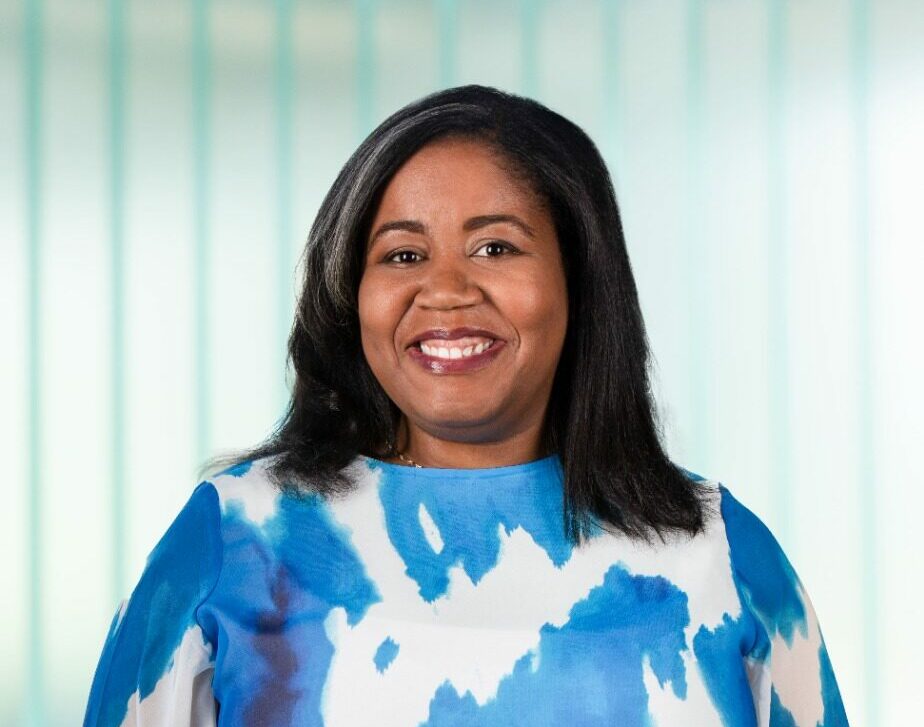
The Investor Running Toward the Problem
Her full name takes a breath to say out loud: Uriridiakoghene. It is Urhobo - a language from the Niger Delta region of Nigeria - and it translates to "glory be to God." Most people call her Ulili. The nickname stuck because the name is long, but also because Ulili fits: compact, memorable, easy to repeat across a room once you know it. She has spent her career making sure the right rooms know it.
Ulili Onovakpuri grew up in Hunter's Point, one of San Francisco's most historically underserved neighborhoods, in a city that was already mid-transformation into a place many of its native residents couldn't afford. She was diagnosed with Juvenile Rheumatoid Arthritis as a young child. Healthcare was never an abstraction for her family. It was a budget line. The question of who gets access to what kind of care - and at what cost - became the animating question of her adult life.
That question led her, eventually, to venture capital. Not the most obvious destination. But the path she took - UC Berkeley, Mozilla, IBM, Duke's Fuqua School of Business, a brief attempt at her own health startup, Village Capital, and then back to Kapor Capital as a Principal in 2015 - was less a zigzag than a tightening spiral. Each role brought her closer to the lever she was looking for: who gets funded, and by whom, determines what gets built. She was going to work on the lever.
"You shouldn't have to make the decision between am I going to let my light bill go off because I have to buy medicine."
- Ulili Onovakpuri, on her investment motivationBy the time she was named Co-Managing Partner at Kapor Capital in 2021 - alongside Brian Dixon, succeeding founders Mitch Kapor and Freada Kapor Klein - she had already spent nearly a decade building the infrastructure that would make Fund III possible. The summer associates program she launched in 2011, when she was just an analyst, grew into the longest-running VC fellowship program for underrepresented individuals in the country. She built it because she needed it to have existed when she was starting out, and it didn't.
Fund III closed in 2022 at $126 million - the largest in Kapor Capital's history. The portfolio composition tells the story better than any press release: 46% female founders. 53% Black founders. 100% underrepresented founders of color. Not as a quota. As a sourcing strategy. The thesis, as Ulili put it, was that if you build networks other VCs haven't bothered to build, you see deals other VCs will never see. Turns out that's true. Returns tend to follow.
The standard venture capital playbook requires warm introductions - a feature, not a bug, of a system designed to keep its own network intact. Ulili didn't redesign the playbook. She built a different network. Then she deployed $126 million through it.
She backed Cayaba Care, which focused on maternal health for underserved communities. Daylight, the first LGBTQ+ digital banking app. TomoCredit, which built credit for immigrants and others excluded from traditional scoring models. eddii, a diabetes management platform for children. These weren't charity. They were bets on markets the mainstream had consistently underestimated: people whose healthcare needs were real, whose financial needs were real, and who had no adequate product yet.
Along the way, she wrote for TechCrunch, spoke at the Milken Institute Global Conference, the Grace Hopper Celebration, TechCrunch Disrupt. She wasn't performing visibility - she was creating pipeline. Every panel appearance was a recruiting opportunity for the kind of founders she wanted to see pitching her.
In May 2025, after more than ten years at Kapor Capital, she announced she was leaving. She was careful about the language. "This isn't a goodbye to investing or to funding the founders building critical solutions," she wrote. "But it is a purposeful pause." She also noted, with characteristic wit, that her inbox had "definitely seen the last of 'just wanted to follow up on the deck I sent you.'" Anyone who has ever worked in venture recognized the joke immediately.
She has since joined Motley Fool Ventures as a Venture Partner - which is either a pause or the next chapter, depending on when you're reading this. Either way, she brought the same conviction: the best investments are in problems everyone else has learned to stop looking at. And healthcare access, financial inclusion, workforce equity - those problems are still very much unsolved.
The name Uriridiakoghene is hard to say on first encounter. But Ulili has made it so you don't need to say it. The work says it instead. Glory be, indeed.