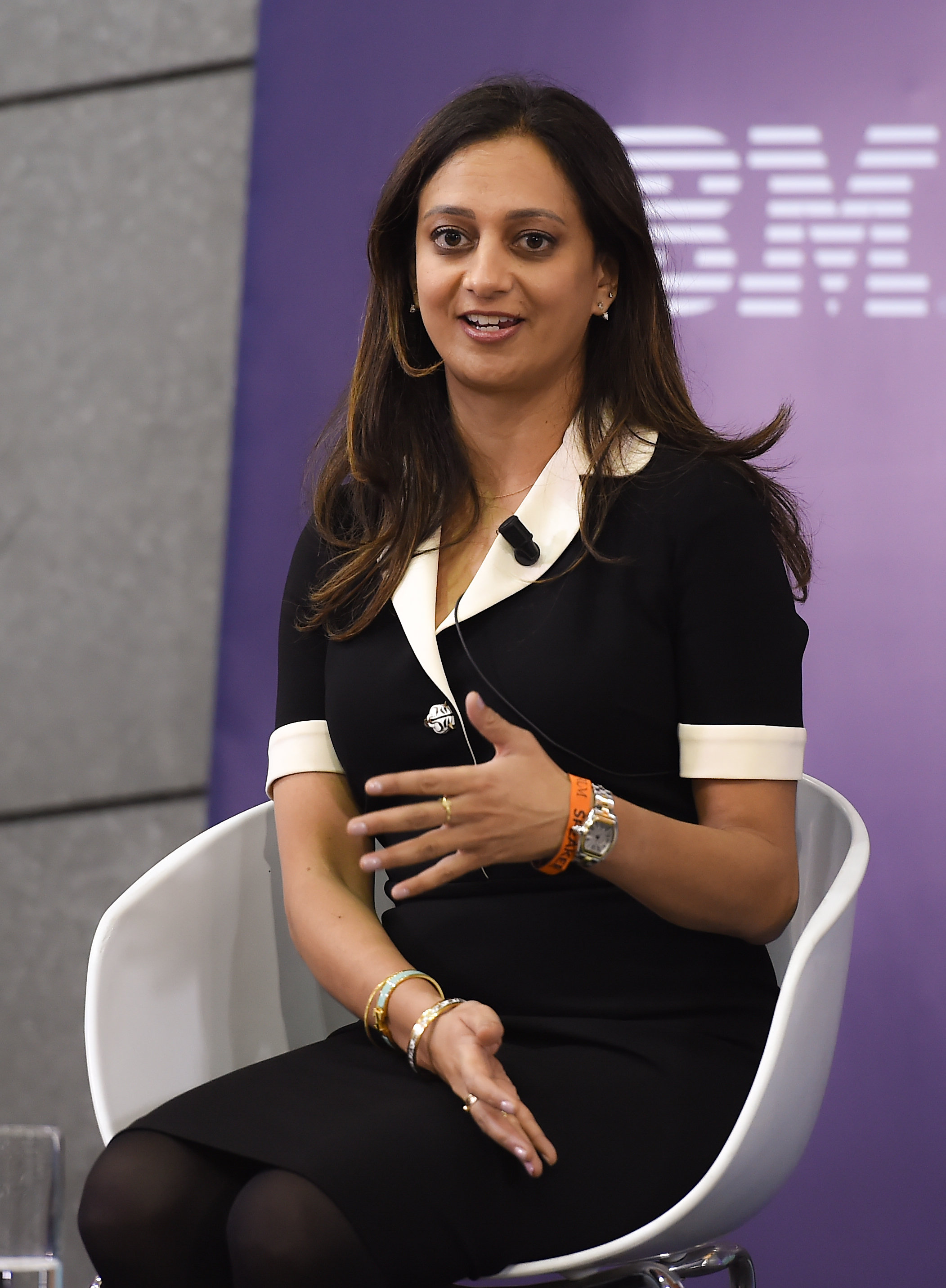
The Investor Who Got There First
In 2013, when Bitcoin was trading around $600 and most Wall Street professionals couldn't spell "blockchain," Jalak Jobanputra walked into a Bitcoin conference and came out a convert. Not the reluctant, hedge-your-bets kind of convert. The kind who goes home and builds a fund around the idea. Two years later, Future\Perfect Ventures was live - one of the first institutional VC funds anywhere in the world dedicated to decentralized technology.
She didn't get there by accident. She got there because she had spent twenty years watching what happens when money gets stuck - behind borders, behind bank counters, behind the kind of infrastructure that serves some people and ignores the rest. She had seen it in Nairobi. She had seen it in Dar es Salaam. She had watched it play out in emerging markets while everyone else was focused on Sand Hill Road.
The question that launched Future\Perfect Ventures was deceptively simple: what would a financial system look like if you built it from scratch? Most investors were asking how to integrate Bitcoin into existing systems. Jobanputra was asking whether the existing systems were the problem.
"I cannot go wrong if I listen to my inner voice."- Jalak Jobanputra, in multiple interviews across her career
From Nairobi to New Jersey to New York
She was born in Nairobi, Kenya, to parents of Indian descent, and arrived in rural New Jersey around age five. That combination - African birthplace, Indian heritage, American upbringing - turns out to be exactly the preparation you need to understand that financial systems are not natural laws. They are choices. Other choices are possible.
The radio batteries story stays with her. A childhood visit to her father's ancestral village in India in 1980: the family brings gifts. The villagers' top request? Not clothing. Not food. Radio batteries. The desire to receive information, to be connected to the broader world - it predates the internet by decades and explains why she has spent her career betting on technologies that connect people to systems that previously excluded them.
She has lived in, worked in, or visited close to forty countries. Her blog, "The Barefoot VC," has run since 2009 - named for going barefoot as a child in Africa and India. The blog was named a top ten investor blog by Business Insider. It also predates most of the crypto hype cycles by years. She was writing about emerging market mobile finance when most VC blogs were enthusing about the next consumer app.
"Money is a representation of value, but in the case of M-Pesa, that representation is really software and bits."- Jalak Jobanputra
The Wharton-Kellogg Path She Didn't Follow
The expected path after graduating magna cum laude from Wharton with a dual degree in economics and communications, then getting an MBA from Kellogg, is well-worn. You join a major investment bank. You track upward. You don't take a detour.
She took the detour at the first opportunity. In 1995, at twenty-three, she was working in investment banking in London - media, telecom, tech. She attended the Netscape IPO conference. The experience convinced her the internet was going to restructure everything. She walked back to her banking desk and began planning her exit. Colleagues expressed shock. She accepted a salary of roughly one-tenth what she was making, moved to New York, and joined an early-stage internet startup called Horsesmouth - one of Silicon Alley's scrappiest early bets.
The detour after Kellogg was even more unusual. Instead of taking a VC seat in 1999, she flew to Dar es Salaam and spent four months helping establish microfinance programs for women entrepreneurs in the food processing industry. The experience wasn't a gap year. It was research - the kind you can't get from a spreadsheet. It shaped everything about how she thinks about who needs capital and why.
Building Before the Hype: Intel, NYC, Omidyar
After the Tanzania stint, she joined Intel Capital in Silicon Valley, investing in enterprise software and internet companies from 1999 to 2003. The exits were solid: Yodlee IPO, Financial Engines IPO, R Systems IPO, acquisitions by Oracle, IBM, and Peregrine. She wasn't making noise. She was learning the mechanics of technology venture, deal by deal.
By 2005 she was in New York at the New York City Investment Fund - a private economic development fund co-founded by Henry Kravis. She didn't just invest there. She built things. In 2008, she spearheaded the formation of NYCSeed, filling a gap in the early-stage startup ecosystem at a moment when New York was trying to figure out whether it could compete with Silicon Valley. She also co-founded the FinTech Innovation Lab, which later replicated in London and Hong Kong. The Lab is now considered one of the more consequential fintech institution-builders of that era.
From around 2010 to 2014, she directed emerging market mobile investments at Omidyar Network - Pierre Omidyar's impact investing organization. The focus: mobile payments and financial inclusion across emerging markets. Africa, South Asia, Southeast Asia. The deals weren't famous in Sand Hill Road terms. They were foundational in terms of what came next. When the blockchain thesis clicked in 2013, it made complete sense against this background. She had spent years watching what happened when people got financial tools they had previously been denied. She had seen M-Pesa. She had seen what mobile money does to a market.
"Human potential is limitless; it's the opportunity and the capital that determines success."- Jalak Jobanputra
Future\Perfect Ventures: The Fund That Bet Early
Future\Perfect Ventures launched in 2014. The backslash in the name is intentional - a typographic acknowledgment that perfect is a direction, not a destination. The fund's thesis was built around decentralized technologies, blockchain infrastructure, smart data, and IoT. At the time, "blockchain" was not yet in mainstream vocabulary. Jobanputra was already writing checks.
The early deals tell the story. Blockchain.com - seed round. Blockstream - seed round. BitPesa (now Aza), the Nairobi-based company building Bitcoin payment rails for African markets. Abra, the crypto digital wallet. Everledger, using distributed ledger tech to track diamond provenance. These weren't bets on a crypto trading frenzy. They were bets on infrastructure - on the idea that the financial system was going to be rebuilt on decentralized rails and that the companies building those rails in 2014 and 2015 would matter enormously.
The Graph Protocol, Polkadot, Current, Tari Labs - the portfolio grew to 50+ companies across three funds. She has been on the investment committee, on boards, and in the room at moments that now read as turning points. Crunchbase cited FPV as one of the top VC funds in blockchain "before it was cool." Microsoft gave her a VC Trailblazer Award in 2018 for "early and bold" blockchain investments. Institutional Investor put her on its Most Powerful Fintech Dealmakers list three years running.
The bet has matured. She has noted that Bitcoin's evolution from "digital gold" narrative to institutional asset class is exactly what she expected - that the question was never whether it would happen, but when, and whether you were positioned correctly for it. She was.
Portfolio: 50+ Bets on the Decentralized Future
"Blockchain wasn't a popular word back then, but we are finally seeing our financial system being re-wired on these onchain rails."- Jalak Jobanputra, 2024
The Collective Future: Diversity as Architecture
In 2018, at the height of one crypto boom and the beginning of a reckoning about who was getting access to the opportunities it created, Jobanputra founded The Collective Future. The organization exists specifically to advance diversity and inclusion in blockchain and Web3 - and it produced the Blockchain Inclusive and Diversity (BID) Pledge.
This wasn't a brand play. She has spoken publicly about her experience as one of a small number of women of color in the venture capital ecosystem, and specifically in the blockchain space. She has noted that being "different" forced a kind of resilience that she now considers a competitive advantage. But she has also been clear that the scarcity of diverse voices in Web3 is a structural problem worth solving - not a personal narrative to perform.
The Collective Future fits with her broader pattern: identifying a gap in infrastructure, and building something to fill it. She did it with NYCSeed in 2008. She did it with Future\Perfect in 2014. She did it again in 2018.
Awards & Recognition
- 2018Microsoft VC Trailblazer Award for early and bold blockchain investments
- 2016-18Institutional Investor's Most Powerful Fintech Dealmakers, three consecutive years
- 2017Top 5 Investor Powering the Blockchain Boom
- 2016-17100 Most Influential Fintech Leaders (two consecutive years)
- 2017Ranked #33 on Institutional Investor Fintech Finance 40
- 2010Outstanding 50 Asian Americans in Business - AADC
- 2009+Barefoot VC named top 10 investor blog by Business Insider