The unglamorous end of innovation sometimes smells like a deep-fat fryer. Bomac Electric, a manufacturer of heating elements and products, spotted a business opportunity in waste cooking oil: customers needed a smarter way to manage its collection. The company developed a sensor-based system, tested an early prototype and found interest. Then came the harder engineering work of turning a promising idea into something ready for wider use.
LYVA Labs helped Bomac secure innovation funding, work through development problems and find an electronics engineering and manufacturing partner, Tritec. The product, OilSentry, was still moving towards wider customer trials in the company’s August 2026 account. That unfinished quality makes the example useful. Innovation support happens while the outcome is still in doubt.
This is the territory occupied by LYVA Labs, Liverpool City Region’s publicly backed investment and commercialisation company. Its job encompasses early cheques, grant applications, business plans, specialist advice and introductions. The recurring question is straightforward: what is stopping this idea from becoming a business with paying customers?
A city can have science and still need businesses
LYVA Labs grew out of a regional effort to turn research strengths into economic activity. Its operating company, LCR Ventures Limited, was incorporated in September 2021. The LYVA Labs launch and first investments followed in 2022. Lorna Green, its co-founder and founding chief executive, had already joined in 2021.
Green’s career helps explain the approach. She began in the NHS, moved into commercial medtech roles and worked with the £27 million Liverpool Seed Fund before becoming director of enterprise and growth at the Innovation Agency. Clinical knowledge, commercial experience and investment judgement all have a place in the organisation she leads.
The original public backing was £10.5 million from Liverpool City Region Combined Authority. The remit involved commercialising ideas, strengthening connections between industry and researchers, and assembling collaborations. A scientist with a potentially useful discovery might need a company, a customer proposition and a funding plan. An established manufacturer might need a research partner. LYVA Labs works on both sides.
Its first disclosed investment, in May 2022, was £175,000 for Frequasense, which was developing a platform to detect early signs of bacterial sepsis. The company said it would relocate into the region. The transaction established an enduring theme: support a technology while also trying to bring the resulting business activity closer to home.
Pre-seed investment across 37 start-ups
Small cheques, a longer relationship
The current Pre-Seed Challenge Funds advertise investments of £10,000 to £250,000. Applicants must be based in Liverpool City Region or willing to relocate there. LYVA Labs can invest alongside others in a larger round, and its published process includes investment-committee review and support before a proposal reaches that committee.
The fund page describes £7 million supplied by the Combined Authority for pre-seed investment. That is fund capacity, a different measure from money already invested. Returns go back into the Challenge Fund to support further companies. The structure gives the organisation a regional purpose alongside its financial interest in portfolio businesses.
Investment can lead to continued help with grants, research partners and subsequent fundraising. Depending on the circumstances, LYVA Labs may appoint a non-executive director. Its public offer also leaves room to help companies it declines to back financially. A rejected investment proposal need not end the conversation.
That combination places it among several kinds of organisation a founder might otherwise approach separately: a seed investor, a business adviser, a university commercialisation team and a programme manager. Angel groups and regional accelerators such as Baltic Ventures occupy adjacent territory. LYVA Labs’ particular proposition is to connect early capital with scientific and commercial support under a geographic brief.
Three doors, depending on what is stuck
The Incubator is aimed at businesses with early concepts or prototypes, described as technology readiness levels 2 to 5. The published package includes £10,000 initial investment through an advanced subscription agreement, individual commercial mentoring, grant-writing support and workshops on subjects including sales, intellectual property, finance and regulation.
Founders need an incorporated company, a bank account and an intention to raise investment. The £10,000 is investment rather than an unconditional giveaway. The programme builds towards investor readiness and a Demo Day, but a pitch slot is an opportunity to raise more money, not a promise that someone will provide it.
“I entered this programme as a physiotherapist with an idea and some early testing.”Nicki Allen / founder, Haptiv8
Allen’s company is developing an insole intended to help children who walk on their toes. Her account of the programme emphasises gaining a business plan and clear next steps. That is a more revealing measure of early incubation than a photograph of founders holding oversized cheques: the inventor becomes better equipped to run the company.
Accelerate addresses a later problem. It targets eligible businesses at technology readiness levels 6 to 9, with a minimum viable product, product or intellectual property ready and a clear route to market. Its fully funded offer includes commercialisation advisers and up to £10,000 for specialist expertise. That might mean regulatory advice, a sales strategy or business-development support.
ADAPT opens another door, for established businesses in any sector. Its current criteria require at least £500,000 turnover and three employees. Two senior team members, including someone at C-suite level, must attend a two-day bootcamp. The offer combines expert planning with a £15,000 feasibility grant to test a proposed product, service or business opportunity.
The useful question is: what changed?
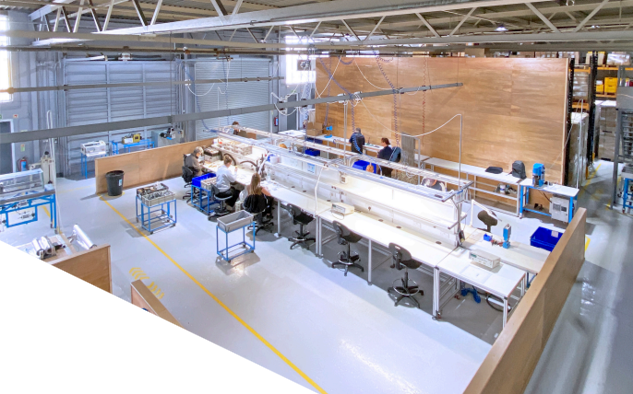
Bomac’s case provides an unusually practical answer. Customers helped identify the opportunity; prototype testing gave the company more confidence that it was worth pursuing. Technical difficulties then created a need for further development support. LYVA Labs helped the company find another engineering partner and funding to address those issues.
The published account does not make this a tale of effortless progress. It describes a company preparing for wider trials, with commercial viability still ahead. What a reader can copy is the sequence: collect customer evidence, test a prototype, identify the remaining technical obstacle and hire expertise suited to that obstacle.
A second ADAPT case, Regal Wholesale, began with success creating uncertainty. After launching on Temu, the household-products wholesaler reached hundreds of direct-to-consumer orders a day within a year. The question became how to expand without disrupting its established wholesale operation.
LYVA Labs connected Regal with retail specialist Mark Taylor to work through commercial modelling, operational readiness and digital capabilities. The intervention concerned the business model as much as the technology. Selling more through a marketplace creates demands on systems and people that a rising order count cannot answer by itself.
For iiDiagnostics, a Liverpool School of Tropical Medicine subsidiary, the next task was engineering a proven insecticide-detection prototype for manufacture and deployment. LYVA Labs funding supported work with DefProc Engineering. Five near-production devices were planned for field trials in Southeast Asia in 2027. Those are development milestones, not completed field results.
The bill includes time and cash flow
At the programme level, £4.24 million of Innovation Zone funding was approved in March 2025 for the five-year Innovate, Grow, Accelerate and Partner initiative. Its plans covered incubation, acceleration and a £1 million Clean Tech for Health fund. The latter allocation sits within the programme award; adding it again would exaggerate the total.
For participating businesses, the costs differ by route. Equity-related investment has ownership implications governed by the agreement. ADAPT requires senior management time and a defined feasibility project. Its grant claims are retrospective, with the published timetable specifying payment within 30 days and staged claims available to reduce cash-flow pressure.
As of September 9, ADAPT applications were open until September 30 at 5pm, with the bootcamp scheduled for October 21 and 22. The current Incubator and Accelerate pages said their spring and summer cohorts were closed. Founders should match their development stage and timing to the programme before assembling an application.
Local connections, highly specific gates
LYVA Labs’ partnerships supply some of the expertise behind the introductions. A November 2024 agreement with STFC and Sci-Tech Daresbury connected its investment and consultancy work with technical resources, incubators and business support. In February 2026 it became a core partner in iiCON, the Infection Innovation Consortium led by Liverpool School of Tropical Medicine.
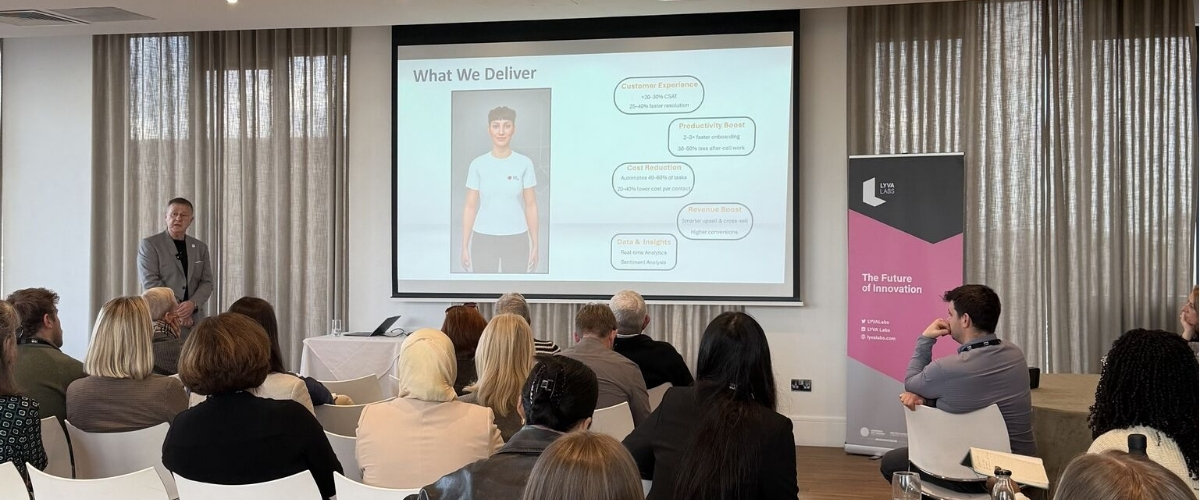
The iiCON agreement covers SME support and the commercialisation of work emerging from consortium partners. This is a useful distinction for readers encountering the word “Labs”: LYVA Labs helps connect research, companies and investment. The facilities and scientific capabilities in its partner network belong to the organisations developing and operating them.
The eligibility boundaries are specific. Current Incubator and Accelerate pages exclude pharmaceuticals, drugs, alcohol and consumer health. Their deep-tech criteria also reject thin wrappers around third-party language-model APIs. Applied AI must be central to the product, with data and technical capabilities supporting an advantage over generic models.
Those restrictions, the regional requirement and the need for specialist follow-on work limit where this approach fits. A business outside the geography, an excluded sector or a founder unwilling to pursue investment needs another route. Even an eligible company must still establish demand and deliver its product. The support can pay for expertise and create introductions; customers retain their vote.
LYVA Labs makes the most sense when a founder can name a concrete next problem: an untested market, a manufacturing hurdle, an investment proposal or a missing research partner. Bomac’s cooking-oil sensor brings the point back to earth. The next useful step was finding people who could help make the thing work at the next stage.
Follow the work
Explore LYVA Labs, its investment criteria, Incubator, Accelerate and ADAPT programme.
Read the Bomac development story, Regal’s marketplace case, iiCON partnership announcement and latest news. Follow LinkedIn, X or Instagram.