Company Health · AI · Wearables
The Startup Betting Your Ears Know Your Heart Better Than Your Wrist
synseer's HealthBuds skip the wrist and the fingertip, reading your heartbeat through sound inside your ear canal. It is a bet that the next big health tracker is a thing you were already wearing to take calls.
The pitch is almost annoyingly simple. You already wear earbuds most of the day - on calls, on the treadmill, on the train pretending not to hear anyone. So why is the job of watching your heart handed to a separate gadget on your wrist, one that shines a green light at your skin and does its best guess? synseer, a seven-person company in Boca Raton, Florida, thinks the better sensor was in your ears the whole time.
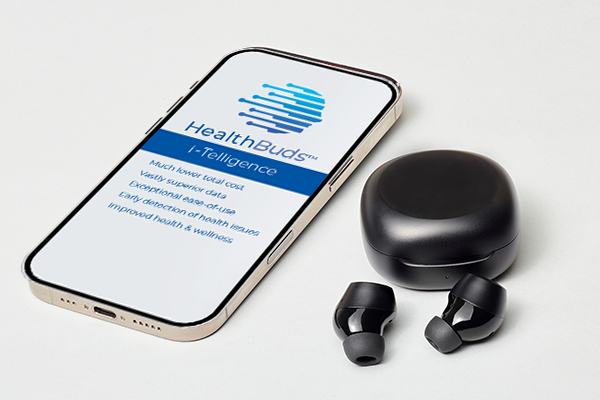
Its answer is HealthBuds: noise-cancelling earbuds that play music, take calls, and quietly read heart and hearing health by listening to the sounds your body makes inside the ear canal. Not light bouncing off skin - actual acoustic signal, captured from the inside. The company unveiled them at SXSW 2025 in Austin, and the audio and medical-device press stopped to look, which is not nothing for a startup you had not heard of a year ago.
The ideaSound in, not light on
Most consumer wearables use optical sensing - photoplethysmography, if you want the word to drop at dinner. An LED shines into your skin, a photodiode reads how much bounces back, and software infers your pulse from the flicker of blood flow. It works, mostly, until you move, sweat, have darker skin, or wear the thing loosely. synseer's bet is that the ear canal is a quieter, more stable place to listen, and that sound is a richer signal than reflected light.
The wrist way
Optical sensor shines light at the skin and estimates your pulse from what reflects back. Sensitive to motion, fit, and skin tone.
The ear way
Microphones inside a sealed ear-tip capture low-frequency acoustic biosignals from the heart directly - a channel synseer says runs at higher fidelity.
The hardware trick that makes this work is what synseer calls the AudioDome - an ear-tip design with embedded microphones that seals off a small, controlled listening chamber in your ear. It does double duty: a clean environment for audio, and a clean environment for hearing your own heart. Sitting underneath is what the company describes as an in-ear "infra + ultrasonic operating system," combining infrasonic sensing (below what you can hear) with ultrasonic (above it).
The founderA sixth act, and a personal reason
synseer is not John Martino II's first company. It is, by his count, his sixth - and he exited three of the earlier ones to public companies before starting this. But the reason this one is about ears and hearts is personal. Martino survived a serious car accident at 18 that changed how his brain processes information, and later lost hearing in one ear. That pushed him into the research linking hearing and heart health, and into building a device that treats both as one problem instead of two.
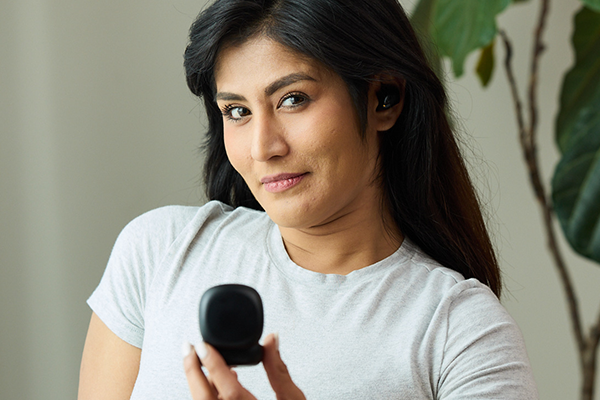
That framing - hearing and heart in a single wearable - is the thing that makes synseer more than "AirPods with a pulse feature." A HealthBud is pitched as a hearing device, a heart monitor, and a set of good earbuds at once, so the health part rides along on a thing you already had a reason to wear.
The tech partnerBorrowing a clinical-grade ear
In May 2025, synseer signed a strategic partnership with MindMics, a company with patented "infrasonic hemodynography" - a mouthful that means capturing low-frequency acoustic signals from the ear canal to read heart rate, heart rate variability, and stress and recovery states with clinical-grade accuracy. synseer brings the AI analytics and coaching layer; MindMics brings validated sensing. Pilot testing was slated for the summer of 2025.
The AI layerA coach that never takes the buds out
Continuous data is only useful if something makes sense of it. synseer's answer is i-Telligence, an AI wellness coach that turns the stream of in-ear signals into personalized guidance and early-risk nudges. A later HealthBuds release is set to add an agentic AI health and wellness coach - the difference being an assistant that can act on your patterns, not just chart them. It is the part of the plan that scales: a sensor you wear eight hours a day feeding a coach that is always in the room.
The business modelSell the razor, rent the blade - in reverse
Here is where synseer gets genuinely unusual for a hardware company. HealthBuds are priced at $799 at retail, with preorders opened at $399, plus a monthly subscription in the $25-$30 range for the monitoring and coaching. Buy the device once, pay monthly for the intelligence, and every two years you swap your buds for a free upgrade. Returned units do not go in a drawer - they get refurbished and given to people with hearing loss.
The model splits opinion, which is a sign it is at least interesting. Skeptics see a monthly fee stapled to earbuds and wince. Optimists see recurring revenue, a built-in upgrade cadence that keeps hardware fresh, and a reason for the company to keep improving the software you are renting. Either way, it is a different shape from "buy the gadget, own it, forget it."
The fine printWellness gadget, not a cleared device - yet
Worth being clear-eyed: at announcement, HealthBuds were positioned as a wellness product, not a classified, FDA-cleared medical device, and the company's accuracy claims arrived without published comparative studies. That is the honest state of an ambitious pre-launch product. Availability messaging has since pointed to a Winter 2026 iOS release with Android to follow, pending regulatory review. Read the claims as a thesis being tested, not a settled result.
The marketEveryone's fighting over the wrist
The competition is who you would expect - the Apple Watch and other optical smartwatches, plus fitness bands and the ring crowd like Oura, Whoop, Garmin and Fitbit. synseer's whole differentiation is refusing to fight on that ground. Instead of the wrist, it takes the ear; instead of light, it uses sound; instead of a dedicated tracker, it hides the tracker in something you already carry. For a seven-person team, picking a lane the giants have mostly ignored is not a bad way to start.
TimelineHow synseer got here
John Martino II starts the company in Boca Raton to build consumer-led preventive health devices.
Public launch in Austin; preorders open at $399.
Clinical-grade infrasonic cardiac sensing added, with pilot testing planned for summer.
Messaging points to a Winter 2026 iOS release, Android to follow, pending regulatory review.
What is copyable here, if you are building anything: synseer found a piece of real estate the incumbents left open (the ear), attached a health job to a device people already keep in all day, and wrapped it in a subscription so the software keeps earning its keep. Whether the sensing lives up to the claims is the open question - and the one that will decide if this is a clever reframing or a genuinely better way to watch your own heart.
Follow synseer
Figures reflect synseer's publicly stated plans and pricing as of the SXSW 2025 launch; product availability and regulatory status may change.