Farid Vij
He sold his startup to a bigger company, then bought back its mission. Now he is teaching software to do the one job American healthcare keeps forgetting - advocate.
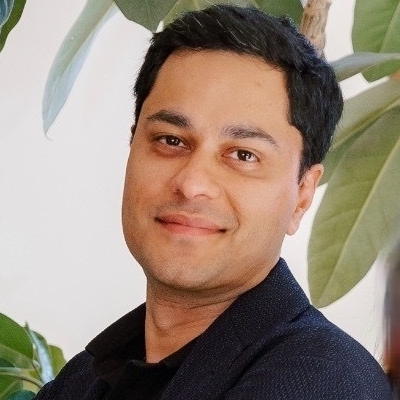
FARID VIJ - co-founder and CEO of Citizen Health, San Francisco. The Wharton finance grad who decided patients should keep a cut of their own data.
Start with the 98.3%
In healthcare, getting a patient to share their medical records for research is supposed to be like pulling teeth. On Farid Vij's platform, 98.3% of them volunteer. That single number is the whole argument: when people trust where their data goes - and get a cut when it creates value - they stop guarding it and start contributing.
Vij is the co-founder and CEO of Citizen Health, a San Francisco company building what it calls an AI Advocate: agentic software that takes a patient's scattered medical records, genetics, imaging, and self-reported notes and turns them into a clear answer to the only question that matters in a crisis - what do I do next? It schedules the appointment. It drafts the insurance appeal. It finds the dozen other families wrestling with the same diagnosis.
The patients Citizen serves do not have the luxury of a single tidy chart. The average person on the platform is seen by nine different providers at the same time. Their conditions are rare, complex, and often un-Googleable. For many, there is no approved therapy and very little published information - just a family, a binder of paperwork, and a system that was never built for them.
"Today's patients aren't waiting," Vij says. "They're searching, deciding, and expecting more. They deserve the same clarity, personalization, and intelligence in healthcare that they get in every other part of their lives." It is a deceptively simple complaint. We let an app reroute us around traffic in real time, but a parent of a child with a one-in-a-million syndrome is handed a printout and a phone number.
Citizen's answer is to flip the ownership model. Patients keep control of their data and decide who sees it and why. When a pharmaceutical company pays to use that data for research, Citizen takes a percentage and shares it back with the patients who made it possible. More than a million dollars has already flowed back that way - an unusual sentence in an industry that has historically treated patient data as something to be quietly harvested.
The founder who got a second draft
Most founders sell a company once and call it a career. Vij sold his, watched it become a division of a public company, and then watched that company hand it back. In 2017 he co-founded Ciitizen - two i's, an early quirk of the brand - to give cancer patients seamless access to their own records. When Nasha Fitter joined in 2018, the focus widened to rare and complex disease, and the idea clicked: the same plumbing that unlocked one patient's data could assemble an entire community's.
In 2021, Invitae acquired Ciitizen in a deal reported around $325 million. Vij stayed on as president and general manager of the patient-data business. Then the corporate weather changed. In late 2023, Invitae divested the platform, and the leadership team that built it - Vij and Fitter among them - reconstituted it as an independent startup. Citizen Health was reborn in 2024 with a $14.5 million seed round led by Transformation Capital, and it has been running uphill ever since.
The pivot to rare disease was not an abstract market choice. Fitter's youngest daughter was diagnosed with FOXG1 syndrome, and the family discovered what so many do: even with excellent doctors, there was almost no information about the condition and not a single therapy on the market. That absence - the silence where guidance should be - became the company's reason to exist.
Before any of it, Vij learned the unglamorous craft of data at ZL Technologies, an enterprise software company wrangling unstructured information for the Fortune 500. It is not the origin story of a healthcare idealist. It is the origin story of someone who understood, early and deeply, that the value was never in the algorithm - it was in the messy, fragmented records nobody had bothered to organize for the person they belonged to.
Five lines that explain the bet
Whenever there's any commercial use of the data, that's when Citizen makes money - and we actually take a percent of that and share it back with the patient.
It's not only a patient that's impacted - it's the entire family. The average patient on our platform is seen by nine different providers concurrently.
They deserve the same clarity, personalization, and intelligence in healthcare that they get in every other part of their lives.
This is about turning passive systems into proactive, human-centered experiences.
Notes from the edges
Find him here
Sources: Citizen Health, CNBC, MedCity News, Axios, Global Genes, Crunchbase, Stanford Medicine RAISE Health, PMWC. Reporting reflects public statements and coverage as of June 2026.