In 2006, a man in Austin was trying to follow the care of his mother in Illinois. The agency kept notes in a little book at her home. To learn what had happened, he needed someone to relay the pages by phone or fax. Sometimes the full record never arrived. His son, Geoff Nudd, saw a rather modern problem inside this old-fashioned arrangement: the people who needed the information lived far from the paper that held it.
Nudd would found ClearCare in San Francisco in 2010. Its first idea was almost modest: put the care log online so the family could see it. The resulting Family Room let relatives check who had visited, what tasks were done and what the caregiver had noted. It gave a scattered family a common account of a day that none of them had witnessed.
- ClearCare sold cloud software to private-duty home-care agencies, not care visits to families.
- Its early visit tracker needed scheduling, billing and payroll to work inside an agency.
- By 2019, more than 4,000 agencies used the platform.
- WellSky acquired ClearCare in 2019; the product is now WellSky Personal Care.
A family portal sounds like a neat product. But a home-care agency is a dispatch office, payroll department, billing desk and care coordinator squeezed into one business. A missed task can become a family call. A late arrival can become a payroll dispute. A schedule change can become an empty doorway. The little book sat at the end of a long chain, and ClearCare had to learn the whole chain.
The first product had a missing office
Nudd spent months visiting agencies and asking how work actually moved. One administrator described a caregiver noting an ulcer on an older client’s ankle week after week. The paper notes stayed unread until the client had been taken to hospital. The case made the cost of a silent record painfully plain. ClearCare’s early tablet app let a caregiver clock in, clock out and record work at the point of care. The notes could travel while the visit was still fresh.
Then sales conversations exposed the awkward part. Agencies could see the value of a live care record, but they still ran their business through schedules, invoices, payroll and reports. A visit app that stood apart from those systems would add another place to type the same facts. Nudd’s account of the period, told to a former adviser, says the team responded with a 40-day sprint to add the missing functions. That was the decisive turn: the family’s question became an agency operating system.
The useful thing to copy here is the sequence, not the software. Walk through the customer’s entire day. Follow one piece of information until it reaches the person who must act on it. A tool can solve the visible annoyance while leaving the transfer points intact. ClearCare’s original insight survived precisely because the company enlarged the product around it.
A thousand calls and a bill per client
Nudd’s later confession is refreshing in a field that prefers immaculate origin myths. He put his savings into engineers and spent what he called “an enormous amount of money” before making his first sales call. The product happened to be close enough. He has since argued he should have tested a demo and the sale before building so much of it. The price of that lesson is undisclosed, but its direction is clear: development came before proof of demand.
The proof took work. Nudd and his first employee made roughly a thousand calls before the first customer, according to the adviser’s account. By late 2011 they were seeing a repeatable sales pattern. Nudd tracked a benchmark of about 40 cold calls for one demo, then studied how many demos became customers. He sold the promise of real-time visibility to agencies; the agencies told him which operational holes prevented a purchase.
ClearCare charged agencies mainly by the number of clients they served, an approach its founder said buyers accepted early. Historical contracts specify monthly invoicing tied to client counts and types. That made the software bill rise with the agency’s book of business, while the platform could replace separate manual steps. Current WellSky pricing is quoted, so there is no honest universal price to print.
“We were striving for repeatability from the very beginning.”Geoff Nudd, on ClearCare’s early sales process
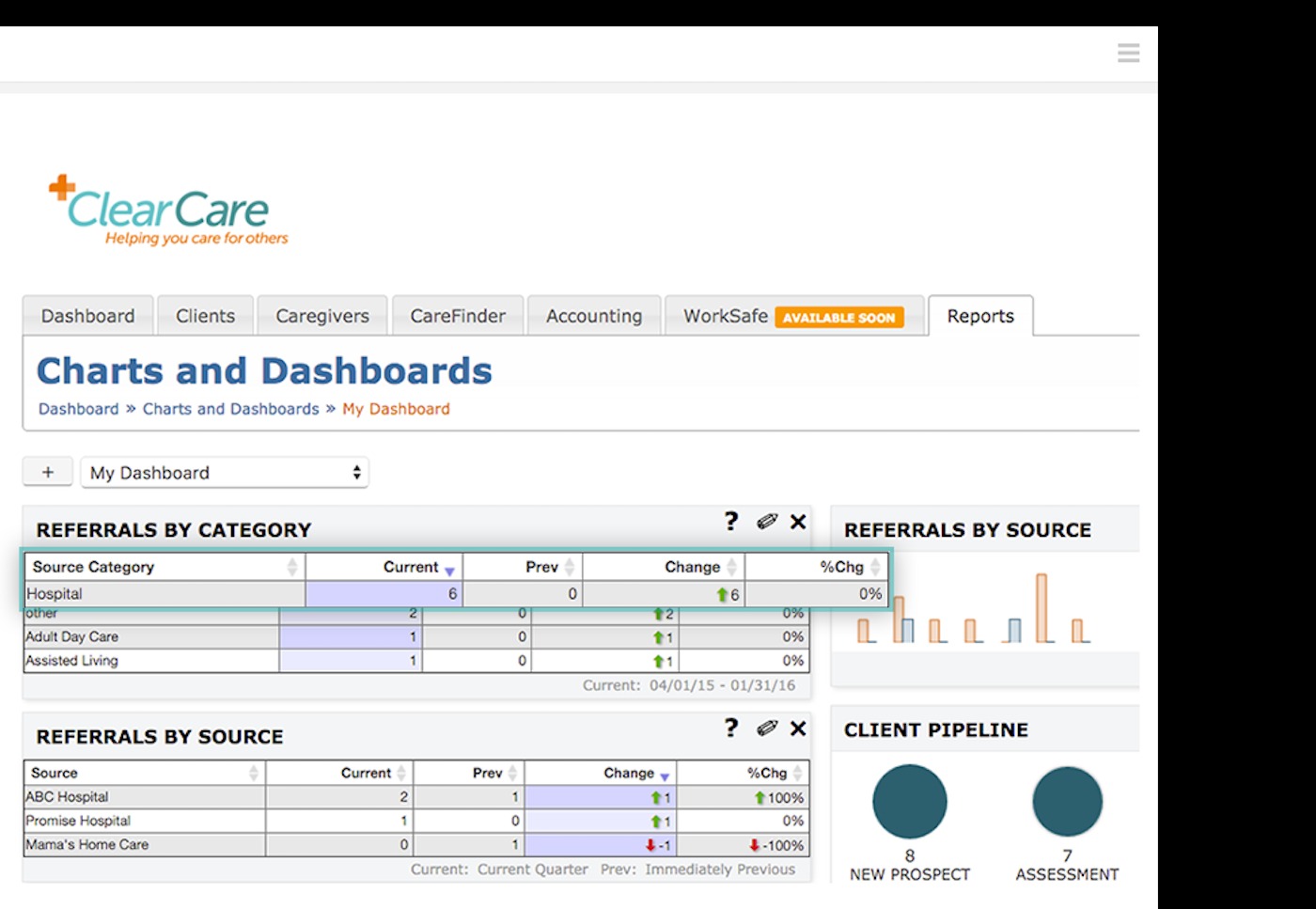
An agency owner could use the system to assign shifts, match caregivers, monitor care plans, collect family feedback, pay workers and bill clients. A caregiver could see a schedule and record a visit from a phone. A relative could check the Family Room instead of chasing a paper book. The company’s expertise lay in connecting those three views without pretending they were the same job.
The invitation to Las Vegas
Winning an independent agency was one challenge; winning a national network was another. By the end of 2012, ClearCare had references but no customer among the ten largest home-care enterprises. Nudd paid for an invitation-only industry meeting in Las Vegas. The agenda centered on the future of home care, without a conventional product pitch. Within a year, three of the five largest agencies had signed on, according to the former adviser’s account. It was an expensive bet on being known as a serious participant in the industry rather than another vendor with a feature list.
ClearCare’s 2015 deal with Griswold Home Care shows the more practical side of that reputation. Griswold tried the software in company-owned operations before choosing it as a preferred partner for employee-based agencies. The WorkSafe Central caregiver safety feature was a deciding factor. The sale depended on fitting a network’s own operating standards, not merely displaying a polished portal.
Battery Ventures led a $60 million growth-equity investment in 2016. ClearCare said it would strengthen the platform and explore partnerships. It bought home-care software company HomeTrak in 2017, launched Home Connect API in 2018 to link agencies with health plans and hospitals, and partnered with Amedisys in 2019 to coordinate personal care and skilled home health. That progression matters: an agency system, once widely adopted, can become a bridge between otherwise separate parts of care.
The system behind the person at the door
The market had plenty of software names, including AxisCare and AlayaCare. ClearCare’s distinction was its breadth across private-duty agency work and the size of its installed base. It combined a family-facing origin with the unglamorous operations agencies could not skip: schedules, payroll, billing, HR, matching and reports. WellSky later reported that the product supported more than 4,000 agencies and eight of North America’s ten largest personal-care networks. Those are company figures, but they explain why the platform was attractive to a buyer already selling across post-acute care.
WellSky acquired ClearCare in October 2019; the price was not disclosed. The name eventually changed to WellSky Personal Care, including the caregiver mobile app. The old ClearCare brand now reads like a clue to its founding question. Could a family see clearly what happened when a stranger came to help someone they loved? The answer required more than a screen. It required a schedule before the visit, a record during it, and a business capable of responding afterward.
The lesson travels beyond home care. Transparency is rarely a window you install at the end of a process. It is the result of joining the process together. ClearCare began with a notebook nobody could read and built the machinery that made the next entry matter.