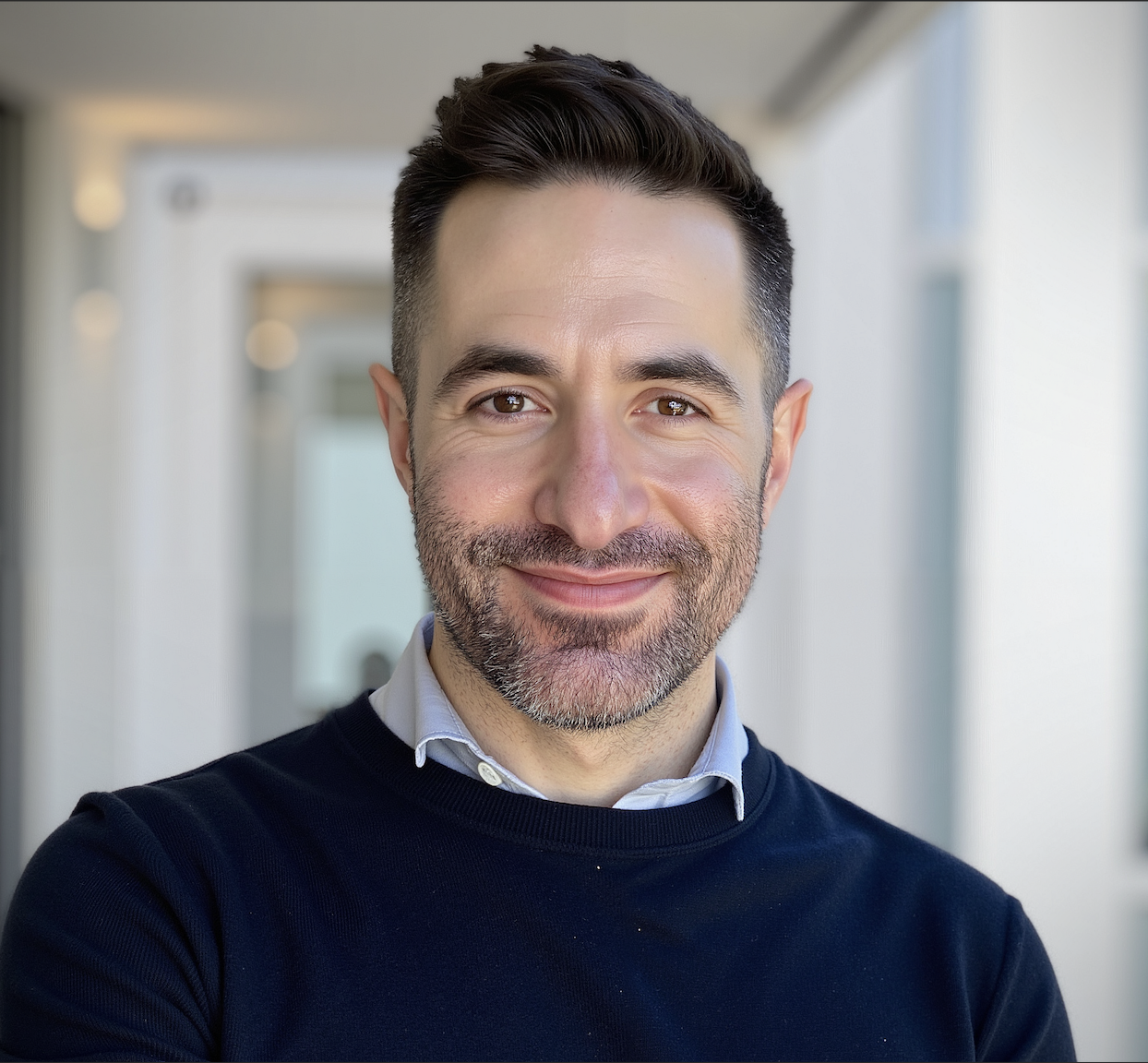
A repeat founder decided healthcare's paperwork was a software problem
Every year, the American healthcare system loses billions of dollars to a single word: authorization. A doctor orders a scan, a drug, a procedure - and then everything stops while a payer decides whether it will pay. Daniel Friedman looked at that pause and refused to accept it as a permanent feature of medicine.
Friedman is the cofounder and chief executive of Ethermed, a Philadelphia company that has spent the last several years attacking prior authorization, one of the most reviled bottlenecks in American healthcare. His pitch is deceptively simple. If a payer's rules can be read, and a patient's clinical documentation can be read, then a computer that genuinely understands both should be able to do in seconds what teams of people currently do over days. That is the whole company, distilled.
He did not arrive at healthcare by the usual route. Friedman studied Chinese and comparative politics, law and economics at Johns Hopkins University's School of Advanced International Studies, including a stint at its Nanjing University Center for Chinese and American Studies. It is an unusual academic foundation for someone now building large language models that parse clinical charts. But the through-line is systems - understanding how rules, institutions and incentives interact, then finding the friction points where they grind against one another.
Before Ethermed, Friedman worked across the frontier of applied technology. He served as chief executive of Backtrace AI and was a cofounder and Director of Labs at Vidoni AR, an augmented-reality venture. By the time he turned to healthcare, he was a repeat founder who had already lived through the unglamorous mechanics of building products, hiring engineers and selling into skeptical markets.
The founding question
Ethermed began in 2021 with a question rather than a product. What if AI could solve prior authorizations and remove the barriers between payers and providers? Friedman founded the company alongside Michal Such, an engineer who became cofounder and lead engineer, and the two started by repurposing technology Friedman had developed through his earlier ventures. The bet was that the paperwork choking healthcare was not an immovable cost of doing business but a software problem hiding in plain sight.
The mission has a slogan attached, and it is a pointed one: healthcare should be about people, not paperwork. Ethermed lists three values on its wall - empathy, progress and quality - and Friedman put empathy first deliberately. Behind every stalled authorization is a patient waiting for care and a clinician buried in forms. The company frames its automation not as a way to remove humans from the loop, but as a way to give clinical judgment more room to breathe.
From a pilot to a platform
The proof came from the field. Ethermed's early traction included a partnership with MedPOINT Management, a California organization serving thousands of providers and more than a million members. What started as a pilot grew into a platform processing thousands of pre-authorizations a day, and then millions a year. Roughly 89 percent of those now run fully automated, with the system either approving requests instantly or flagging exactly what additional information a payer needs.
The numbers Friedman cites are the ones that matter to the people doing the work. Average processing time has fallen to 3.9 seconds. First-pass completion sits at 91 percent. The platform keeps real-time pace with more than 130 payers and their constantly shifting rules. And crucially, Ethermed onboards health systems in about 12 weeks - a fraction of the nine-to-twelve-month timelines that plague enterprise healthcare technology.
Money, and what it is for
In 2026, Ethermed raised an $8.5 million Series A led by Enfield Capital Partners and Blue Marlin Partners, with participation from Jumpstart Ventures, Healthliant Ventures, the Woodard Family Office and Gaingels. The round followed a seed raise of more than $6.5 million and pushed total funding past $15 million. By then the company had nine health-system customers live on its platform.
Friedman has been consistent about where the money goes: scaling the AI engine and expanding the network of health-system partners. The same year, the company launched Ethermed Online, a modern authorization workspace that pulls cases from email, EMR connections and file uploads into a single dashboard, layering on AI-driven clinical determinations, confidence scoring and audit-ready documentation. It is the visible surface of a system Friedman wants most patients to never notice and all of them to feel.
The quiet infrastructure play
What makes Friedman's approach distinctive is the insistence on augmentation over replacement. Ethermed's engine reviews documentation and interprets payer rules to generate compliant submissions, but the framing is always about amplifying clinicians rather than sidelining them. In a corner of healthcare where automation often means blunt denial engines, that positioning is a deliberate choice - and a bet that the market rewards tools that make people more effective rather than redundant.
Friedman is building the kind of infrastructure that rarely makes headlines. There is no consumer app, no viral moment, no household name. There is a company standing in the middle of two sides that almost never agree - payers and providers - and quietly translating between them faster than anyone thought possible. If he is right, the pause after a doctor places an order gets shorter every year until it nearly disappears. That is the future Daniel Friedman is trying to build, one three-second authorization at a time.